
 Hawai'i Journalism Initiative
From losing her home to chairing Maui housing committee: Tasha Kama leaned on faith and family
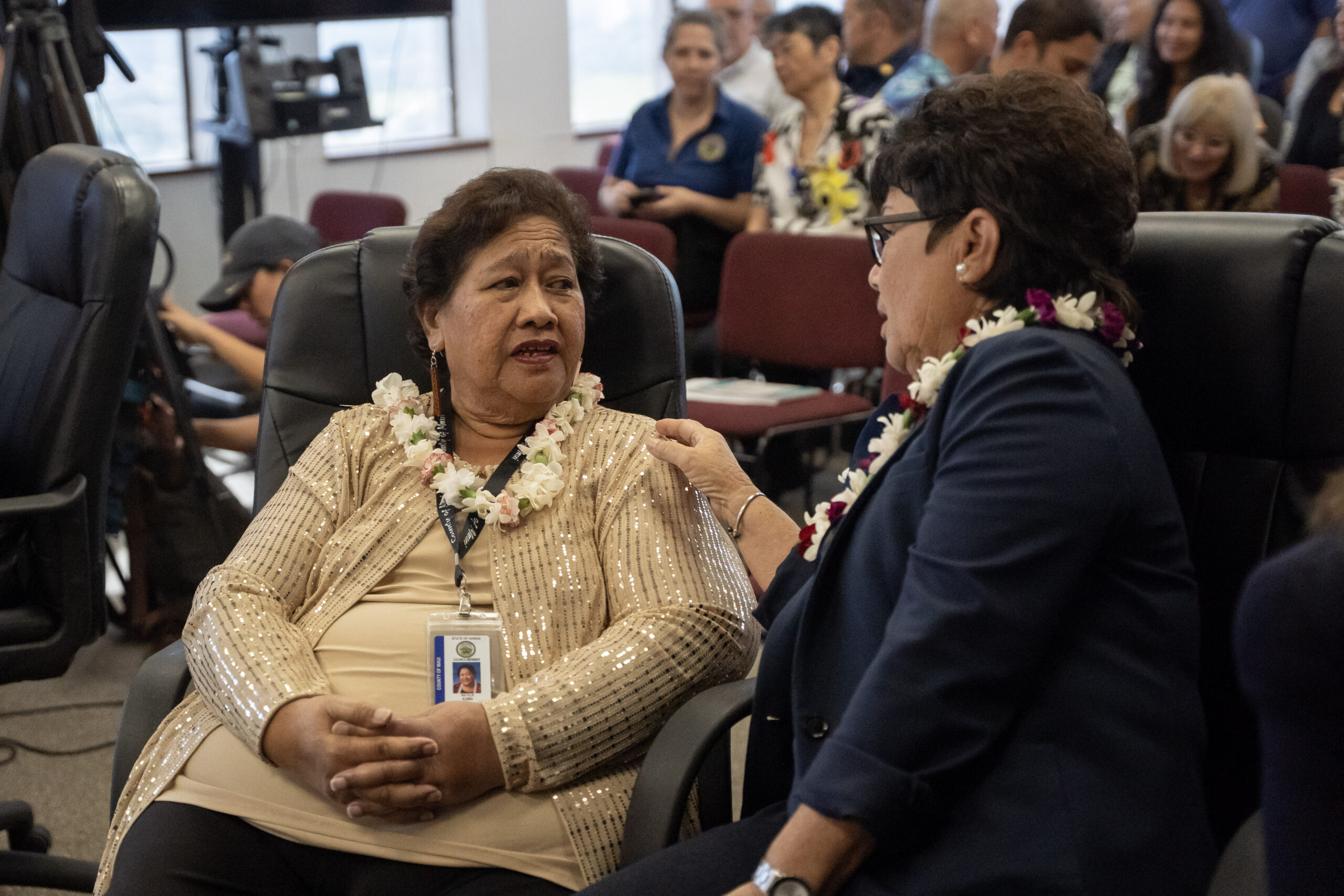
When Natalie “Tasha” Kama faced the foreclosure of her home in the early 2000s, she decided to ask her dad for permission to live at the Wailuku church where he pastored.
For 10 years, she and her family lived in the one-room church with just a toilet, no shower and a sink with no running water, a period of her life that she said she only got through with the help of “my faith, my trust, my family, my friends.”
“They’re the guys that told me, ‘Listen, this is only temporary. It’s not going to last forever,’” Kama told the Hawai‘i Journalism Initiative during an interview in January.
The 73-year-old Maui County Council member, former pastor, community advocate, mother of 11, grandmother of 31 and great grandmother of six often leaned on her family and her faith throughout her life. On Sunday night, she passed away surrounded by the people she loved most, her family announced on Facebook.
Family and people who worked with her on the council and in her advocacy days remembered her as a mother, leader and friend who cared deeply about marginalized communities, was full of aloha for both allies and opponents, loved playing cards and could cook a mean beef stew.
“It didn’t matter who you were — she loved you,” said Evan Dust, who married Kama’s eldest daughter and later served as her campaign manager and senior executive assistant. “She loved you because Jesus said to love your fellow man, and she operated in that way throughout all the years that I knew her.”
Dust said the family is declining to share details about her medical condition or cause of death.
Council Chair Alice Lee said she was informed Friday afternoon that Kama was sick and had been hospitalized. On Sunday morning, she went to visit her in the Maui Memorial Medical Center intensive care unit. Lee held Kama’s hand and reminisced about life and spiritual topics.
“I always kind of looked upon her not only as a friend, but my spiritual adviser,” Lee said.
Lee said Kama “was accepting of her situation.” They’d talked in the past about “leaving this earth,” and Lee asked Kama who was the first person she’d want to see.
“My parents,” Kama said.
Kama’s father, the Rev. Clarence Kamai, was a pivotal figure in her life and the reason she got into ministry. Clarence and Ruth Kamai, who had 12 children, came to Maui in 1973 after being awarded a homestead in Paukūkalo, according to a council resolution.
Born and raised on O‘ahu, Kama moved to Maui in 1983, according to a news release from her office.
In the late 1980s, father and daughter were regular visitors to the homeless shelter that Stan Franco ran in Pu‘unēnē. At the time, the shelter was struggling to afford to feed the residents living there, and they asked the community to help provide food. Franco remembers Kamai and Kama providing meals and music a few times a month.
Franco and Kama would go on to work closely together over the years, bound by their faith. He was a senior deacon of the Catholic Church, she was a non-denominational Christian kahu. They also both had a passion for affordable housing, helping to start in 2009 the Maui branch of Faith Action for Community Equity, a nonprofit advocating for social justice.
At the time, Immigration and Customs Enforcement agents were raiding local workplaces, Franco said. The nonprofit known as FACE Maui helped bring a Mexican consulate official to Maui to offer advice for people about the paperwork they needed and how to respond if they were approached by ICE.
Kama was the organization’s last chair before it morphed into Stand Up Maui in 2019 as a nonprofit focused on affordable housing and social justice.
Franco, a retired social worker with 2nd Circuit Family Court and a board member of Stand Up Maui, said Kama’s faith was a big driver behind her belief “that we had to take care of our least fortunate brothers and sisters.”
“Her legacy is that everyone was loved, regardless of their state in life, mayor or janitor, and that’s how she treated everybody that came to her when they were in need,” Franco said.
Faith wasn’t the only thing that made Kama sympathetic to folks who were down on their luck.
“People don’t know at one time in my life, I was homeless too,” Kama said.
After she and her husband David lost their home to foreclosure nearly two decades ago, they arranged for some of their kids to stay with relatives while they lived temporarily at the Christian Ministry Church.
Kama was “determined” to improve their situation and said they focused on one thing at a time. They started with their debt, knowing they couldn’t rent a place or buy a car if they weren’t good lending candidates.
“You work on those things a little bit at a time until you come to a place where, OK, people are willing to take a chance on you,” Kama said.
Eventually, her husband got sick and needed a more accessible place to live. Their children got together and pitched in to help them rent a place. Kama said they applied for social services like food stamps and that at times she had to swallow her pride to do what was needed.
“It’s having to be humbled, having to be gracious, having to be merciful,” she said. “But you just gotta do what you gotta do to be able to make it. And things do get better over time.”
Kama also realized that she wanted a higher education and more life skills. She got married right after finishing high school. So, in 2011, on the cusp of her 60s, she enrolled at the University of Hawai‘i Maui College. She went on to serve as student body president and secretary, according to the school.
“How do you like being the oldest kid in your class?” Kama said. “And when these kids are talking about stuff, it just goes over your head. Then you gotta get into one study group with kids who are old enough to be your grandkids.”
In 2015, Kama earned associate degrees in Liberal Arts and Human Services.
Three years later, driven by the cost of living, Kama ran for the Maui County Council’s Kahului seat against three-term mayor and former council member Alan Arakawa.
“People were calling us David and Goliath,” Kama told The Maui News in October 2018. Her upset victory over Arakawa in the November 2018 general election was her first successful bid for public office after campaigning for the council in 2002 and for the state House in 2008.
While Kama attributed her 2018 victory partly to backlash against Arakawa, Lee says Kama “won on her own strength” and her “reputation of being active in the community.”
Lee chuckles when she thinks about Kama’s early campaign days, when she made yard signs out of construction paper and worried about replacing them every time it rained.
“I would tease her about that,” Lee said. “I told her, ‘Wow, the last election, you really had nice, professional signs compared to your first race.’”
In 2019, Kama and Lee were among six female council members who took office, marking the first female majority in the council’s history.
Kama soon proved to be the swing vote on critical decisions over the mayor’s nominees, drawing the ire of the progressive coalition who’d backed her in the election and had hoped to have a majority on the council. Kama told The Maui News at the time that she “didn’t come here to be popular.”
“I came to create affordable housing for my people,” she said.
Lee said Kama didn’t listen to any particular faction: “She just voted according to what her mind and heart told her.”
However, over time Kama often voted with the more moderate majority. She won reelection three more times and was serving as presiding officer pro tempore, the third-highest ranking on the council, at the time of her death.
She also chaired the Housing and Land Use Committee, a position she secured in a narrow 5-4 vote over protest from more progressive members frustrated over Kama’s leadership of the committee in the previous term.
Even Franco, her longtime ally, felt “she’s been a little more conservative than I would hope” on housing issues. For one, Franco was a big proponent of rent stabilization; Kama said that her committee wouldn’t consider legislation to regulate rent but was open to incentives to moderate it. However, their disagreements were purely over policy: “I cannot say anything bad about her,” Franco said.
Her death leaves the council’s balance of power up in the air and will also likely stall Bill 9, the mayor’s proposal to phase out thousands of vacation rentals. Kama’s committee has overseen multiple hearings on the bill.
Dust said Kama had to make “quite a few very emotionally charged decisions” while on the council, but “she always was a steadfast supporter of housing.”
“She told me that she never worried about an election, because if it was God’s will that the voters chose somebody else, she would understand that,” Dust said. “She’d go on and say, ‘Oh, OK, what else do you want me to do, God?”
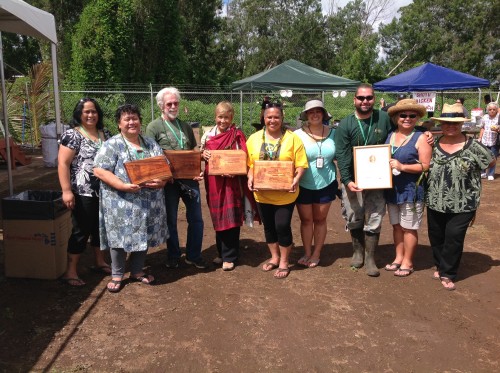
Housing for Native Hawaiians particularly hit close to home for Kama, who watched five of her 11 kids “make the difficult choice to leave Maui to find housing,” Dust said. She was passionate about Hawaiians getting homesteads and helped found the Waiohuli-Kēōkea Homestead Associations. The state Department of Hawaiian Home Lands described her as “instrumental in mobilizing Kēōkea farmers in the early ‘90s.”
Dust thinks Kama’s family “was the driver for her tireless advocacy for housing.”
Dust met Kama “because I fell in love with her eldest daughter,” Davelyn, in 2000. Shortly after, they traveled from Washington state to Las Vegas to meet up with Kama. Even though he wasn’t part of the family yet, Dust said he felt “fully embraced” by Kama. On that trip to Vegas, he learned how much she loved playing cards. The highlight of many family gatherings was “the friendly game of poker.”
Dust remembers when Kama served as kahu of the Christian Ministry Church. She was “never a fire-and-brimstone-style preacher,” delivering even the toughest messages with love. Kama and her father officiated Dust’s wedding at Good Shepherd Episcopal Church in Wailuku in August 2003. The couple moved to Maui in 2012, and Dust worked on Kama’s campaign in 2018 before becoming her manager in later campaigns.
Kama’s faith was “her bedrock” and a big source of comfort when she lost her husband and Davelyn within days of each other in April 2021.
“It was very hard, but faith is very powerful,” Dust said.
Kama said she shared her struggles because she wanted people to know she understands where they’ve been.
“I think people think that I live in this wonderful big house and drive a nice car, but they don’t know, as old as I am, I’ve gone through a lot of life’s ups and downs,” Kama said. “But you cannot go through life without experiencing stuff, and the stuff that you experience is what helps you to understand what other people are going through.”
Lee said she’ll miss the conversations she and Kama used to have about their love of Vegas, and the delicious beef stew that Kama made for the council.
Learning about her struggle with homelessness, Lee said, “it makes me admire her even more.”
“It’s an incredible human victory story, and I can see that in her,” Lee said. “She had that strong will and perseverance, and she always seemed to have a positive mental attitude, and all those combined to make her an incredible and special person.”