Second live skunk captured in the past week
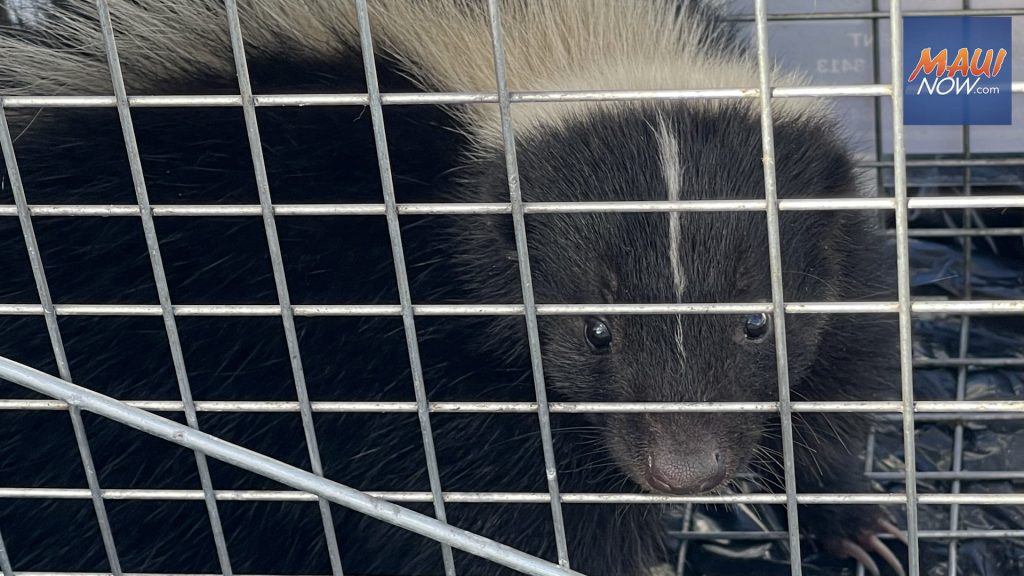
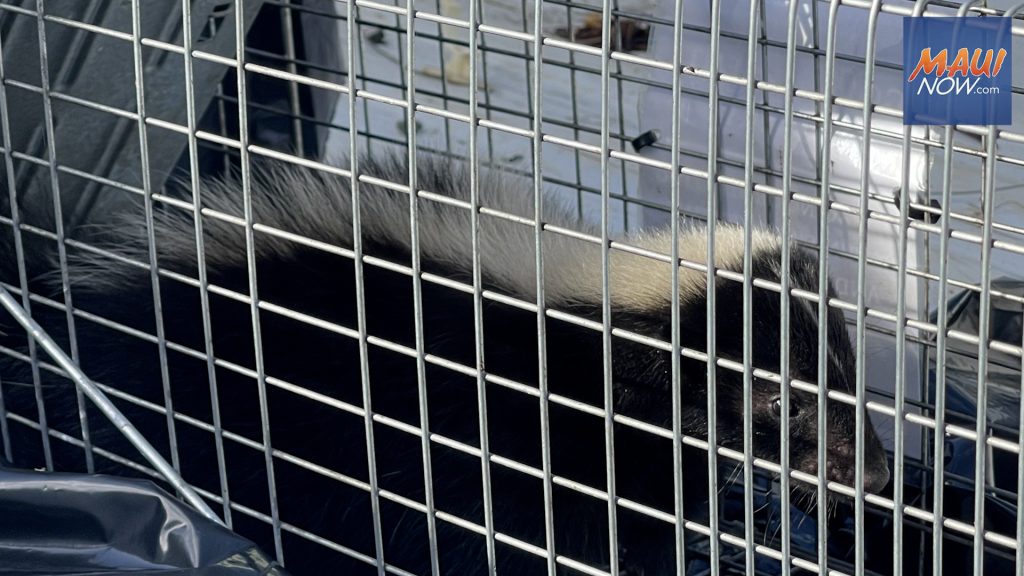
Another live skunk was captured Thursday, this time at Honolulu Harbor. The previous skunk was captured at Hilo Harbor on Nov. 7.
On the morning of Nov. 11, US Customs and Border Protection staff at Honolulu Harbor contacted agriculture inspectors at the Hawai‘i Department of Agriculture and Biosecurity’s Plant Quarantine Branch and reported a sighting of a skunk at Pier 1.
PQB inspectors were dispatched to the pier and conducted a search of the area but did not locate the skunk. Inspectors set four traps using cat food around the area. Yesterday, dockworkers notified PQB that the skunk was caught in one of the traps. It was humanely euthanized and a test for rabies is being conducted.
On Nov. 7 at Hilo Harbor, PQB staff captured a skunk hiding in the undercarriage of a vehicle by loading the vehicle into a shipping container and setting traps using cat food. As a precaution, Hilo inspectors maintained traps in the area for the past week and no further skunks have been caught. The rabies test result on the Hilo skunk was received yesterday and was negative.
The origin of both skunks are unknown, but the animals are presumed to have hitchhiked aboard cargo ships.
Other recent captures include:
| June 2025 | Kaka‘ako Waterfront Park, Honolulu | ||
| February 2023 | Hilo resident captures skunk in mongoose trap | ||
| August 2022 | Kanahā Pond State Wildlife Sanctuary, Maui | ||
| June 2022 | Honolulu Harbor | ||
| July 2021 | Honolulu Harbor | ||
| January 2021 | Honolulu Harbor | ||
| December 2020 | Kahului Harbor | ||
| August 2018 | Maui trucking company site | ||
| February 2018 | Honolulu Harbor |
All previously captured skunks have tested negative for rabies.
Skunks are prohibited in Hawai‘i. They are avid egg-eaters and would pose a threat to Hawai‘i’s native ground-nesting birds if they become established. They inhabit the mainland US, Canada, South America, Mexico and other parts of the world. In the US, they are recognized as one of the four primary wild carriers of rabies, a fatal viral disease of mammals that is often transmitted through the bite of an infected animal. Hawai‘i is the only state in the US and one of the few places in the world that is free of rabies.
Sightings or captures of illegal and invasive species should be reported to the state’s toll-free Pest Hotline at 808-643-PEST (7378).
Sponsored Content