 Hawai'i Journalism Initiative
Earthjustice asks water commission to stop Kapalua golf courses from using drinking water for irrigation
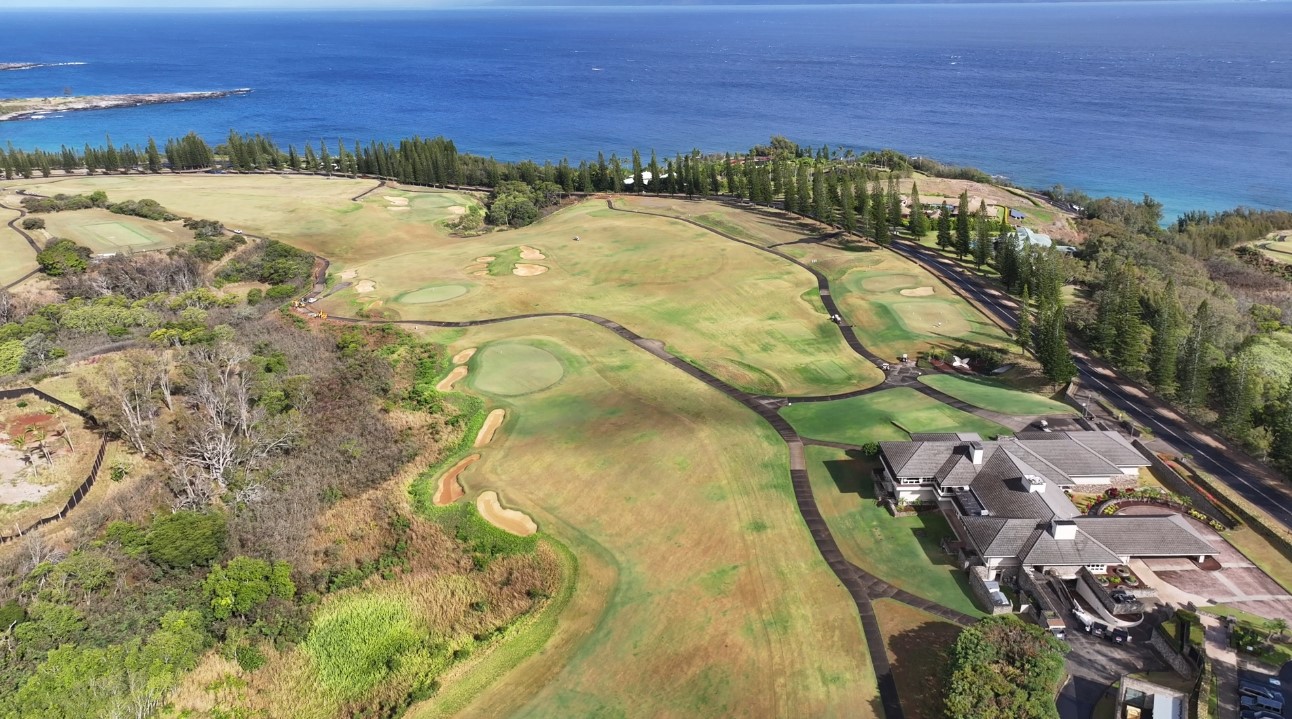
The environmental law firm Earthjustice is claiming that two Kapalua golf courses unlawfully used millions of gallons of drinking water for irrigation, and with the knowledge of the state water commission chair.
Earthjustice sent a letter to the commission on Monday urging them to halt the use of potable water for irrigation at a time of drought and water restrictions in West Maui.
HJI Weekly Newsletter
Get more stories like these delivered straight to your inbox. Sign up for the Hawai‘i Journalism Initiative's weekly newsletter:
The claims came a day before Tuesday’s water commission meeting, in which the agenda includes a review of a report on water use in West Maui before the August 2023 wildfires. The claims also come during the ongoing dispute between TY Management Corp., the golf course owner, and Maui Land & Pineapple Co., the water system owner.
TY Management, owned by Japanese billionaire and Uniqlo founder Tadashi Yanai, alleged in a lawsuit filed in August that Maui Land & Pineapple has failed to maintain the system and deliver water to the golf courses; Maui Land & Pineapple said in a counterclaim in September that TY Management has improperly used water meant for fire protection to irrigate its golf courses.
On Monday, Earthjustice jumped into the fray, claiming that Dawn Chang, chair of the Commission on Water Resources Management and the Board of Land and Natural Resources, shouldn’t have allowed the golf courses to use potable groundwater for irrigation.
The law firm said that Chang stated in an email to Maui Land & Pineapple in August that “temporary use of groundwater as a substitute for surface water during low flow periods is allowed for irrigation uses, including at the Bay and Plantation Golf Courses, pending Commission action on Hawai‘i Water Service’s water use permit application.”
In a clarifying email to Hawaiʻi Water Service, Chang wrote the Commission has not “authorized, required or directed the use of groundwater as a substitute source for golf course irrigation.” She added the provision of water to the golf courses is governed by private water delivery agreements between Maui Land & Pineapple and TY Management.
“The Commission does not have the authority to rewrite these private contract agreements outside the water user permitting process,” Chang wrote.
TY Management and many others are currently waiting for the commission to review 141 water permit applications in West Maui, following a 2022 decision that designated Lahaina’s aquifers as a surface water and groundwater management area. This required all existing and new water users to apply for permits from the state.
Hawai‘i Water Service, which delivers water to Kapalua customers through Maui Land & Pineapple’s ditch system, applied for a water use permit on Aug. 5, 2023, just before the deadline, commission documents show.
Earthjustice says TY Management’s golf course parcels are included in the surface water application, but because they’re not included in the groundwater application, they shouldn’t have been able to use groundwater for irrigation.
“In the middle of a historic drought for West Maui, Chair Chang allowed the golf course to use millions of gallons of drinking water to irrigate its grass without a permit,” Dru Hara, an attorney with Earthjustice’s Mid-Pacific Office, said in a news release Monday. “There could not be a starker picture of disconnect between this administration’s actions and the mission of this agency that they keep undermining.”
In its lawsuit, TY Management claimed that Maui Land & Pineapple’s failure to provide enough water had deteriorated Kapalua Golf’s courses so much that they were jeopardizing The Sentry golf tournament, which had been held at its Plantation Course for the past 27 years, and recently has been an estimated $50 million boom to the economy.
After the lawsuit was filed and some water restrictions were lifted, TY Management said it began irrigating the course but it was too late. the PGA Tour cancelled the prestigious golf tournament originally set for January.
Earthjustice’s argument that the golf courses shouldn’t be allowed to use groundwater wells for irrigation echoes an Aug. 18 memorandum from Ciara Kahahane, deputy director of the water commission, to Gov. Josh Green, with Chang copied on the memo. Kahahane stated that “MLP’s wells were not being used to irrigate golf courses in Aug 2022; therefore, they cannot be used for this purpose now.”
“Groundwater should not be used to irrigate golf courses, especially during a long and severe West Maui water shortage,” Kahahane said.
Commission staff “support MLP’s prohibition of irrigation during severe water shortage and prioritization of municipal and firefighting needs,” Kahahane added.
The Department of Land and Natural Resources, which oversees the water commission, said in a statement to the Hawai‘i Journalism Initiative on Monday that the commission “received Earthjustice’s letter today and it is under review.”
Last week, water commission staff released a report on how water was being used in West Maui prior to the 2023 wildfires. The commission plans to take up the report in today’s meeting at 9 a.m. in Honolulu that will also be broadcast via Zoom or YouTube.
In a statement to the Hawai‘i Journalism Initiative on Monday, Maui Land & Pineapple said the company “is committed to responsible stewardship of Maui’s water resources.”
”We follow the guidance from the Commission on Water Resource Management,” Maui Land & Pineapple said. “We are currently reviewing Earthjustice’s letter to the Commission.”
In its counterclaim, the company pointed out that West Maui was under a drought, with the Honokōhau Stream that supplies the company’s water system seeing 46% of its normal rainfall over the last 12 months, hydrologist Ayron Strauch told the water commission in September.
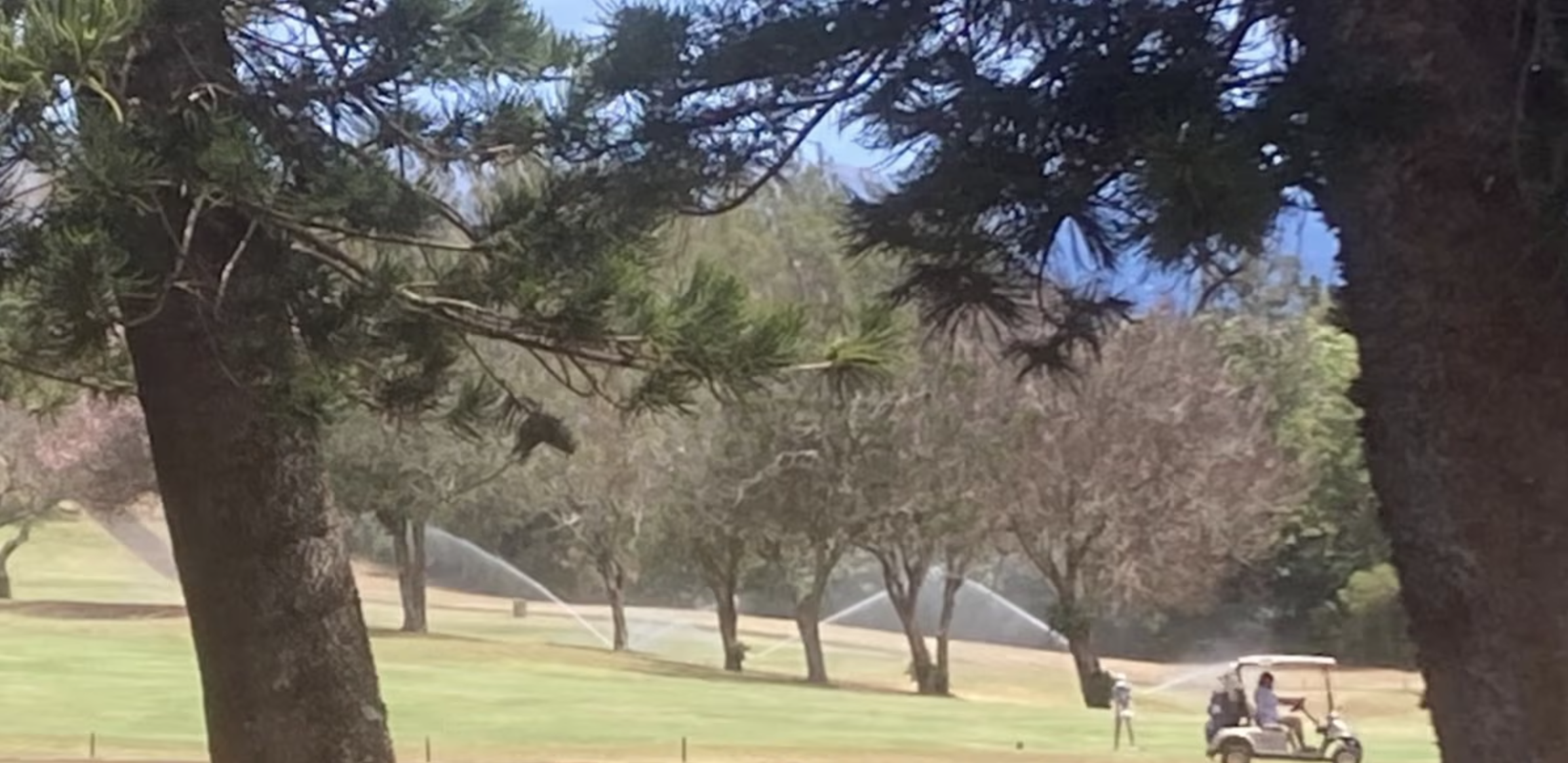
Despite the area being under Tier 4 water restrictions in June that required a 100% reduction of non-potable water usage and only allowed for fire protection, Maui Land & Pineapple claims the Kapalua golf courses still ran their sprinklers and consumed more than 11.4 million gallons of water for irrigation that month, including nearly 6.8 million gallons at the Plantation Golf Course, 4.2 million gallons at the Bay Golf Course and 437,700 gallons at the Golf Academy Driving Range.
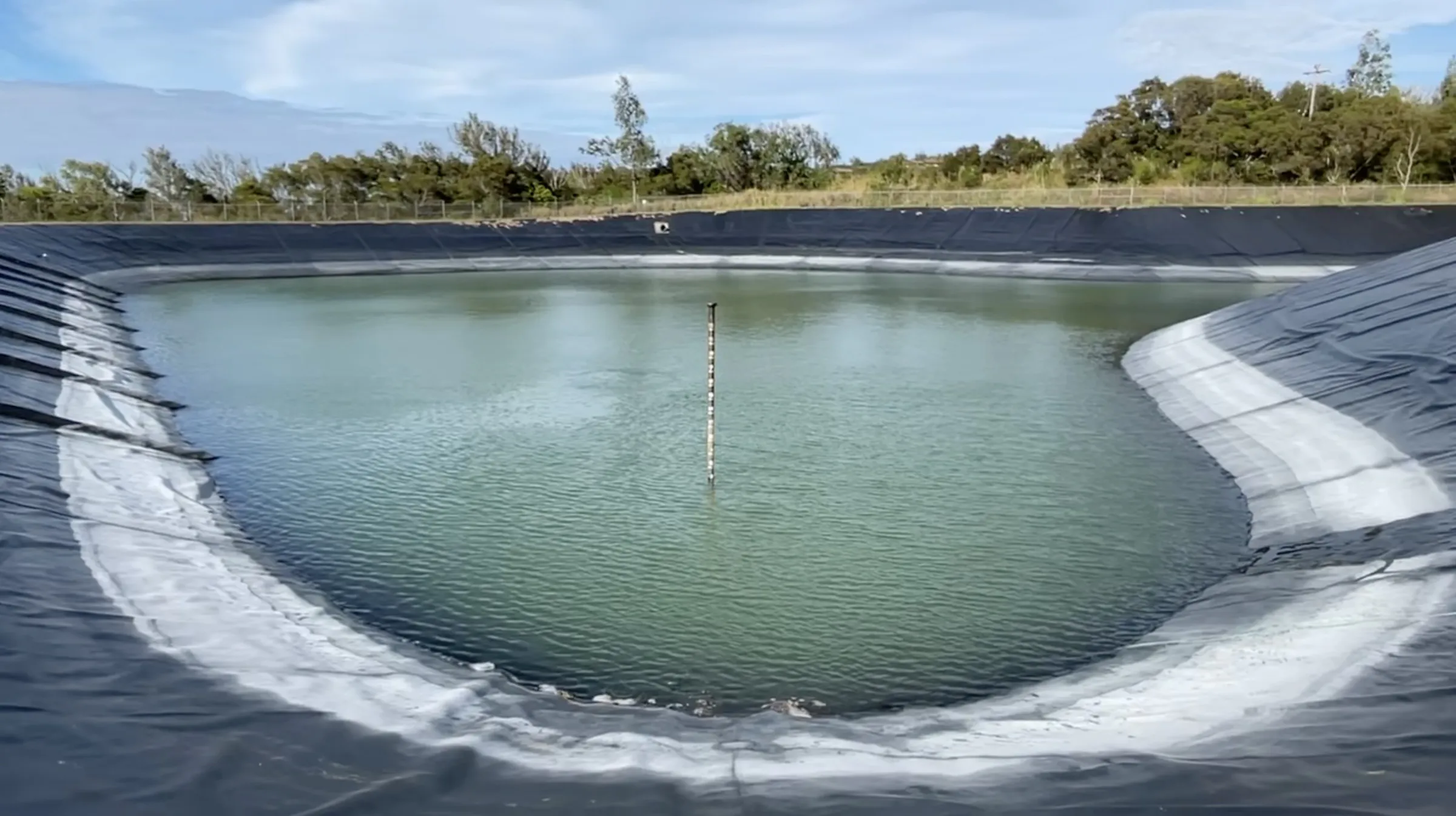
Maui Land & Pineapple told the Hawaiʻi Journalism Initiative that some of that water was potable, as groundwater wells were used to refill the reservoir when it was depleted. However, exact figures on how much potable water TY Management used were not immediately available Monday evening.
The counterclaim says that after the water commission allowed groundwater to be substituted for surface water in August, the Hawai‘i Water Service downgraded its Tier 4 restrictions to Tier 2, which calls for a 40% reduction of normal water use and allows for non-potable water irrigation.
That same month, the golf courses’ usage went as high as more than 1 million gallons a day for irrigation between Aug. 27 and Aug. 29, the counterclaim says. Hawai‘i Water Service warned that not everybody in Kapalua was following water conservation measures and that the two Kapalua wells, which provide potable water, could not keep up with their overconsumption.
Maui Land & Pineapple called TY Management’s complaints over dry golf courses “a defamatory publicity campaign,” claiming that the golf courses suddenly started following irrigation restrictions they’d ignored for months and then touted the resulting brown grass as proof that Maui Land & Pineapple was failing to supply enough water.
Kenji Yui, general manager of TY Management, said in a statement to the Hawai‘i Journalism Initiative on Monday: “The Earthjustice complaint is an example of just how complicated the water situation is on Maui. But it’s also a reminder that we need solutions, which is what TY Management is working towards.”
He said the goal is to reduce the use of surface water and ground water and increase the use of recycled water.
“We are actively seeking long term solutions while the ditch system needs to be quickly fixed and properly maintained for the benefit of all of West Maui,” Yui said.
Kapalua Golf General Manager Alex Nakajima told the Hawaiʻi Journalism Initiative last week that the golf course has tried to conserve water by converting to drought-tolerant grass following a 2019 renovation, “so the entire turf is requiring less water.” He added that the golf course is also trying to plant more native grass.
When asked about Maui Land & Pineapple’s claims that TY Management did not follow water restrictions, Yanai said through an interpreter, “first things first,” and put the onus on Maui Land & Pineapple.
“It starts with the responsibility to supply the water,” Yanai said. “If they did a good job of preserving the water, we would not come into this situation where we are suffering from the tight supply of water.”
Yanai also said he understands “the people’s concern” about golf courses using a lot of water. “But in the case of Kapalua, I personally believe that we have enough supply of water at the source.”
TY Management was joined in the lawsuit by Hua Momona Farms and the homeowners associations for Kapalua developments Plantation Estates, Coconut Grove and The Ridge at Kapalua. All rely on water from Honokōhau ditch system owned by Maui Land & Pineapple. Hua Momona Farms told the Hawai‘i Journalism Initiative in August that Maui Land & Pine wasn’t delivering the water and that the lack of supply was impacting his crops.
“Out of the 154 days immediately preceding the filing of this Complaint … all Plaintiffs have been restricted to using no irrigation water for 136 days, and restricted using only forty percent of their historical irrigation water usage for the remaining 18 days,” the lawsuit said in August.
No decision is set for the commission’s review of the water report today, and it’s unclear when the commission will finish its review of the applications. Staff said earlier this year that the process could take years.
Earthjustice said in its letter that giving the golf courses “special treatment” while everyone else’s applications “remain in limbo for years, violates the law and disserves the Maui Komohana community.”
“Any action to allow water uses must be addressed by the full Commission based on a proper record and in compliance with the law, including due process and the applicant’s burden of proof,” Hara said.