


 Hawai'i Journalism Initiative
As frustrated West Maui community waits for state water permit approvals, dispute over golf course irrigation grows
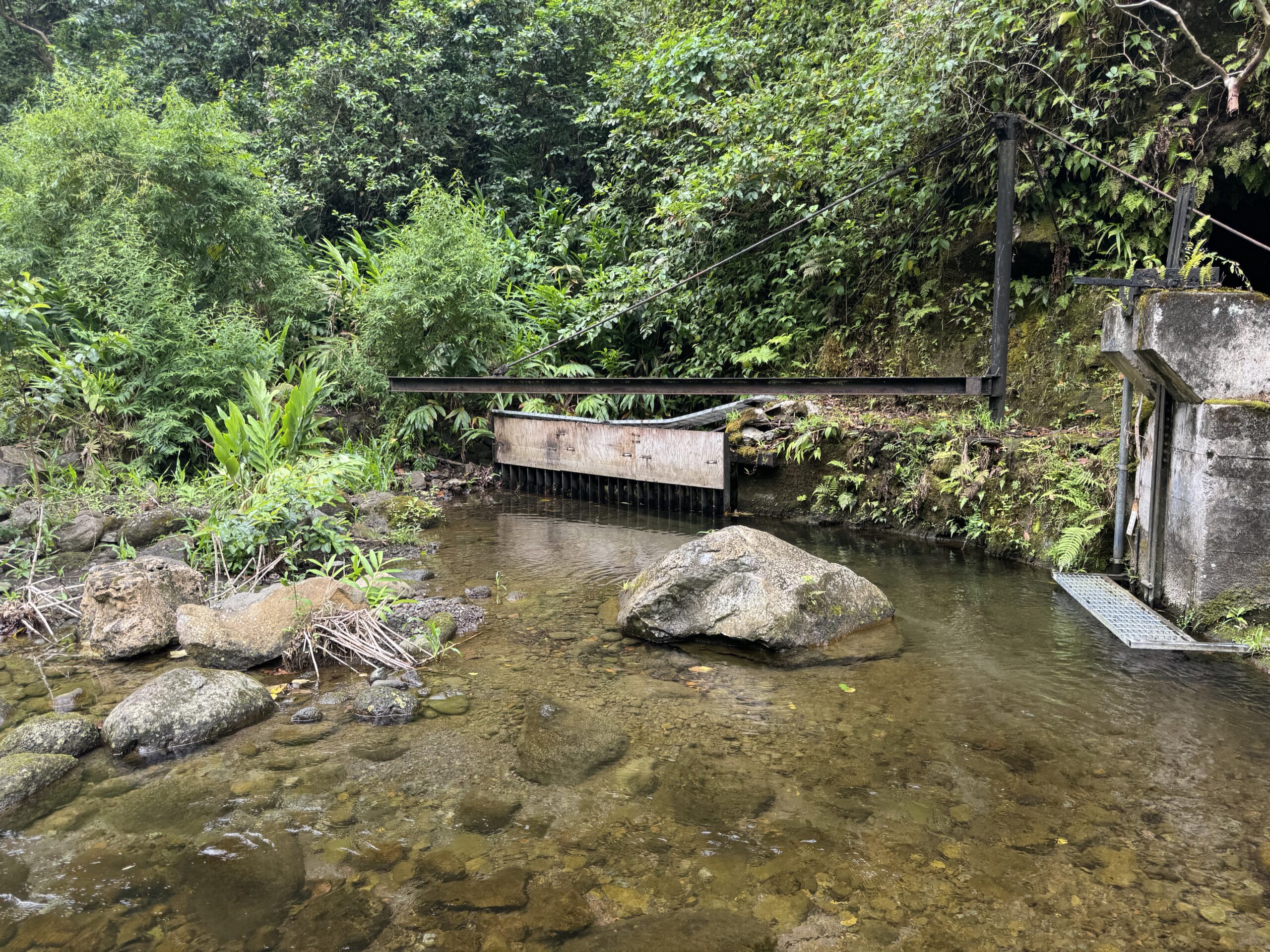
Karyn Kanekoa has watched the kalo that she and other farmers grow deep in Honokōhau Valley slowly rot in the parched earth as warmer water and less streamflow take a toll on their crops, with up to 60% spoiled in some patches.
Kanekoa is tired of waiting for the state Commission on Water Resource Management to make a decision about who will get permits for water in West Maui. Water users applied for those permits over two years ago to meet the state deadline, which was just one day before most of Lahaina town was destroyed in the Aug. 8, 2023 wildfire.
HJI Weekly Newsletter
Get more stories like these delivered straight to your inbox. Sign up for the Hawai‘i Journalism Initiative's weekly newsletter:
“The water shows in Lahaina and across Hawai‘i … it’s not going to get better if all we keep doing is sitting down and talking about it,” Kanekoa told the water commission Tuesday via remote public testimony from Maui. “We need action. We need movement.”
The commission has had two years to review over 140 applications for existing and new water uses in West Maui.
While they deliberate, some say that precious water is being wasted during the extended drought, including going to golf courses in Kapalua where the environmental law firm Earthjustice claims millions of gallons of potable water were used for irrigation unlawfully with the knowledge of the water commission chair.
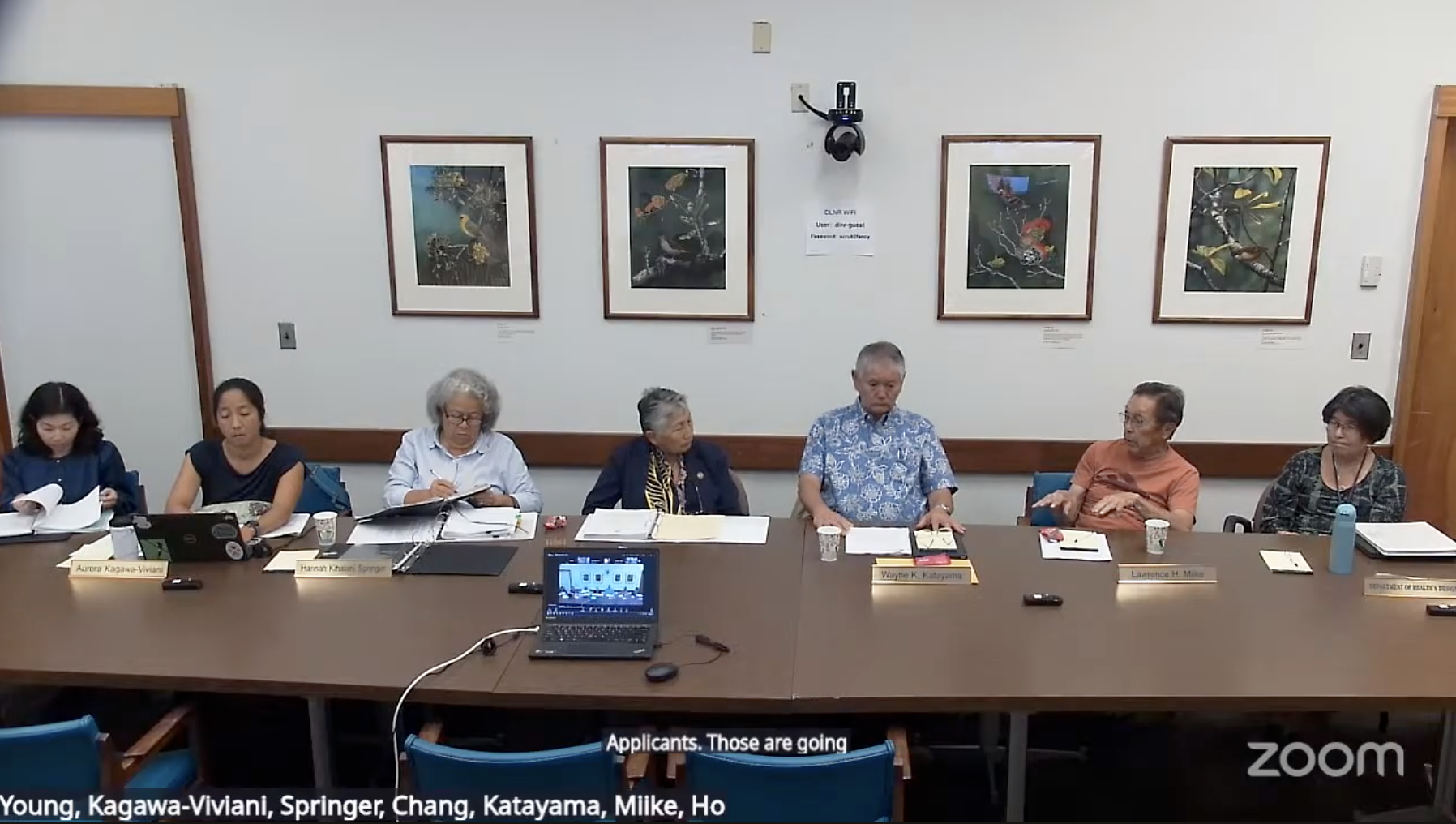
Commissioners and staff said at the Tuesday meeting in Honolulu that the process is taking so long because of delays from the fire, issues with incomplete applications, and limited staff to review more than 4,000 parcels of land serviced by public and private water systems.
Ayron Strauch, hydrologist for the commission, said a “very small but mighty team” is processing the applications, which include 93 for existing uses and 48 for new uses. However, none of the applications were complete — some didn’t have enough data, and others contained inaccurate information.
The applications require extensive details, including lists of potable and non-potable water uses, maps of irrigated areas, information on stream diversions, acreage of watered crops and what traditional and customary Native Hawaiian rights are exercised in the area.
There are 4,168 parcels with current water usage in the Lahaina Aquifer Sector. Some are served by potable and non-potable systems, requiring separate applications. Some potable and non-potable water systems included both surface and groundwater sources, which complicate matters even more.
Strauch, who helps with reviewing the data but is not involved in processing the permits, said this requires “combining staff across expertise, which is not always easy because we’re all on different timelines and different schedules.”
Commissioner Aurora Kagawa-Viviani added that staff didn’t want to reach out to people and ask them to correct their applications in the wake of the fire.
“There was a desire to be considerate of that, but it also produced delays, and right now we’re dealing with it,” Kagawa-Viviani said. “I don’t want to make excuses. … But it’s clear we need to communicate with all applicants on what’s missing and what needs to be corrected.”
Commissioner Lawrence Miike said: “We’re studying this thing too much.”
He said “the burden is on the applicants” to show their existing water uses and justify it, and agreed that the commission should start with the small applicants and go from there.
“But we really need to start approving,” Miike said.
The permits are required because of a 2022 decision that designated Lahaina as a surface water and groundwater management area. Community members said Tuesday they supported that decision, but now are frustrated with how long the process has taken and the ways in which water has since been used in West Maui.
“Instead of action, it feels like I’m hearing excuses,” Kanekoa said. “I understand that this is a complex process, but it just feels like we keep coming to these dead ends.”
Last week, water commission staff released a report that shed light on how water was being used in West Maui based on data pulled from the applications.
They found that single-family homes used the most water collectively at 5.5 million gallons of water per day, followed by hotels at about 3.5 million.
Nearly 80% of single-family homes used less than 1,000 gallons of water on average per day, but just under 10% of homes, many of them non-owner-occupied units, used 2,000 gallons of water or more each day. Ciara Kahahane, deputy director of the water commission, said last week that if all homes cut back to 1,000 gallons per day, the area could save 1.7 million gallons per day.
On Tuesday, residents called for the commission to curb the biggest water users and to protect precious supplies of potable water.
“There is no situation in which we should be using our precious groundwater for anything other than potable uses,” Kanoelani Steward said.
“Watering golf courses and filling swimming pools are probably not the most reasonable beneficial uses of potable groundwater,” she said, adding water should be going to farms that grow food, not decorative landscaping “in the yard of gentleman estates.”
Wili Wood, a farmer in Honokōhau Valley, said it “breaks my heart” when he harvests rotten kalo from the irrigated patches known as lo‘i. He said since Maui Land & Pineapple completed some maintenance to its Honokōhau ditch system that the commission had ordered it to do several years ago, the situation has improved with water flowing last week into Honokōwai Stream.
However, Wood was also concerned about stormwater going to waste because Maui County’s facilities can’t take all of the turbid water from Honokōhau during heavy rains. He suggested new infrastructure, including a system that would allow some of the overflow to replenish the groundwater or a reservoir to let the turbid water settle so the county can use it.
“Our water is still being mismanaged,” Wood said. “… The diverters have to show that the uses are reasonable and beneficial, which to me means that they can make them more efficient.”
Kimo Landgraf, deputy director of the Maui County Department of Water Supply, said that the department has started the design for a 100-million-gallon reservoir to collect high flows during rainstorms and settle out the sediment so the water can be used.
The challenge is when the department declares a shortage during a drought, that only applies to county customers, Landgraf pointed out. Private companies can also impose water restrictions on their customers, which Hawai‘i Water Service did in recent months for its customers in Kā‘anapali and Kapalua.
However, Maui Land & Pineapple, which owns the water system that Hawai‘i Water Service supplies customers from, says not all customers followed water restrictions and that TY Management, the owner of two golf courses in Kapalua, irrigated its courses with water meant for fire protection.
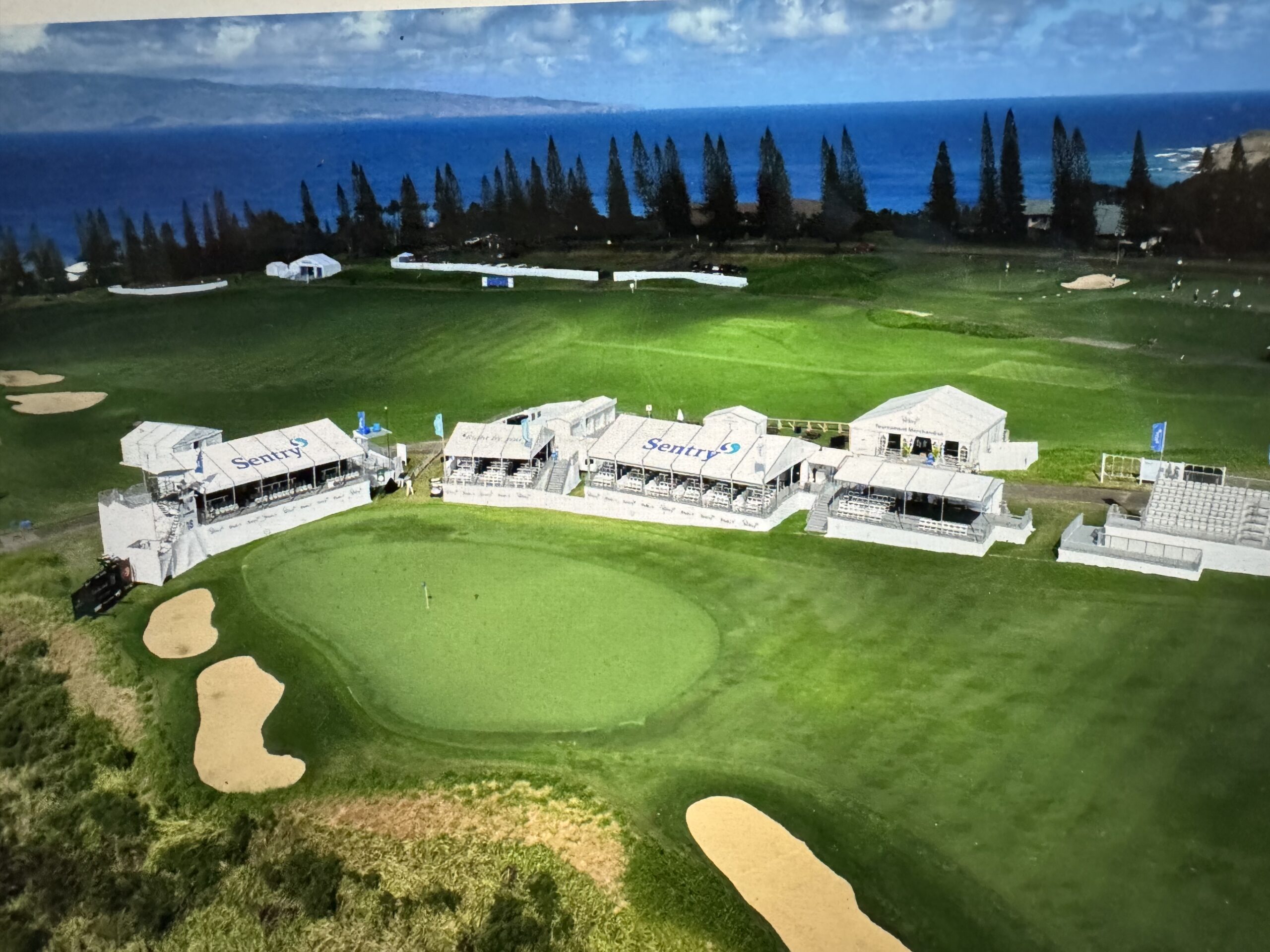
But TY Management, which sued Maui Land & Pineapple in August, says water restrictions have dried up its courses in Kapalua, leading to the cancellation of The Sentry, the long-standing PGA Tour event on Maui that generates tens of millions for the local economy.
Earthjustice said Monday that Dawn Chang, chair of the water commission, allowed the golf courses to substitute groundwater for irrigation when surface water ran out, which they were not allowed to do without a permit or a pending application.
Chang addressed the claims Tuesday, saying that she didn’t authorize any new water uses. She said that comments she made in an email in August about groundwater being allowed as a temporary substitute for low-flowing surface water were “based on representations” made by water system owner Maui Land & Pineapple and operator Hawai‘i Water Service that this was an existing practice.
“So we are asking them to provide us documentation to support that oral representation,” Chang said. “If they do not provide the documentation, then I am more than willing to stand corrected. But I did not authorize, I did not speak on behalf of the water commission. It was … acknowledging it as an existing use.”
Maui Land & Pineapple disputed that it had claimed this was an existing practice. In an email to the Hawai‘i Journalism Initiative on Tuesday, the company pointed to an April 15 letter to the commission in which the company said the wells were not being used for golf course irrigation at the time of the 2022 water management area designation and were not part of Maui Land & Pineapple’s groundwater existing use application for the golf courses.
The company also said it has been working since 2022 to complete the improvements to the ditch system that were ordered by the commission. Some improvements have exceeded the commission’s orders, the company said.
TY Management General Manager Kenji Yui, who testified at Tuesday’s meeting, did not directly address the irrigation issue but said he was concerned that “if water shortages continue into next summer,” the PGA would leave Hawai‘i for good. He said a solution is needed for the “serious water crisis” and that the company is developing a plan to make “more efficient use of existing water facilities and to increase supply of water.” They hoped to bring the plan to the commission in the future.
Tadashi Yanai, owner of TY Management, has previously said that he believes there is enough water at the source but that he thinks Maui Land & Pineapple is mismanaging the system.
Potable water is also used for some Kā‘anapali hotels serviced by the county because they don’t have a dual-line system that would allow them to deliver recycled water to those properties, Kahahane explained last week.
“So really, it comes down to the operational constraints of where dual lines are available,” Kahahane said. “And we’re going to have to work with these folks, hotel operators and the like, to think more proactively and think more creatively about what other kinds of sources might be available besides just surface and groundwater resources.”