Hawaiian Electric unveils new look for EV fast chargers
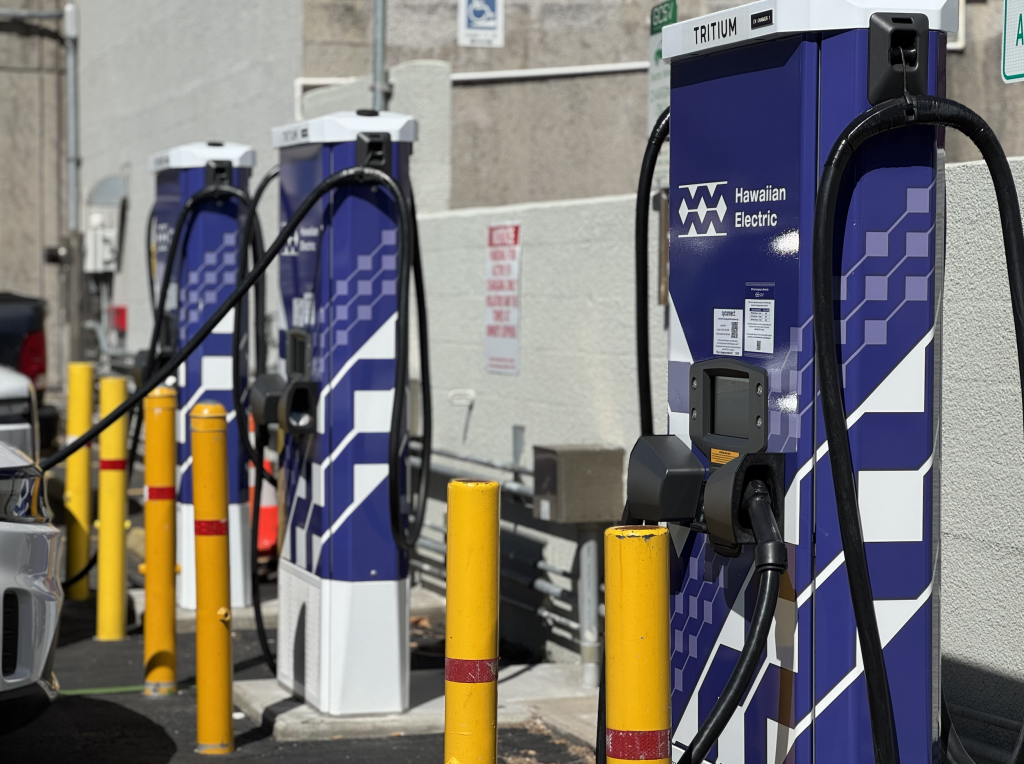
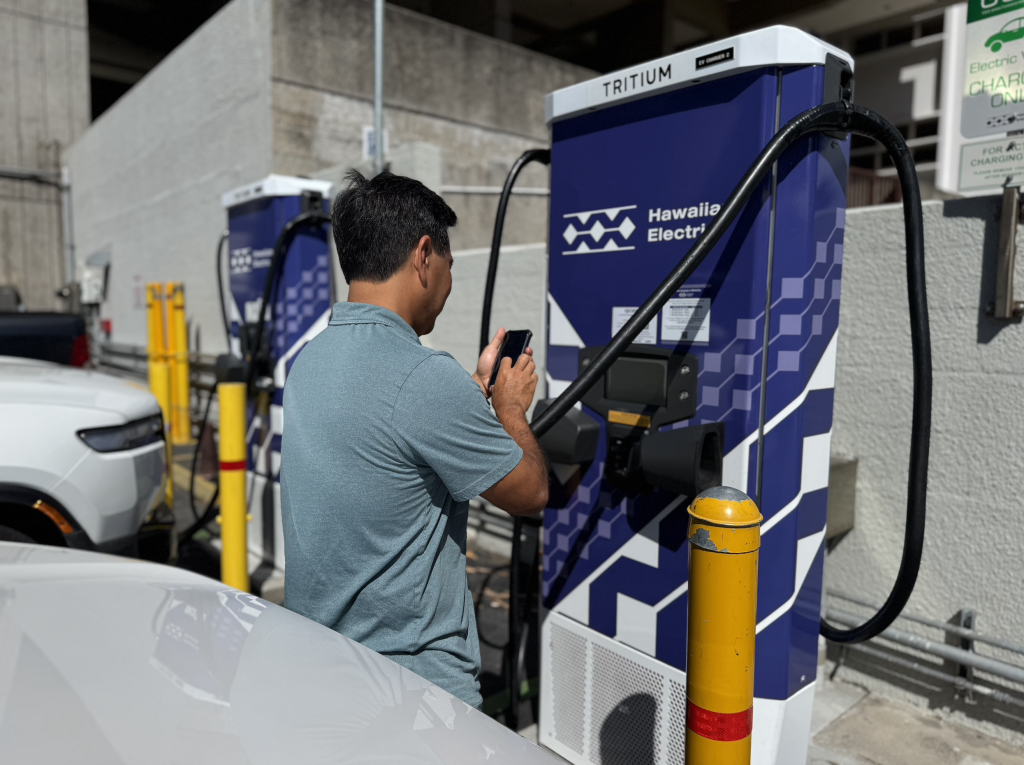
Hawaiian Electric is giving its electric vehicle fast chargers a new look with a company branded vinyl wrap as it continues to focus on charging station reliability to support Hawai‘i’s growing EV market.
The wrap, emblazoned with the Hawaiian Electric logo, was unveiled Wednesday at the company’s Ward Avenue EV charging location. Representatives from the Public Utilities Commission (PUC), the state Legislature, Hawai‘i Energy and Hawaiian Electric were on hand for the event, which included an update on work being done by Hawaiian Electric to support the electrification of transportation across its service territory. These efforts include:
- Building on a recent PUC order that removed the “pilot” designation from Hawaiian Electric’s public EV charging program.
- Upgrading equipment at Hawaiian Electric charging locations with state-of-the-art Tritium fast chargers to increase charging station reliability.
- Looking for opportunities to install additional fast chargers at existing Hawaiian Electric locations where there is sufficient space and electrical capacity.
- Improving compatibility with different models of EVs by adding NACS connectors at selected Hawaiian Electric charging stations to support the growing number of EV models being sold with NACS ports.
“Featuring the Hawaiian Electric logo celebrates our public charging network’s evolution beyond the pilot stage that began 12 years ago, reflecting the spirit of connection, reliability and progress for Hawai‘i,” said Aki Marceau, Hawaiian Electric’s director of electrification of transportation.
It is widely recognized that electrifying ground transportation will play an increasingly important role as Hawai‘i strives to meet its decarbonization goals. Ground transportation accounts for about 18% of total greenhouse gas emissions in Hawai‘i, according to a report from the Hawai‘i State Energy Office.
The number of registered EVs on Hawai‘i’s roadways has increased more than 10-fold over the past decade to nearly 40,000 today. Nearly every major automobile manufacturer now offers a fully electric or plug-in hybrid option in their vehicle lineup. The Hawai‘i Automobile Dealers Association reported that these two categories accounted for about 15% of Hawai‘i vehicle registrations in the third quarter of this year.
Electric vehicle charging is also becoming an increasingly significant share of Hawaiian Electric’s load. Charging on EV rates, such as those used by electric buses, the Hawaiian Electric public charging network and third party-operated public charging stations exceed 1.28 million kilowatt hours monthly. That’s equivalent to the average monthly energy consumption of about 2,500 homes. By 2027, EV charging is forecast to become as big as Hawaiian Electric’s third largest customer group by load.
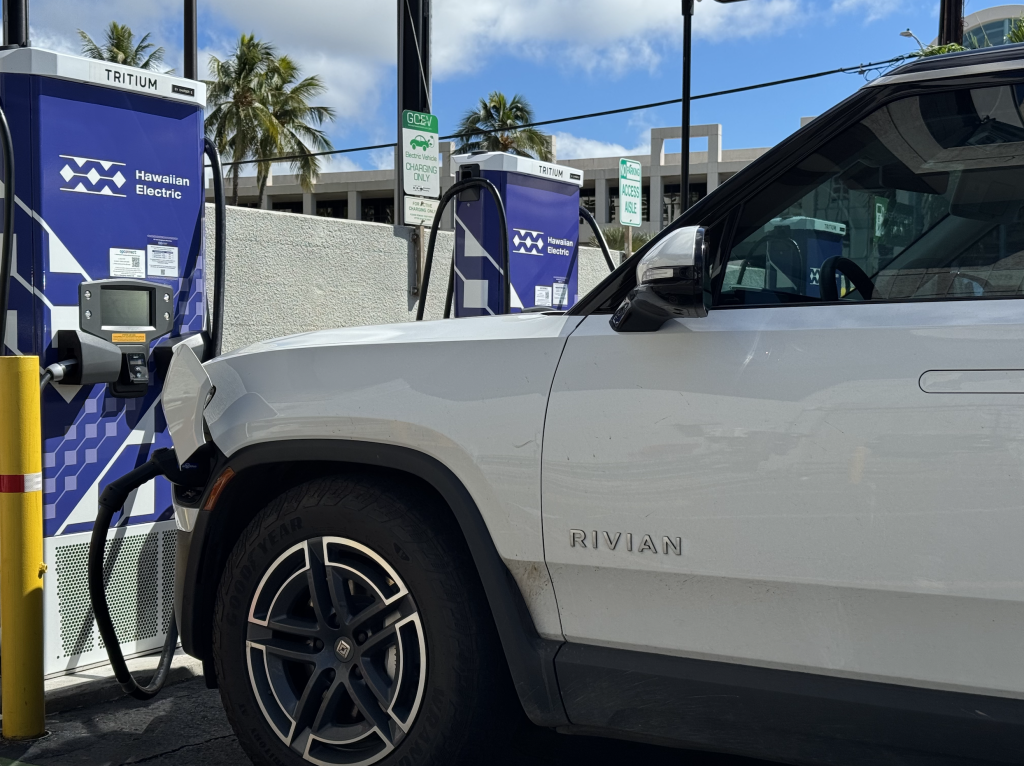
The PUC in June issued a significant order recognizing the progress Hawaiian Electric has made in developing its public charging program, launched as a pilot in 2013. The PUC removed the pilot designation and raised from 25 to 50 the number of metered sites at which the company can deploy fast chargers. Hawaiian Electric currently owns and operates 34 fast chargers at 26 locations on four islands.
In the meantime, Hawaiian Electric is continuing to replace its first-generation fast chargers, based on age and performance, with new Tritium RTM chargers that enhance the EV driver experience and increase charger reliability. The Tritium RTM seals out contaminants such as dust, salt, moisture and insects that can degrade internal components and reduce equipment life. The chargers also feature a modular power architecture that contributes to improved up-time and allows for fast and simple repairs in the field.
Hawaiian Electric also has begun adding a new connector type to some of its chargers to accommodate vehicles with NACS ports. It is estimated that by the end of 2025, some 70% to 80% of EV models will be sold with NACS ports, and the number is expected to grow.
Sponsored Content