


 Hawai'i Journalism Initiative
Maui Invitational faces challenges from Las Vegas college basketball tournament offering big money
For 42 years, the Southwest Maui Invitational college basketball tournament hosted by Chaminade University of Honolulu has been a prestigious early-season event drawing some of the top teams in the country.
But on Monday, the opening day of the tournament being played at the Lahaina Civic Center, a major announcement was being made on the Mainland. The Players Era Festival in Las Vegas entered into a name, image and likeness agreement with the Big 12 Conference for $50 million.
The plans call for the tournament, which also plays during Thanksgiving week, to expand to 32 teams over three weeks, with each participating team guaranteed $1 million to be split among players on each roster. The Players Era Festival started last year as an eight-team event and this year features 18 teams.
HJI Weekly Newsletter
Get more stories like these delivered straight to your inbox. Sign up for the Hawai‘i Journalism Initiative's weekly newsletter:
A new NCAA rule allows teams to play in early-season tournaments every year instead of being limited to playing in multi-team events like the Maui Invitational and Players Era Festival once every four years.
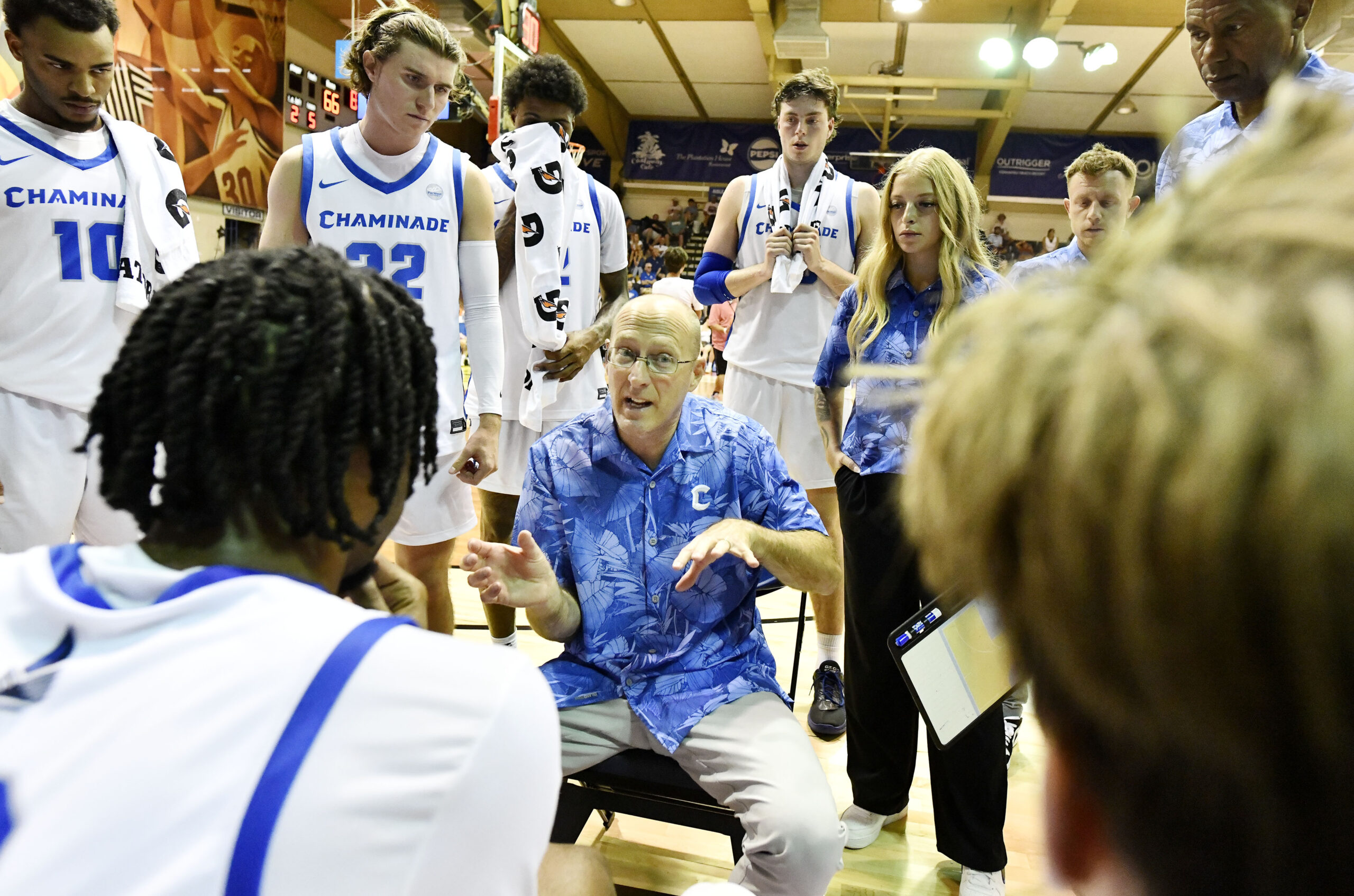
Chaminade coach Eric Bovaird said Sunday morning before the announcement that “there’s no secret that there’s other tournaments that are making a push, but I think that there’s nothing that can replace the Maui Invitational. The setting we have here, the experience that kids get when you come here.”
Bovaird added, “We’ve played all over. Nothing compares to this, and when the coaches come out here and they bring their teams, it’s something that their players will remember the rest of their lives.”
But money talks. Houston coach Kelvin Sampson told ESPN that his team returned to Las Vegas because “they’re giving us $1 million.”
“That’s why we’re there, and I would say that’s why all the teams are there,” Sampson said. “We didn’t sign up for this to have a tournament where we could play each other. We signed up for this because they’re giving us $1 million. If they decided to put a court down at some vacant lot and they’d give us $1 million, I’d go play there, too.”
The winner of the Players Era Festival also gets an additional $1 million.
Chaminade Athletic Director Dr. Tom Buning has contemplated dipping into the name, image and likeness model to help fund the 12 sports programs for the NCAA Division II school. That is a plan that is still developing, but would require some work with sponsors to fund the effort.
But so far Chaminade has been able to avoid delving into the world where fundraising has to deal with raising money for a roster as all NCAA Division I teams have done since 2021.
Buning acknowledged it may now become a necessity in order to compete for teams in the Maui Invitational. For Division II Chaminade, the Maui Invitational is important because it annually provides about $500,000 of the Silverswords’ $3 million athletic budget. The Maui Invitational does not currently provide teams with NIL money.
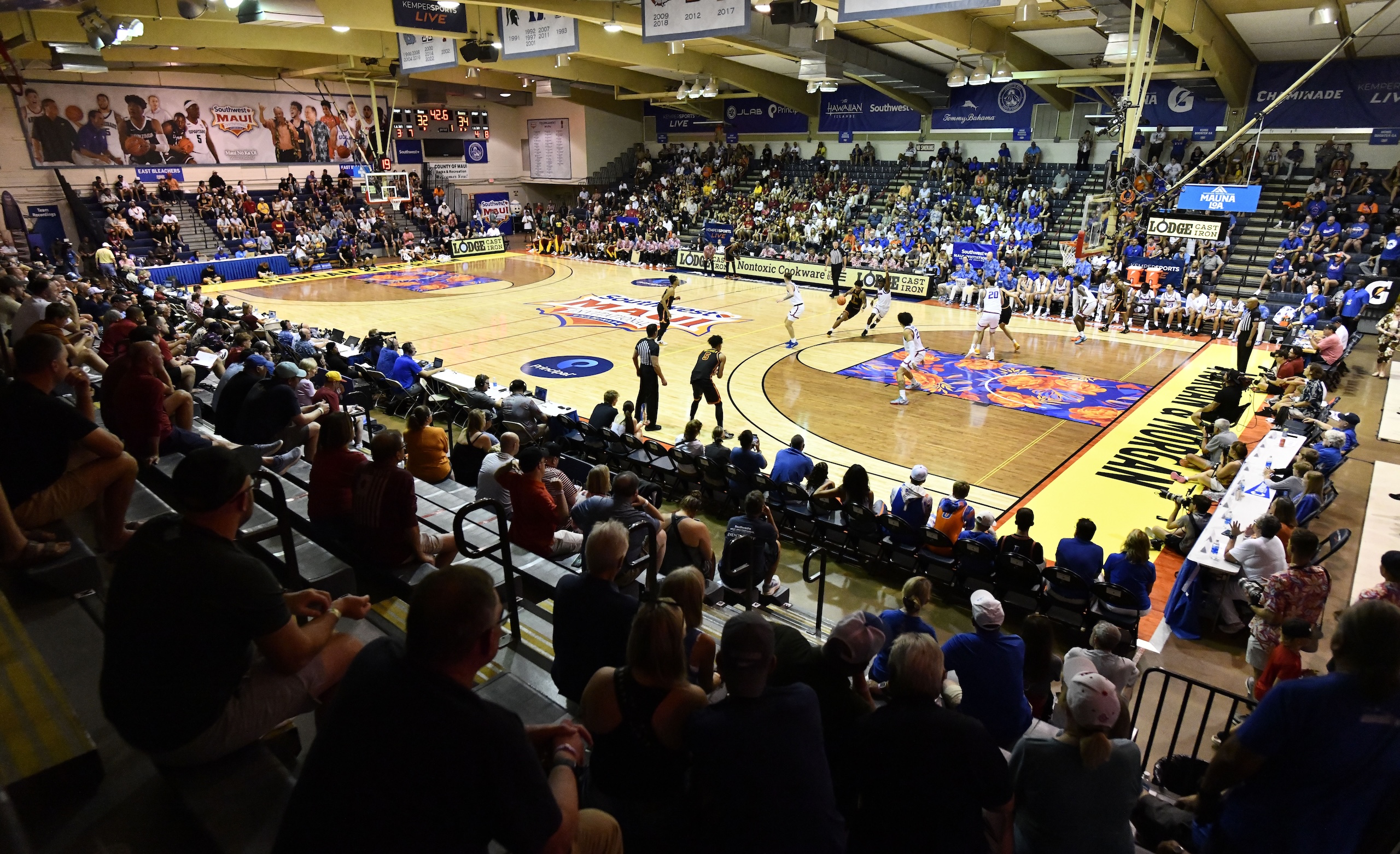
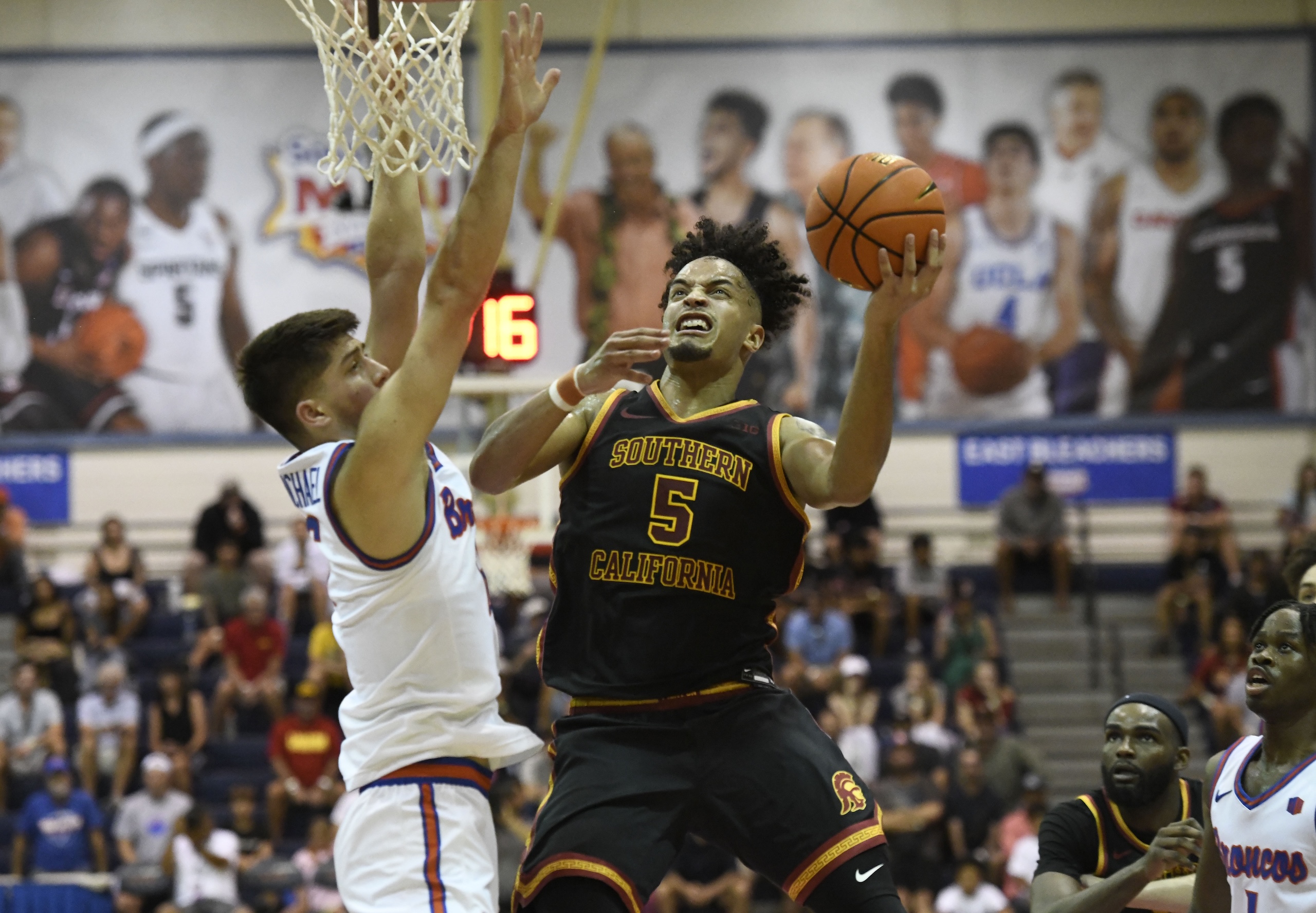
“Well, certainly we have such a great asset in the Maui Invitational, the history behind it, the love many college teams have for the experience they’ve had here,” Buning said as he sat courtside watching Southern California’s 70-67 win over Boise State in the second game of the tournament.
“We need to work to stay relevant and to make sure that we stay the premier basketball tournament. NIL is a new reality, and we can’t ignore it.”
In June 2021, the NCAA implemented an interim policy on name, image and likeness, or NIL, allowing student-athletes to make money from their personal brand.
Buning said officials of the Maui Invitational already are discussing what is needed to keep their event here strong.
“We’ve got to sit down and figure out how all parts of this organization and this event make things happen,” Buning said. “And I think the amazing sponsors that we have are probably smart about this reality, too. … All hands together. All hands on deck. We can come up with a solution that continues to make it both attractive for the teams and, more importantly, their fans.”
As participants at the Maui Invitational learned of the $50 million announcement Monday morning, they said playing here was a unique experience that has a long-standing traditional place in the landscape of college basketball.
Southern California head coach Eric Musselman was here for the 2022 Maui Invitational as head coach at Arkansas. He vividly remembers the loud atmosphere of the 2,400-seat Lahaina Civic Center.
“This environment can prepare you for the NCAA Tournament with the way that the field is set up, with the intimacy of the gym and loudness; it’s pressure filled,” Musselman said, adding that all 12 games are being televised on ESPN. “Got a great TV network that covers it. So from a national exposure, you don’t have to go through 25 TV stations; we know what it’s on, which makes it easy on my mom to know what TV station we’re on.”
Over the past three tournaments, 14 teams have been ranked in The Associated Press top-25 during the tournament, including last season when No. 2 Connecticut, No. 4 Auburn, No. 5 Iowa State and No. 12 North Carolina were in the field.
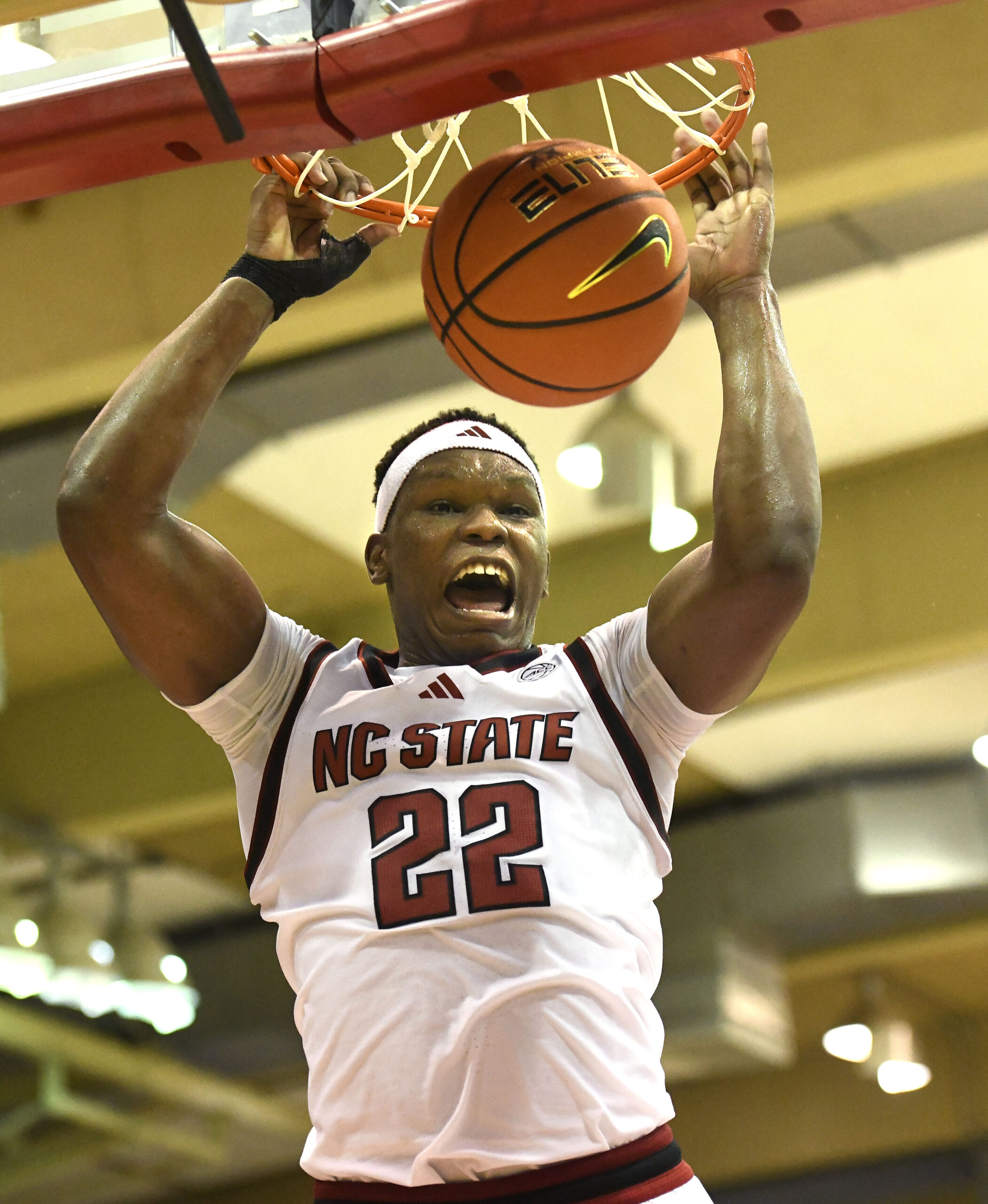
But this year, only North Carolina State, at No. 23, came to the Maui Invitational ranked in the top-25. But on Monday morning, the Wolfpack was upset 85-74 by Seton Hall in the first game of the tournament.
Later on Monday, Southern California edged Boise State 70-67. In the third game of the day, Chaminade fell 90-85 to Washington State. In the finale Monday night, Arizona State edged Texas 87-86.
Today’s schedule is N.C. State vs. Boise State at 9:30 a.m. and Chaminade vs. Texas at 5:30 p.m. in the fifth-place semifinals. In the championship semifinals, Seton Hall faces USC at noon, and Washington State takes on Arizona State at 3 p.m.
“We love it,” Musselman said of the tournament. “We got here and our guys got to experience a little bit of Maui, and then yesterday afternoon it was all about basketball, which is all it’ll be about from here until we go back home.”
That experience included some players who had never been in the ocean before trying out surfing.
“We’ve kind of approached this thing much like we do for an NCAA Tournament where we don’t put our guys on lockdown,” the Trojans coach said. “They’re not in the hotel 24/7. We want them to experience stuff and have some looseness to them and not be too uptight.”
Musselman said Maui simply has a draw that cannot be duplicated anywhere else.
“It’s a great life experience for all of our players, and it’s incredible for families,” he said. “It’s incredible for boosters and alumni that want to come and get a vacation over a holiday and see great basketball. To me, it’s awesome.”
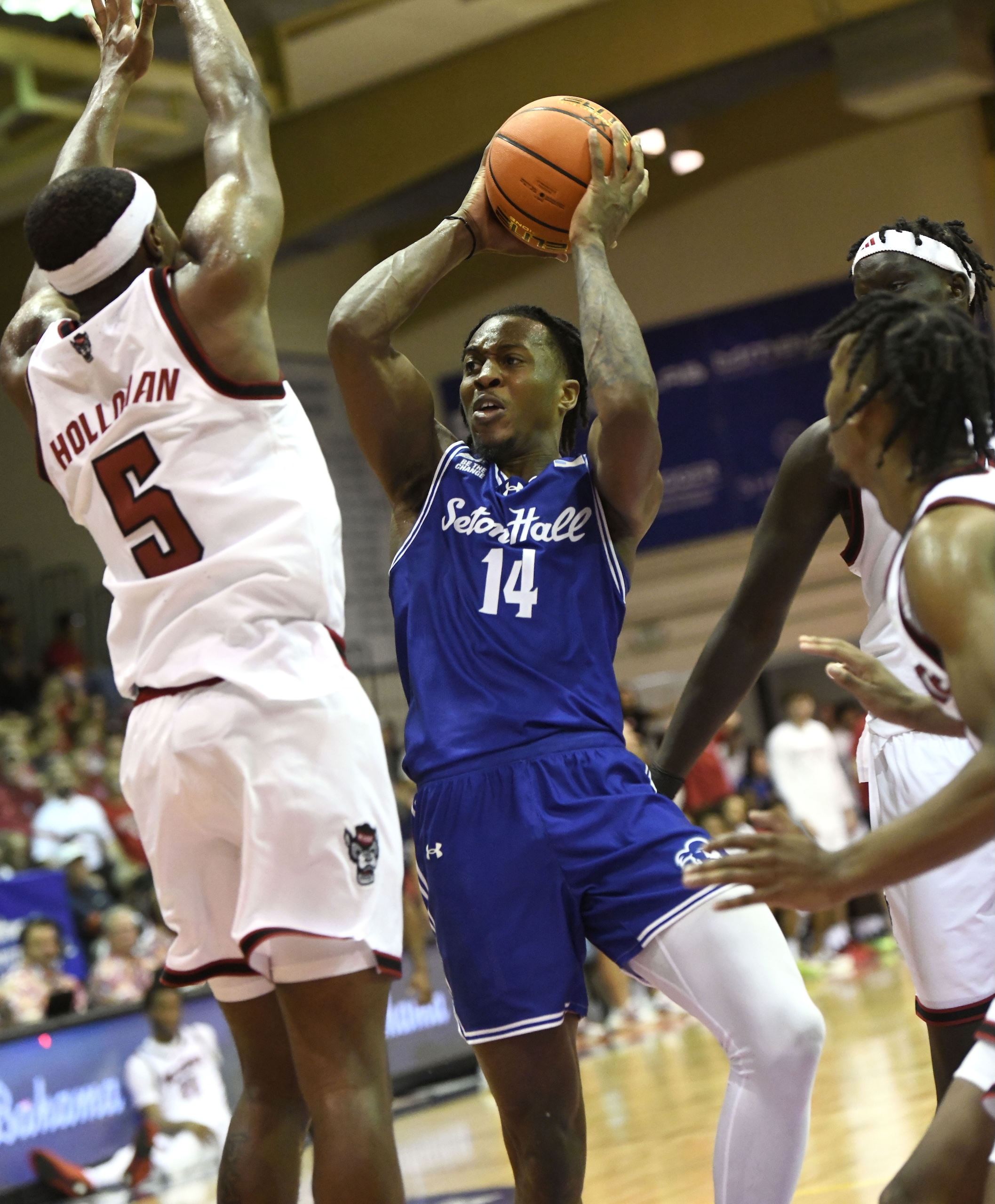
Seton Hall coach Shaheen Holloway heard about the Players Era-Big 12 announcement for the first time in his post-game press conference after his team’s win over North Carolina State.
“That’s big time. … I don’t know too much about the politics of college basketball right now,” Holloway said. “I just try to worry about us. … We’re happy to be down here. This is a great experience for us, great experience for those young men that will probably never have a chance to be somewhere like this again.”
Nelson Taylor, the tournament director since 2019 for tournament operator Kemper Sports Live, said another new NCAA rule taking effect next year that caps all NCAA teams to a 32-game regular season is another piece to the “48-piece puzzle” of putting together the best plan for the Maui Invitational.
Prior to the schedule rule change, teams were allowed to play three games on Maui that were exempt from the previous regular-season limit of 31 games. Now that exemption will no longer apply.
“We’ll continue to evaluate the tournament and make sure that we’re putting together the appropriate field style of play and number of games that teams are looking for to keep it in this great spot here,” Taylor said.
When asked directly if the Maui Invitational is going to go to an NIL-type of plan to pay teams to play here, Taylor said: “We always have said that we are going to make the best decision for the tournament moving forward to make sure that we maintain the preeminent spot during Feast Week (high-level nonconference games and tournaments around Thanksgiving).
“And NIL is one component of a plethora of decisions that go into schools and the events that they choose to participate in.”
Arizona State, Washington State and Boise State replaced Oregon, Baylor and UNLV this season as the latter three teams ducked out of the Maui Invitational over the last year to play in the Players Era Festival this week.
The 2026 Maui Invitational field includes Arizona, Brigham Young, Clemson, Colorado State, Mississippi, Providence, Virginia Commonwealth and Washington.
Taylor said the 2027 field also is set, but has not yet been announced. The tournament contracts between ESPN, Maui County, Kemper Sports Live and Chaminade run through 2030, according to Taylor.
“Scheduling now turns out to be like a 48-piece puzzle,” Taylor said. “And we’ve got to make sure all of the pieces fit together and just make sure that we’re still doing the right things for the tournament.”
David Riley, the 36-year-old head coach at Washington State, jumped at the chance to fill the void.
“This is a tournament I grew up watching,” Riley said. “I remember sneaking out of school or missing class so I could watch Gonzaga play back in, must have been 2005, 2006. … There was never a doubt we were going to jump at the chance to play here.”
Holloway added that the whole landscape of NCAA basketball is far from settled.
“I don’t want to speak for the tournaments and stuff like that, but everything right now is adjustments. You’ve just got to adjust to everything,” Holloway said. “Everybody has got to try to figure it out.”
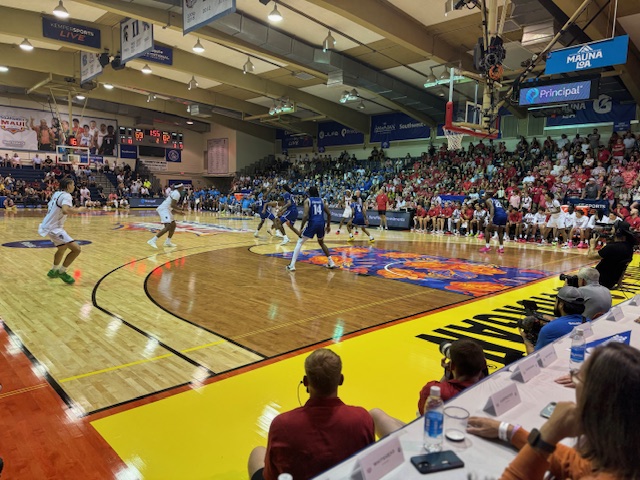
Holloway said that his booster group is enjoying the Maui experience, one thing that the Maui Invitational can offer that Las Vegas and the Players Era Festival cannot.
“Seton Hall travels very well. Our boosters travel very well any time we go somewhere,” Holloway said. “Everybody thus far is enjoying it. I’m down here for business. I know everybody else is down here to kind of hang out. But my team and I, we’re down here for business. This is just the first step in our journey.”
Buning is confident the Maui Invitational will endure. It has been one of the leading early season tournaments since moving to Maui following the first event in 1984 at Konawaena High School on Hawai‘i island.
“The experience these athletes are getting here cannot be duplicated,” Buning said. “Vegas and lights, camera, action, and Hollywood and money, those things have kind of been synonymous with that town for a long time. But there’s something that’s really homegrown and special about this event that I think we all have a vested interest in making sure it stays relevant and the top of the heap.”