


 Hawai'i Journalism Initiative
Conservationists want to restore cloud bridge that once brought rain to leeward Haleakalā, Kaho‘olawe
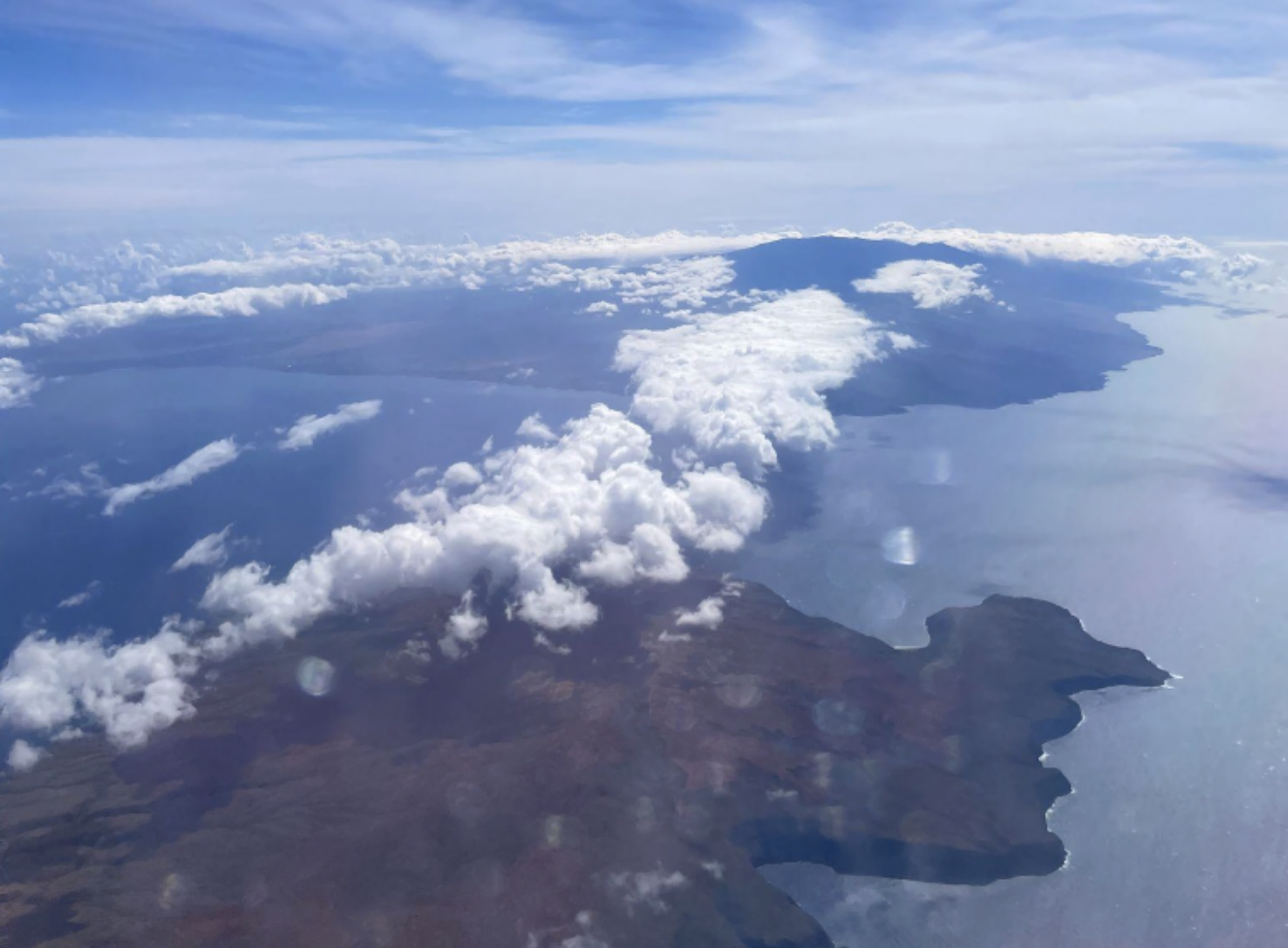
While on a recent flight home, CJ Elizares took a photo of fluffy white clouds in a line over the channel between Maui and the nearby island of Kaho‘olawe.
The view reminded Elizares of the celestial feature known as the nāulu cloud bridge that once existed prominently between the two islands, generating rainfall to replenish the earth.
HJI Weekly Newsletter
Get more stories like these delivered straight to your inbox. Sign up for the Hawai‘i Journalism Initiative's weekly newsletter:
But as forests were cleared for ranching and the U.S. military decimated Kaho‘olawe’s landscape with bombing exercises, that cloud bridge diminished, and with it the rains.
That’s why Elizares, a cultural practitioner with the Protect Kaho‘olawe ‘Ohana, and other community members are working to restore the land in hopes the cloud bridge — and the abundant rain it brings — will return.
“We’re trying to, just like this bridge, figure out connectivity between our different organizations … and how we can make a continuous bridge not only in the sky with the clouds and the water, but through our networking and collaboration as partners on land,” Elizares told a Maui County Council committee earlier this month.
Nāulu is the name of both a wind and rain, referring to a sudden passing shower. It starts when the wind pushes the evaporation off the ocean’s surface onto the land, Elizares explained. The heat from the land in Kaupō and Kahikinui then drives it up the steep cliffs of Palikū, where the water starts to congregate as a cloud that then comes over Honua‘ula, a moku (district) of Maui that covers the island’s southwest flank.
Kaho‘olawe was never known for an abundance of water, but reports from the 19th century mentioned a “dense forest” at the top of the island and a cloud bridge that connected it to the slopes of Haleakalā, according to the island’s restoration plan. Kūpuna recalled tradewinds bringing nāulu rains that accounted for some of the dry season rainfall.
But over time, the environments on both sides of the cloud bridge have undergone drastic change, impacting the ability of the landscape to coax moisture out of the air.
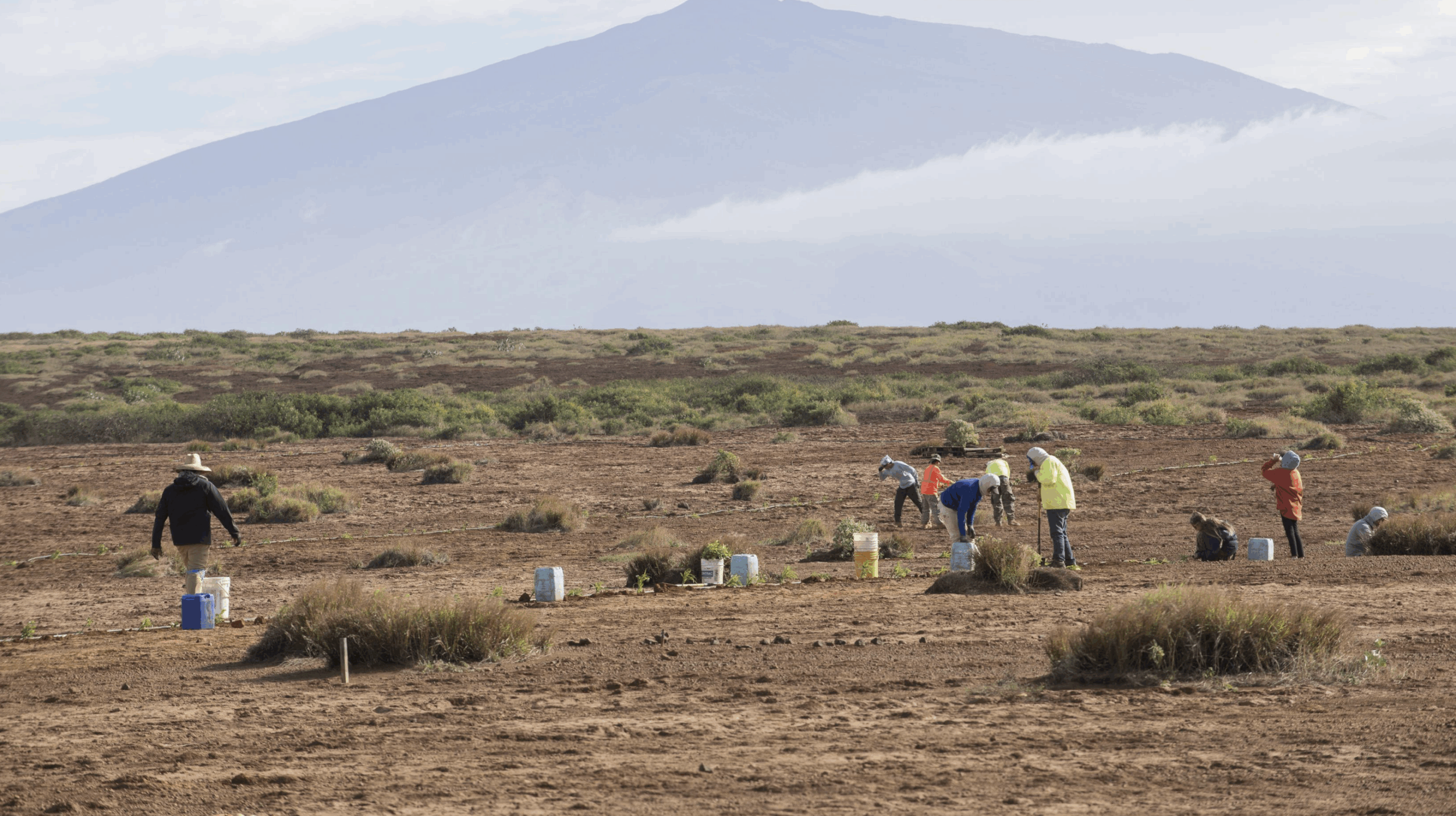
On Kaho‘olawe, the introduction of goats at the end of the 18th century and the ranching of sheep and cattle in the 19th century led to overgrazing and erosion. Efforts were made to plant trees and eradicate goats, but when the Japanese bombed Pearl Harbor in 1941 and the U.S. entered World War II, the military declared martial law and seized all of Kaho‘olawe, bringing restoration work to a halt.
For decades, the goat population thrived while the Navy’s target practice decimated the land. Following protests and litigation by the Protect Kaho‘olawe ‘Ohana in the 1970s, the Navy struck an agreement with the state to begin soil conservation, revegetation and goat eradication programs.
Foresters and community groups spent years putting plants back into the soil, but bombing didn’t officially stop until 1990. The Navy returned the island to the State of Hawai‘i in 1994.
Restoration work on the barren island is careful and limited with some areas still not fully cleared of unexploded ordnance.
The Kaho‘olawe Island Reserve Commission, which was established in 1994 to manage activities on the island, says in three decades of restoration efforts about 25,000 volunteers have helped put 500,000 native or Polynesian-based canoe plants into the soil. But full restoration is still years away.
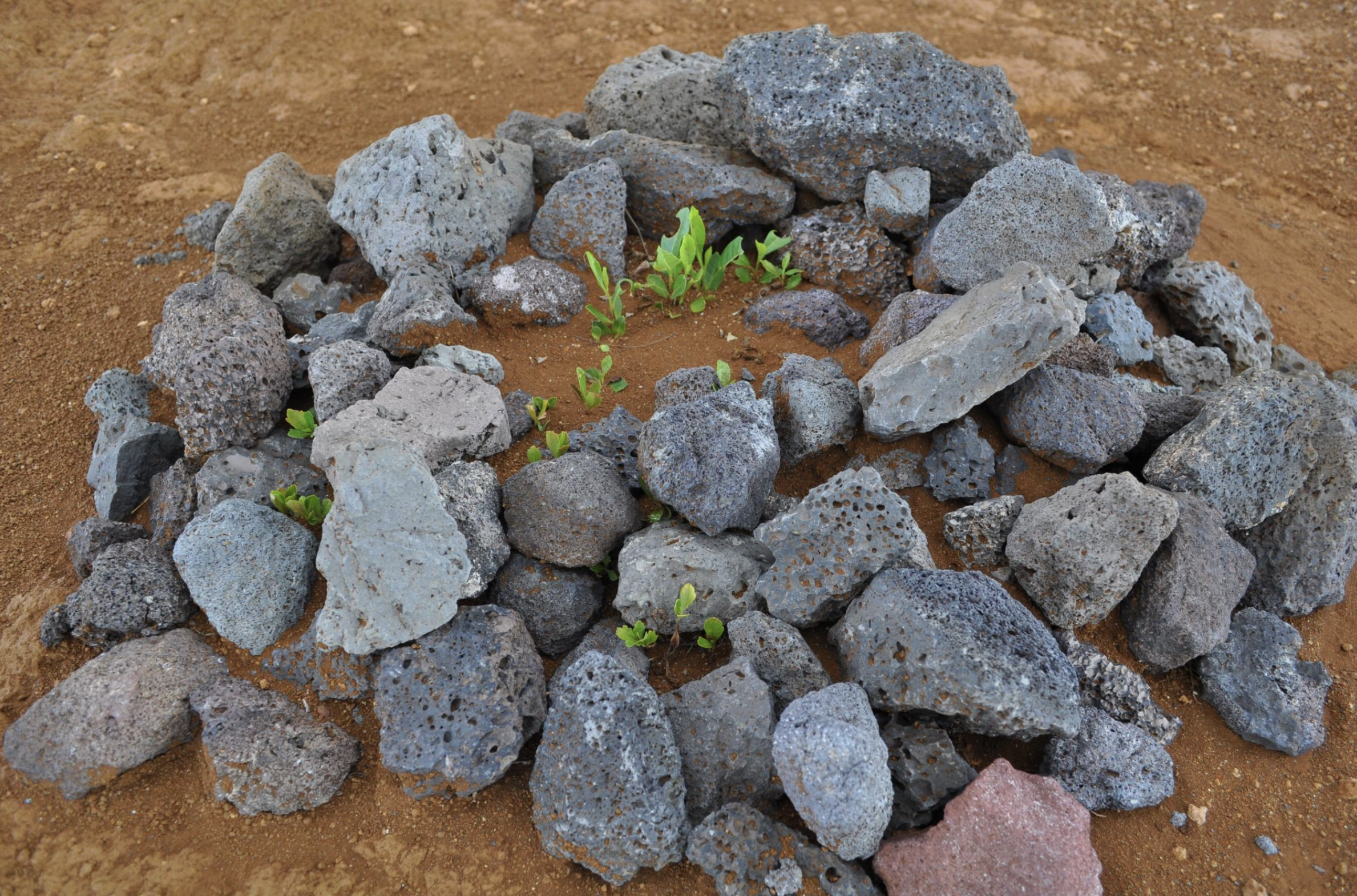
Paul Higashino, a natural resources specialist with the commission, said the island’s hard-pan landscape that feels as solid as asphalt and the unexploded ordnances make it difficult to dig deep. In some places they’ve resorted to ancient techniques: piling up rocks, tossing in a few seeds, occasionally watering and letting nature run its course.
Staffing constraints also have forced the commission to cut back volunteers from 800 to 1,000 a year to 400 or 500.
The commission currently is working with Maui County to create a water development plan for the island, with the hopes of getting funding to put more plants into the ground and restore the cloud bridge.
Higashino, who’s been working on Kaho‘olawe since 1978 when he was a military contractor, said even before the Navy arrived “the island was gone” because of the impacts from cattle, sheep and goats.
“What happened to Kaho‘olawe is happening to all the other islands,” Higashino said.
Across the channel, Maui’s leeward slopes also are contending with challenges, said Andrea Buckman, executive director of the nonprofit Uhiwai o Haleakalā. They include feral animals like axis deer and pigs that uproot native species; strong winds that can bring diseases like rapid ‘ōhi‘a death; and fires that devastate the landscape and open the door for more invasive species, especially those resistant to drought.
Buckman said only about 5% of native forest remains on leeward Haleakalā, describing the biodiversity losses as the “epicenter of extinction in the Pacific.”
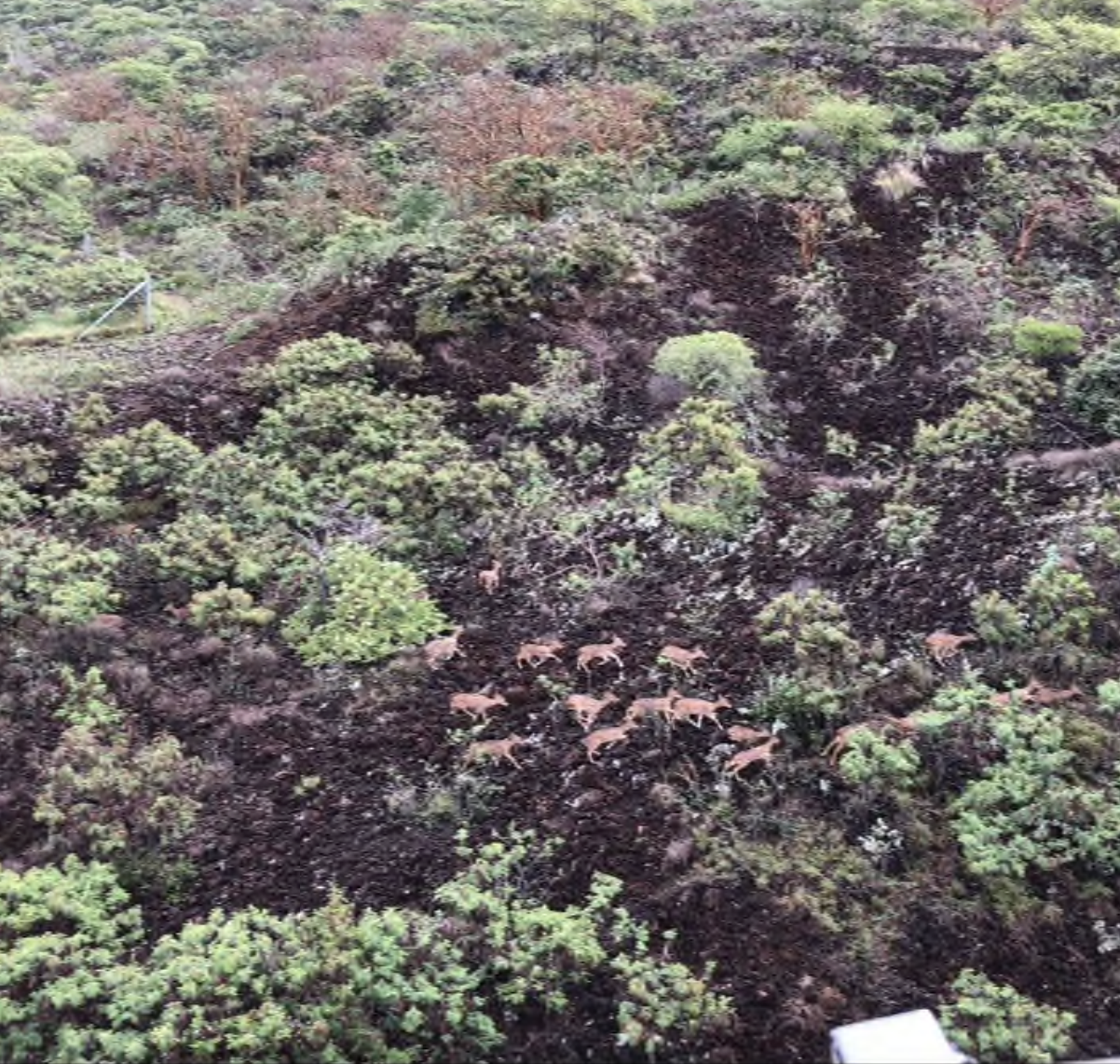
The disappearance of forest cover has led to erosion and sediment that clogs streams and rolls in sheets down the mountainside into nearshore waters, disrupting reefs and impacting roadways.
The less stability in the forest, the “more and more exposed and less resilient” it becomes, Buckman said. “But there are some good things … and we need to hold on to what we can.”
One of those success stories is the Auwahi Forest Restoration Project, which was founded by Art Medeiros in 1997 to restore the dryland forests of leeward Haleakalā. The project started on 10 acres and expanded to two other plots of 23 acres apiece that have become havens for native species rarely seen anywhere else. Within 15 years, native shrub cover increased from about 3% to nearly 82%, while non-natives declined from more than 75% to just above 3%, Medeiros and other researchers noted in 2014.
Buckman said the project proved “you can convert degraded pasture land and really decimated native forest back to a native dominated ecosystem. … It takes a lot of work, a lot of volunteers, a lot of community, a lot of diligence. Starting small is important.”
In 2003, 11 public and private landowners of more than 43,000 acres joined forces as part of the Leeward Haleakalā Watershed Restoration Partnership to restore dryland forests between the 3,500- to 6,500-foot elevation level. Buckman said the effort led to 12,721 acres fenced and protected by 2019.
Uhiwai o Haleakalā, whose name refers to the “heavy mist that rises from the ocean and settles on forest leaves in the afternoon,” was formed in 2018 by a group of experienced conservationists to help fill gaps in resources for reforestation efforts on leeward Haleakalā.

Reforesting the mountain and restoring the cloud bridge is a team effort between organizations like Uhiwai and landowners like Ka‘ono‘ulu Ranch, which has worked to remove invasive wattle and fence off areas.
Buckman said the goal is to replace the invasives with native plants, but it’s going to take a long-term effort. With one species currently dominating the area, there’s not a lot of understory plants to capture the rainwater needed to replenish the aquifers below ground.
The nonprofit also works with the state in places like the Kanaio Natural Area Reserve, where more than 119 acres of invasive weeds have been cleared to help preserve the remaining remnant of native dryland forest.
And, the nonprofit teams up with private businesses like KIA Hawai‘i and Maui Nui Venison to assess ungulate population and turn axis deer destroying leeward Haleakalā into food for the community.
The work isn’t cheap. The organization wants to put more than 80,000 plants into the ground, with 800 to 1,000 seedlings for 1 acre costing $5,600 to $7,000. One day trip for a crew of six with seedlings can total $16,000; one week-long trip by helicopter can cost $30,000.
Akua Po, board member of Uhiwai and long-time resident of Kahikinui, said in order to produce a viable amount of native plants to propagate and put into the ground, they need resources like water, electricity and a large greenhouse, as well as stable funding and long-term leases to support the work.
“The more trees we have, the more water falls, the better for the land,” Po said. “It’s as simple as that.”
In Kahikinui, the Hawaiian homesteading community is eager to support an Uhiwai reforestation project on 4,500 acres. Elama Farm, president of Ka ‘Ohana o Kahikinui, called it “a tremendous opportunity to restore a huge portion of our mountain” and produce a more sustainable water source. With the help of state and federal resources, the community is trying to harness more of the moisture in the air through a fog drip system.
Maui County Council Member Gabe Johnson, who chairs the Agriculture, Diversification, Environment and Public Transportation Committee that hosted discussion about the cloud bridge, called it a “generational, historical undertaking.”
“There is hope for healing if we look at this holistically and recognize the indigenous knowledge of our natural systems and our human place within them,” Johnson said. “If we consciously steward the land and restore our trees and forests, there is hope that the cloud cover will grow as well and bring life-giving rains that are so needed.”

He said he wanted the council and administration to understand the type of work that’s at stake and why he may put in a big ask, potentially “in the millions,” when county budget talks roll around.
“You’re trying to … untie the knots of just mismanagement for years and years and the compounding of just not taking care of the ‘āina,” Johnson said. “If we would have done it in the beginning, it would have been a whole lot cheaper.”
But, Johnson said, “if we don’t do it, the cost is even more expensive.”
Elizares and other cultural practitioners are putting in a different type of ask. There are currently three rain ko‘a, or shrines, on Kaho‘olawe, and another on Maui at the Pu‘u Mahoe cinder cone in ‘Ulupalakua. Together, their function is to “call back the rains of the past” and disperse it across the islands, according to the Kaho‘olawe commission.
Since 1997, traditional rain ceremonies have been held on Kaho‘olawe, typically in October, Higashino said.
“The cultural end is not very different from the scientific end,” Elizares said. “If we keep on saying water is life, then we need to recognize these things.”