



 Hawai‘i Journalism Initiative
‘Ohana Strong’s mission to save clothes and toys helped save its volunteers, too

In 2017, when Kristy Kahae and her family of seven were living out of their Honda Odyssey on Maui, a local clothing exchange operating out of a Kīhei church came to their rescue.
The family picked out clothing, toys, blankets, towels — “everything that we needed to live in our van,” Kahae said.
HJI Weekly Newsletter
Get more stories like these delivered straight to your inbox. Sign up for the Hawai‘i Journalism Initiative's weekly newsletter:
All of it was free from ‘Ohana Strong, a nonprofit created the year prior in 2016. The exchange offers a place for community members to donate new and gently used items that others could take at no cost.
There are no rules about how much a person has to bring, or how much a person is allowed to take.
“It all balances out,” co-founder and Executive Director Melissa Eisenhart said.
Today, Kahae’s family lives in a home in Wailuku, and she’s one of the longest-running volunteers with the organization.
“It was a beautiful ‘ohana that we were able to come into,” Kahae said during a giveaway event in Wailuku shortly before Christmas.
Since it started a decade ago, ‘Ohana Strong has helped more than 1,000 families, including the volunteers behind the scenes who drive the small grassroots organization.
Eisenhart said providing for a family’s basic needs has a ripple effect. It reduces stress in the household, which decreases the chances of domestic violence and allows parents to be more present with their children. That in turn helps kids do better in school and social settings. And, when families don’t have to stress about affording basic goods, they can put the money towards rent and save for a home — which in Maui County reaches a median price of $1.15 million — or an emergency expense.
“If we can take that little bit of stress away from them and help them out, then that’s what matters,” Eisenhart said. “And then at the same time, we’re making sure that we don’t add to the overconsumerism and needless waste of things going to the landfill.”
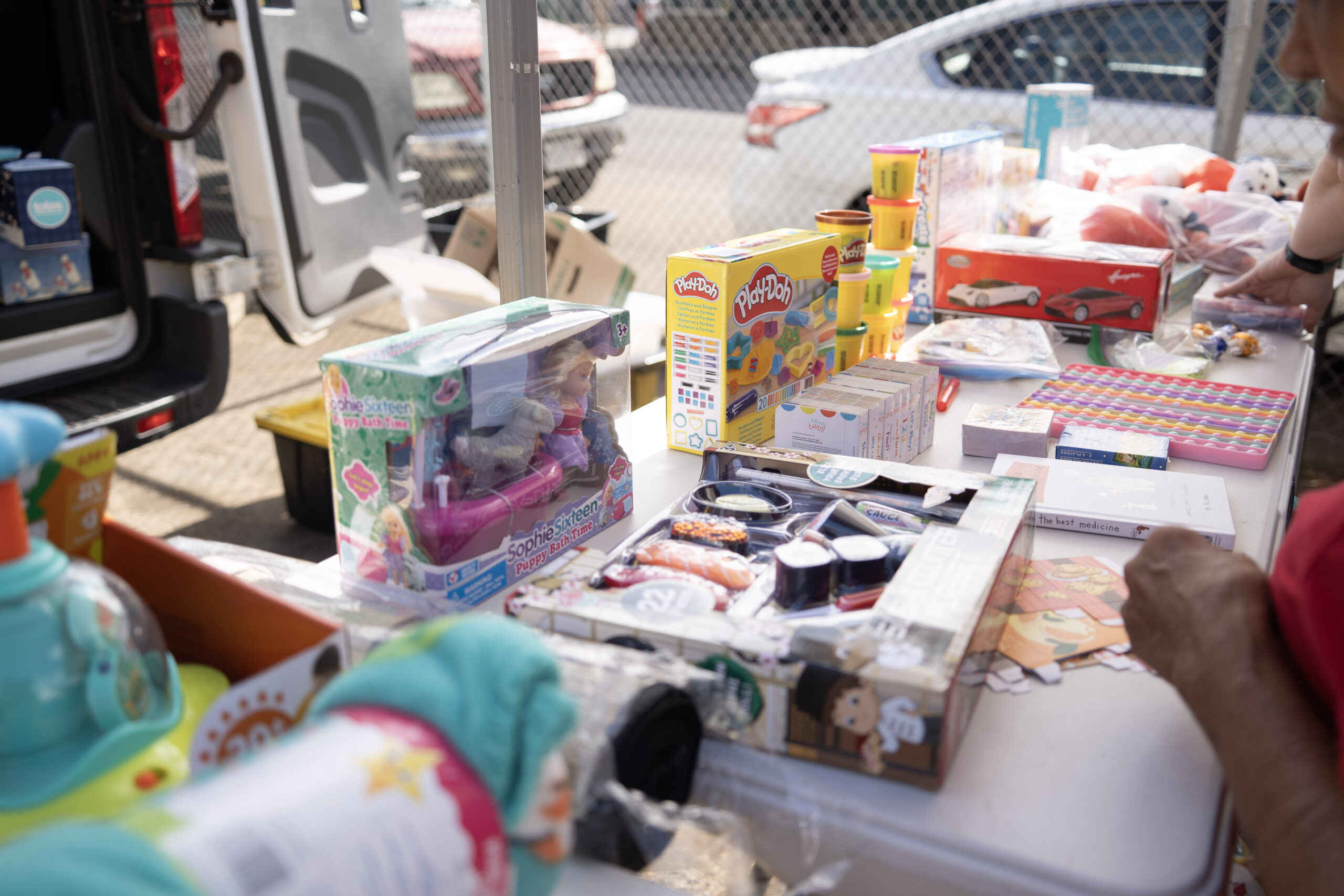
‘Ohana Strong operates out of Kīhei Lutheran Church, where every second Saturday of the month from 9 to 11 a.m., it collects and shares donations of clothing, toys, games, baby items and other materials.
The two main tenets are supporting Maui families and sustainability — “making sure that everything … lives its entire lifespan before it ends up in the trash,” Eisenhart said. “Everything can be reused, repurposed, given away, traded.”
Last year, the organization saved more than 1,000 pounds of items a month from ending up in the landfill.
Any clothing that can’t be worn goes to places like the Maui Sewing Hui, which can shred the material and use it for other projects. ‘Ohana Strong also works with five different homeless outreach organizations to make sure unsheltered people have access to the donated clothing.
‘Ohana Strong also holds “mobile enrichment exchanges,” where it brings toys, books, games, puzzles and other items kids would enjoy to a location for families to drop off donations or take what they need. The organization held three events at Twin Falls this year and has another four slated for the same spot next year. It also plans to do mobile clothing exchanges in 2026.
The organization also recently expanded to sports equipment, giving out 150 cleats to Little Leaguers, in addition to brand-new baseball pants donated by Perfect Game.
The goal is to eventually open a regular storefront with free goods and expand mobile events to places like Hāna, Moloka‘i and Lāna‘i.
Over the last few months, ‘Ohana Strong has taken some hits as donations have declined in the wake of the 2023 wildfires, and the federal shutdown in October led to the end of the grant that helped fund Eisenhart’s $2,000 monthly salary. The organization had been seeking additional funding so Eisenhart could make it her full-time job.
‘Ohana Strong isn’t the only one feeling the pinch. Eisenhart and her volunteers also see the need in the community at a time when federal food assistance benefits were recently cut during the federal government shutdown, leaving thousands of Maui families in the lurch.
Eisenhart is especially mindful of families in the “ALICE” bracket, which refers to asset limited, income constrained, employed people who have a job and income above the federal poverty level but can’t afford basic costs in the county where they live. Statewide, that was 52% of all families in 2023, the latest year for which data is available. In Maui County, it was 54%, the second highest of the four counties.
Eisenhart said “that’s way too many families” who could be just a paycheck away from losing their housing.
Earlier this month, she and volunteers like Kahae set up shop next to Feed My Sheep’s weekly food distribution in Happy Valley and helped people pick out clothes and toys for free, one of ‘Ohana Strong’s 12 outreach events during the holidays.
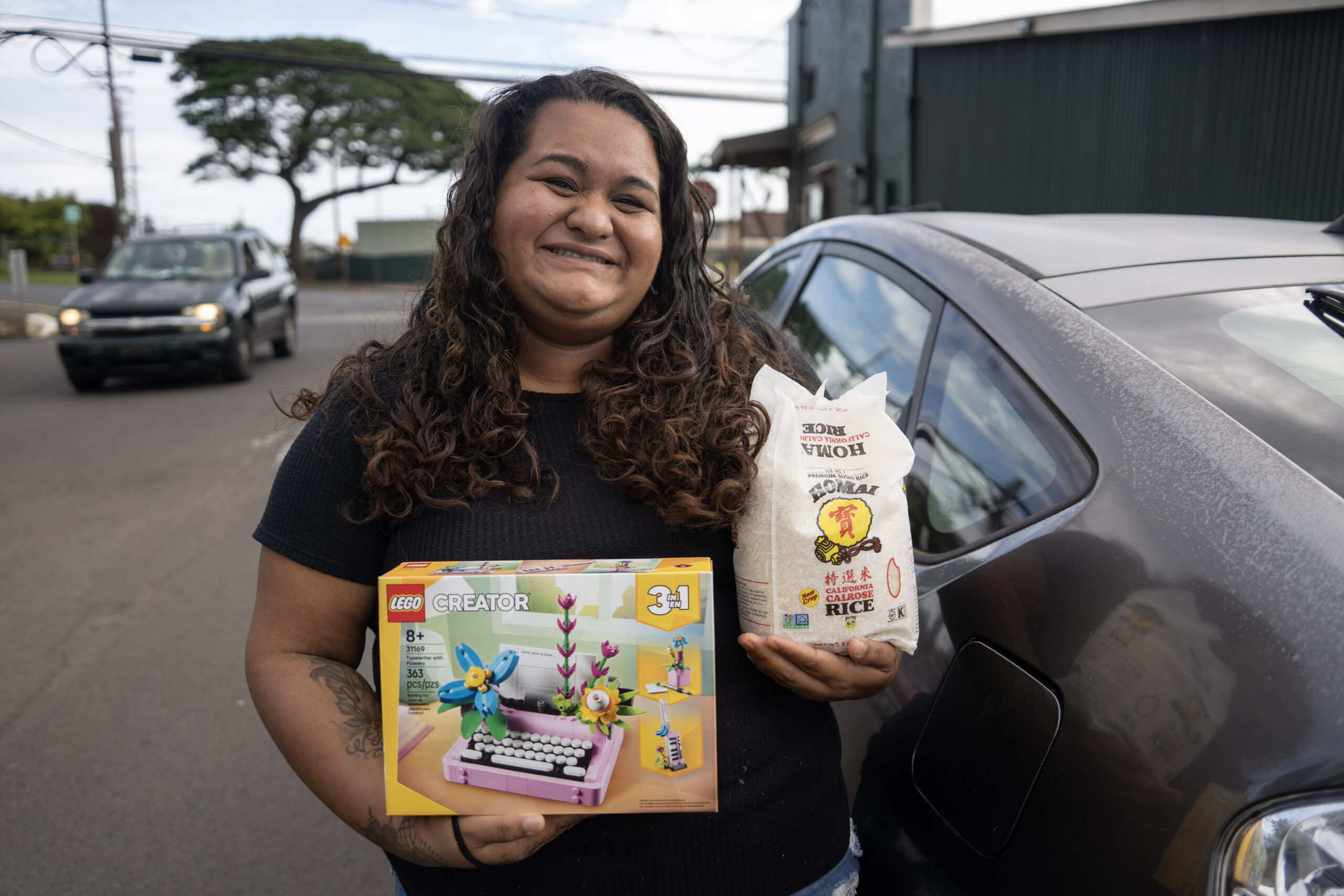
Anytime Eisenhart needs help, Kahae said she’s there to help families who were in the same spot she was in, “and just trying to be that voice out in the community that there are resources out there. You just have to look for it.”
Kahae’s family was living in Washington state when the blockbuster Disney movie “Moana” was released in 2016. Watching the young daughter of a Polynesian chief following the path of her ancestors, the family felt a similar kāhea, a call to come back home.
“We were getting homesick like every year. It’s a major culture shock,” Kahae said of life on the continent.
The family sold nearly everything they had so they could move back to Maui. But after the housing they’d planned to move into fell through, they ended up out on the streets. Kahae’s husband worked nights so he could be home during the day and take the kids to school.
Nonprofits like ‘Ohana Strong helped pull the Kahae family back on their feet. With five kids ages 15 and younger, they outgrew things fast, and ‘Ohana Strong created the perfect place to find what they needed and leave what they didn’t.
Child and Family Services and Family Life Center helped the family get into a three-bedroom, one-bathroom home in Paukūkalo around 2020. During the pandemic, they got stuck indoors for months as Kahae worried about leaving the house with her youngest child, who was anaphylactic. The community came through again, dropping by with food and clothing as needed.
Now Kahae finds purpose in giving back. In addition to helping ‘Ohana Strong, she volunteers with Living Way Church, her home congregation, and helped feed displaced families after the 2023 Lahaina wildfire.
“I like outreach work because I was there once before, so I know how it is and I know the people, I’ve made those relationships,” Kahae said.
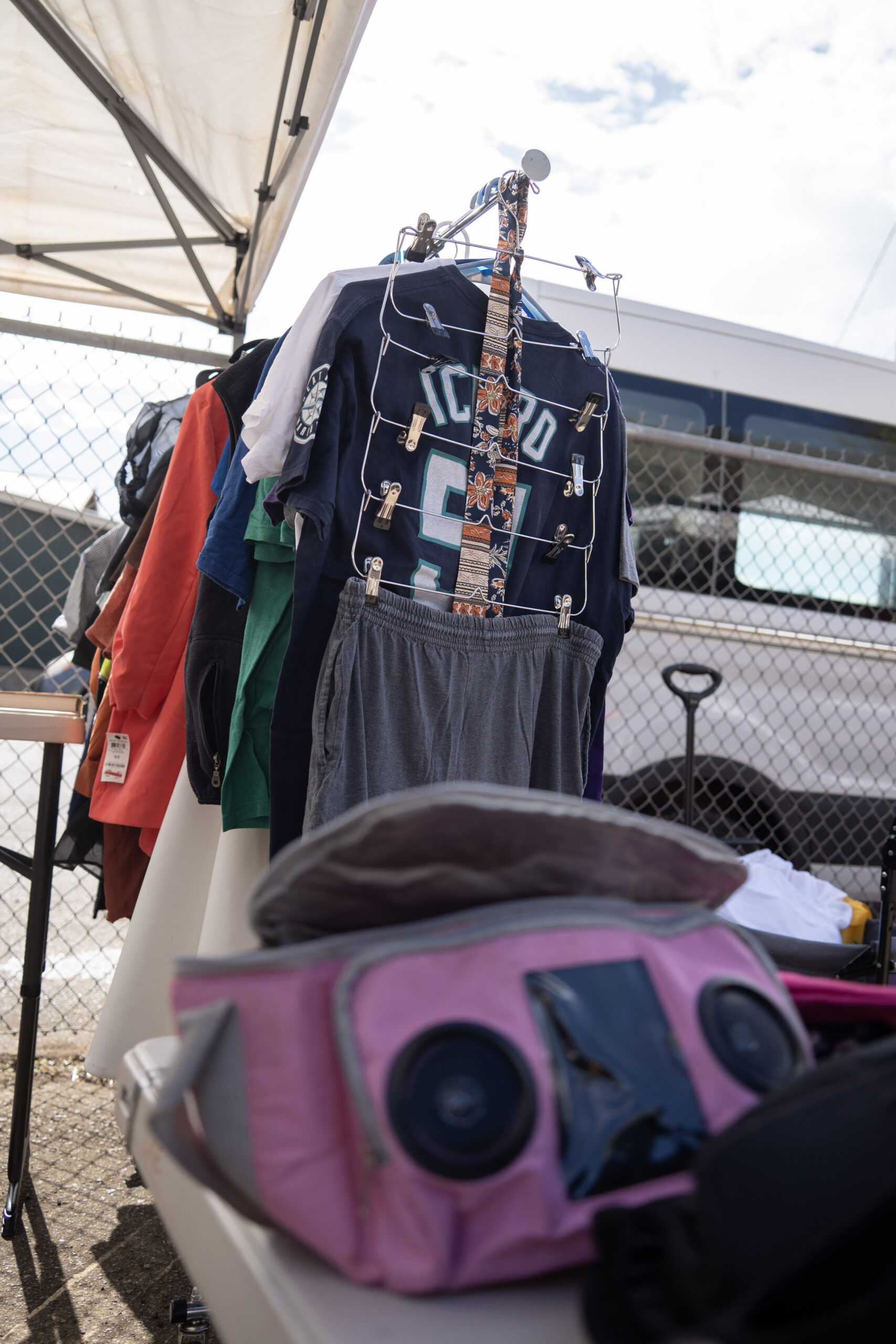
‘Ohana Strong volunteer Nahir Akman also came across the organization at just the right time in her life. Her daughter was 6 months old when she started volunteering in 2018.
“When you’re a first-time mother, there’s so much you don’t know,” Akman said. “And then you get to connect with other mothers and then ask and then try things.”
‘Ohana Strong helped Akman save money as she figured out what kinds of items worked best for her daughter. It also helped her avoid wasting clothes that her daughter would outgrow in a matter of months.
“It really was lifesaving,” Akman said. “And then also, what a great experience for the children. It’s not all about money. It’s about giving and receiving, and giving and receiving.”
When the COVID-19 pandemic hit in 2020, ‘Ohana Strong gave her a place to reconnect with the community again, “to look people in the eyes, to be of service” at a time of need.
“It’s a whole beautiful circle,” Akman said. “Mel is like a bright star, a woman to follow, and it’s amazing what she created.”
