

Rep. Case supports FY26 spending bills with funding for Hawaiʻi projects
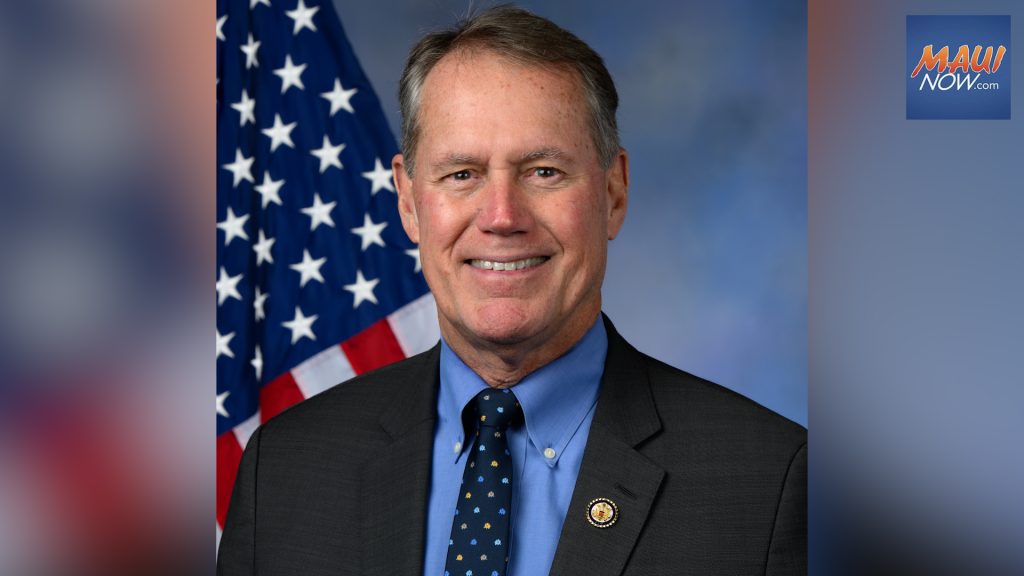
US Rep. Ed Case voted this week in favor of a House measure advancing three of the 12 annual federal appropriations bills for fiscal year 2026, which begins Oct. 1, 2026.
The legislation combines funding for the Commerce, Justice and Science; Interior and Environment; and Energy and Water departments. It passed the House and now moves to the US Senate for consideration.
According to Case’s office, the measure includes hundreds of millions of dollars for federal programs that serve Hawaiʻi, as well as six Community Project Funding requests for projects in his district. Those requests include:
- $1.09 million for the Department of Hawaiian Homelands to upgrade the sewer infrastructure at Papakōlea
- $1 million for the Hawaiʻi Division of Aquatic Resources to survey and remove invasive coral spread at Joint Base Pearl Harbor-Hickam;
- $1 million for the UH for its Fireshed Partnerships program, which facilitates wildfire risk reduction;
- $1 million for the Hawaiʻi Division of Aquatic Resources to restore fishpond habitat and enhance water quality at Maunalua Fishpond;
- $1.15 million for Hawaiʻi Pacific University to develop its Aquaculture Program; and
- $1 million for the Honolulu Police Department to acquire a new Emergency Mobile Command Vehicle to replace its current vehicle, which is over 20 years old.
Interior, Environment and Related Agencies Bill
The Interior and Environment portion of the bill funds agencies such as the National Park Service, US Fish and Wildlife Service, Environmental Protection Agency and US Geological Survey.
The measure approved several of Case’s priorities, including:
- $4.75 million for US Fish and Wildlife Service’s State of the Birds Activities;
- $45.5 million for the USGS Biological Threats and Invasive Species Research Program;
- $64 million for the USGS Climate Adaption Science Centers, which includes the Pacific Islands Climate Adaption Science Center based out of UH Mānoa;
- $62 million for State Historic Preservation Offices;
- $76 million for State Fire Assistance;
- $4.6 million for Japanese Confinement Site Grants; and
- $3 million for the Joint Fire Science Program.
Energy and Water Bill
The Energy and Water bill provides funding for Department of Energy programs and US Army Corps of Engineers civil works projects, including coastal erosion studies, harbor improvements, flood control and aquatic plant management.
The bill includes numerous items requested by Case, including:
- $2 million for the USACE’s beach erosion and hurricane and storm
- damage reduction activities;
- $40 million for flood control and coastal emergency efforts;
- $18 million for the USACE’s National Coastal Mapping Program; and
- $36.5 million for the USACE’s Aquatic Plant Control Program;
The bill also includes language directing the DOE to investigate potential benefits of small-modular nuclear reactors as a source of clean electricity for remote, noncontinuous US areas such as Hawaiʻi.
CJS and Related Agencies
The Commerce, Justice and Science portion of the legislation supports agencies including the Department of Justice, National Oceanic and Atmospheric Administration, NASA and the National Science Foundation. Funding includes grants for state and local law enforcement, crime prevention programs, scientific research, climate monitoring, marine conservation and STEM education.
Provisions which Case requested and were included in the measure to fund the DoJ, NOAA, NASA and NSF include:
Justice
- $397 million for Byrne Justice Assistance Grants;
- $800 million for the Community Oriented Policing Services (COPS) program;
- $54 million for grants to reduce the sexual assault kit backlog;
- $48 million for Anti-Methamphetamine and Anti-Heroin Task Forces; and
- $175 million for the Manufacturing Extension Partnership Program to support small and medium-sized manufacturers, including in Hawaiʻi.
Science
- $250 million for the Established Program to Stimulate Competitive Research (EPSCoR);
- $143 million for NASA STEM engagement programs, including Space Grant; and
- $104 million for Climate Laboratories and Cooperative Institutes to support facilities such as the Maunaloa Observatory.
- $33.5 million for the Coral Reef Conservation Program;
- $67 million for national marine sanctuaries and marine protected areas;
- $178 million for Marine Mammals and Sea Turtles Protection;
- $47.5 million for the Integrated Ocean Observing System (IOOS);
- $17 million for the Regional Integrated Sciences and Assessments program;
- $34 million for the National Estuarine Research Reserve System; and
- $80 million for the Sea Grant Program.
Commerce
- $4 million for the Minority Business Development Agency’s Native American Business Development Program;
- an additional $5 million for grants to American Indian, Alaska Native and Native Hawaiian entities providing business and technical assistance; and
- $3.5 million for the Assistant Secretary of Travel and Tourism position to support federal coordination on tourism policy.
Case, a member of the House Appropriations Committee, said work continues on the remaining six FY26 appropriations bills ahead of an end-of-month deadline.
Sponsored Content