


 Hawai'i Journalism Initiative
As tension over immigration crackdown grows, community groups help Maui immigrants know their rights, deal with ICE
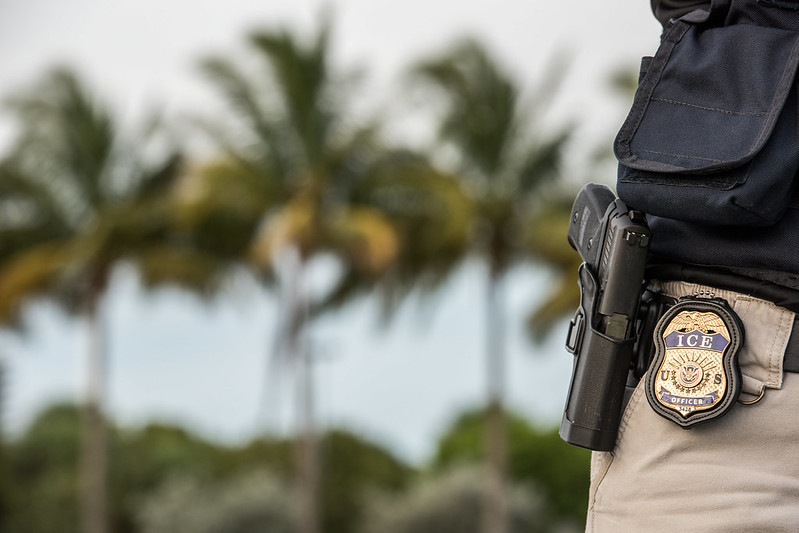
It was the Jewish New Year of Rosh Hashanah when Zoe Goodman got the heads up that U.S. Immigration and Customs Enforcement agents were searching for someone in a temporary housing complex for Lahaina fire survivors.
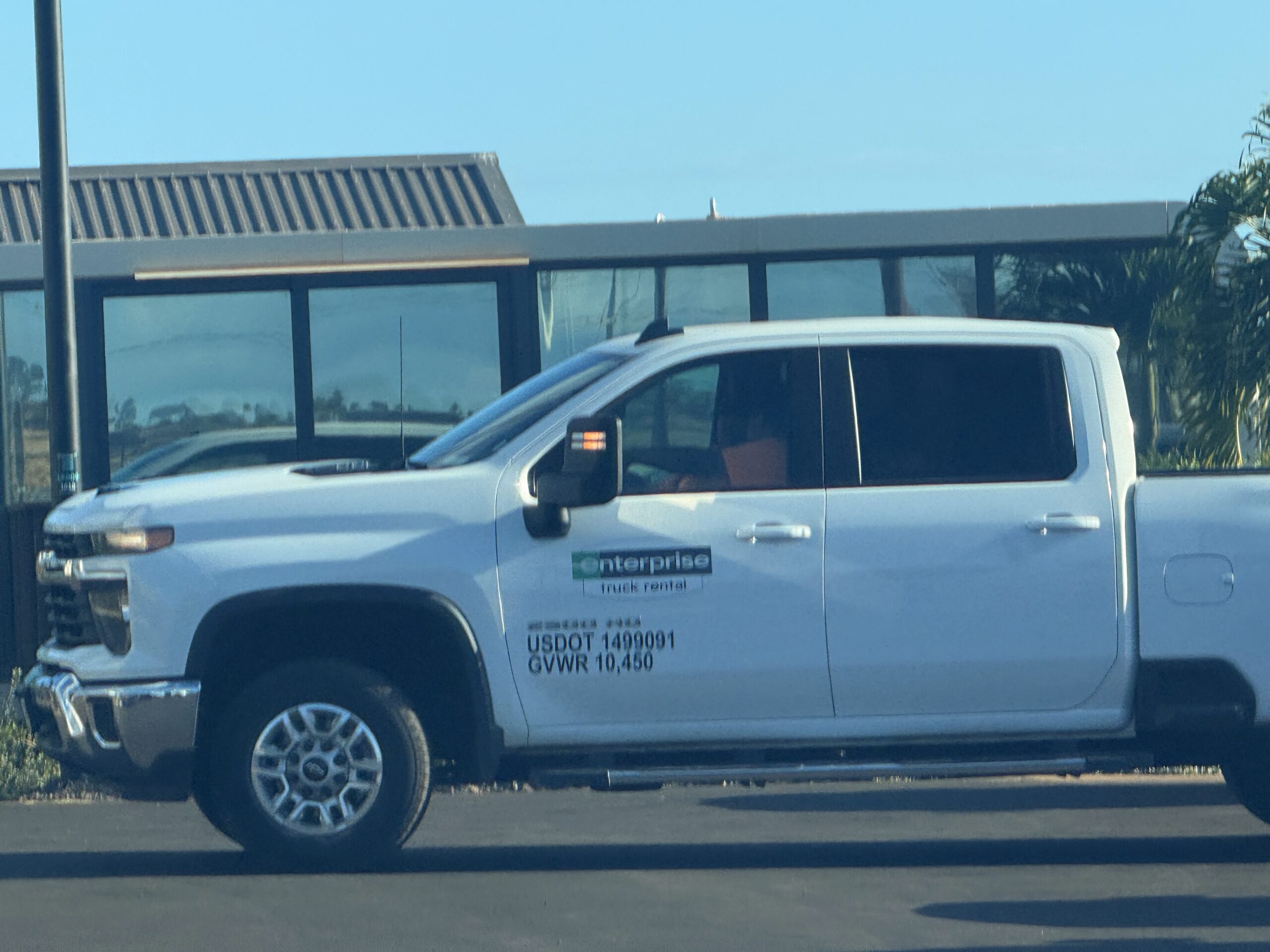
Goodman, the lead volunteer trainer for El Pueblo en Acción Maui (The People in Action Maui), hustled over to the neighborhood. As the agents roamed the complex in a rented pickup, Goodman and other volunteers helped the person run through preparations, making sure they had an emergency contact and had signed a document that would allow a lawyer to contact them if they were taken into custody by ICE.
HJI Weekly Newsletter
Get more stories like these delivered straight to your inbox. Sign up for the Hawai‘i Journalism Initiative's weekly newsletter:
“Our kuleana (responsibility) really is to be there as a calm, informed presence so that folks are aware that they have rights,” Goodman said.
The agents eventually left the area without making an arrest, but the September episode was one of multiple confirmed and suspected sightings of ICE that have put the Maui community on edge, especially as arrests in Hawai‘i have climbed over the past year and an ICE agent’s fatal shooting of Minneapolis woman Renee Good sparked protests across the islands. On Saturday, a Minneapolis man was shot and killed by ICE, setting off a fresh wave of outrage.
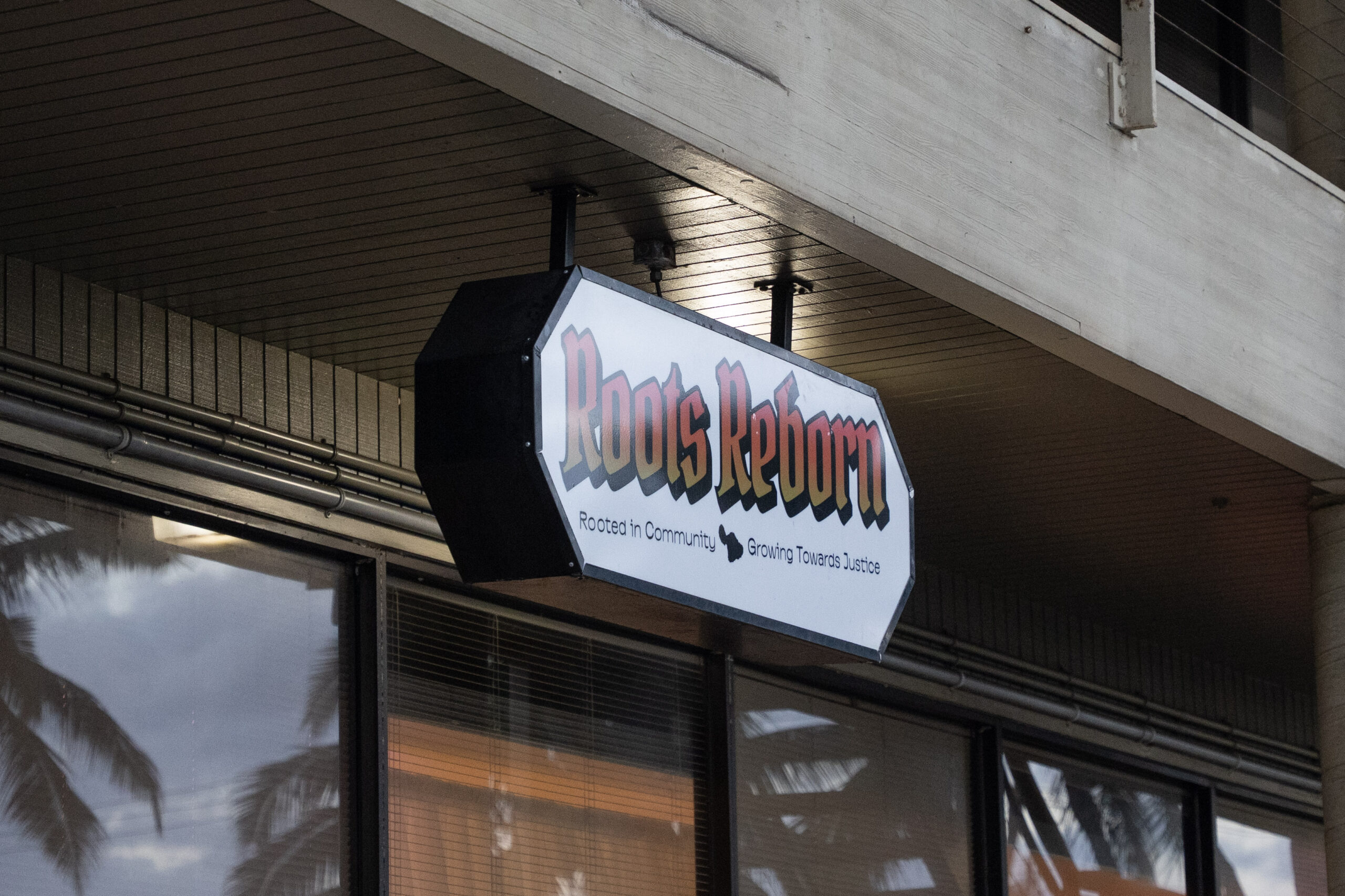
On Maui, community groups and concerned citizens focused on immigrant rights and legal services created a coalition known as El Pueblo en Acción Maui to run an ICE tipline and watch group around late 2023 and early 2024, according to Veronica Mendoza-Jachowski, executive director of the nonprofit Roots Reborn that was formed after the fires and is part of the coalition. For awhile, it was the only group of its kind in the state, she said.
The network that Goodman estimated at 50 volunteers can be called at a moment’s notice to verify ICE sightings, help people review their rights and serve as legal observers when someone is being detained in hopes that they won’t get lost in “a black hole of the immigration and detention system.”
They’ve been extra busy over the past year. When Trump took office in January 2025, the tipline was flooded with dozens of text messages, emails and calls from people thinking they’d seen ICE.
“That fear was just heightened and they were on alert,” Mendoza-Jachowski said.
Last week, El Pueblo en Acción Maui announced on social media that ICE agents had showed up to a Kīhei church during sacrament hour on Jan. 11. While no arrests were made, it was another sobering reminder for the community that places once considered off-limits are now fair game to the federal agency.
“The worry here is as we continue to see ICE enforcement presence at these previously protected locations, that there will be a chilling effect,” said Tina Sablan, community and policy advocate with O‘ahu-based nonprofit The Legal Clinic. “Not only that people will stop going to church … but also kids will be afraid to go to school. Families will be afraid to access health care that they need. And there are ramifications for the entire community that will affect a wider sense of public safety when these places are no longer considered protected.”
In the first six months of 2025, ICE arrested 149 people in Hawai‘i, more than triple the amount of people arrested during the same period in 2024, the University of Hawai‘i’s Refugee and Immigration Law Clinic told a Senate Judiciary Committee in December, citing the Deportation Data Project.
ICE claims it’s detaining the “worst of the worst,” highlighting a handful of arrests tied to serious crimes like drugs, assault and firearms possessions. But Sablan pointed out that according to detentionreports.com, which keeps data on ICE detention facilities nationwide, out of a total average daily population of 74 at the Honolulu facility, 57 individuals (77%) were non-criminals.
On Maui, Mendoza-Jachowski said people have been taken more “quietly” than in other places. Aside from the high-profile case of several Maui County teachers who were wrongfully detained in Kahului as immigration officers were searching for someone else, arrests have included individual encounters like a Lahaina fire survivor who lost his home and business, and an undocumented Maui man who showed up at the Wailuku courthouse for a hearing on driving under the influence and without a license.
By contrast, ICE has made mass arrests during raids of Hawai‘i island coffee farms and Kaua‘i homes and businesses.
Sablan said she’s not sure why other islands have seen more mass enforcement, but noted that Maui has “a really strong network of folks” who have been working to educate people on their rights and keep tabs on ICE.
“I think that’s been really effective and had a very protective effect, particularly on communities in Maui,” Sablan said.
Mendoza-Jachowski said the experience of working in disaster response has helped the Maui organizations become more nimble in the face of growing enforcement and constant uncertainty.
El Pueblo en Acción Maui has been holding “Know Your Rights” training for restaurant workers, health care providers, faith leaders, educators and others, reminding them of such constitutional rights as being able to remain silent and refuse a search of themselves or their belongings without a judicial warrant.
Mendoza-Jachowski said “we don’t want anyone breaking the law,” so the goal is to inform people on their rights and equip them to make their own decisions in the moment.
Keeping the community informed and curbing false information is also the focus of the tipline, which takes calls and texts at (808) 500-5533. Volunteers work to confirm or debunk sightings by going to the location themselves or examining photos submitted to the tipline.
Mendoza-Jachowski remembers one report that turned out to be a DUI checkpoint near Mā‘alaea, and another that was a traffic control measure for a construction site. Once they used reverse image search to determine a photo sent to the tipline of law enforcement at a grocery store had actually been circulating on social media over a year ago and showed officers with the Hawai‘i Department of Land and Natural Resources, whose green uniforms and holstered guns were reminiscent of ICE agents.
When it comes to deciding what to report, “we take that very seriously,” Mendoza-Jachowski said.
“We don’t want to start a frenzy,” she said. “So I think keeping our community calm means keeping our community safe, and so there is no very clear recipe for how we respond because every single one is so different.”
She said the groups decided to share information about the reports of ICE agents in a Kīhei church earlier this month because it came directly from a “trusted source” who witnessed firsthand the agents showing up and identifying themselves as immigration enforcement. They told church leaders that they were looking for three people and waited out the full service until they determined the people in question weren’t there.
For safety reasons, Mendoza-Jachowski did not share the name of the church.
Members of other churches in Kīhei said they’d also heard about the incident. Shannon Kama, church administrator at Kīhei Lutheran, said she’d gotten word about it from social media and the community service organizations that work with the church.
Kama said her church hasn’t discussed what they would do if ICE showed up, but she said if she saw them coming, “I would lock my office down and I would notify our Montessori preschool on property, just to try to keep everybody safe.”
“It’s just awful,” Kama said of the thought that ICE might come to a church. “Nobody wants to be fearful. We just need to all be mindful, and I think that’s our mindset of our congregation. … Personally, I just pray that nothing like that would happen and be protective of everybody else.”
Chuck Spence, treasurer of Trinity Episcopal-by-the-Sea in Kīhei, said he found out through text messages sharing the post from El Pueblo en Acción Maui. He said Trinity hasn’t had any encounters with ICE as far as he knows, and that the church holds prayers every week for people impacted by what is happening across the country.
“It’s too aggressive and too dangerous when people are starting to get killed,” Spence said.
He noted that Trinity “is an inclusive and all welcoming mission church” and pointed out that Episcopal Church leaders have condemned ICE-related violence, called for prayer and supported peaceful resistance.
“The Episcopal Church remains steadfast in its commitment to protect the dignity and safety of all people, particularly those most vulnerable to immigration enforcement actions,” Spence said.
Churches have long been seen as safe havens off-limits to immigration enforcement, but in January 2025, after taking office, the Trump administration rolled back those protections for churches and other “sensitive” places like schools.
Hawai‘i state lawmakers, who kicked off the 2026 session on Wednesday, are considering a bill that would restore protections for sensitive locations, Sablan said.
It’s one of several bills The Legal Clinic and other immigration-focused organizations will be tracking, including measures that would require clear identification and bar masks for public-facing law enforcement, create a statewide framework for “U” and “T” visa certification for noncitizens who are victims of crime and human trafficking, and prevent “287g agreements” that would deputize local officers to carry out civil immigration enforcement.
In her line of work, Sablan often hears comments that if people were here legally, they wouldn’t have anything to worry about. However, she thinks “there’s a pretty fundamental misunderstanding of how much has changed” to make legal immigration pathways more difficult to obtain, and in some cases, revoking legal status of people already here.
Regardless of their status, Sablan pointed out, everybody “has basic due process rights and a right to a fair hearing, and they should have a right to legal representation.” Federal immigration court is the only court people don’t have the right to a public defender, she pointed out.
The argument that only “the worst” criminals are being taken off the streets doesn’t align with the data, and she said she has to “fundamentally disagree with the argument that it’s worth it to violate the rights of all.”
“If one person’s due process rights are violated, nobody really can feel safe believing that the same couldn’t happen to them,” Sablan said.
On Maui, if someone is detained, groups like Maui Rapid Response, another member of El Pueblo en Acción Maui, step in to help connect their families to services, especially if the person taken was the “sole breadwinner.”
“We’re looking at things like rent, we’re looking at child care, we’re looking at just housing in general, transportation,” said Nicole Huguenin, executive director of Maui Rapid Response.
The organization leads several community initiatives that range from helping unhoused people to assisting with fire recovery. Huguenin noted that people’s needs are often intersectional, such as being both undocumented and unhoused, and she said the fear of being arrested and deported has put additional stress on people already struggling to recover from the wildfires. Nearly one-third of Lahaina’s population before the fire had been born in another country.
“What we’re really seeing across the board in all vulnerable populations of people right now is compounding traumas,” Huguenin said.
In Lahaina, an arrest in September 2024 frightened parts of the community, and the incident in September of last year reignited those fears. Since then, Goodman said all of the four other potential sightings that she’s responded to have been in Lahaina.
She said “it is especially painful” to see people experiencing a moment when they know ICE is coming for them after being a contributing member of the community they’ve lived in for years.
Goodman spent 15 years working with a program that escorted women safely to abortion clinics in Queens, New York, so she’s “no stranger” to encounters with police or protesters shouting in her face. If ICE agents are “yanking people out of cars,” her sentiment is “put me in, coach.” But when she responds on Maui, her main focus is making sure her presence doesn’t make things worse for the people she’s trying to help.
Goodman said if the crackdown was about doing things the right way, ICE wouldn’t be showing up to detain people at their immigration hearings or sweeping kids out of school.
“The right way does not involve terrorizing people who are doing all of the right things,” Goodman said. “…There is no right way in this moment in time, because we’ve designed a system that is terrorizing everybody.”