Forensic Sciences Lab secures last remains of venerated Saint Marianne of Molokaʻi
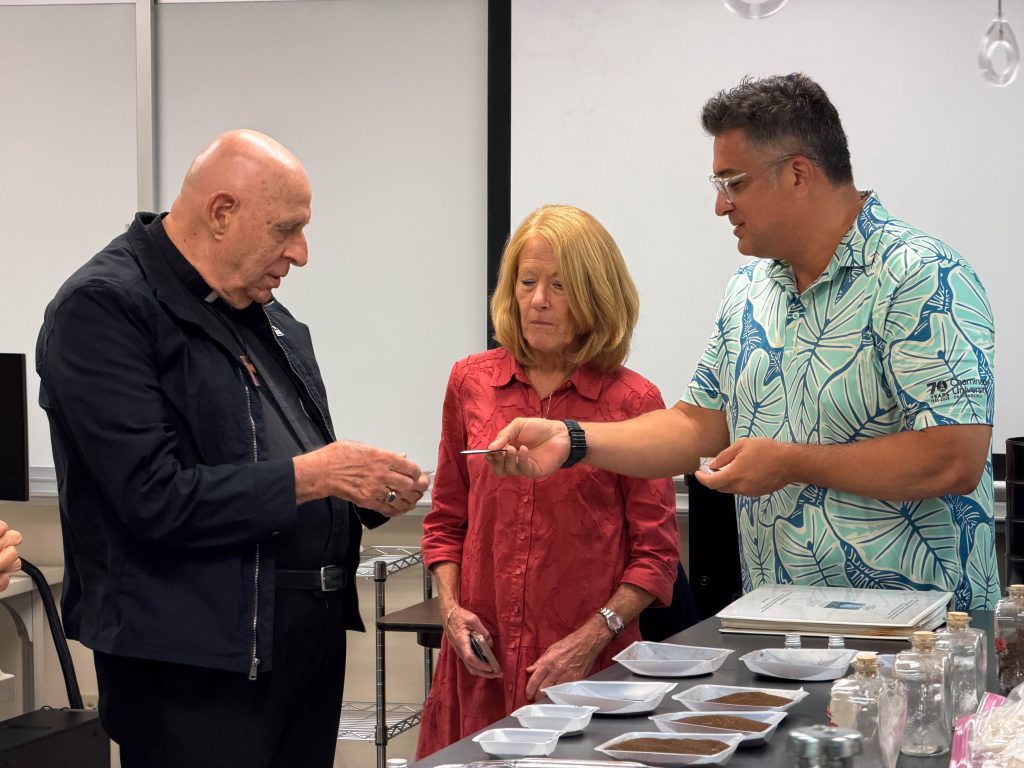
More than a century after her death, the story of a saint who served those with leprosy and died on Moloka’i is being told anew—through science. Chaminade University’s Forensic Sciences Unit is helping evaluate her remains, uniting Marianist mission and modern forensic expertise to bring history to life in service to the community.
Mother Marianne Cope was a German-born American Franciscan nun who traveled from Syracuse, New York to the Kingdom of Hawaiʻi in the late 1800s to help build the kingdom’s medical infrastructure. She’s most famous for her work tending to the spiritual and medical needs of leprosy patients at Kalaupapa, Moloka‘i alongside the legendary Father Damien.
Now, Chaminade University’s Forensic Sciences Unit has been enlisted to help collect her remains at the request of the Roman Catholic Church. It’s the first time the Catholic Marianist institution has been called up to assist the Church in this manner.
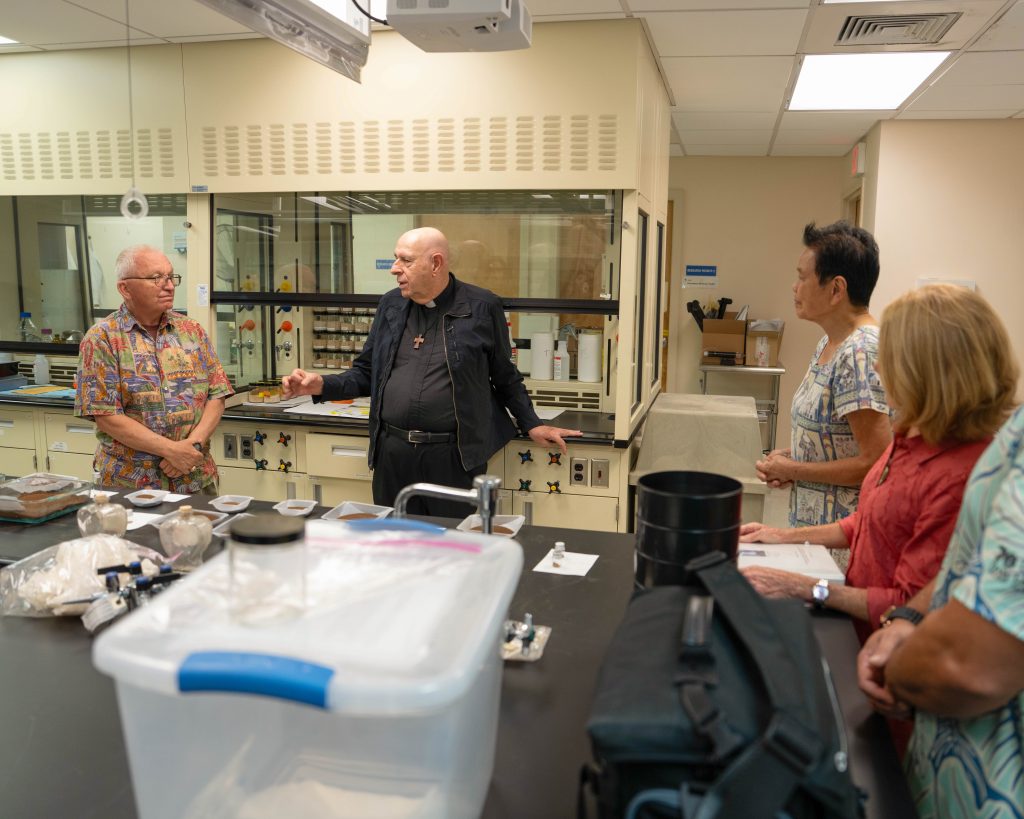
The remains, bone fragments carefully extracted from the soil from her grave, will be shared among the Hawaiian Islands at different parishes.
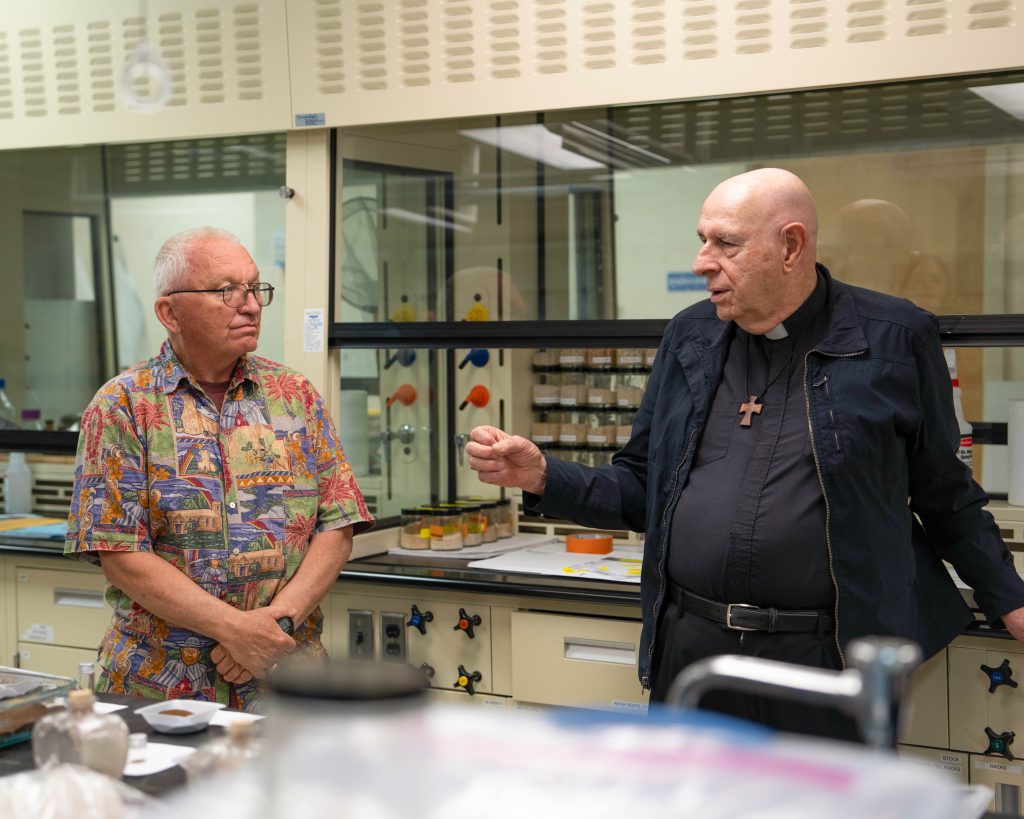
Bishop Clarence “Larry” Silva, head of the Diocese of Honolulu, visited the lab on Chaminade’s campus to assess Sava and the students’ progress, accompanied by Chaminade University President Lynn Babington.
Forensic anthropologist Vincent Sava is leading the work at one of Chaminade’s campus forensic sciences lab, using sifters and microscopes to separate bone from soil and rock, preserving Mother Marianne’s earthly remains for relics and ceremonies.
Carlos Gutiérrez Ayala, Director and Assistant Professor of the Forensic Sciences Unit at Chaminade’s School of Natural Sciences and Mathematics, said this work with Sava and the Catholic Church is a once-in-a-lifetime opportunity for students and the university. The Forensic Sciences unit at Chaminade was started 30 years ago.
Mother Marianne was beatified by Pope John Paul II in 2004. She achieved sainthood in 2011 through canonization by Pope Benedict XVI.
Over the years, Sava has been enlisted by the Church to gather remains and historical artefacts from the gravesites of important figures. The scale of this challenge led Sava to reach out to his former student, Gutiérrez, and the Chaminade University Forensic Sciences Unit for help.
Soil samples are closely examined and bone fragments are carefully collected using special equipment and forensic techniques. The fragments are then placed in vials.
For more information about the Forensic Sciences program, visit https://chaminade.edu/nsm/forensic-sciences/.
Sponsored Content




Subscribe to our Newsletter
Comments