
 Hawai'i Journalism Initiative
Kapalua residents oppose water rate increases and other new charges

Hawai‘i Water Service, a public utility, is facing community pushback on its request to increase water rates and pass on the costs of power and water to the roughly 1,500 customers it serves in Kapalua.
The company is asking the Hawai‘i Public Utilities Commission for higher rates that would double the average residential customer’s monthly water bill and increase total revenues for the company by $2.22 million, a 59% increase over revenues at current rates.
HJI Weekly Newsletter
Get more stories like these delivered straight to your inbox. Sign up for the Hawai‘i Journalism Initiative's weekly newsletter:
“We know there’s never a good time for a rate change, and we have made significant efforts to keep those costs down in our Kapalua service area,” Geoff Fulks, general manager of Hawai‘i Water Service, told the commission during a public hearing Monday night at Maui Preparatory Academy.
But Fulks said the last rate increase was in 2009, and since then operating costs have grown.
He also said Hawai‘i Water Service has invested nearly $33 million in improving its Kapalua system since May 2021, when it purchased Kapalua Water Company, a subsidiary of Maui Land & Pineapple Co., and took over operations of the Kapalua potable and nonpotable water systems.
However, Maui Land & Pineapple still owns the wells that supply water to the Kapalua Resort and the nonpotable ditch irrigation system that supplies water for irrigation and fire suppression for the Kapalua Resort. That means Hawai‘i Water Service still has to buy the water it supplies to customers at the rates Maui Land & Pineapple sets.
Fulks said increasing rates would help Hawaiʻi Water Service cover the costs of purchasing the water and the significant capital improvements it has made to comply with state Department of Health regulations and maintain service to 11 developments and one hotel in Kapalua.
The projects included rehabilitating potable water storage reservoirs, replacing valves, improving fire protection systems and investing in sewer pump stations, especially the ones serving D.T. Fleming Beach Park, Fulks said.
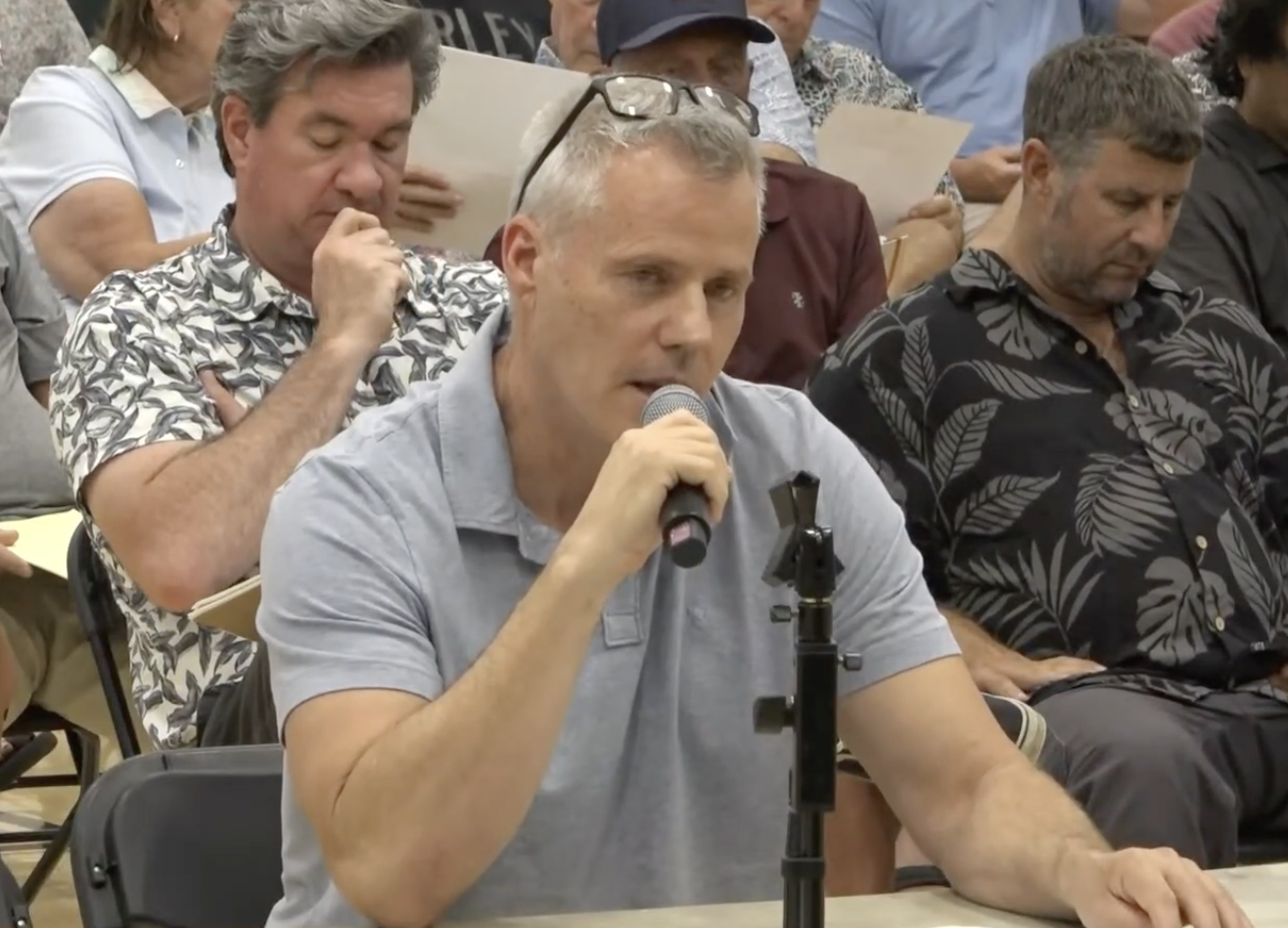
According to the company’s application, the $2.22 million increase in revenues would come from $1.6 million in water rates (68% increase over the current rates) and $622,882 from sewer rates (44% increase).
Currently, a bill for 15,000 gallons of water, which Fulks said is the average monthly use for all residential customers, is $66.41 for water and $66.41 for wastewater. With the increased rates, bills would increase to $134.33 for water and $108.72 for wastewater.
If it stays at current rates, the company expects to lose $1.15 million annually for its water delivery service and $373,972 for its wastewater service.
The Kapalua system is the primary supplier of water in an area contending with drought and declining resources, prompting Hawai‘i Water Service to periodically impose restrictions on users. Last year, the company set maximum Tier 4 restrictions, which bars all use of nonpotable water except for fire protection. As of January, Kapalua remains under Tier 3 status, which means a mandatory 60% reduction in nonpotable water use.
Faced with less water and heavy restrictions, TY Management, the owner of two golf courses in Kapalua, sued Maui Land & Pineapple in August, claiming that the company had failed to maintain its system and deliver enough water for the courses, which had grown so brown that the PGA Tour cancelled The Sentry golf tournament that takes place each January in Kapalua.
Maui Land & Pineapple has countered that TY Management improperly used water meant for fire protection to irrigate its golf courses during water restrictions, and that the problem isn’t its system but the lack of rainfall.
TY Management testified at the hearing Monday in opposition of the rate increases.
Fulks said Hawai‘i Water Service “does not take a position on these matters and we have remained independent.”
The company says it has no control over Maui Land & Pineapple’s water delivery charges, which can fluctuate and sometimes result in refunds or further charges. That’s why it’s asking the commission for a “watershed purchase rider” that would allow it to directly pass on to customers the cost of water it buys from Maui Land & Pineapple’s watershed.
Hawai‘i Water Service’s projected usage in 2025 was 180 million gallons for potable water and 450 million gallons for nonpotable water, Fulks told the Hawai‘i Journalism Initiative. The rates it pays Maui Land & Pineapple have increased from $2.99 per 1,000 gallons of potable water and $0.46 per 1,000 gallons of nonpotable water in 2024 to $4.06 per 1,000 gallons of potable water and $1.69 per 1,000 gallons of nonpotable water in 2025.

Gregory Shimansky, director of home states rates and regulatory affairs for California Water Service Group, the parent company of Hawai‘i Water Service, said that with expenses increasing, Hawai‘i Water Service is paying Maui Land & Pineapple for water without fully recovering the costs in its rates.
“The point of the rider is to see that the collection in revenues match the Maui Land & Pineapple fees and charges for water from the ditch that they own,” Shimansky said in his testimony as part of the company’s application.
Hawaiʻi Water Service also is asking the commission for a “power cost charge pass-through” that would allow it to directly pass on its power costs to customers.
The base rates, water costs and power costs are all based on the amount of water the customer uses.
For example, at the current rates, a customer using 15,000 gallons of water is charged a base rate of $66.41, Fulks explained to the Hawai‘i Journalism Initiative. Under the proposed rates, the base rate would be $38.83, with a power cost of $2.81 and a watershed cost of $92.69.
For wastewater service, the base rate for a customer using 15,000 gallons would jump from $66.41 to $101.67, with a power cost of $7.05.
Not all of the changes would add costs. The company also is asking for a Tax Cuts and Jobs Act “tariff surcredit rider” to refund customers for overcollected revenues from 2021 to 2025. The act lowered the corporate tax rate from 35% to 21% when it took effect on Jan. 1, 2018, but Hawai‘i Water Service’s rates had already been set based on the old tax rate.
Residents at the hearing on Monday opposed the company’s request for the rate increase and riders, saying they would substantially raise their costs.
Robert Ehrlich, who’s been a homeowner in Kapalua for 35 years, said that allowing Hawai‘i Water Service to pass on additional costs would essentially allow Maui Land & Pineapple to raise its rates “as they see fit without any oversight.” The company is not regulated as a public utility by the commission.
“There’s no incentive for Hawai‘i Water Service to be performing for the good of the public as they claim if they’re not able to control costs passed on by Maui Land & Pine,” Ehrlich said.
Jon Kindred, a full-time resident of Kapalua, said he had “no objection” to Hawai‘i Water Service seeking a fair return on its costs. However, he said he was “strongly opposed” to the watershed rider, which would represent 80% of his total potable water costs and 43% of his total nonpotable water costs.
“This is not a trivial matter, commissioners,” Kindred said. “… The only reasonable basis to approve such a rider would be if you are also regulating the purveyor of the water upon which the rider is based, which you are not.”
Dan Jones, president of the board of the Pineapple Hill Owners Association, said the organization opposes both the rate increases and the rider. Jones said customers shouldn’t have to pay for the millions in improvements that Hawai‘i Water Service had to invest in a system whose maintenance has long been the subject of community complaints.
Jones said he spent years working for a publicly held company like California Water Group.
“When we made a bad business decision, you know who paid for it? We did, not the customer,” Jones said.
All 13 of the testifiers in person and online opposed the rate increases.
Fulks said that all water systems need infrastructure upgrades and maintenance over time, regardless of who owns or operates them.
“Water utilities are not funded through taxes like highways or schools; rather, water systems are paid for by the customers who use the water,” he told the Hawai‘i Journalism Initiative via email on Wednesday.
Fulks said the investments were necessary to make the system safer and reliable, especially in emergencies. When the company went without grid power for 20 days after the devastating Aug. 8, 2023 wildfire in Lahaina, “we were one of the only systems on the west side of Maui to be able to keep our system running with no water outages or water quality/boil water events,” he said.
He added that the commission’s oversight of Maui Land & Pineapple is an issue in a separate case, and that Hawai‘i Water Service “has no control over that outcome.”
“Behind the scenes, we did have discussions with MLP to reduce its rate increase in order to reduce the impact to our customers,” Fulks said.
Race Randle, CEO of Maui Land & Pineapple, said in written testimony to the commission on Monday that while the company is not a public utility, it has to follow the contracts it negotiated with Hawai‘i Water Service and other entities it delivers water to, including Maui County and TY Management.
“Hawaiʻi Water is capable of negotiating different terms or pursuing alternative water sources and infrastructure,” Randle wrote.
Randle said the company has also been operating its systems “at a substantial lost” and did not increase rates through 2024 even though its costs have increased over the years, including materials, labor, electricity and payments to Hawai‘i Water Service for system operation and maintenance.
Randle also pointed out that while the Public Utilities Commission doesn’t regulate Maui Land & Pineapple, the company still has to answer to the state Commission on Water Resource Management, which oversees all water resources across the state.
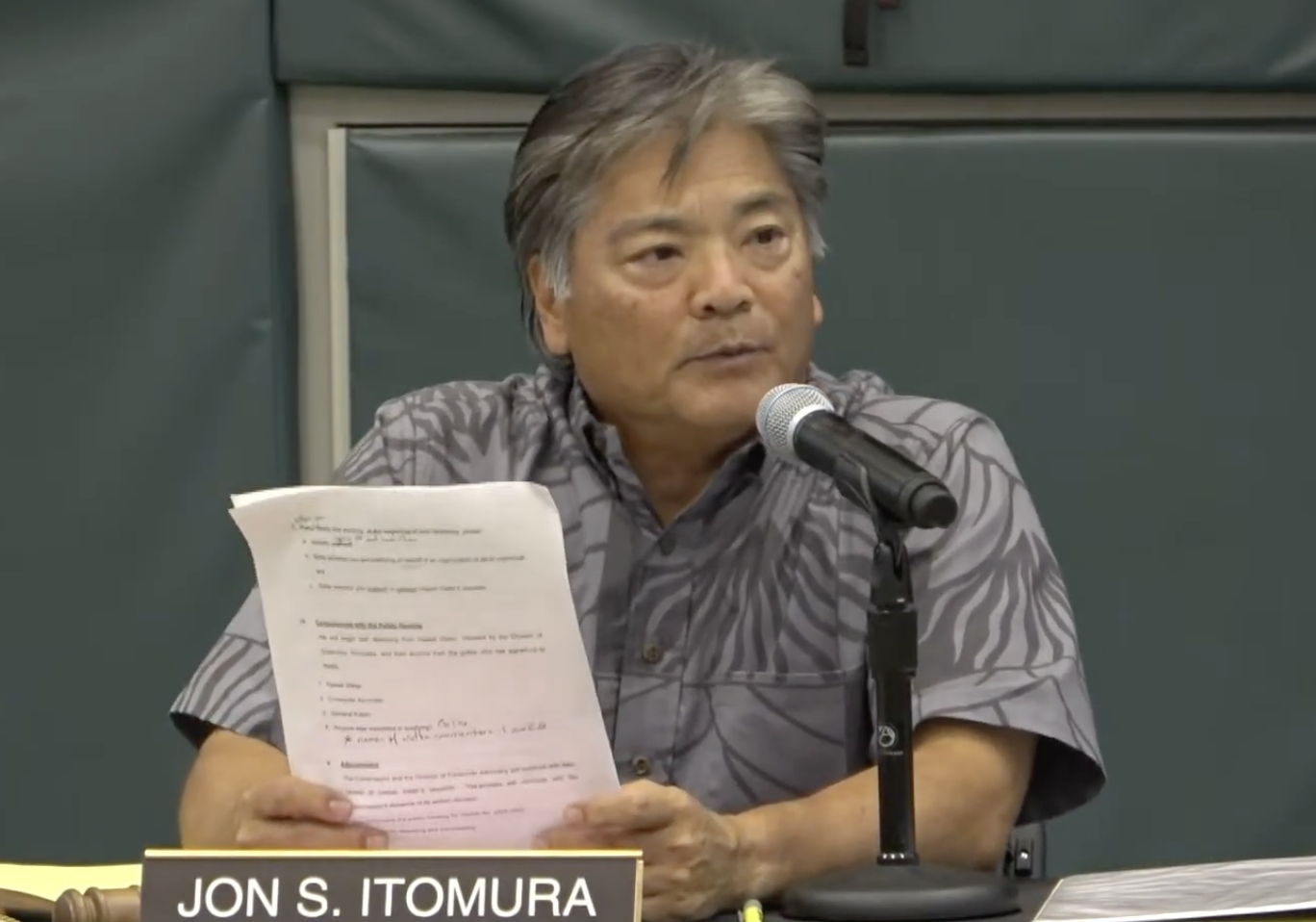
Michael Angelo, executive director of the state’s Consumer Advocacy Division, said the agency plans to review Hawai‘i Water Service’s request and ask for more information before submitting its own analysis and recommendations to the commission.
It will then be up to the commission to issue a written decision and order on the rate increase. The commission did not give a timeline for a decision at the meeting and could not be immediately reached for comment on a timeline Wednesday.