



 Hawai‘i Journalism Initiative
Hawaiʻi officials worry bills to help property owners with coastal erosion could put public beaches at risk
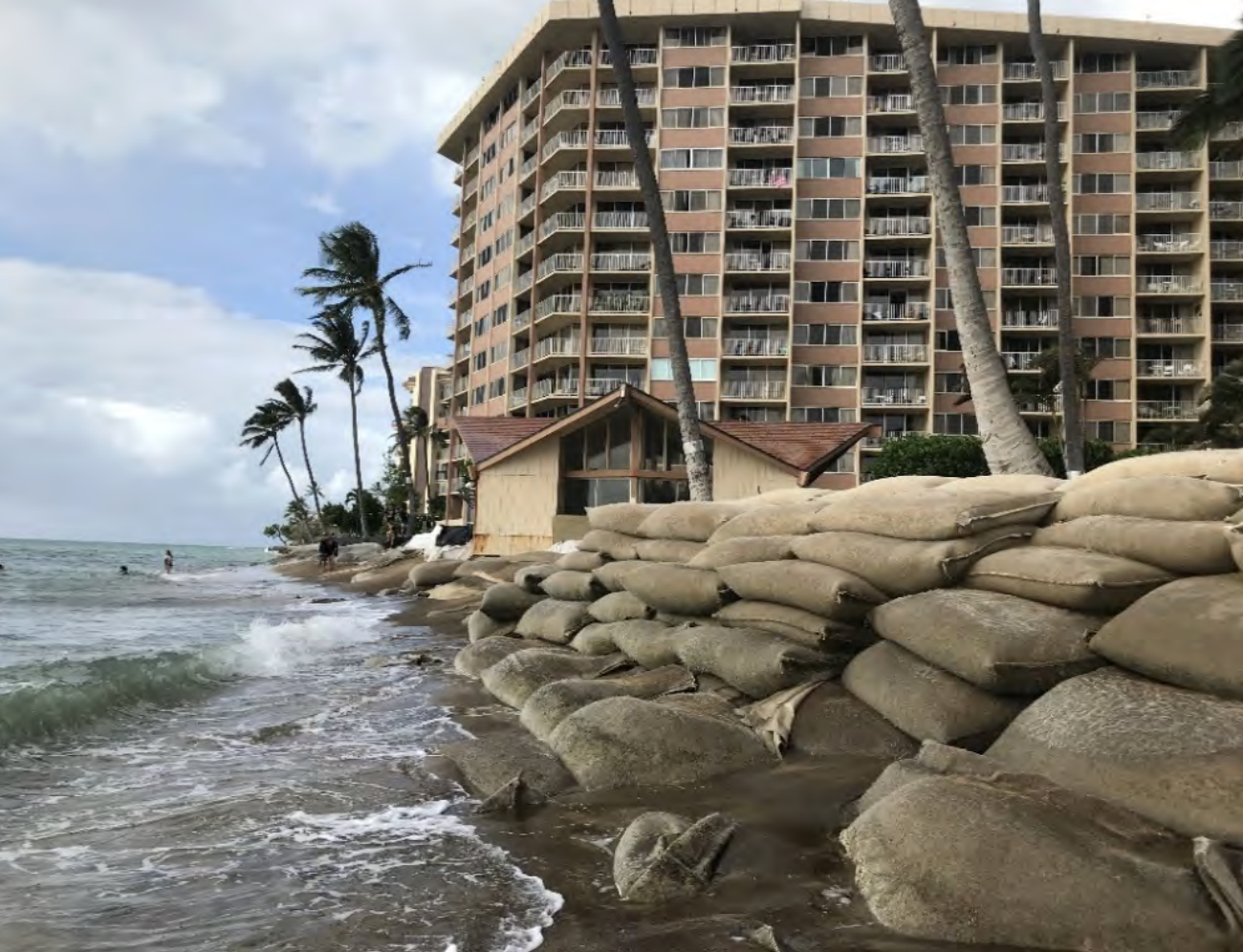
Every day, Kahana resident Spencer Schmerling is reminded that the shoreline fronting his condominium is shrinking.
“Safety risks are increasing, and recent sand loss and seawall damage shows just how serious this has become,” Schmerling told state lawmakers via Zoom during a public hearing in Honolulu on Thursday. “This is not a single property issue. It’s a regional crisis.”
State lawmakers are considering a pair of bills that would help property owners affected by coastal erosion, but they face opposition from state agencies concerned the measures would put natural resources and public beaches at risk.
HJI Weekly Newsletter
Get more stories like these delivered straight to your inbox. Sign up for the Hawai‘i Journalism Initiative's weekly newsletter:
House Bill 1846 would create regional shoreline mitigation districts where properties would be required to create their own coastal erosion and sediment management plans. That would then make it easier to review county and state permits for shoreline work.
House Bill 2205 would replace the current ban on private shoreline hardening measures with a policy of allowing “limited, carefully conditioned shoreline protection measures where necessary.” It also would allow emergency permits to be issued for erosion mitigation, and be valid for up to five years.
The House Water and Land Committee deferred both bills on Thursday. HB 1846 has also been referred to the Finance Committee, while HB 2205 has been referred to the Judiciary and Hawaiian Affairs Committee. Both measures have companion bills in the Senate.
Residents in places like Kahana say the bills would give them more solutions and allow them to act more quickly in the face of worsening coastal erosion. But state officials worry they would shift the focus more toward protecting private property over natural resources and put public beaches at risk.
The issue has grown more pressing for government officials and community members in recent years as high tides and big waves on eroded coastlines pose a greater threat to homes, roads and public facilities.
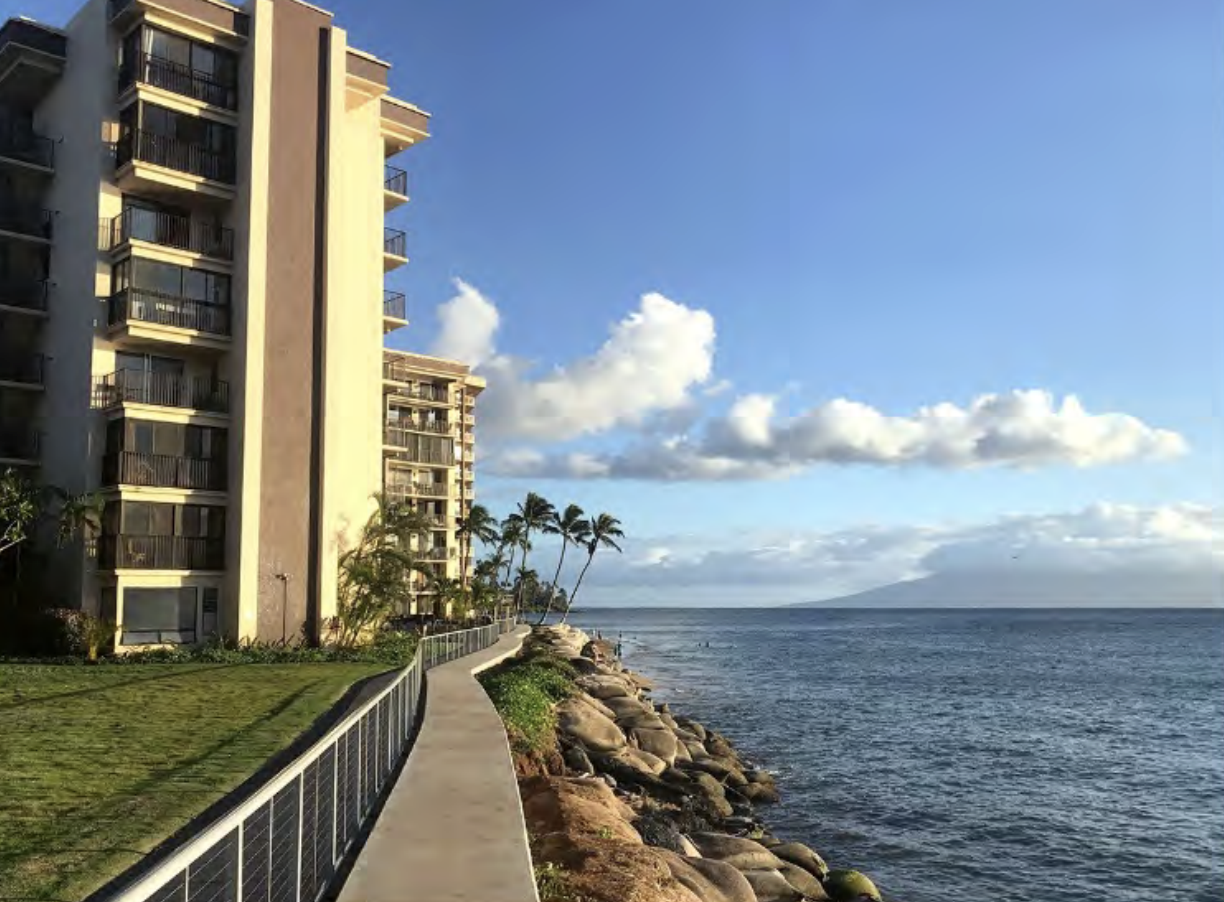
Seawalls have long been one method of hardening the shoreline against erosion. But in 2020, the State of Hawai‘i recognized seawalls’ negative impacts to beaches and banned private shoreline hardening structures.
Michael Cain, administrator of the state Office of Conservation and Coastal Lands, explained that shoreline hardening “is defined as artificially fixing the shoreline in one place.” Shorelines are naturally dynamic, and erosion is a natural process that is always happening across the islands, Cain told the Water and Land Committee.
Occasionally, shoreline hardening does have its uses, Cain said. For example, there is a clay bank eroding on Maui that the state may need to consider hardening to protect its resources. But hardening sandy beaches could mean losing them in the long run, and the islands have already lost too many beaches, he said.
Cain said state lawmakers’ proposal would effectively overturn the measure passed in 2020, which was “a landmark piece of legislation that really put Hawai‘i in the lead of protecting coastal resources in the nation. I’d hate to see that weakened.”
But state lawmakers say barring private shoreline hardening “may limit the ability of state and county authorities to authorize narrowly tailored erosion control measures in emergency circumstances,” according to House Bill 2205.
Shifting state policy from total prohibition of private shoreline-hardening structures to minimized, limited use “will allow the use of carefully reviewed and appropriately conditioned emergency measures where necessary, while preserving the State’s strong policy preference against unnecessary or excessive shoreline armoring,” the bill said.
In Kahana, the properties fronting the shoreline have faced “dire erosion issues since 2007,” said Mihoko Ito, who spoke on behalf of the Kahana Bay Steering Committee during the hearing on Thursday.
In 2017, nine condo properties and one residential parcel created the committee in hopes of finding a solution. They hired engineers to help put together an erosion mitigation project and published their draft plans in 2021.
But the process has stalled “in part because the County of Maui indicated that it was unwilling to assume the liability risks of owning the proposed groins that would be required to keep the restored sand in place,” Ito said in written testimony to the committee. Groins are structures built perpendicular to the shoreline to help intercept water flow and sediment and curb beach erosion.
“Kahana Bay is at an inflection point,” Ito said.
Both proposed measures would help Kahana residents, Ito said. House Bill 1846 would create long-term solutions by consolidating planning and reducing duplication, while House Bill 2205 would allow for short-term solutions.
Allowing minimal shoreline hardening for private properties as needed would simply “equalize the standards between state and private with respect to emergency shoreline solutions,” Ito said.
She said that the condos in Kahana have resorted to temporary sandbags to keep the erosion at bay, but those are in disrepair and have grown dangerous to both the public and condo residents.
Joshua Greig, whose family has lived on O‘ahu’s North Shore for 30 years, said they’ve lost nearly 40 feet of their sand dune over 10 years of erosion, and now their house sits just feet from the ocean. He said there is often “adversarial framing of private homeowners versus public beach,” but everyone wants the same thing.
On the North Shore, Greig said, “protection of the public beach has been almost entirely put on the back of private homeowners,” who can’t afford the millions of dollars it would take to put in erosion control measures. Even if they got the funding and the permits, he said, the family’s home “could be wiped out long before.”
“The state does have a worthy endeavor of protecting the state property and public access,” Greig said. “But there is, I would say, an equal importance on the state protecting private property. That’s one of the most important rights that we have.”
Cain said the Department of Land and Natural Resources, which oversees the office he runs, opposes both bills, in part because they would impact the department’s focus on protecting public trust resources.
“This reverses that dynamic and makes a priority in protecting private land interests, which are important, but our mission is to watch out for our natural and historic resources,” Cain said of House Bill 1846.
He added that creating regional shoreline mitigation districts and putting the Office of Planning and Sustainable Development in charge of the new process would also switch the roles of the two agencies, “turning DLNR into an agency that reviews permits but lacks regulatory authority and turns the Office of Planning into a regulatory agency, despite not having the rules that allow them to regulate land issues.”
The Department of Land and Natural Resources already has the authority to issue emergency permits, he said, pointing to a recent example of a damaged seawall and sidewalk at Queen’s Surf on O‘ahu that the department issued permits for in two days.
“It’s a powerful tool, so I don’t want to exploit it,” Cain said. “I’m worried about embedding these emergency permits into law as a five-year permit. I don’t think we need that.”
Officials with the Office of Planning and Sustainable Development also had concerns.
Director Mary Alice Evans said in written testimony that while the office “concurs that regional shoreline management is an appropriate approach to address coastal hazards,” it was also worried about becoming a regulatory agency for decisions that normally would be left to other departments.
The bill also “sets a high priority on the protection of private shoreline properties and lists dune enhancement, beach nourishment, living shoreline projects, or structural measures such as rock groins as long-term erosion mitigation solutions to a regional shoreline mitigation district.”
Evans said given the natural shoreline processes, the Office of Planning and Sustainable Development recommends also exploring “removal, retreat or relocation of the existing shoreline structures and infrastructure to protect dunes and beaches, and other public resources” in the long term.
O‘ahu Democratic Rep. Kim Coco Iwamoto, whose district includes areas of downtown Honolulu, said ideally, shoreline property owners would move back their structures to preserve public access to coastal waters.
“If we keep building seawalls where then the public can’t access the ocean … when do we stop?” Iwamoto said.
O‘ahu Republican Rep. Garner Shimizu, whose district includes Fort Shafter, Moanalua and other nearby areas, acknowledged concerns about shoreline hardening but wondered what choice the state had.
“If we don’t do anything, we’re going to lose everything, and it’s going to be gone,” Shimizu said. “So there needs to be something that’s done.”
