 Hawai'i Journalism Initiative
Who should get first crack at water licenses in Hawaiʻi? This bill wants it to be the counties
Maui County’s recently created water authority for East Maui could have a more direct shot at securing water licenses under a bill proposed in the Hawai‘i State Legislature.
House Bill 2434 aims to give the four counties or their subdivisions priority and the right of first refusal for water rights for public purposes.
HJI Weekly Newsletter
Get more stories like these delivered straight to your inbox. Sign up for the Hawai‘i Journalism Initiative's weekly newsletter:
But if the measure doesn’t advance through committee by a key deadline this Friday, it will effectively be dead, leaving Maui County to continue negotiations with farming company Mahi Pono over the future of the critical water system.
Under the bill, before considering any water license application, the state would first have to notify the county where the water source is located and offer the county a chance to strike an agreement. If the county is interested and responds within 90 days, the state would have to ensure the water use is in the public interest and then “make every effort” to create an agreement.
Any water license issued to an applicant other than a county or subdivision would be limited to five years, with one five-year extension allowed.
The House Water and Land Committee deferred the bill during a public hearing Thursday, but Rep. Mark Hashem, who chairs the committee, said he would “work with the introducer to see if we can fix some of the issues in the bill.”
“This may come back,” Hashem said.
Friday is the first lateral deadline, meaning that all bills with multiple referrals need to move to their final committees by then in order to stay alive. House Bill 2434 has been referred to the Water and Land as well as Judiciary and Hawaiian Affairs committees.
Rep. Mahina Poepoe, whose district includes East Maui, is one of the sponsors of the bill, in addition to several other lawmakers who include fellow Maui representatives Terez Amato of South Maui and Elle Cochran of West Maui.
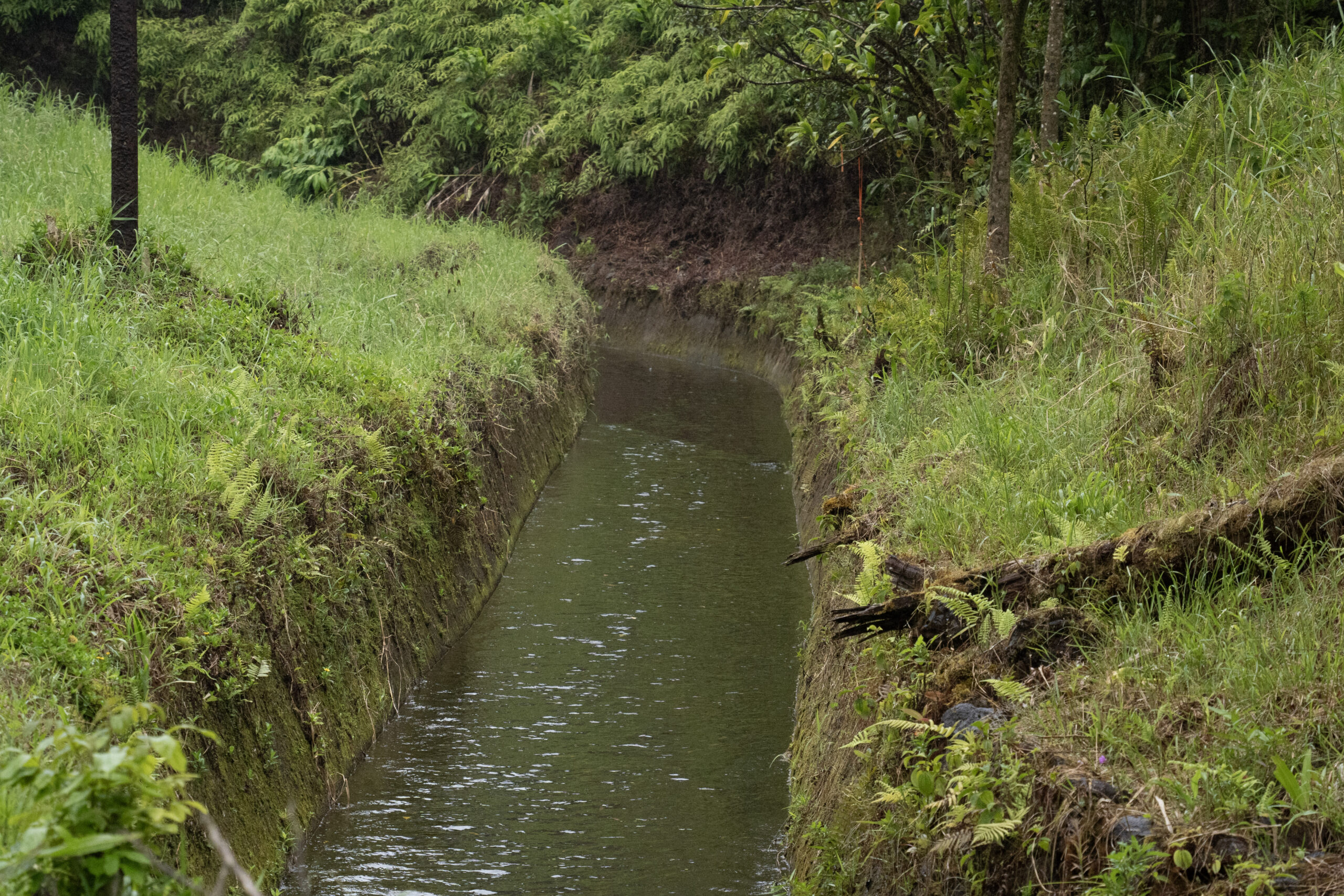
The proposal comes at a time when Maui County has its sights set on one day taking over the now private East Maui water system, which has diverted water from East Maui streams for roughly 150 years to hydrate sugar plantations across the island. The system is operated by East Maui Irrigation, which has a lease from the state to divert water from the streams.
In 2022, Maui County residents voted in favor of creating an East Maui Water Authority and a board made up of 11 residents and water experts tasked with acquiring and managing water in the Nāhiku, Ke‘anae, Honomanū and Huelo license areas.
In June of last year, Alexander & Baldwin transferred full ownership of its East Maui Irrigation system to Mahi Pono, which is farming a variety of crops, including fruit, coffee and macadamia nuts on former sugar cane land in Central and Upcountry Maui.
A contested case hearing over the water license for the East Maui streams is currently before the state Board of Land and Natural Resources. In November, the board deferred a decision on the hotly contested issue until May.
Gina Young, director of the Department of the East Maui Water Authority, said last week that the county has been in “regular discussions with Mahi Pono to come to some kind of mutually beneficial agreement” over the system. She said House Bill 2434 is one measure they are tracking. Young and Maui County Mayor Richard Bissen sent a joint letter in support of the bill last week.
Jonathan Scheuer, chair of the ‘Aha Wai O Maui Hikina, East Maui Regional Community Board, told the Hawai‘i Journalism Initiative on Tuesday that the bill “would make it much easier” for the county to eventually take over the system.
“The state’s biggest water delivery system, the vast majority of the water which comes off of state lands, should be controlled by a governmental entity,” Scheuer said. “The point of the bill is that should be the default position. You shouldn’t have to fight and struggle as a county agency to beg the state to not hand over an important public resource to a private entity.”
Scheuer said after the passage of the charter amendment in 2022, the county has to fulfill “a promise” it made to voters.
But the state Department of Land and Natural Resources has concerns about the measure.
Ciara Kahahane, deputy director for the Commission on Water Resource Management that is under DLNR, said during the hearing that the state already works with the counties on their water needs. If they ever request water on state lands, the first option is a “set aside,” which Kahahane said is “generally a faster alternative to pursuing a water license.”
Kahahane said the bill would add a lot more work to the department’s Land Division and “might create bottlenecks in the process of getting a water license, both for counties and for others, and in general is not necessary given the existing relationship that we have with the counties and our preference that we give to them for set asides.”
Kahahane also raised concerns about the five-year cap for water licenses issued to non-county applicants, saying this “would actually disincentivize” long-term planning and investment in water infrastructure.
Brian Miyamoto, executive director of the Hawai‘i Farm Bureau, said the organization also worried that the five-year cap could impact farmers who also have to seek water licenses. The bureau represents 1,800 farm family members statewide.
Miyamoto said farming is a long-term endeavor, and 10 years is not long enough for farmers to get financing. He said farmers need the assurance they will have access to water, and the uncertainty could keep them from investing in infrastructure and meeting food production goals.
“No water, no agriculture. No agriculture, no food,” Miyamoto told the committee. “This could limit our desire to grow the sector.”
Hawai‘i Deputy Attorney General Alyssa Kau said there already are “procedural safeguards” to evaluate water license applicants. Under the state’s current process, water licenses go to the Board of Land and Natural Resources for consideration, and if someone wants to contest the license, they can ask for a contested case hearing. At that time, the board will have “like a mini trial” to decide if the use is appropriate or not.
Kau worried that the bill was “so vague that … it almost says private entities are not eligible to do so,” and that’s not the message the state wants to send.
“We should be looking at who is the most qualified operator, who is the most qualified bidder under the auction process to service the water,” Kau said.
But John Helly, a member of the Maui County Board of Water Supply who testified as a private citizen, said the bill could clear up a water management scenario that has been muddled for decades.
With so many public and private agencies responsible for water delivery, quality and oversight, “Maui is kind of a poster child for the confusion that has derived from the proliferation of responsibilities and decentralization of responsibilities for water supply, integrity, regulation and authorization of water access to purveyors,” Helly said.
“This legislation will go a long way in fixing that by authorizing the county to act for all of the county citizens and all of the water resources that are in the public trust,” Helly said.
To track the bills that meet deadlines this session, visit https://www.capitol.hawaii.gov/advreports/main.aspx.