
 Hawai'i Journalism Initiative
‘Worst it’s ever been’: In Hāna, power and roads still limited days after storm
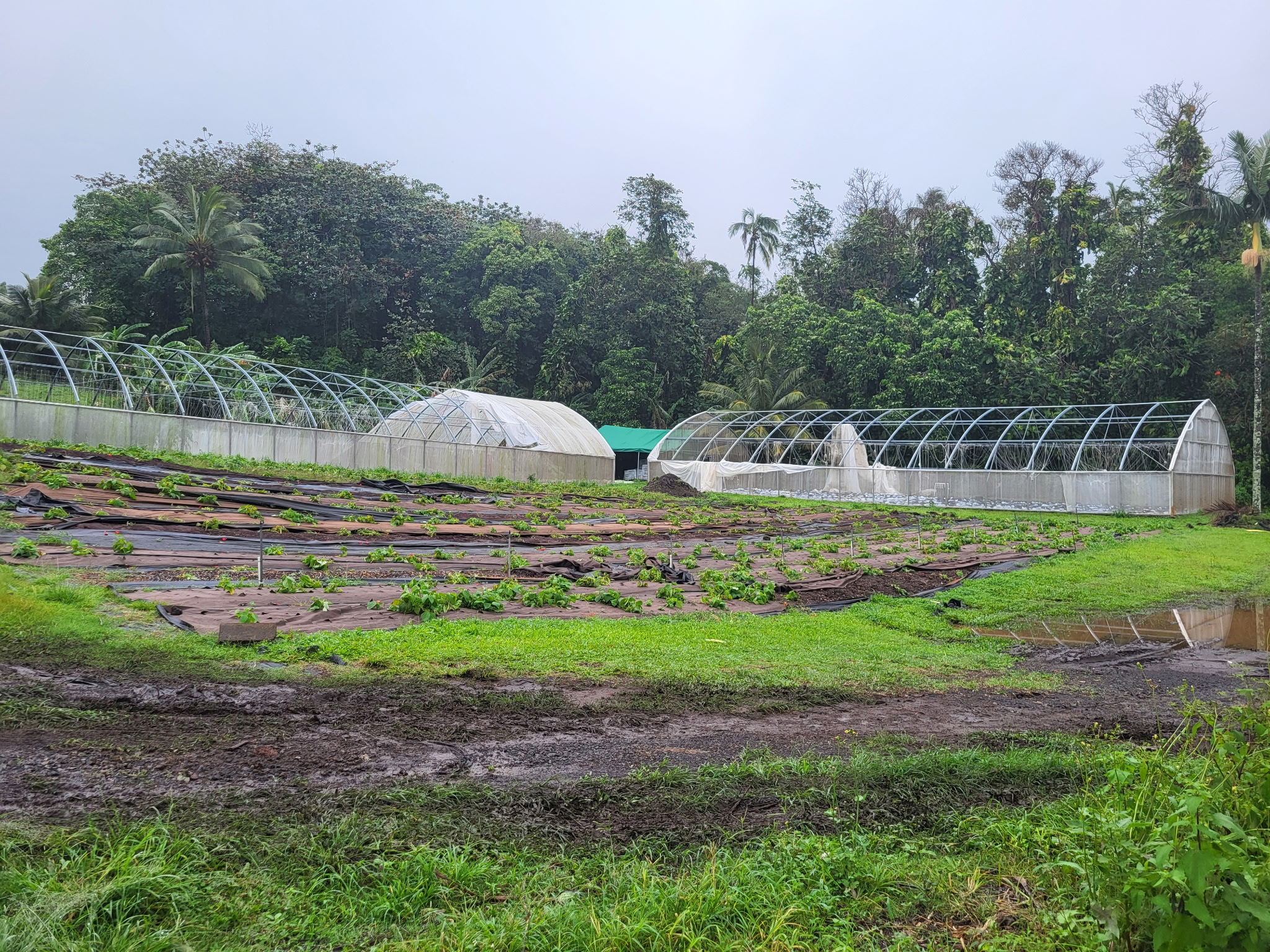
Three days after leaving the office when a Kona low storm knocked out the power at Hāna Health, Executive Director Cheryl Vasconcellos returned to work on Monday to face thousands of dollars worth of spoiled vaccines and damaged crops on the clinic’s 15-acre organic farm.
At Hasegawa General Store, owner Neil Hasegawa discovered a hole in his roof. At the Hāna Ranch Store, employees tossed out refrigerated products that went bad due to a lack of power.
HJI Weekly Newsletter
Get more stories like these delivered straight to your inbox. Sign up for the Hawai‘i Journalism Initiative's weekly newsletter:
The stores and the federally qualified community health center, which serves as the main medical facility for the rural town, were among the many places hit hard in Hāna by the weekend storm, which caused electric outages, downed trees that cut off access to the rest of Maui and drenched the entire state.
“We haven’t had one like this in quite a long time,” Vasconcellos said of the storm, which brought more than 11 inches of torrential rain and strong winds to Hāna that downed trees and power lines.
The health center was among about 650 East Maui customers who lost power on Friday afternoon. Most of Hāna town, about 410 customers, was back online by 11:30 p.m. Sunday, according to Hawaiian Electric.
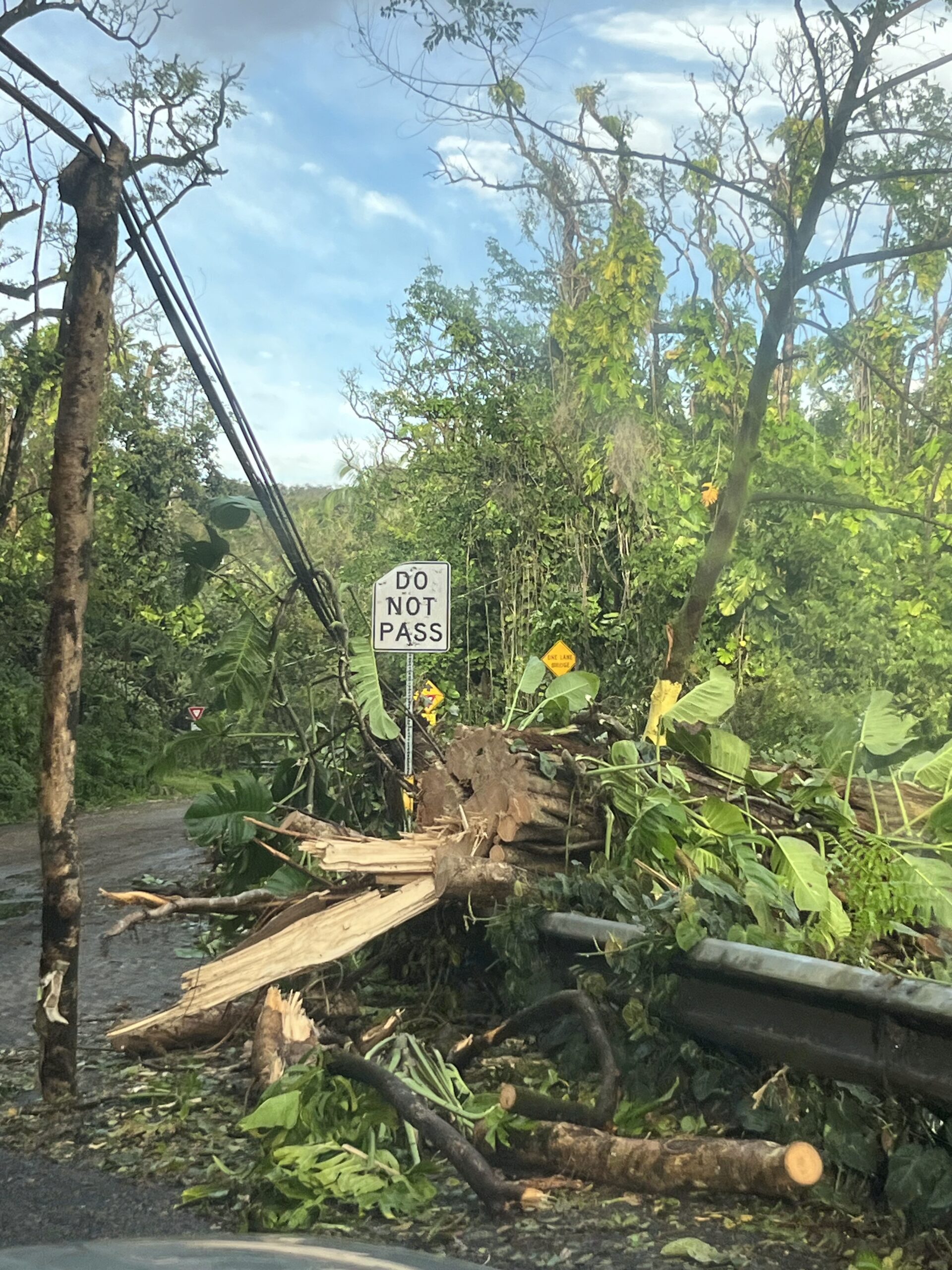
As of Tuesday afternoon, about 240 customers in East Maui were still without grid power as crews continued to repair 20 damaged poles and multiple spans of downed lines in remote, heavy vegetation, including the lines that that deliver power from Central to East Maui. The company asked residents to prepare for extended outages for several more days.
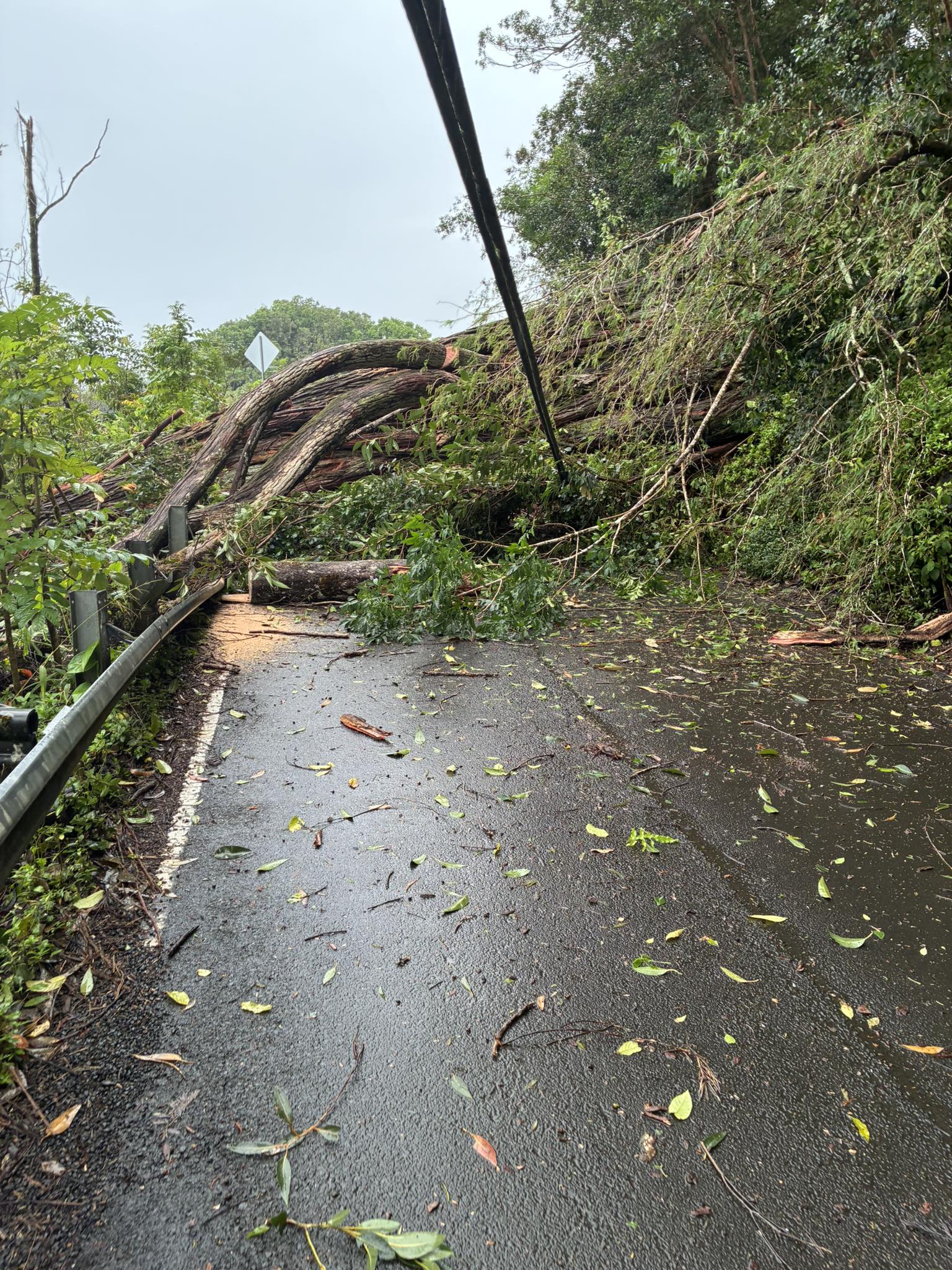
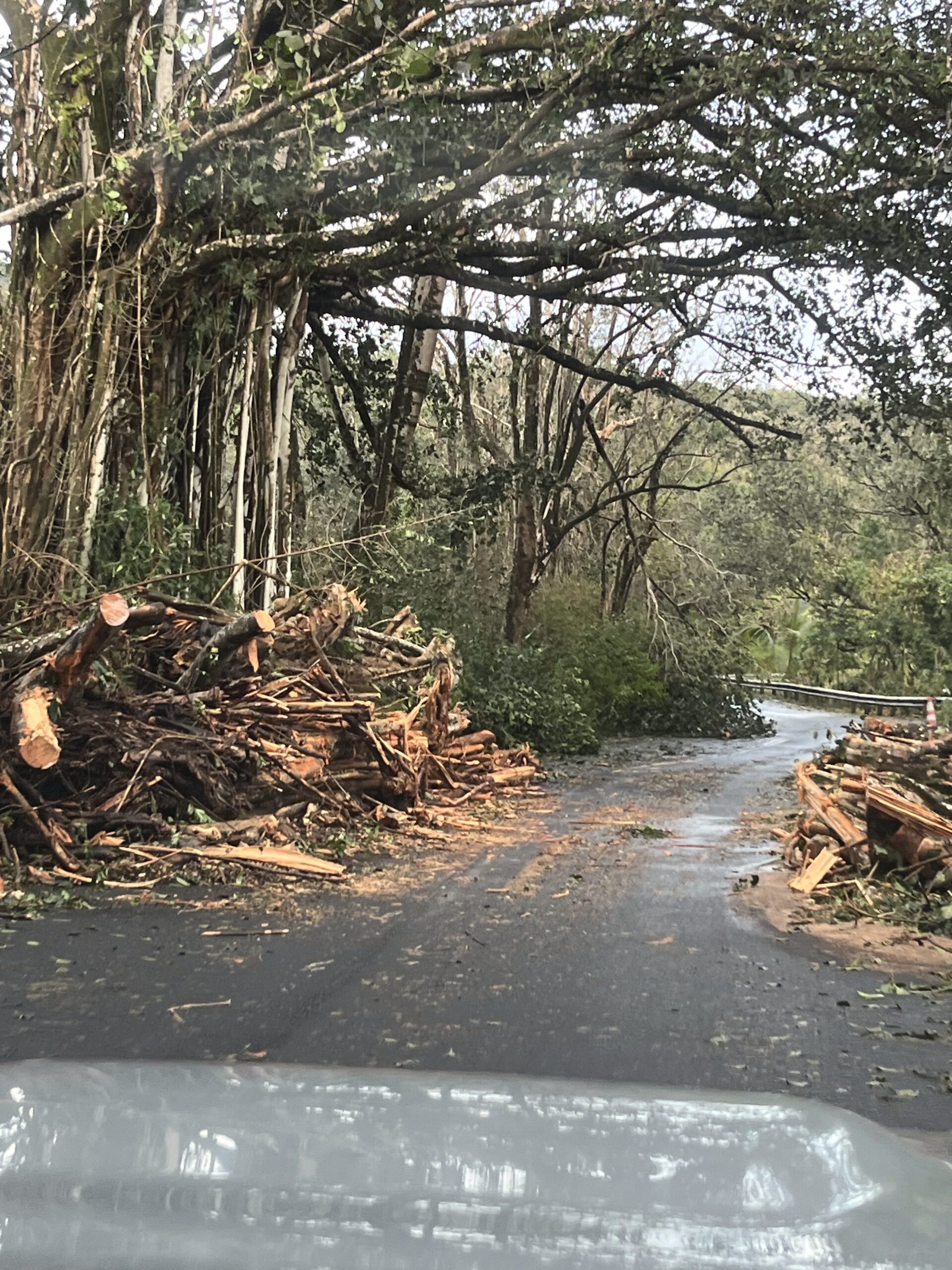
As of Tuesday, access to Hāna Highway was still limited to residents and emergency workers as crews continued to remove portions of the downed trees that blocked multiple sections of the critical road to Hāna, according to the state Department of Transportation.
Vasconcellos, who lives next to the Hāna Health clinic and dealt with a leaky roof over the weekend, said she and her staff were “trying to be in recovery mode” as the overcast, rainy weather dragged on.
But the loss of power and cold storage for more than three days forced them to have to throw away about $15,000 to $20,000 worth of crucial supplies of vaccines and other medicine.
The clinic is working to get tetanus vaccines, the most immediate need, from Mauliola Pharmacy in Wailuku. Those are set to arrive Thursday, Vasconcellos said. Other vaccines for things such as the flu, pneumonia and shingles could wait and would likely be restocked within a week or so.
Vasconcellos is just glad there were no major health emergencies during the storm. With the road blocked by trees, the ambulance couldn’t get out of Hāna town for two days.
The clinic borrowed a small generator from Maui County that they used to power the urgent care room during the storm. They took a few cases that included a patient who needed stitches and also worked with the ambulance provider to get oxygen to a resident in need.
The storm also wreaked havoc on the 15-acre certified organic farm run by the clinic as part of its Hāna Fresh initiative that aims to improve community health and food security. Two greenhouses were totally destroyed and the roofs of another four were lost. At least half of the farm was damaged, including many banana and mountain apple trees.
Refrigeration went down in the kitchen where the staff prepares food for the clinic’s farm stand and Food as Medicine program. Vasconcellos estimated about $4,500 worth of food products and $2,800 worth of crops were lost.
Damages to the farm may take at least a month to repair, potentially longer “if the weather continues like this,” Vasconcellos said. In the meantime, the clinic plans to bring in food from other places to continue its programs.
The clinic currently is accepting all patients.
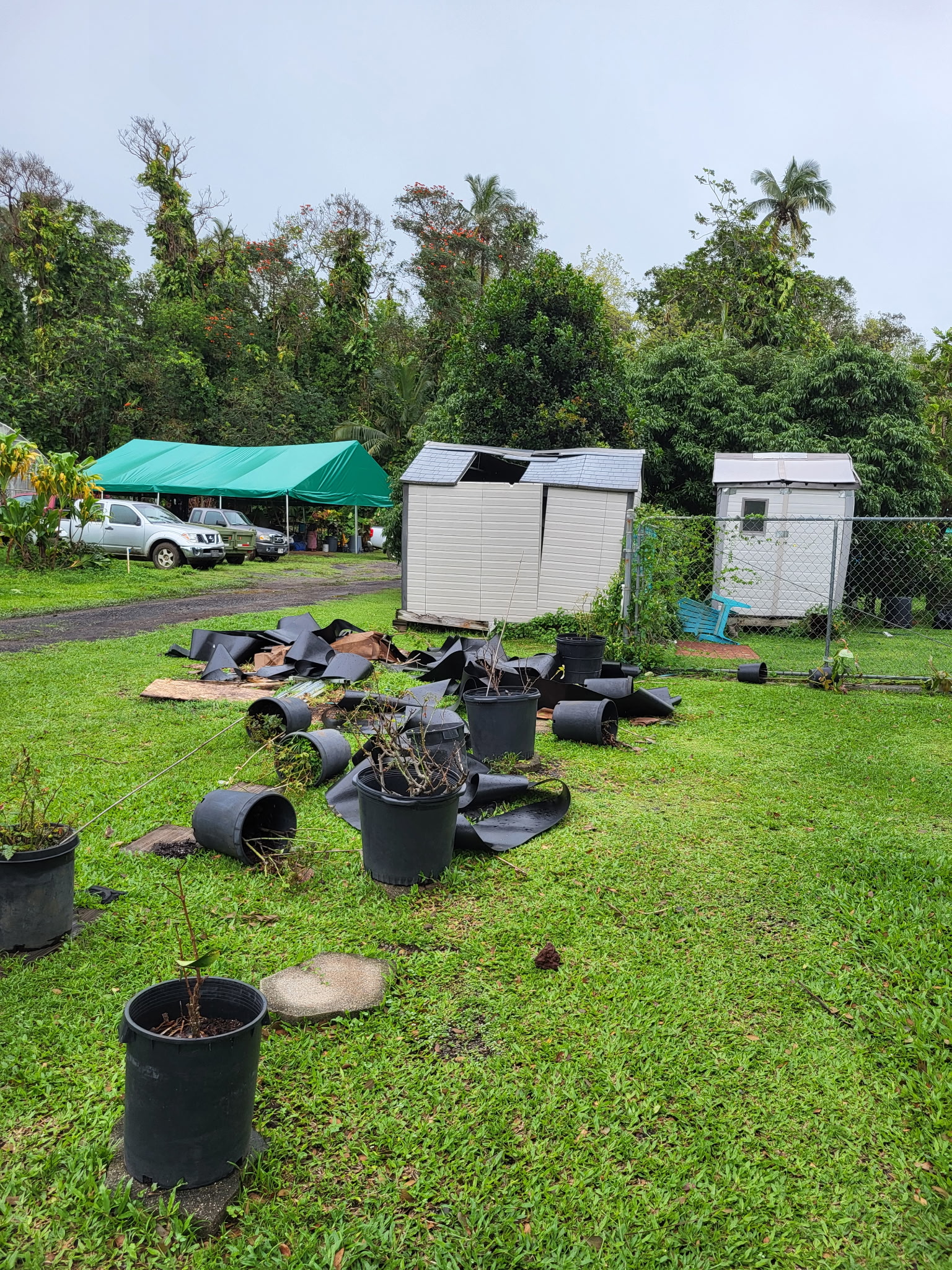
About a mile down the road at Hasegawa General Store, the storm peeled a 20-foot-by-20-foot portion of the roof of the popular one-stop shop for food, drinks and hardware supplies. But the hole, which has been temporarily patched, is not what’s keeping owner Neil Hasegawa from opening. It’s his computer system, which powers his inventory records and cashier transactions and was damaged by intermittent power outages on Friday morning.
Despite paying Dell for a “premium package” with next-day, on-site service, Hasegawa is not sure when it will get fixed. The last time he had IT issues, he had to wait about a month for someone to fly over from O‘ahu to fix it.
In the meantime, he plans to buy a computer on his weekly trip into Central Maui on Thursday. He hopes to reopen by Friday.
Hasegawa has spent the last few days shuttling between the store and his home in Hamoa — avoiding a downed utility pole along the way — to check on the roof and cover supplies with tarps and plastic trash bags. The rain soaked some paper forms, envelopes and rolls of adding machine tape, and he had to toss ice cream that melted after three days without power. Miraculously, some of the Haagen-Dazs products stayed frozen.
Hasegawa credited the manager of the Hāna-Maui Resort with bringing in a big generator to power the gas station on Sunday night while residents were waiting for electricity to be restored.
“So that was a good thing because a lot of people were running out of gas because they were running their generators,” he said.
The 62-year-old Hasegawa has spent most of his life in Hāna and weathered plenty of intense storms. But this one, he said, “is the worst it’s ever been.”
Christine Hill, manager of the Hana Ranch Store, also described the storm as “definitely the worst I’ve seen” since she moved to East Maui in 1980.
At her home in Nahiku, Hill still doesn’t have power, internet or phone service. Fallen trees on the road forced her to spend Friday night in Hāna at a friend’s house.
“I’ve never seen it so bad,” she said.
The Hana Ranch Store reopened on Tuesday to cash sales only, with their internet still out and the system unable to process credit and debit card transactions.
The store had stocked up before the storm, but after losing power from Friday afternoon to Monday morning, they had to toss thousands of dollars worth of products like milk, cheeses and ice cream. On Wednesday, the store had limited offerings of dry goods as workers called in more orders. Hill said they were busy as customers stopped in for crucial supplies like propane.
“There’s a storm coming in a couple days,” Hill noted. “Everyone’s freaking out already again.”
Vasconcellos said the storm made it clear that the clinic needs its own backup generators and can’t depend solely on the big generators that help power Hāna town during outages. There’s currently a bill in the State Legislature that would help community health centers in rural areas get solar power and battery packs, which she said would help in an emergency. If they’d had that during the most recent storm, “we would have converted to the battery packs right away,” she said.
“I don’t know that they would have lasted as long as we needed them to, but at least it would be something,” she said. “We also really need to focus on assuring that these isolated rural communities are … resilience hubs, especially when we’re delivering medical care and food to this community.”
Hawaiian Electric said that “troublemen” are stationed in remote areas of the island, including East and West Maui, and that it does take measures to station crews and materials ahead of storms if possible, depending on where the impacts are slated to be.
When it comes to restoring power after a storm, Hawaiian Electric crews first start by repairing damage to the company’s power plants and lines. Then it prioritizes critical facilities such as hospitals, water pumping sites, wastewater plants, military facilities and the airports, while trying to return service to the largest number of customers possible in the shortest amount of time. From there, they repair the infrastructure serving smaller groups and neighborhoods.
In the meantime, residents have learned to make do.
Claire Kamalu Carroll, who helped out at the Red Cross shelter at Hāna High and Elementary School’s cafeteria, said a total of 36 people used the facility, including two of the town’s mailmen. The last three people were sent home on Sunday night as the storm eased.
The winds were so bad that Carroll said her grandkids’ large trampoline blew over the fence and into her parents’ yard. Neighbors reported a bag of recycled cans taking flight “tornado style.”
But living in a small, remote town does have its advantages. Carroll said first responders know who relies on electricity to power their medical devices, and they did welfare checks to make sure people had oxygen and other supplies.
“We can just be so grateful that we activate as a community,” Carroll said. “It’s not one person. It’s everybody just coming together.”