 Hawai'i Journalism Initiative
Flood-prone Kīhei Crossroads for sale as its popular businesses remain closed from latest storm
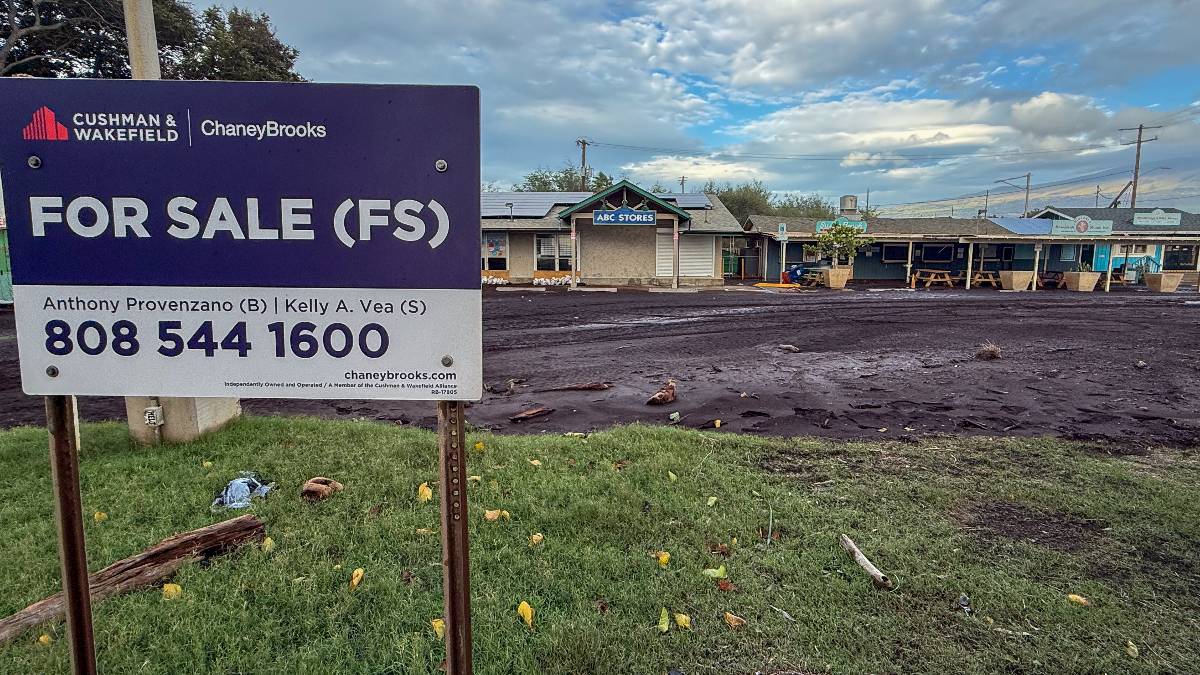
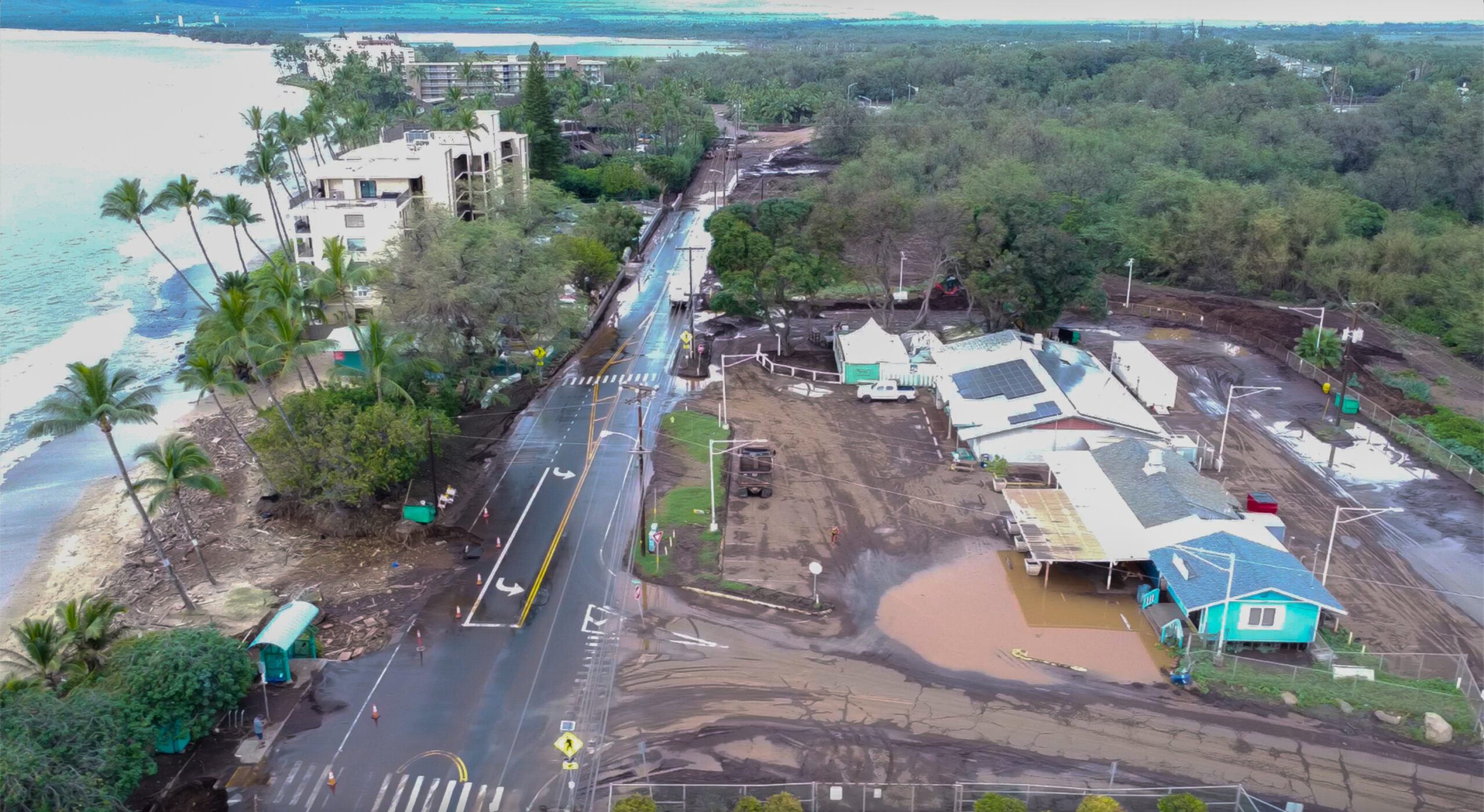
Last Sunday, as flood waters receded from the Kona low storm, a “for sale” sign stood in thick mud in front of the popular North Kīhei strip shopping center, which is home to Ululani’s Hawaiian Shave Ice, the Sugar Beach Shop, Farmer’s Market Maui, a gift shop and an ABC Store.
In June of 2025, Kīhei Crossroads and the surrounding vacant land went on the market for $15.85 million.
HJI Weekly Newsletter
Get more stories like these delivered straight to your inbox. Sign up for the Hawai‘i Journalism Initiative's weekly newsletter:
The listing by Cushman & Wakefield features two parcels together: a 29.2-acre property that includes the shopping center and vacant land, and a nearby 3.9-acre parcel of vacant land.
“The expansive lot offers significant excess land, ideal for future development, with excellent frontage and visibility from Piʻilani Highway, S. Kīhei Road and Uwapo Road,” the listing said.
The nearby 3.9 acres at the corner of South Kīhei and North Kīhei roads further enhances “the potential for a development play in this high-demand area,” the listing also said.
While the property is in a prime location, it also is in an area that recently has flooded four times in the past five years or so. Heavy rains, with soil and debris, flow down Haleakalā, with gravity trying to take it to the ocean. Drainage areas get overwhelmed and clogged, especially at the low bridge over South Kīhei Road that is near the center.
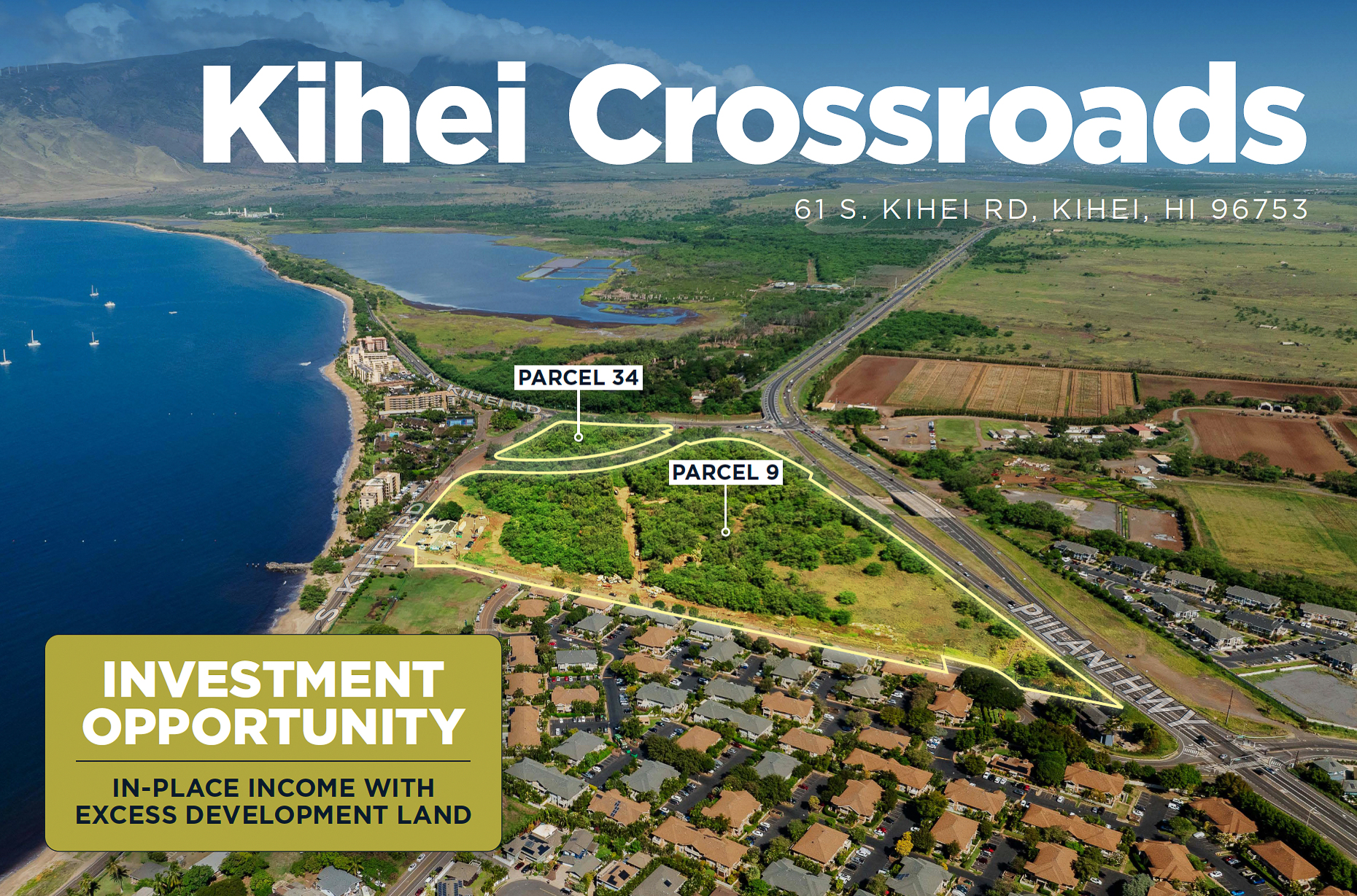
The bigger property is owned by the Harry & Jeanette Weinberg Foundation, which has deep pockets with approximately $3.1 billion in total assets, according to its website. The other property is owned by Honolulu Limited, which owns multiple properties across Maui, according to property tax records.
On Wednesday morning, Kīhei Crossroads should have been buzzing with spring breakers, tourists and locals looking for souvenirs, sweets, fresh baked goods, and healthy fruits and vegetables.
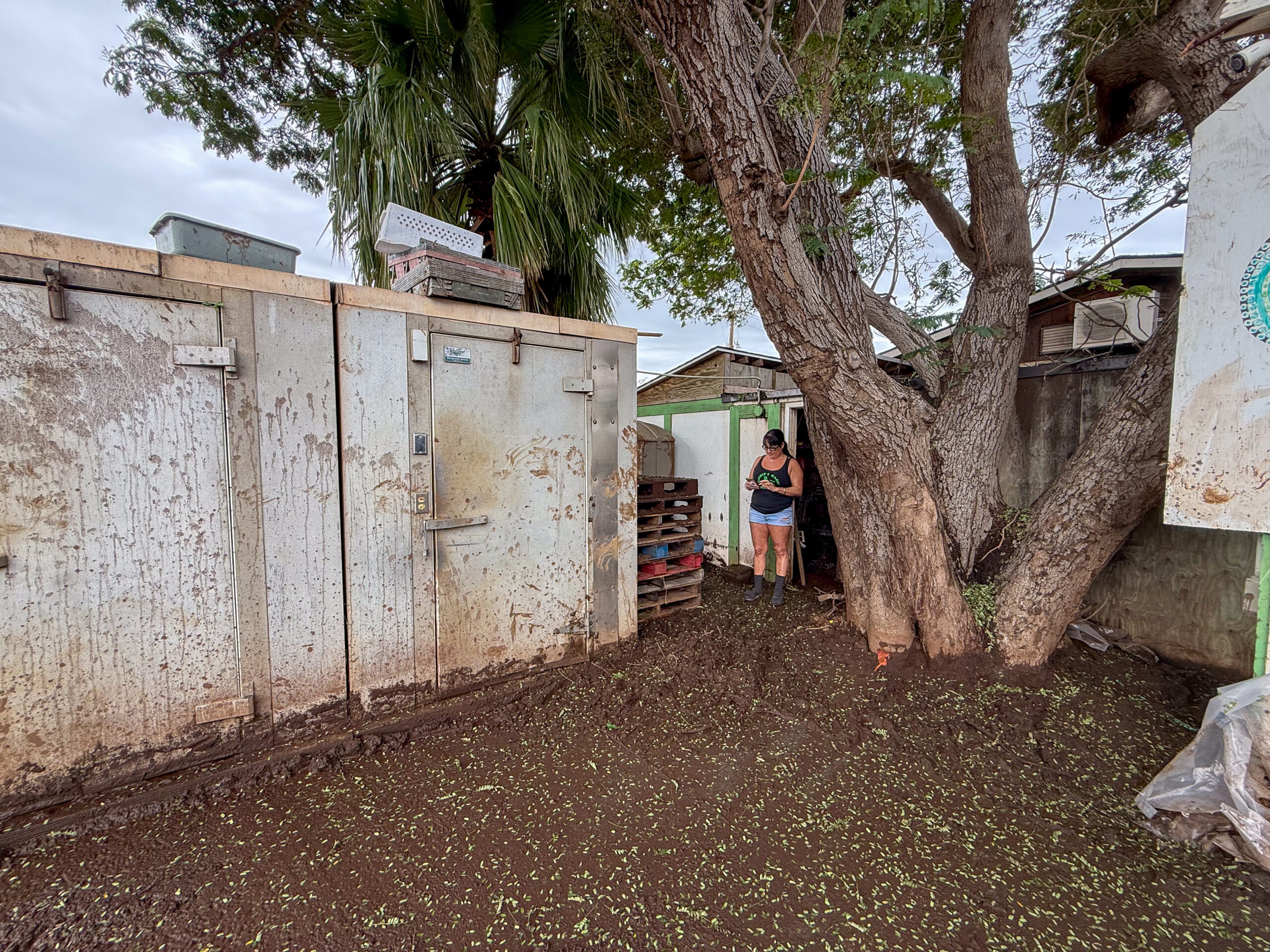
But the only activity was a mini excavator clearing mud from the parking lot of the 5,130-square-foot row of small buildings, and farmer’s market owner Sachi Friedmann opening the door to her business to continue the cleanup inside.
“I don’t know how much longer we’ll be able to stay in business, honestly,” said Friedmann, who began working at the market when she was 5 and took over the business from her father in 2000. “It’s been a tough one.”
Before the storm struck on Friday the 13th, she said she did everything she could to mitigate damage, lessons learned from the previous floods. She moved all items that she could to higher locations and minimizing the refrigerated items. About 100 sandbags and plastic were put around the outside.
“We’re learning from each time — and lifting up stuff and putting more barriers up,” Friedmann said. “Because we know it’s going to come.”
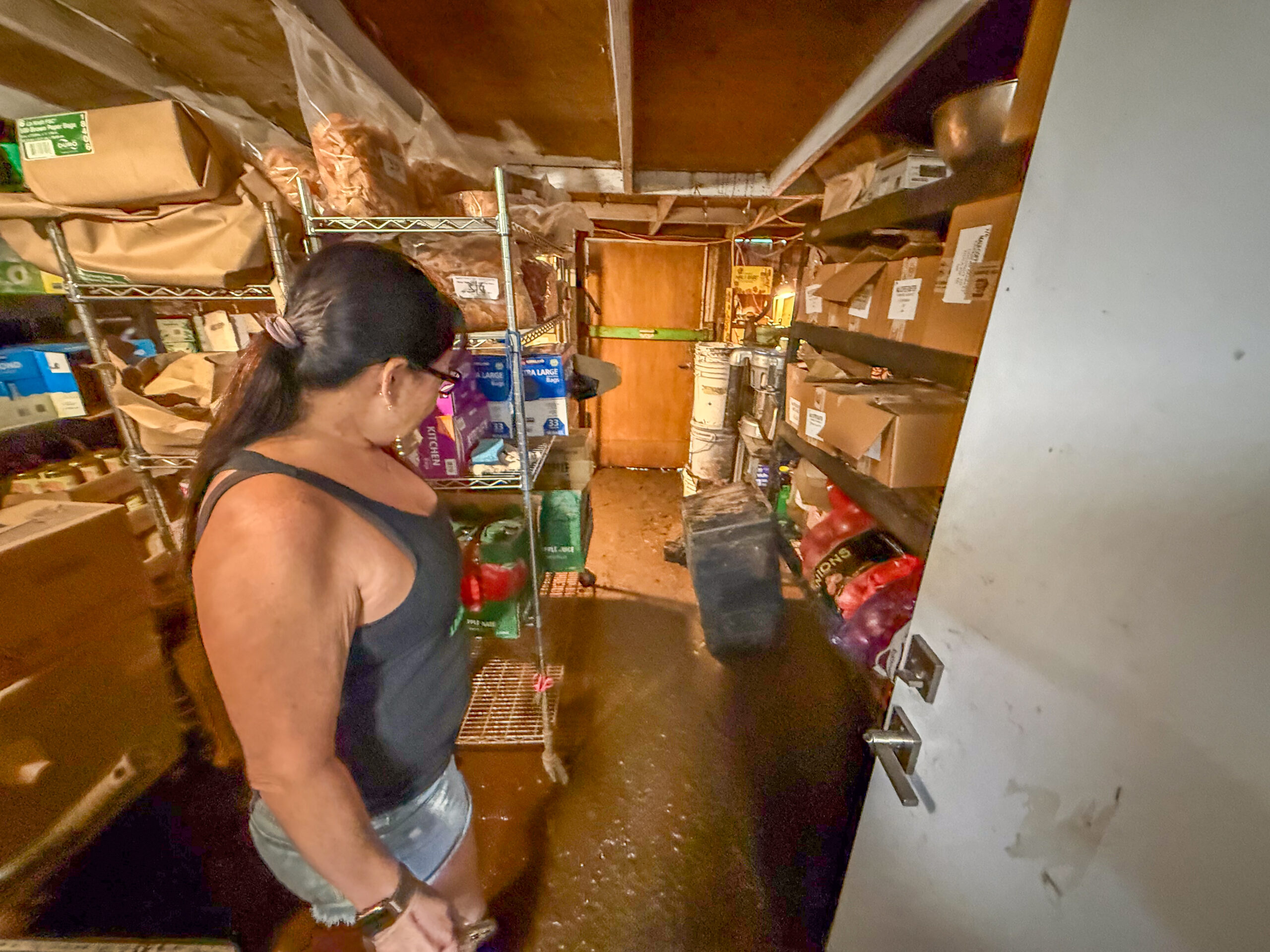
All this preparation helped, but some water and mud still oozed in. Some food spoiled after more than two days without electricity. And, a big tree branch fell on one of the tents in the courtyard.
Friedman estimates she will suffer damages and lost revenue of $10,000 to $20,000.
She also is concerned about the market’s vendors who also will lose revenue. Many of them also lost crops due to the heavy rains, she said.
“Different months it varies, but we probably have up to 50 different vendors of different products that we carry and sell,” Friedmann said. “We have lots of just people who sell stuff from their backyards; people who trim trees and sell coconuts. We have lots of homemade dips and desserts and also smoothies.”
David Yamashiro, CEO and co-founder with his wife of Ululani’s shave ice and gift shop, and owner as well of the Sugar Beach Shop, said: “We thought we were clear because normally the floods were always happening in January or February. So we got through that. We were in March, and we were saying, all right, we made it. And then this happened.”
But he said the new mitigation efforts designed and installed by his utility team worked surprisingly well.
“We were able to put barriers on all our entries, and we also fortified the bottom 22 inches of our building,” he said. “We literally waterproofed that. And then we sealed all of our doorways, front, back, storerooms, bathroom.”
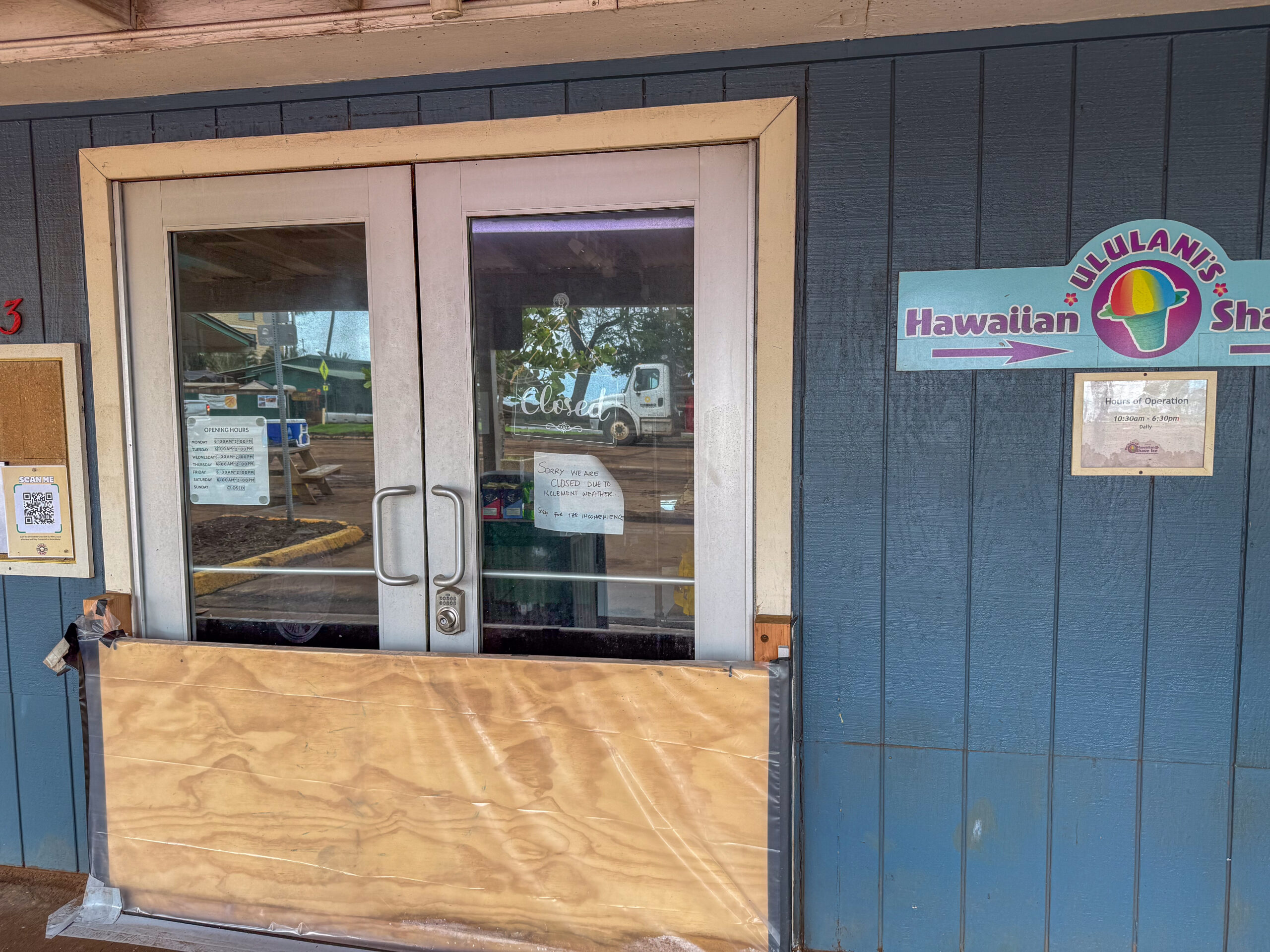
The setup, Yamashiro added, was “like MacGyver,” referring to the TV character who solves complex problems by making things out of ordinary objects.
He said all the businesses suffered little damage, with no mud and only a small pool of water making it inside.
Previous floods had caused the businesses to stay closed for four to six weeks, with cleanup of 3 to 6 inches of mud, sanitization and replacement of equipment. “Oh, God, it was just a mess,” he said.
This time, the shave ice company lost only minimal refrigerated items due to the electricity outage, and at the bakery some goods were thrown away out of an abundance of caution.
“We’re completely, completely blessed,” he said. “We could open up right away if the road opens.”
Every day the business can’t open cost thousands in revenue, he said. Employees also are not able to work.
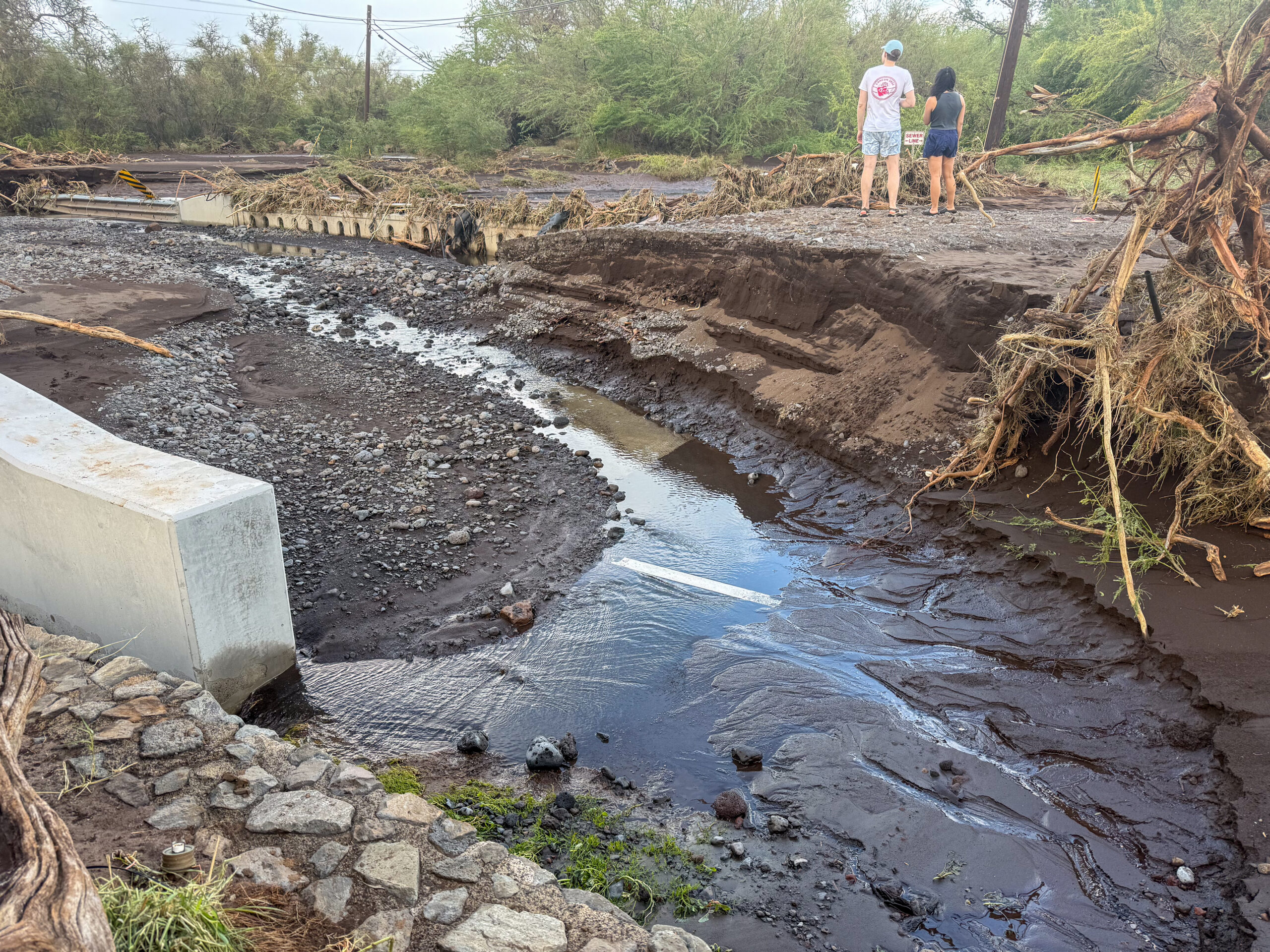
Yamashiro said the “bad or crazy part” is the flooding in this area only started within the past five years, ever since they fixed the bridge.”
The bridge project was part of Maui County’s Kīhei Drainage Master Plan of 2016.
“I really believe it was a design flaw because even on a good day, there’s only like a foot clearance between the water level and the bottom of the bridge,” Yamashiro said. “So literally any debris that’s going to come down a stream during a flash flood or a flood, it’s going to block the flow through.”
All roads to the shopping center had been closed due to heavy mud and debris. The shopping center also counts on the traffic going along South Kīhei Road, which has been damaged in several locations. That damage includes a big chunk of roadway that washed away in front of the center and next to the Kīhei Canoe Club.
But on Friday, the roads were open, with traffic having to use only one lane around the big hole.
Yamashiro said he doesn’t “keep track” of Kīhei Crossroads being for sale.
“A lot of it is not going to affect us,” he said. “We are a good tenant for anybody to have. We are considered to be a cornerstone.”
The listing said there is the potential to subdivide the land, and sell off a portion. But it is in a special management area, which means any development would have to go through extra permitting.
Yamashiro said he is not concerned that a new buyer would redevelop the shopping center.
“A lot of headaches that come with it, too,” he said. “Any property to go through four floods, and that didn’t even include any hurricanes.”
Listing agents with Cushman & Wakefield did not return calls for comment. A message left on the Weinberg Foundation voicemail was not returned.
The Weinberg Foundation recently sold another Maui property. In June 2025, the foundation sold the land under Fairway Shops in West Maui to an affiliate of Nevada-based real estate investor and developer McBeath Holdings for $10 million. The property along Honoapi’ilani Highway had been under the Weinberg Foundation’s ownership since 1981.
Friedmann said she was never informed that the shopping center was for sale.
“It’s kind of hard because eventually it probably will sell,” she said. “But also we’ve had a good working relationship with our landlords.”
She said during the COVID-19 pandemic, which led to the shutdown of Maui to tourists for more than six month, she did get a little break on rent.
“As for the flooding, I haven’t asked and they haven’t offered,” Friedmann said. “Luckily, I have a great support crew here, my managers and our crew members, who have been really dedicated and helpful and just sticking together and getting through each hurdle.
“But you throw in the fires, and we have had a tumultuous six years. I’m just like: ‘Is it ever going to end?'”