Maui Council hears appeals for agriculture and animal shelter relief

Local farmers told Maui County Council members Thursday that the government is falling short of providing island agriculture the help needed to sustain operations. Representatives of the Maui Humane Society also warned that the island’s only open-admission shelter is facing a “perfect storm” of rising costs and record demand.
Farmers seek funding changes
During public testimony before the Budget, Finance and Economic Development Committee, local farmers called on the County Council to overhaul agricultural funding and infrastructure, reporting that a lack of slaughterhouse capacity and upfront capital forces producers to downsize operations, jeopardizing island food security.
Bobby Pahia, owner of Hawaiʻi Taro Farm, and hog farmer Hanalei Colleado urged county officials to shift from reimbursement-based to direct-funding grants.
Colleado, who operates on leased land through the Kaialahui Foundation, told council members he was forced to downsize his operation from 1,000 hogs to under 100 animals because of a “bottleneck” in local slaughter facilities.
“The slaughterhouse cannot — they don’t have the capacity to move my product into the local market because it has to be USDA certified,” Colleado said. He said he could no longer afford to feed animals he could not process for sale.
Pahia, an adviser to the Kaialahui Foundation, applauded the county for its investment in the Department of Agriculture but said current grant structures are failing farmers in the field. He advocated for micro-grant programs similar to those run by Maui Economic Opportunity.
“Agriculture is tough. Margins of profits are slim. The cost of production is high,” Pahia said. “Our farmers, they don’t have the kind of money for the investments they need to pick up equipment, and they don’t have the kind of money upfront in a reimbursement program.”
Council Member Gabe Johnson asked Colleado if a mobile or modular slaughterhouse would resolve the issue. Colleado confirmed that the Kaialahui Foundation has researched modular units costing approximately $6 million, but said they lack the infrastructure and funding to move forward.
“We need advocacy, and that’s where we need guys like the Department of Agriculture to go to bat for guys like us,” Colleado said.
Pahia emphasized the urgency of increasing local production, noting that Hawaiʻi currently imports more than 90% of its food.
“All it takes is a terrorist activity, dock strike, a pandemic, and we’ll all be in a situation where we have, they say, two weeks’ food supply,” Pahia said.
Humane Society faces rising demand amid housing crisis
The Budget Committee also heard from the Maui Humane Society, which is requesting budget increases to manage an influx of animals at its Puʻunēnē animal shelter.
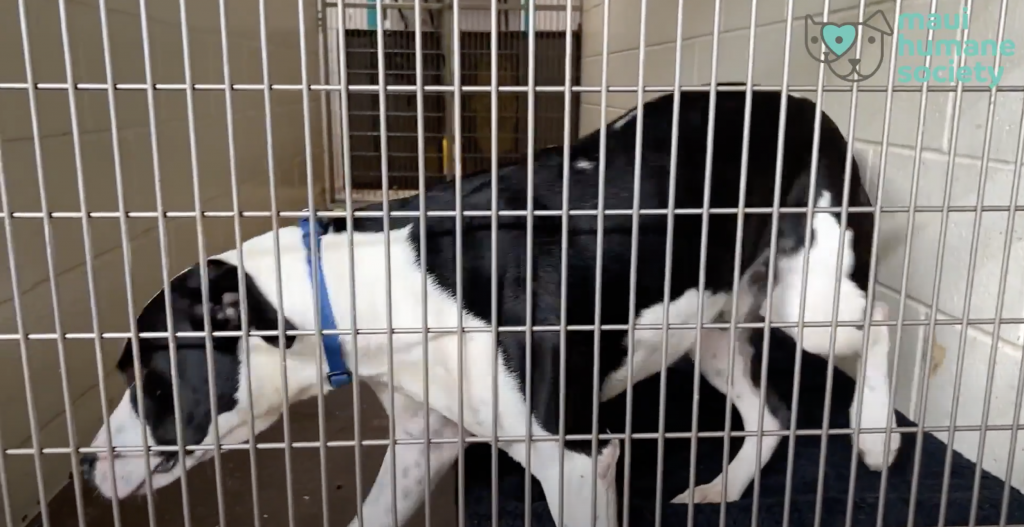
Interim Chief Executive Officer Nikki Russell said the loss of services from local partners has shifted the burden of displaced dogs and Molokaʻi puppies almost entirely onto the society’s shoulders.
Russell told council members the housing crisis and economic shifts are tearing pets away from families. Last year, more than 400 families surrendered animals because they could not find pet-friendly housing. Declining visitor spending has left other residents unable to afford basic care, forcing animals to stay in the shelter longer.
“We’re a safety net that never closes,” she said. “Last year alone, we took in over 5,000 animals. Beyond our walls, our humane enforcement officers serve as the frontline of public safety.”
Enforcement officers responded to more than 4,100 calls, investigated 500 cases of cruelty, and drove more than 108,000 miles islandwide to protect both people and pets, she said.
“The landscape of Maui has changed and our budget must evolve with it,” Russell said.
The agency is seeking an additional $332,000 for animal sheltering and $100,000 more for humane enforcement to reflect current operational costs. Russell also requested $250,000 for the “Forever Pets” program, which was not included in Mayor Richard Bissen’s proposed $1.61 billion budget.
Without adequate funding for mandated services, Russell said the society must use private donations to bridge the gap. This shift pulls money away from proactive community efforts, such as low-cost spay and neuter services.
Dr. Paige Okamoto requested $255,000 for the program, which has been proposed as funding in the administration’s budget. She said that would pay for 2,500 spay and neuter surgeries at about $102 per surgery.
“Spay and neuter is the most physically responsible move this Council can make,” she said. “Preventative care is significantly cheaper than the alternative. . . . We have the surgical supplies, we have the facility, and we have the skilled talent. What we need is a budgetary partnership to match the scale of the need. . . . An ounce of prevention is worth a pound of cure.”
Department of Agriculture budget overview
Department of Agriculture Director Rogerene “Kali” Arce presented a proposed fiscal year 2027 budget outlining a significant expansion aimed at bolstering the island’s food security.

Overall, the department is proposing a 12.1% increase to nearly $18.5 million.
The proposal includes a 38.3% increase in salaries and wages to $1.38 million for 18.5 positions—driven largely by collective bargaining and salary commission approvals—and a 10.4% rise in operations to $17 million, including additional grant funding.
Capital improvement projects for the department include a booster pump replacement at the Kula Agricultural Park, expected to break ground before the end of this fiscal year. Additionally, a contract for a 2.4 million-gallon reservoir and 12-inch mainline was recently awarded to Goodfellow Brothers Inc.
Arce requested three new full-time positions: a grants management program specialist, an accountant and a research statistician. The department is also seeking funding for office rental space to accommodate its growing staff.
The department is proposing two dozen grants totaling $15.6 million, an 8.8% increase over the current fiscal year’s total of $14.35 million. The largest single grant is $3.1 million for the department’s Agricultural Micro Grants Program, with proposed grant funding unchanged from the present fiscal year.
The Maui Humane Society’s Animal Sheltering Program would increase 13.9% to $2,715,000. The Maui Humane Society Molokai’s budget would grow 55% to $372,000.
The Animal Enforcement Program would go up 13.8% to $1,321,000.
The Agriculture Operations/Infrastructure/Education Program would remain status quo at $1,917,000. Also unchanged would be the Agriculture Recovery Program and Local Food Purchasing Incentive: Family to Family Grant, both at $1 million.
The department also is proposing to keep its Mitigation of Axis Deer and other Feral Animals Program level at $1.5 million.
Other grants proposed for expansion include:
- Food is Medicine: A new initiative promoting wellness through sustainable, whole-food consumption. (New grant of $300,000)
- Maui Nui Botanical Gardens: Expansion of educational efforts and seed banking for rare and cultural heritage plants (Up 33% to $200,000)
- Sustainable Molokaʻi: Support for the keiki meal box program through their food hub. (New grant of $175,000)
- Maui Economic Development Board STEM Works: Funding for the only program in the county connecting high school students with agribusiness and technology internships. STEM stands for science, technology, engineering and math. (New grant of $100,000)
Kula Ag Park board membership questioned
During questioning from council members, Arce was asked about being an appointed, voting member of the Kula Ag Park Board.
Council Member Kauanoe Batangan said he was “kind of surprised” that Arce was on the board as a voting member.

“I have an issue with that,” he said, “one, because of the workload issue that you mentioned, but, two, your department oversees this park and the committee is responsible for advising, and, at times, reviewing actions of the department. I think there’s a conflict there.”
Arce agreed. “Yes, you’re correct,” she said. “That’s why we’re in the process of doing language changes with Corp Counsel on that particular section of the Code.”
She indicated that, with the Code change, she’d become a non-voting member of the panel.
Upcoming community meetings
Here’s the schedule for future community budget meetings, all of which begin at 6 p.m.
- April 13, Mitchell Pauʻole Community Center, 90 Ainoa St., Kaunakakai.
- April 14, Kīhei Community Center, Main Hall, 303 E. Līpoa St.
- April 15, Lānaʻi High & Elementary School Cafeteria, 555 Fraser Ave., Lānaʻi City.
- April 16, April 16, Kalana o Maui, Council Chamber, 8th Floor, 200 S. High St., Wailuku.
- April 17, Lahaina Civic Center, Social Hall, 1840 Honoapiʻilani Hwy.
Sponsored Content