
 Hawai'i Journalism Initiative
West Maui condo agrees to finally put in public beach access that was required 50 years ago
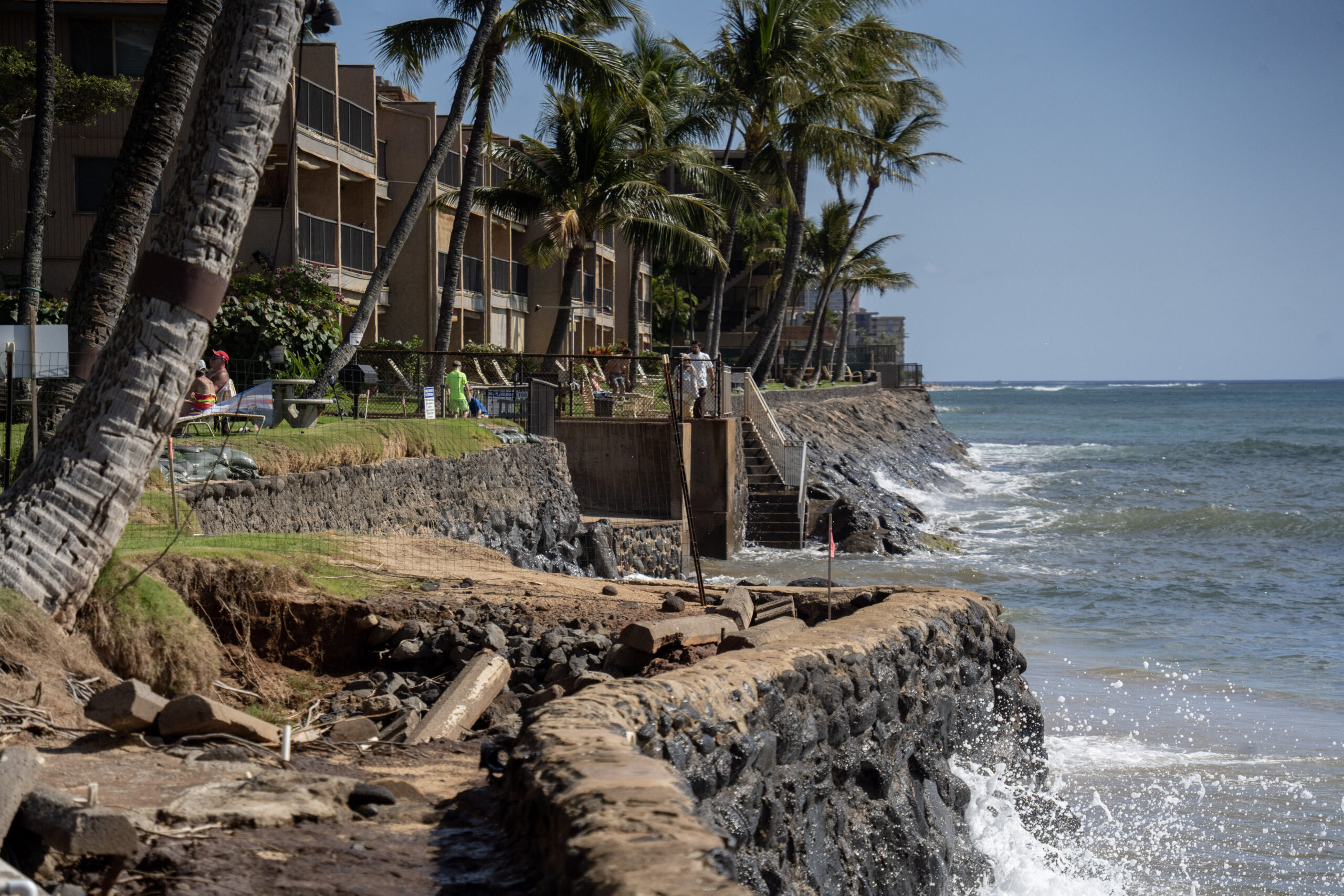
The owners and association of a West Maui condominium complex that has not provided required public beach access for nearly five decades have agreed to finally install a pathway and stairs to the shoreline to avoid nearly $2 million in fines from Maui County.
The Maui Planning Commission voted last week to approve an agreement between the county and the Hale Mahina Beach Resort that would waive the complex’s growing fines as long as the beach access pathway is installed within a year of obtaining permits.
“The department’s priority here is public access,” said Kristin Tarnstrom, deputy corporation counsel for Maui County. “It’s not about collecting as many fines as possible. We really just wanted to bring all the parties together (and) get access to this beach, which has been denied the public for many decades.”
An attorney for one of the condo owners called the deal a win for all sides, but West Maui’s planning commissioner saw it as just one more incident in the longstanding battle between beachfront property owners and the public trying to access the shoreline.
“The abuse to the public trust lands there has been unbelievable,” Commissioner Mark Deakos said.
Hale Mahina sits on a stretch of beachfront next to three other condos — the Lokelani Condominiums, Hoyochi Nikko and Kuleana Resort — that don’t provide beach access because they were built before the Coastal Zone Management Act took effect in Hawai‘i in 1977. The act gave the counties oversight of special management areas along the coastline and required permits for development in these areas.
When Hale Mahina, known as the Mahinahina Beach Resort at the time, wanted to redevelop in the 1970s, it had to seek a special management area permit. In 1977, the Maui Planning Commission approved the condo’s permit but required it to set aside a “paved and aesthetically approved” public beach right of way and stairs at the existing seawall.
In 2020, the county Department of Planning received a complaint that the condo wasn’t following these conditions, Tarnstrom said. She explained that there is a path on the north side of the property to the shoreline that was created as part of a private settlement agreement between the condo complex and members of the public. However, it doesn’t reach the beach and fails to meet the requirements of the 1977 permit.
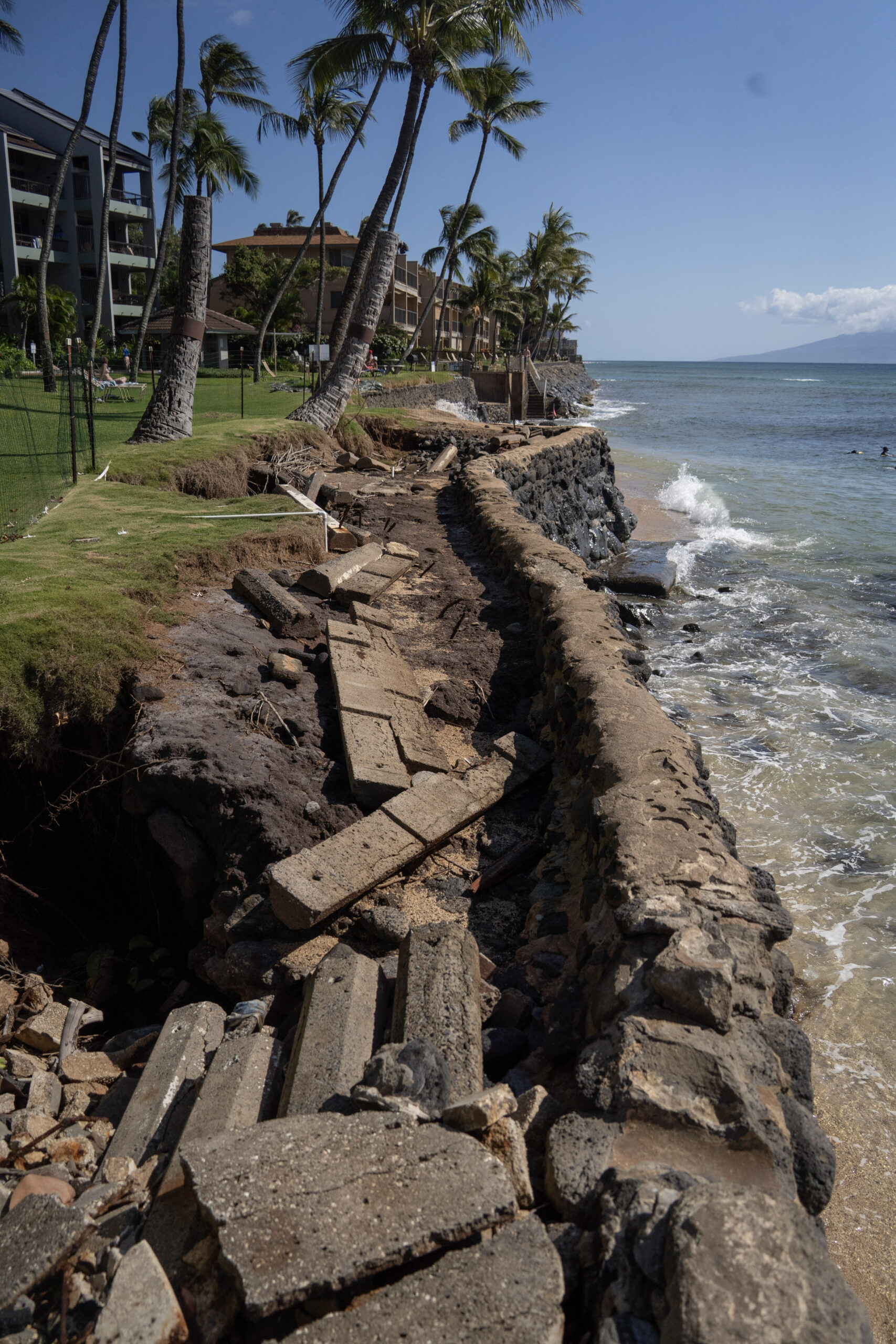
“That access stops at the top of a seawall with bars across it so you can get to the shoreline, but you can’t get down to the beach, which is the requirement in the agreement in the permit,” Tarnstrom said.
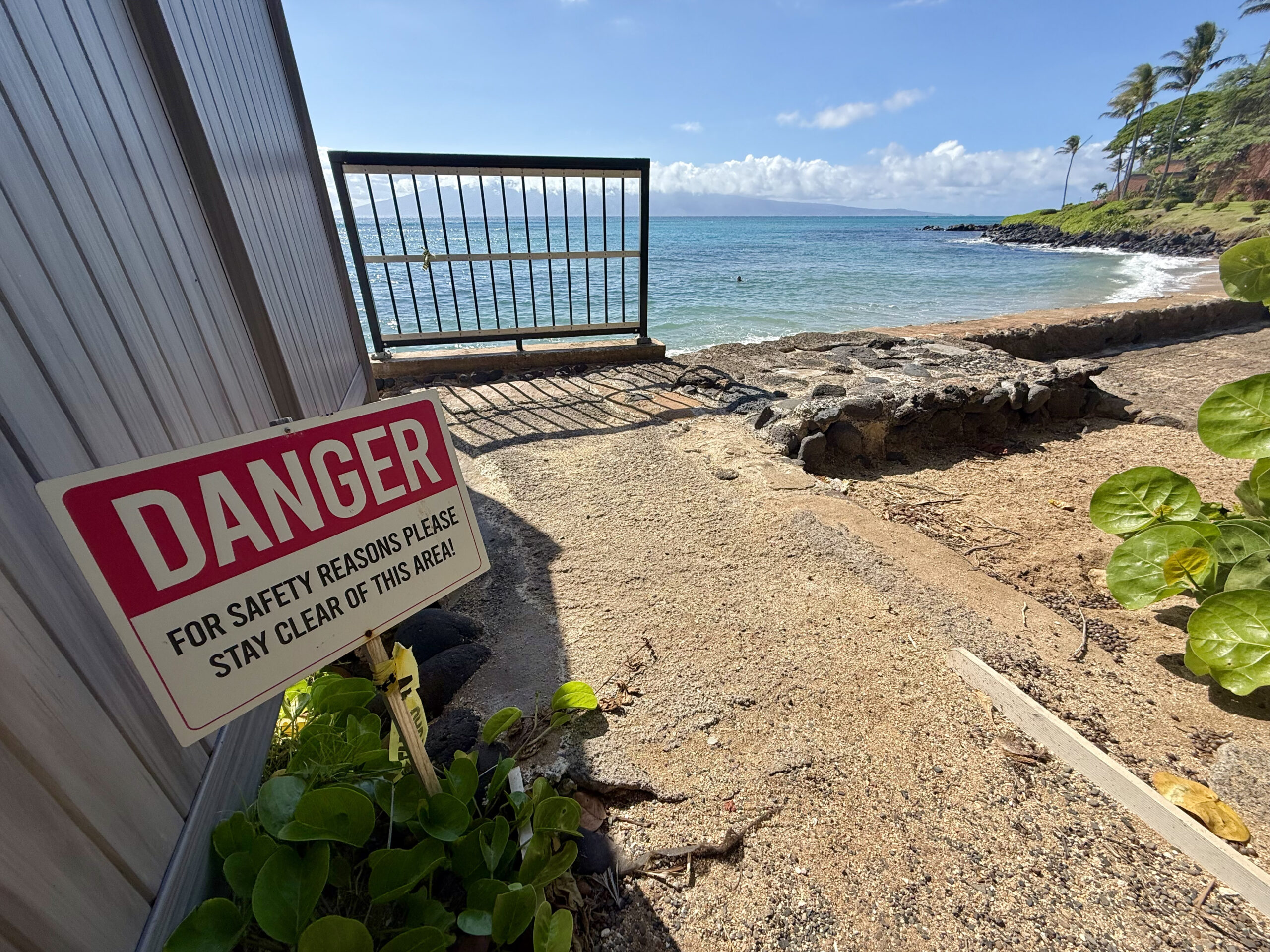
The county issued a notice of warning to the apartment association and fee owners in early 2023. On May 8, 2024, with the access issues still unresolved, the department issued a notice of violation with an initial fine of $50,000 and daily fines of $1,500 per day starting on May 15, 2024, and $2,500 per day starting Nov. 5, 2024. That would put total fines at nearly $1.77 million as of this month.
Hale Mahina has both fee owners and individuals who lease long-term spaces, as well as an association that governs the property. All of those different interests and agreements made it difficult for the county, the association and the fee owners to come to some sort of resolution, Tarnstrom said.
The association and fee owners timely appealed the notices of violation, and on Jan. 12 of this year, they participated in mediation with the department. The association and fee owners recognized that the beach access conditions “have not been strictly complied with,” according to the agreement.
Under the deal that all the sides reached, the association must file permit applications within 45 days of approval to establish a temporary pathway on the south side of the property from the parking lot to a gate at the corner of Building B. The pathway would need to be open daily from 7 a.m. to 7 p.m., measure at least three feet wide and extend from the parking lot to the bottom landing of the existing stairway that provides beach access.
The association also will install a privacy fence on the top of the existing retaining wall along the pathway fronting the Building C area, a chain-link fence from the area seaward of Building B to the bottom concrete landing of the existing stairway, and a lockable security gate at the top of the existing stairway to the private property.
Once the beach pathway is installed, the department will rescind the notice of violation and waive all existing fines. If the association fails to submit a permit application within 45 days or install the pathway within one year of obtaining the last permit or approval required to install the pathway, the agreement will be void and the fines will be reinstated and accrued as if there were no agreement.
The deadline to install the pathway can be extended if there are delays on the county’s part. The county agreed to “work in good faith” to ensure the permitting meets requirements so the department can support the application.
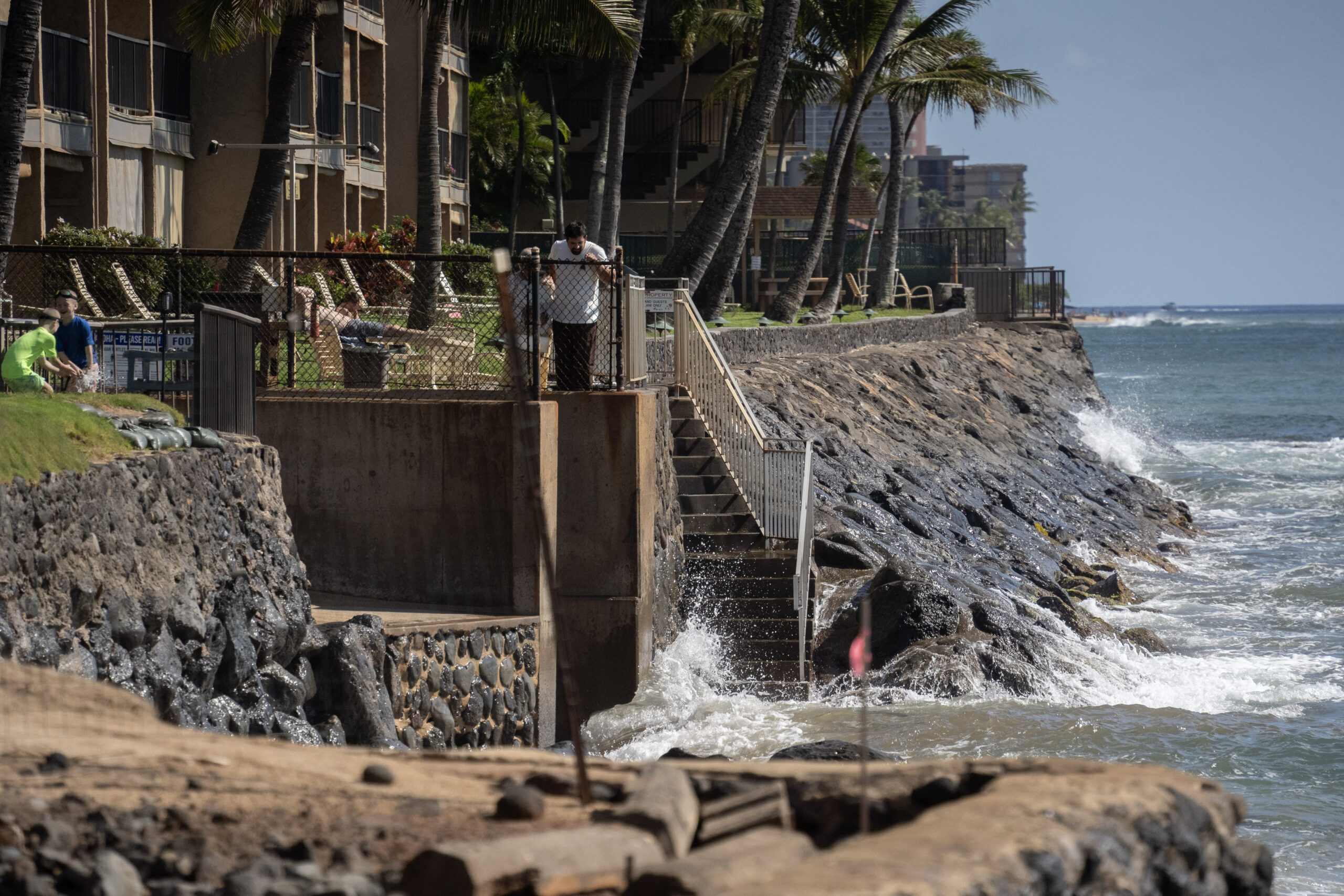
Attorney Andrew Chianese, who represents the association of apartment owners, said Hale Mahina hasn’t been able to comply with the 1977 requirements because providing beach access would essentially be “dumping people into the ocean.”
“The path ends at the seawall and it would be detrimental to the seawall if we were to break into it to put the stairs,” Chianese said. “In addition though, there’s not as much sand beach access there. So it’s not safe for people. … The path that we are proposing leads to a much larger and safer beach access area.”
David Cain, an attorney for Deborah Loeffler, one of the fee owners who appealed the notice of violation, said “we have several defenses including statute of limitations that we could have taken to Circuit Court,” but instead they agreed to settle with the county.
“So it’s a win-win-win literally for everybody at this point,” Cain said.
The other fee owners who appealed are Tanya Fujiwara Swee and Patricia Jean Fujiwara-Woo, trustees of the June Fujiwara Lifetime Trust, and Derrick Fujiwara. Joseph Wlad appealed on behalf of the association.
Deakos disagreed with Cain. He helps respond to turtles in distress in West Maui and says it’s difficult to get public shoreline access “anywhere there for miles.” He resorts to trying to contact a condo owner with a code to the gate leading to the beach.
“They don’t own the beach. They don’t own the coastline. But that has been cut off from the public,” Deakos said. “So with all due respect, I understand this is a win-win-win according to some. I don’t see it that way.”
Deakos pointed out that while Hale Mahina was told in the 1970s that it needed to provide public beach access, “I can’t blame that all on you guys” because the county didn’t issue a warning until a few years ago.
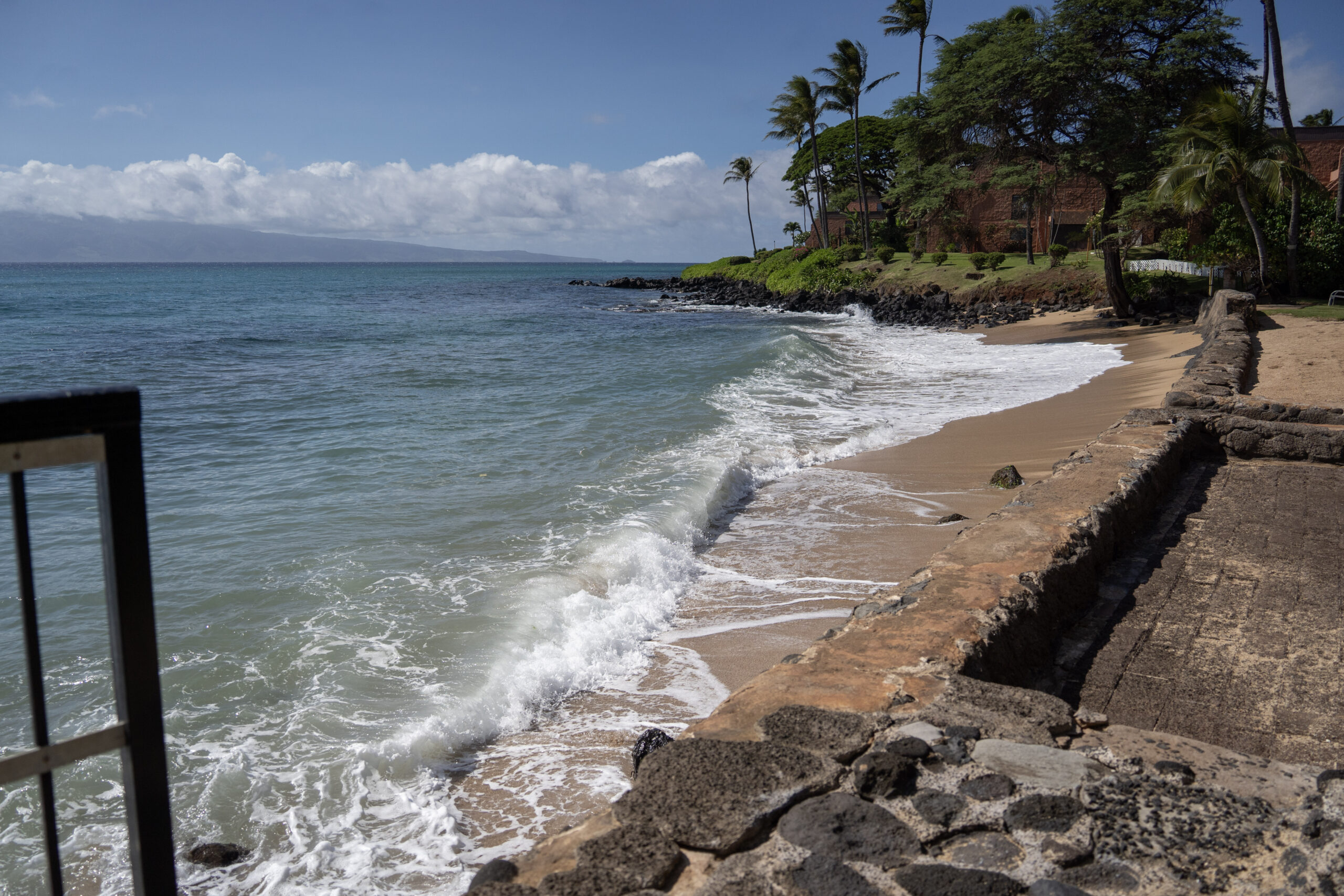
He noted there would be “a very large beach” there if not for the seawall and questioned where private property ends and public lands begin, especially as sinkholes appear behind the seawall. He said he didn’t want the approval of the pathway and waiving of the fines to override the issue of where public access stands.
“At some point we need to define the line of where the public trust is, and I just want to make sure when those opportunities arise, that we don’t turn on our back to the public,” Deakos said.
Kai Nishiki, co-executive director of the Maui Resiliency Hui and a longtime shoreline access advocate in West Maui, raised concerns that the association would only be responsible for the pathway through Feb. 19, 2046 “or for so long as it is legally or contractually required to do so,” according to the agreement.
Nishiki questioned how something that was a condition of a permit approval could expire and said she didn’t want to come back in 20 years to fight for public access again.
“It takes community members walking the shoreline for our access points,” Nishiki said. “This is literally the county’s responsibility and it’s not being taken seriously.”
Nishiki said the condo has been making money “for generations,” and that permit conditions need to be followed and not seen as something that the commission asks, “Hey, is this OK with you guys?” before imposing.
“You guys mandate something and they have to comply,” Nishiki said. “It’s not a reciprocal relationship.”
Cain said the property owners recognize if they don’t comply, they’ll face the consequences.
“If we don’t do the right thing then those fines are going to come back on us,” Cain said. “So yes, I mean, from my client’s point of view, we got to do the right thing.”
He also acknowledged that beach access has been an issue for decades.
“The county has been holding us to the grindstone,” Cain said. “These are basically sins of the father. … So these sins are being addressed right now and with all due respect, properly.”