Maui County and Māʻalaea condo reach agreement on a softer approach to shoreline erosion
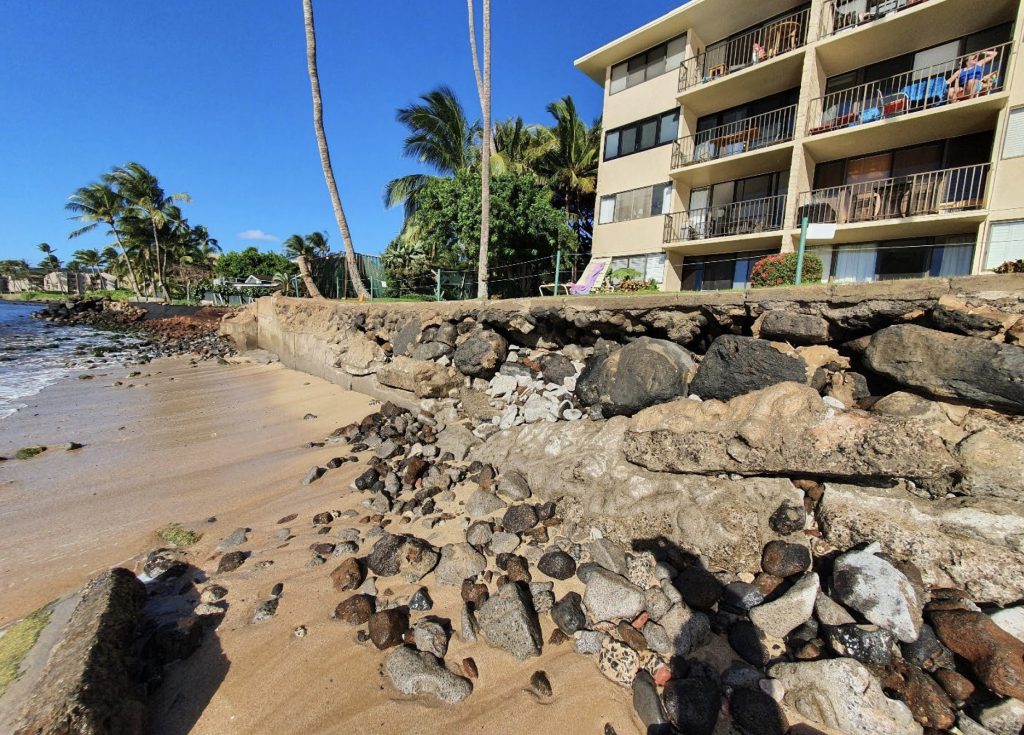
Kanai A Nalu condominium in Māʻalaea has won county approval to remove its aging, crumbling seawalls and let nature reclaim the shoreline, under a $2.4 million sea-level-rise adaptation plan that calls for a buried sand-filled “burrito” structure, a new dune and a public beach-access ramp.
The Maui Planning Department has issued a finding of no significant impact for the project, clearing a project hurdle for the 80-unit condominium at 250 Hauʻoli St. in Māʻalaea. The plan still requires a shoreline setback variance and a special management area permit from the Maui Planning Commission, along with building, grading and flood development permits.
“This is an example of the complexity of work when there is existing development built many years ago and is now very close to the shoreline,” said Department of Planning Director Jacky Takakura. “It is challenging to balance environmental needs with existing development.
“We are glad to see removal of a seawall; however, the proposed burrito is not a permanent solution, and we need to continue researching long-term solutions,” she said.
Decades of failing seawalls
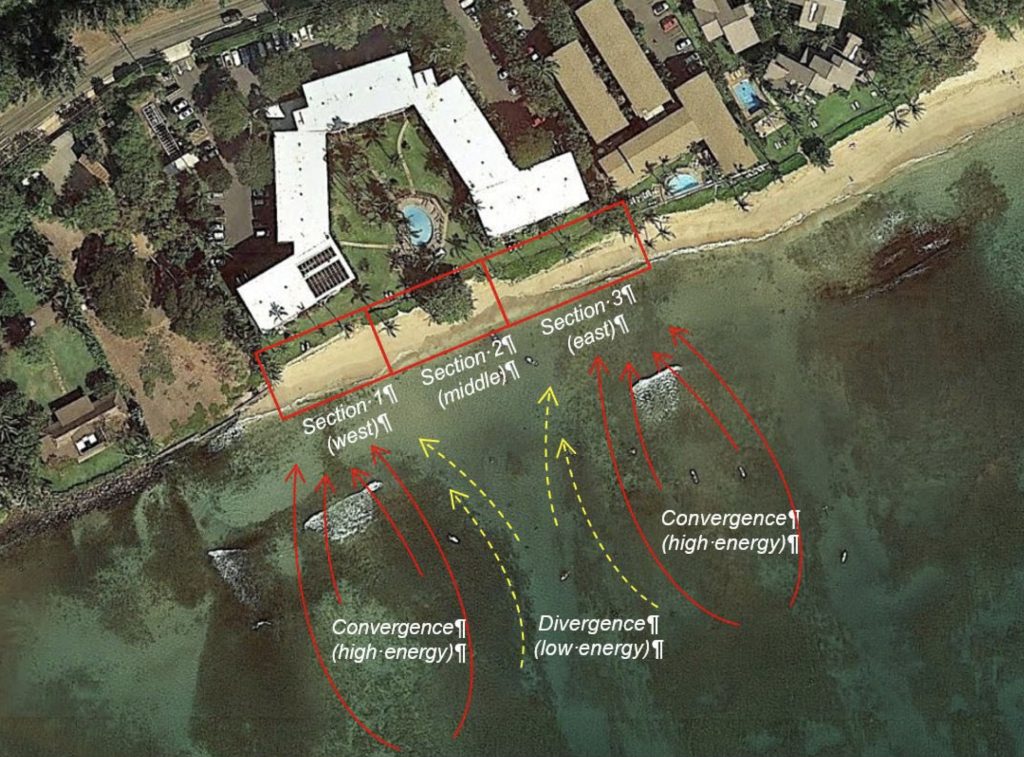
The 370-foot concrete rubble masonry seawall fronting Kanai A Nalu dates to the 1940s and 1970s. It was built after the 1952 construction of Māʻalaea Harbor stripped 1,500 feet of beach to the east, triggering a wave of shoreline armoring that now extends 2,400 feet to Haycraft Park. According to the environmental assessment prepared by Kapalaea Consultants LLC, the middle section of the Kanai A Nalu wall failed and was removed in 2009. The remaining segments—at the west and east ends of the property—are undermined, cracked and cordoned off for public safety.
University of Hawaiʻi researchers found the beach fronting the property has eroded at roughly a foot a year, and the US Army Corps of Engineers estimated the surrounding littoral cell loses about 800 cubic yards of sand annually. Past sand-replenishment efforts in 1997, 1998 and 2003 brought in thousands of cubic yards of fill, but most of it washed away within a few years, the assessment says.
Why a ‘burrito’ instead of a wall
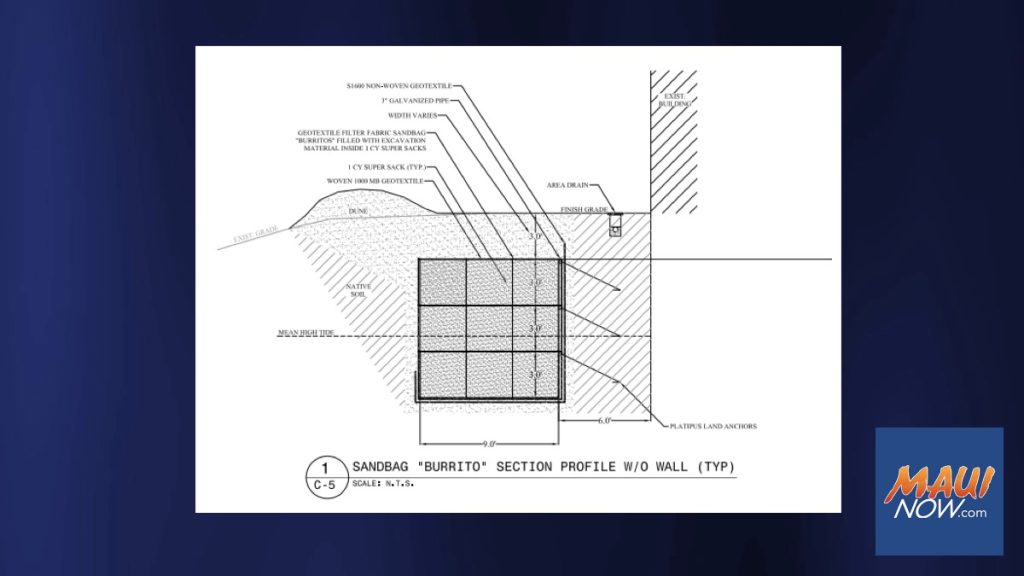
After Kanai A Nalu sought county concurrence in 2021 to install a sheet-pile wall in the setback area, the Planning Department cited a preference for regional, beach-cell-level solutions over a continuous wall. The department directed the association toward an environmental assessment process instead. The County also funded sand-deposit studies, which found that the only nearby offshore sand source contains a high percentage of incompatible Halimeda algae flakes, ruling out large-scale beach nourishment for the area, according to the report.
With hard armoring largely off the table, the project instead leans on a “geotextile burrito” — a roughly 6-by-9-foot underground structure made of stacked, sand-filled geotextile sacks, anchored with a buried pipe and set back from the current shoreline beneath the condominium’s rear lawn. The structure is designed to stabilize the backshore enough so that the existing seawalls can eventually come out, restoring an unarmored beach.
The work includes a 4- to 8-foot native dune planted with species such as ʻakulikuli, naupaka and pōhuehue, plus a wooden ramp along the eastern property line giving the public and residents access from Hauʻoli Street to the beach.
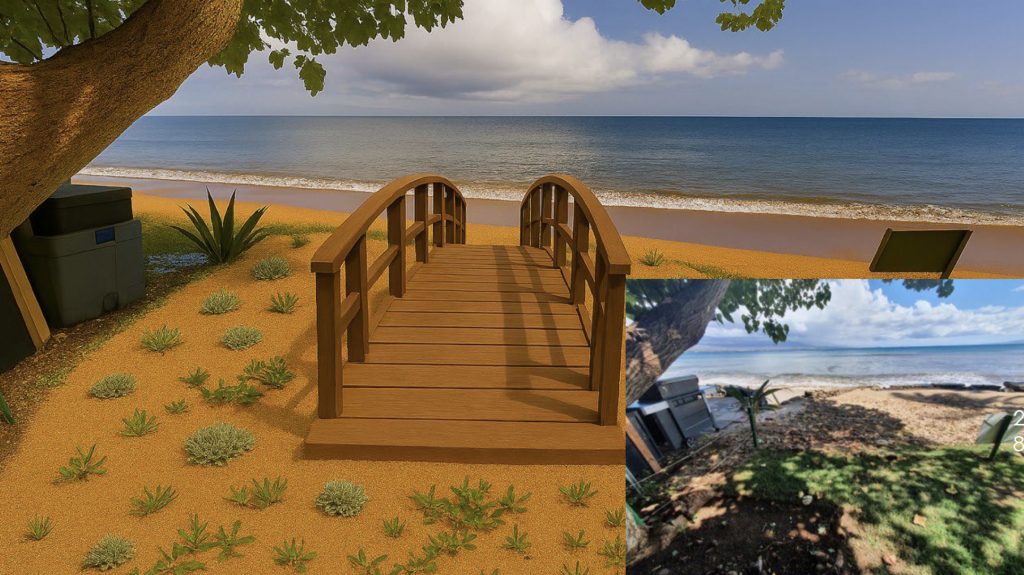
The state Office of Conservation and Coastal Lands has signed off on removing the seawalls once the burrito and dune are in place, though the walls must stay standing during construction to keep the work trench stable, the assessment notes.
Cost and timeline
Construction is expected to take about 90 days at an estimated cost of $2.4 million, according to the report. Project contacts include James Buika of the Maui County Planning Department, Kevin Robinson of the Kanai A Nalu Association of Apartment Owners, and consultant Anders Lyons of Kapalaea Consultants LLC.
The full environmental assessment is available through the state Office of Planning and Sustainable Development’s bimonthly Environmental Notice.
Sponsored Content