


 Hawai'i Journalism Initiative
Reconstruction of Kahului Airport’s main runway down to 2 options — with drastic differences in price, resiliency
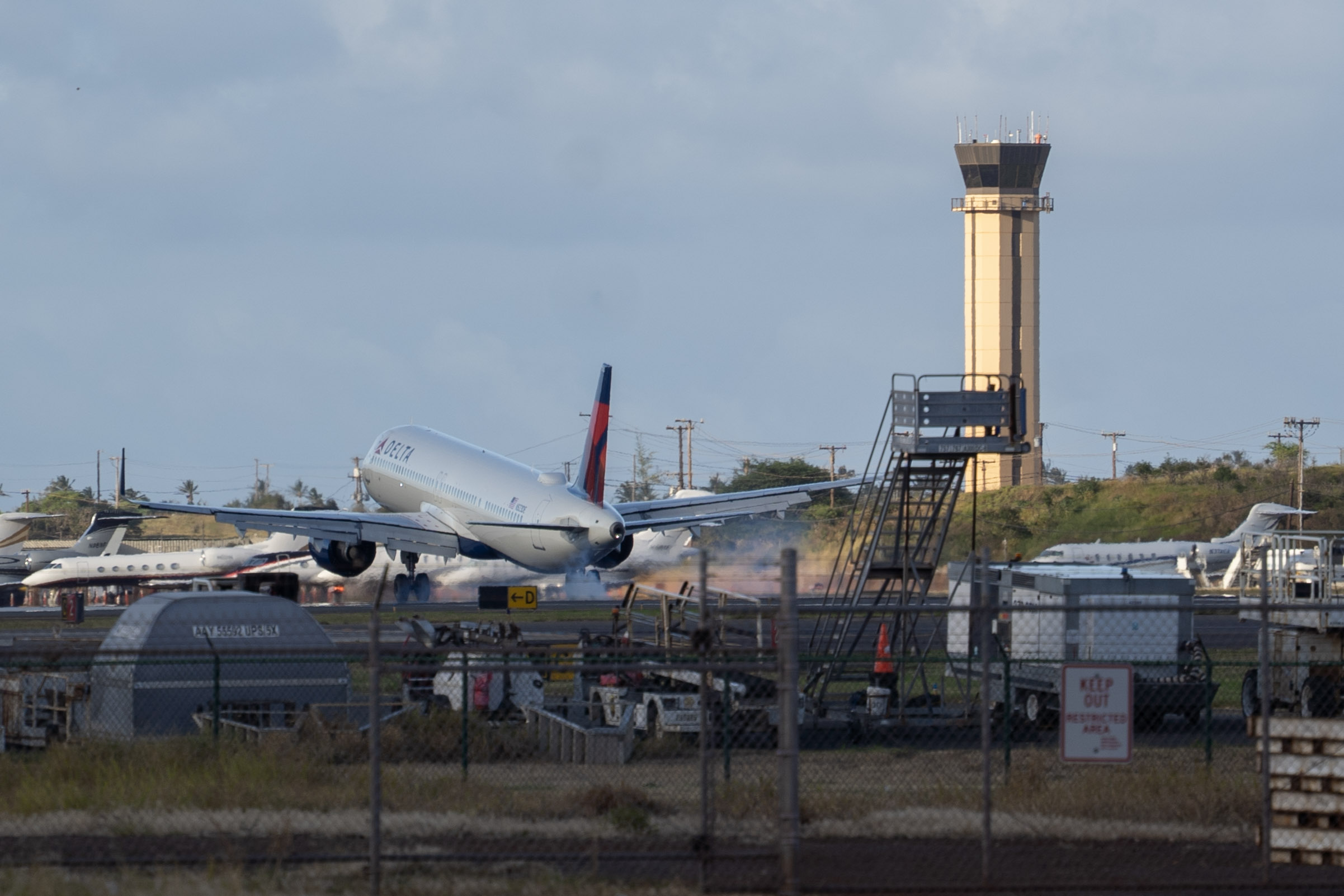
After nearly a year of expert analysis, two options now are under consideration for reconstructing Kahului Airport’s main runway 2-20, which is 84 years old and “at the end of its useful life.”
Neither is cheap.
One option involves building a temporary runway and is estimated to cost $604 million. The other calls for construction of a second permanent parallel runway at a price tag close to $1 billion, according to consultants for the Hawaiʻi Department of Transportation.
But the reconstruction project, no matter the selected alternative, “is critical for the island residents as well as the economy, and, of course, our visitors,” said Curt Otaguro, the state deputy director for airports, during a public meeting Thursday evening in Kahului.
Runway 2-20, at 6,998 feet, is the only one long enough on Maui to accommodate large domestic and military planes carrying people and cargo.
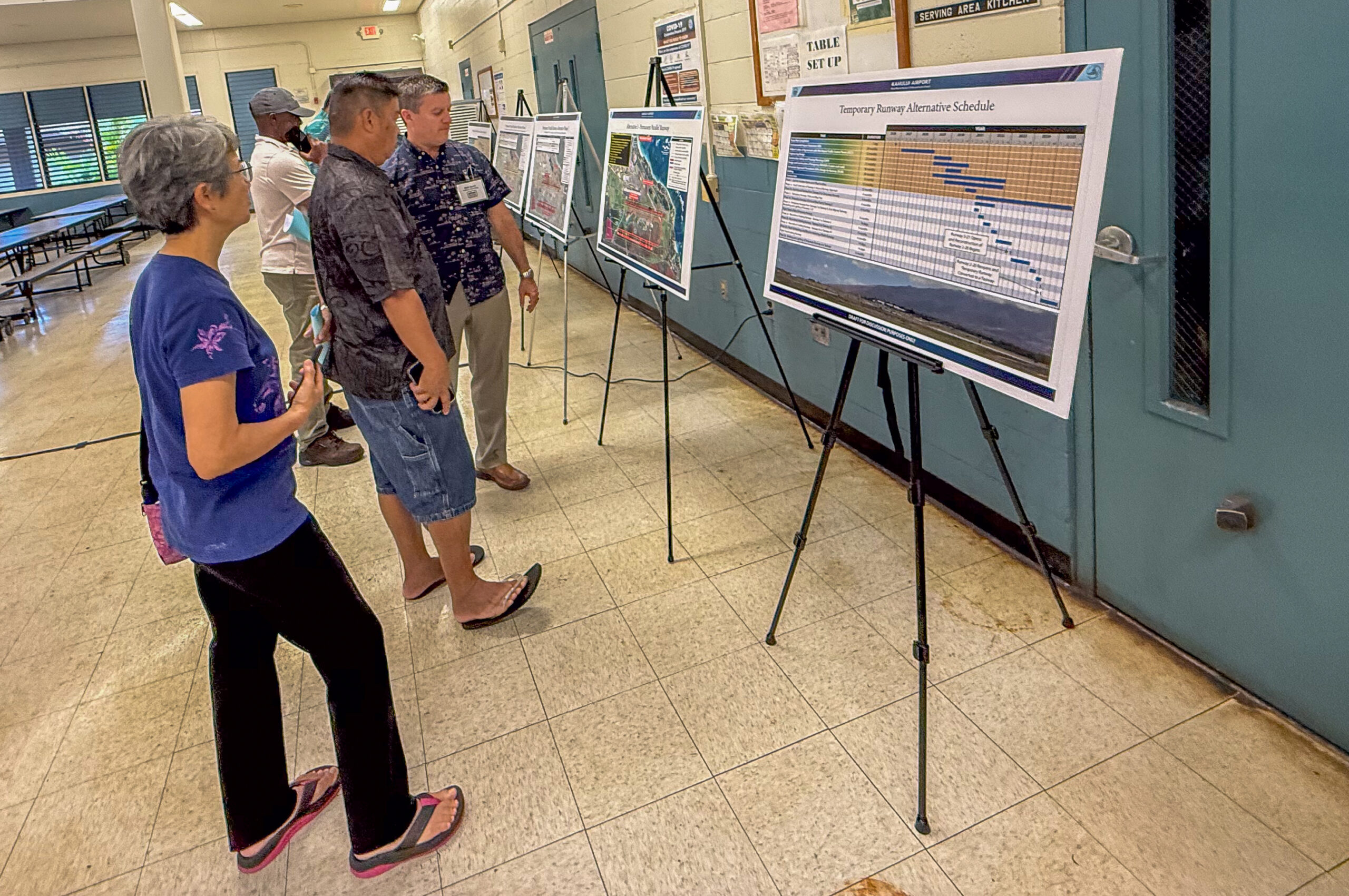
“Our goal is simple,” Otaguro said. “We want to design a plan that allows for the reconstruction, meaning we’re going to dig it all out and redo it again from the core, so that the foundation is strong. So that it will last a long time.”
Both options are designed to keep the airport continuing to operate safely and efficiently with minimal disruptions to the 7.1 million passengers who last year were on 118,304 landings and takeoffs.
“We all, as passengers, we don’t like delays,” Otaguro said.
Runway 2-20 was quickly built in 1942, months after the Japanese attacked Pearl Harbor, for military aircraft used during World War II. The U.S. Navy acquired 1,341 acres of sugar cane fields for the air station needed to meet the demands of war. This station became Kahului Airport.
Over the decades, the runway has undergone 12 major resurfacing projects, the latest in 2024. The $11 million to $12 million project to resurface about 5,000 feet provided another seven to 10 years of life, according to the state Department of Transportation at the time.
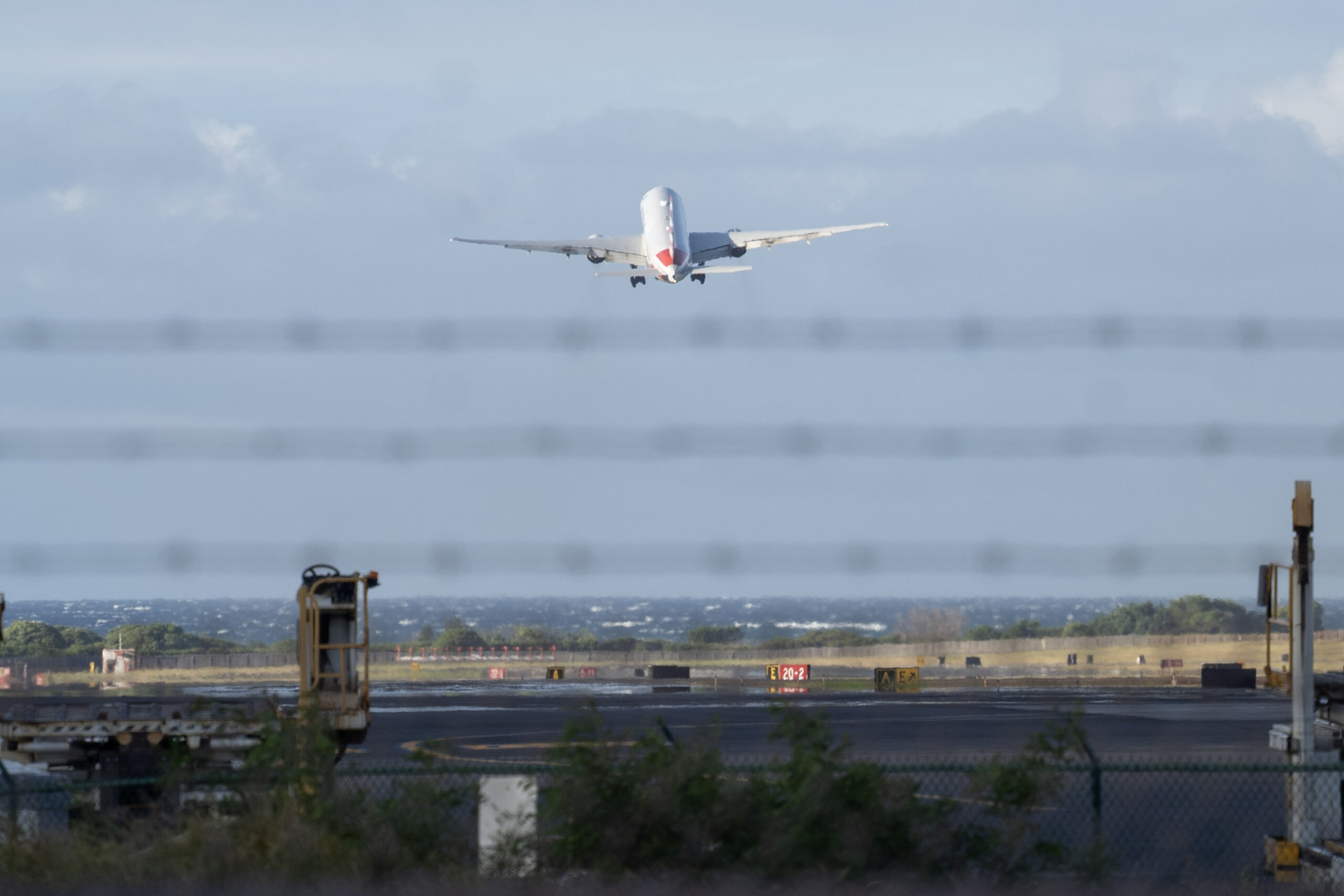
Kahului Airport, the second busiest in Hawaiʻi, has a second runway, 5-23. But it is 4,980 feet (about 2,000 feet shorter than the main runway) and only able to accommodate commuter aircraft and general aviation.
While time is of the essence to reconstruct the main runway, both alternatives will take about the same amount of time — four years — and can start at about the same time, in 2031, with a similar finish date of the end of 2035.
Eric Pfeifer, senior planner with Coffman Associates, the primary consultant for the state’s runway focus plan, laid out the two options that were whittled down from four alternatives presented in March. The Federal Aviation Administration also was consulted during the process, Otaguro said.
The two alternatives not selected called for building a second permanent parallel runway, but the distances between the runways varied from 2,200 feet to 2,900 feet.
Of the two options now under consideration (Alternative 1 and Alternative 3), all runways would be built at Runway 2-20’s current length of 6,998 feet (about 1.3 miles) and current width of 150 feet, Pfeifer said.
And, they all would be reconstructed with 28.5 inches of concrete, which will provide a “much longer-term solution” than the current layered asphalt that is 18 inches thick. Estimates range from the runway lasting 30 to 40 years, or even longer.
Alternatives presented years ago had called for lengthening the runway by more than 1,000 feet. But the extra length no longer is needed due to the advancements in airline technology, said Mike Dymterko, project manager with Coffman Associates.
“What’s amazing is these airplanes can operate from 7,000 feet,” he said. “It’s nuts. You know, 30 years ago, the smaller, single-bodied airplanes would not be able to do that.”
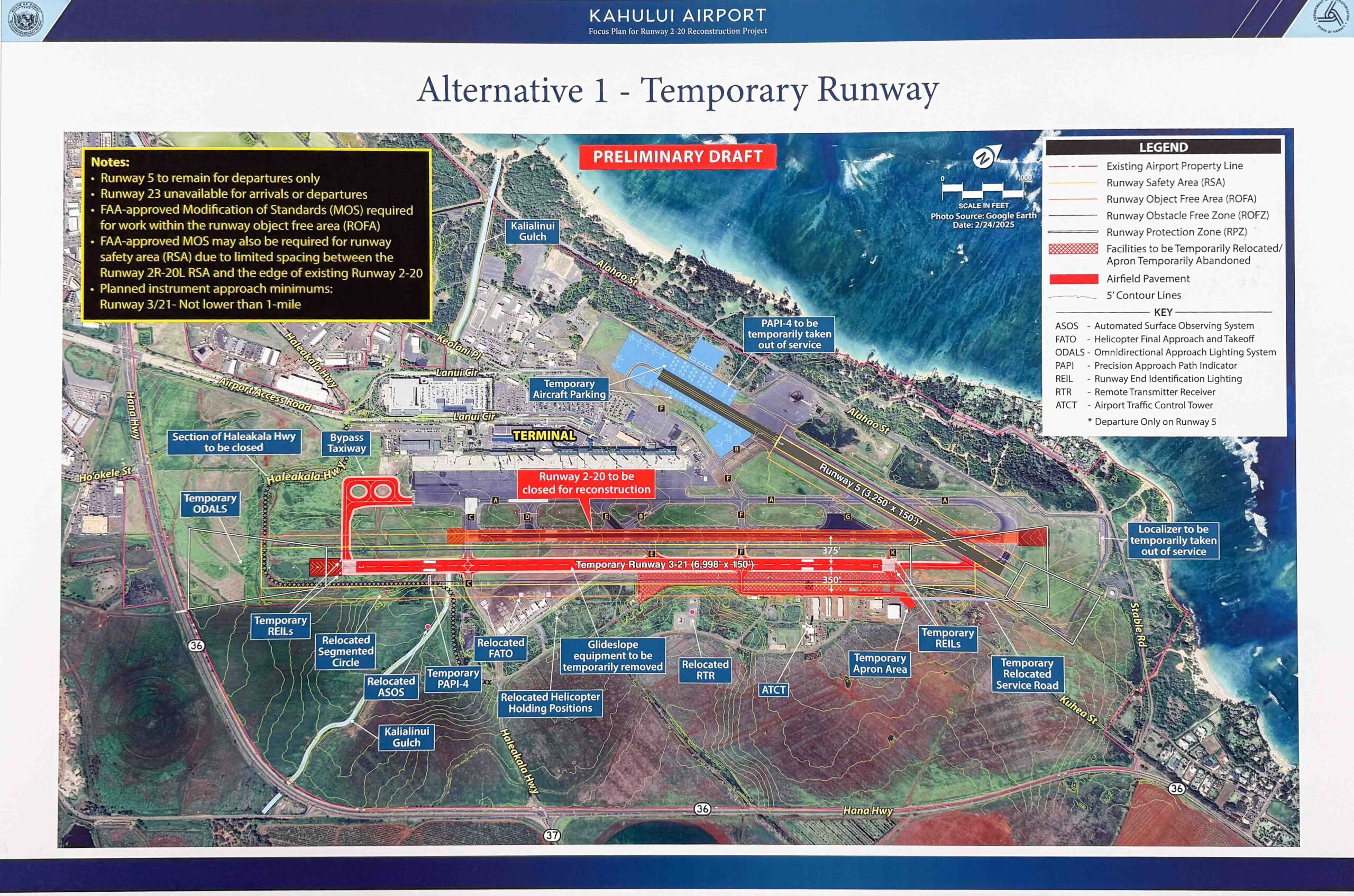
Alternative 1 – $603,708,000: A temporary runway would be built about 375 feet to the east, becoming the airport’s main runway while 2-20 is undergoing reconstruction.
Once Runway 2-20 is completed, a portion of the temporary runway could be used as a taxiway, but portions closer to the helicopter tour operators would need to be closed.
The downside is the airport — and the island of Maui — would continue to have only one main runway that can handle large jets.
This alternative would require temporarily relocating the general aviation facilities, including tour operators and helicopter operators, to a site at the west end of Runway 5. Navigational aids, visual road aids and weather equipment also would need to be moved.
During the construction period, Runway 5 would be reduced in length to 3,250 feet and would be usable only for departures. There would be no use of Runway 23. (Runway numbers are based on what direction an aircraft is landing or taking off).
Once reconstruction of the main runway is done, Runway 5-23 would go back to its original length and usage.
This alternative also requires the portion of Haleakalā Highway located inside of the temporary runway safety areas to be closed for the duration of construction.
The advantages of alternative 1 is the less expensive price, and it will be contained in the existing airport property.
“But one of the drawbacks is that eventually, at some point in the far distant future, you’re going to have to do another major rehab on your primary runway and you’re basically going to be in the same situation again,” Pfeifer said. “It’s going to be far into the future because we are going to use concrete, but this does not necessarily solve that long term where you’re never going to have any more disruptions to air activity at this airport.”
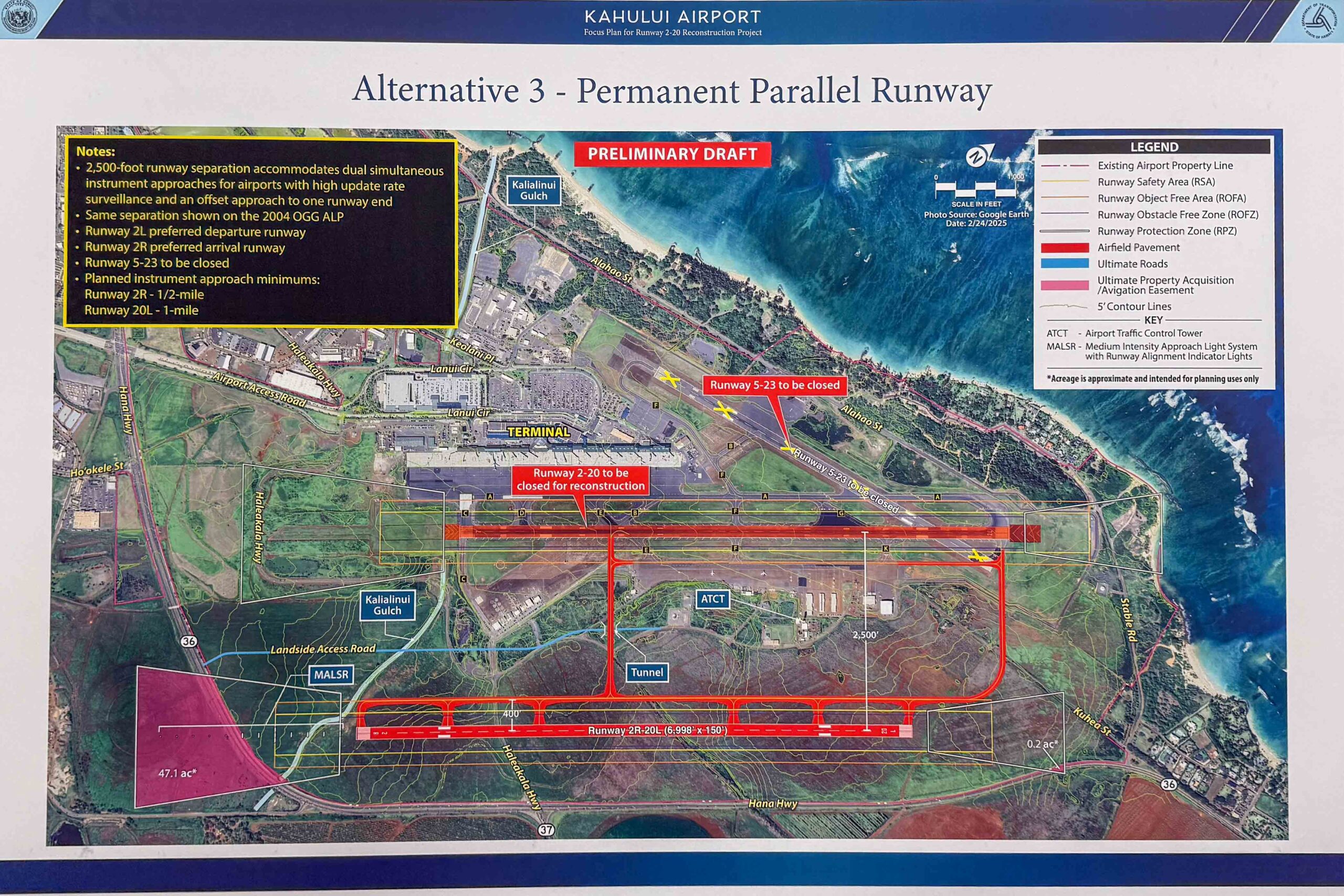
Alternative 3 – $941,505,000: This second option calls for building a permanent parallel runway about 2,500 feet to the east of the existing runway. When this is completed, Runway 2-20 can be reconstructed.
When both of these runways are completed, Runway 5-23 would be permanently closed and the smaller planes and general aviation would use the two parallel runways. The location of Runway 5-23 is not feasible for a lengthening project.
“This concept is not new,” Pfeifer said of the parallel runways. “This plan has been on the planning documents for this airport since the ’90s.”
While the general aviation facilities would not need to be relocated in this alternative, there is a likelihood the helicopter tour operators, which are in the middle of the two runways, would be moved to the west end of Runway 5 for operational safety.
The 2,500-foot cushion between the parallel runways builds in a lot of flexibility to the air traffic controllers to be able to safely route aircraft in and out of the airport, the consultants said.
When both are completed, Runway 2-20 would be the preferred one for departures and the new runway would be the preferred one for landings. By having the arrivals on the new runway, it would keep traffic from overflying Spreckelsville and lessen noise impact, although by exactly how much is not yet known.
Due to the prevailing northeast trade winds, landings and departures would be in the same direction, heading northeast on Runway 2.
A small amount of property also would be needed to be acquired or controlled as part of a runway protection zone.
This alternative also will go through Haleakalā Highway, requiring the road to be relocated.
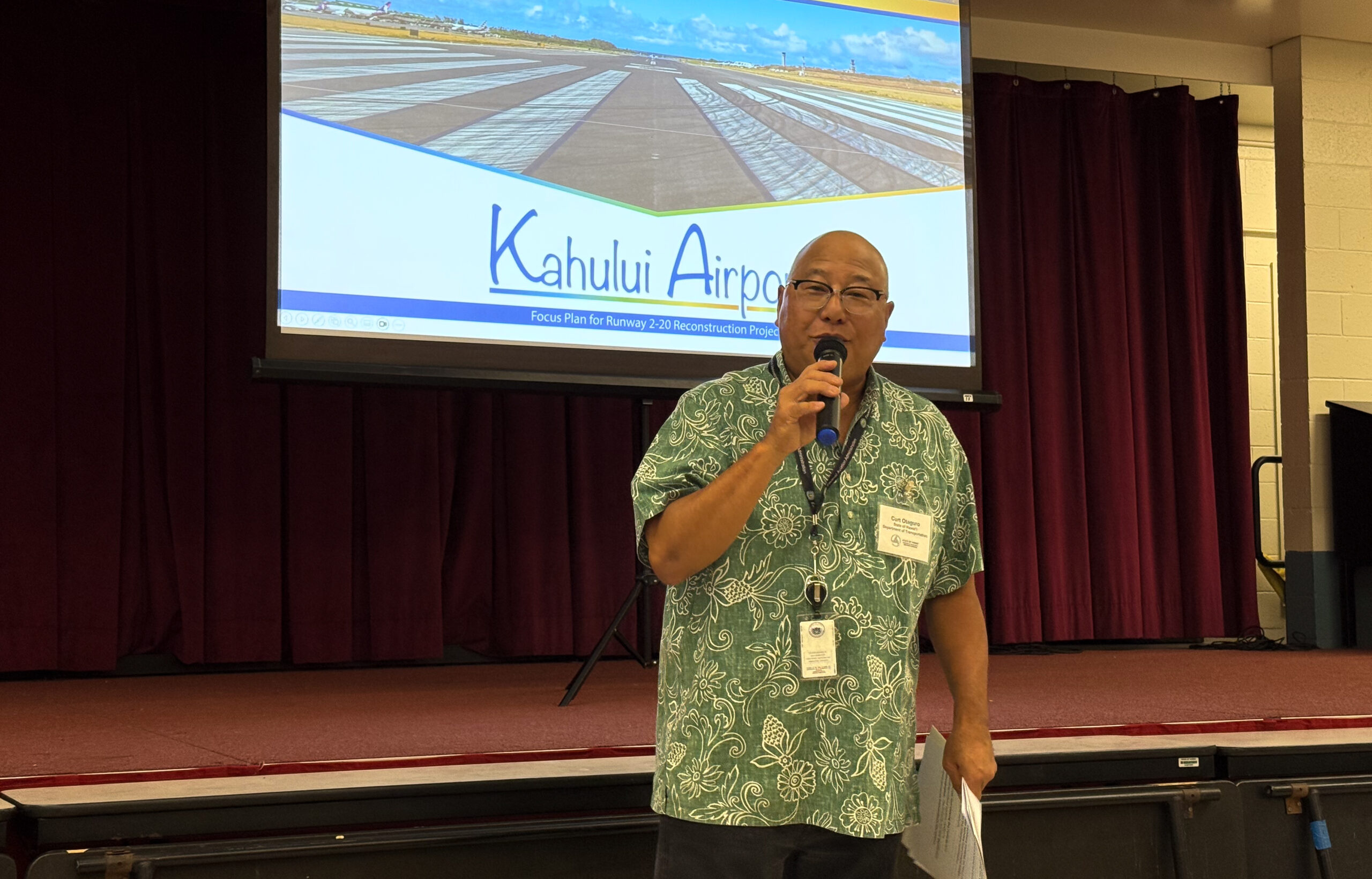
While Otaguro said the state does not have a preference and it will be up to the community to decide, he did say if the temporary runway option is selected “we would again be stuck with one major runway.” The building of a second permanent runway “we believe would be more viable. That’s what we want to do for resiliency, better traffic.”
Several experts at the meeting pointed out the issue in 2024 at Ellison Onizuka Kona International Airport, when cracks in the asphalt turned into a 3-foot hole that caused the shutdown of its only runway. But passengers on the Big Island had the option of flying in or out of Hilo International Airport.
“You do not have that here on this island,” Dymterko said.
And if the main runway on Maui had to be shut down for any length of time, “there’s 5-23, but it’s not nearly long enough to be able to handle the commercial flights. We could get Caravans (small, single-engine turboprops that carry people and cargo). I mean, you might get some pineapples around.”
Otaguro added that having two runways is for resiliency and not for building more capacity, trying to ease concerns about increasing tourism.
Public comments continue to be sought for the runway reconstruction plan. “Your feedback is important,” Otaguro said.
The state and the Federal Aviation Administration have known for nearly two decades that the band-aid solutions were coming to an end, with studies conducted in 2010 that contributed to the December 2016 Kahului Airport Master Plan Update.
In 2019, the state Department of Transportation held a meeting to provide public input, including about proposed alternatives, as it prepared an environmental assessment that was scheduled to be completed in 2020.
At the time, Tim Sakahara, a spokesman for the state Department of Transportation, said the exact cost was not known for the project, but that the department was budgeting $250 million, according to The Maui News.
The difficulty over the past decade has been obtaining funding. The 15 airports that the state operates are not paid for with Hawaiʻi tax money. They are funded by airport activities.
“So we’re self-funded as an airport system,” Otugaro said. “It’s the airlines. It’s our concessions. It’s leases. And so when we borrow money, it’s also not against the state’s general obligation bonds.”
And for major projects, federal money is needed.
Otugaro said he is confident that the runway project finally will get off the ground. Part of that optimism comes from the FAA committing last year to conduct — for the first time in 50 years — a Hawaiʻi Airspace Modernization Project. It’s one of the first projects following the FAA’s “Airspace Modernization Roadmap Strategy.”
The FAA’s strategic plan calls for evaluating and modernizing the airspace infrastructure in the National Airspace System to prioritize projects that address the agency’s safety and efficiency mission. Otugaro said the Runway 2-20 meets their priorities.
And out of nearly $7 billion in Hawaiʻi airport projects, Otaguro said at the March public meeting that Maui’s runway is “one of the higher priority projects, because we’ve done all we can to repair it: layer, fix, dig, seal, layer some more, fix, seal, crack.”
The state is hopeful that a big chunk of the funding will come from the FAA Airport Improvement Program, which pays for 75% of eligible costs. But while the temporary runway will be cheaper, it also will be eligible for less of this funding because the FAA does not pay for temporary facilities.
Some Federal Emergency Management Agency funding may also be available for the runway.
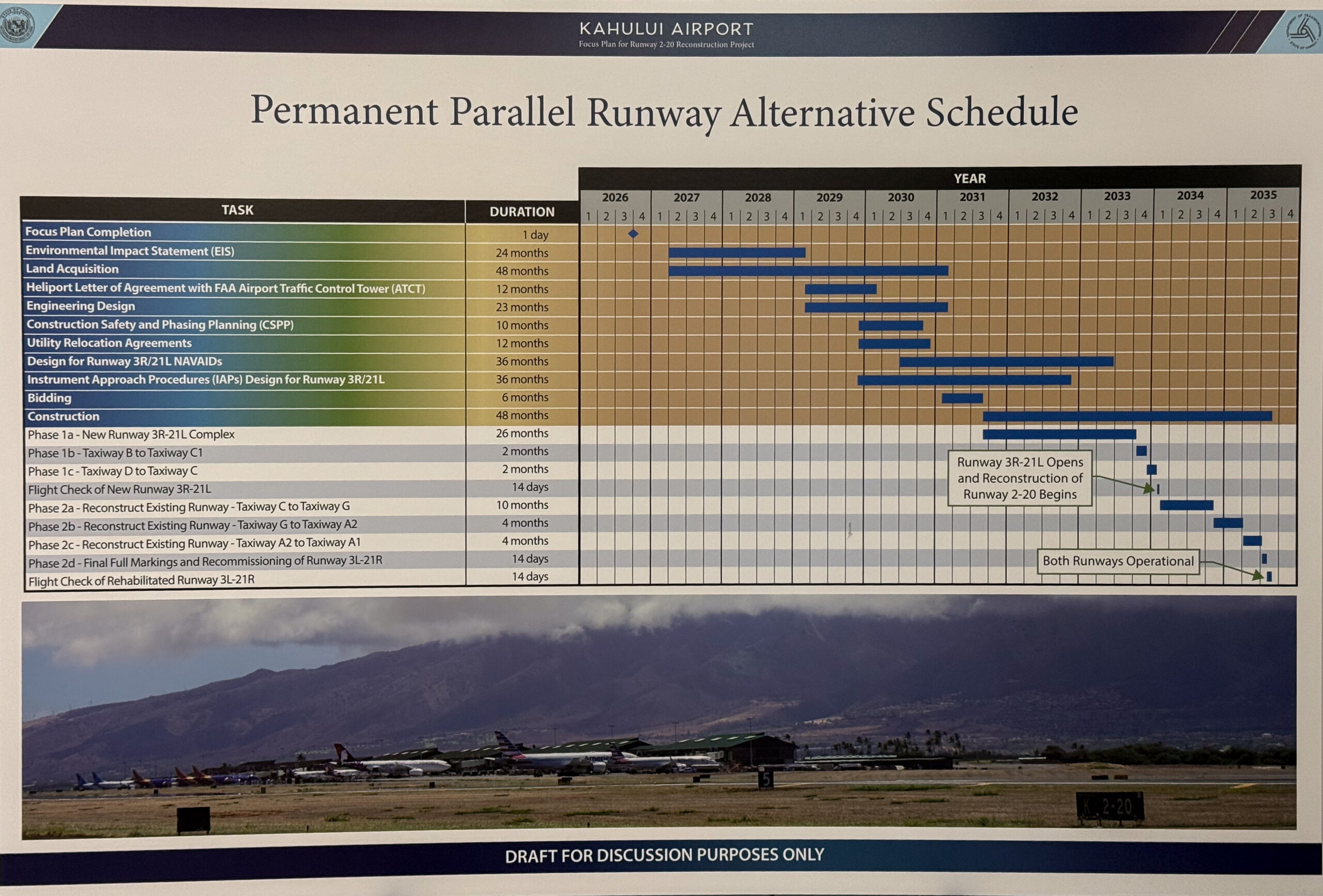
The next steps are for the consultants and the state Department of Transportation to select one of the options and finalize the focus plan. With this option, the Airport Layout Plan will need to be updated and submitted to the FAA for its approval.
This is followed by conducting the comprehensive environmental impact statement, which is about a two-year process. When the EIS is complete, engineering design of the selected runway project and other actions can take place. After all this pre-work, the four years of construction can finally begin.
Coffman Associates originally was hired two years ago by the state to create the Kahului Airport master plan. The company will go back to that plan as soon as the runway focus plan is completed. The master plan looks at the airport over the course of the next 20 years to evaluate the airfield system, land site facilities, terminals and support facilities. This will take 18 to 24 months.