

Hawaiian stilt gets moved from endangered to threatened under Endangered Species Act
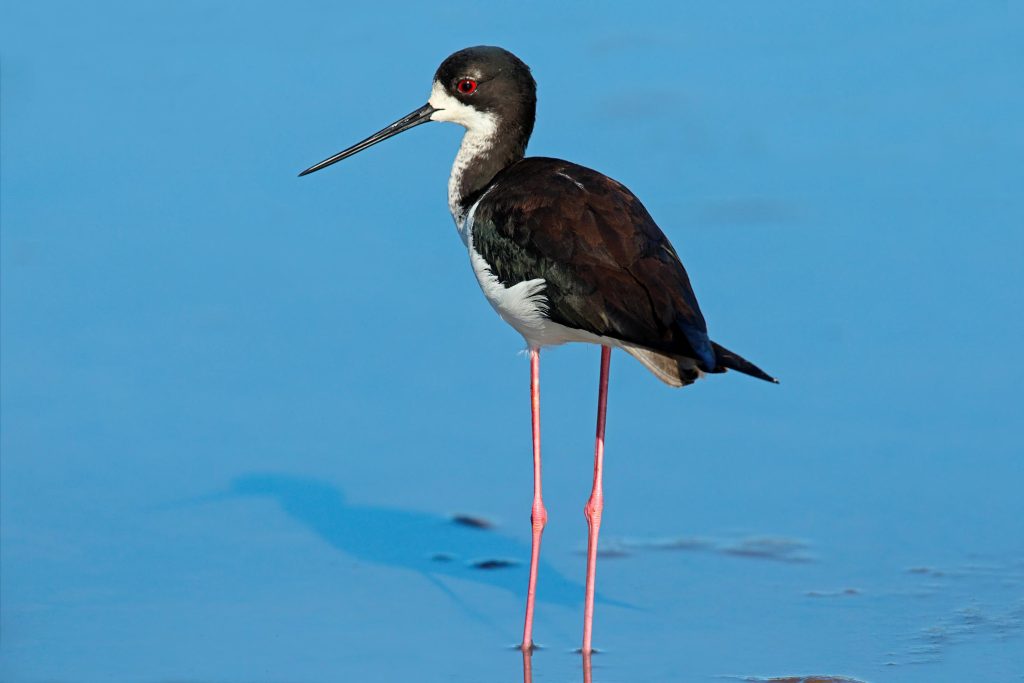
The US Fish and Wildlife Service is downlisting the aeʻo (Hawaiian stilt) from endangered to threatened under the Endangered Species Act.
Aeʻo is a wading bird native to all the main Hawaiian Islands except Kahoʻolawe. The aeʻo was originally listed as endangered in 1970 due to destruction and alteration of habitat, hunting, introduced predatory animals and nonnative birds, and diseases.
As a result of collective conservation efforts, the aeʻo is one step closer to achieving recovery. Over the past three decades, this strong network of conservation actions throughout the main Hawaiian Islands has resulted in more wetland areas being managed compatible with the species’ needs. The State of Hawaiʻi and the Department of War have been key partners with the Service’s National Wildlife Refuge System to protect, manage, and conserve wetland habitats and supporting aeʻo populations.
Aeʻo continues to be threatened by nonnative animal predation (e.g., mongooses, cats, and rats), habitat loss and modification due to human activities, type C botulism, and future sea level rise. Survey data and a recent population viability analysis indicate that the aeʻo population has been stable to increasing for several decades in the eight islands where it exists. If the Service and State of Hawaiʻi continue current management practices such as predator, vegetation, and water level control, stable population trends are expected to continue.
“The downlisting of aeʻo is a huge achievement,” said Bridget Fahey, the Service’s acting regional director for the Pacific Region. “While there is still more work to be done to sustain the aeʻo’s recovery, today we want to celebrate the efforts of our conservation partners, including the State of Hawaiʻi, the US military, private landowners and local organizations.”
The downlisting is accompanied by a 4(d) rule under the Act that facilitates greater flexibility for conservation and management of the species, encouraging support for habitat management and reducing human-wildlife conflicts.
This action aligns with efforts by President Donald J. Trump’s administration to reduce regulatory burdens in accordance with executive orders while continuing to advance wildlife conservation.
Sponsored Content