

United Japanese Society of Hawaiʻi honors early Japanese immigrants at annual Obon Hōyō memorial
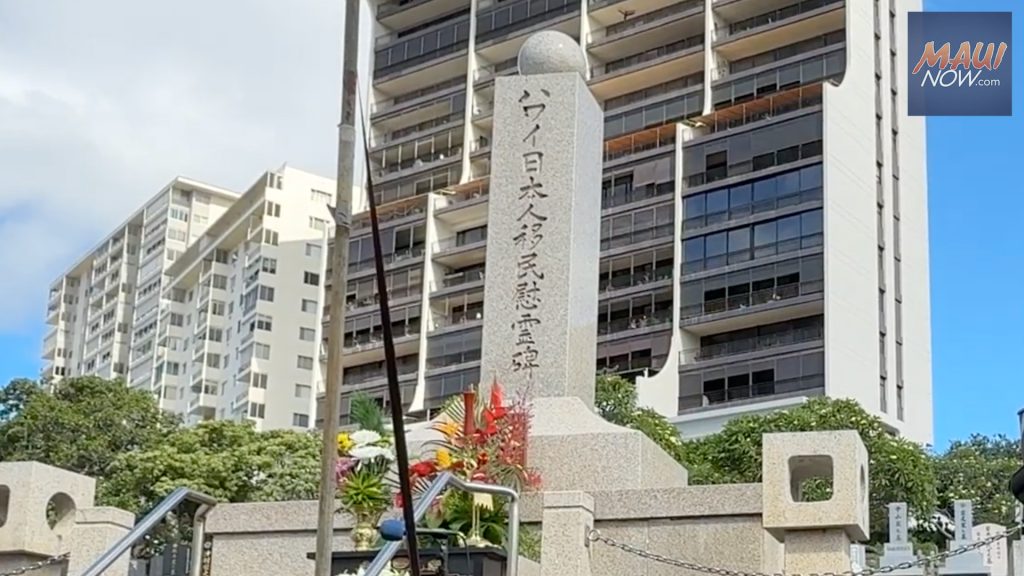
As communities across Hawaiʻi continue to observe the Obon season, the United Japanese Society of Hawaiʻi held its annual Obon Hōyō memorial service on Friday morning at Makiki Cemetery, bringing together religious leaders, community leaders, and the public to honor the legacy of Hawaiʻi’s earliest Japanese immigrants.
The annual ceremony paid tribute to the Gannenmono, the first group of Japanese immigrants who arrived in Hawaiʻi in 1868, as well as the Kanyaku Imin, the government-sponsored immigrants who began arriving in 1885. Their courage, perseverance, and hard work laid the foundation for generations of Japanese Americans and helped shape the social, cultural, and economic fabric of modern Hawaiʻi.
Conducted with the assistance of the Hawaiʻi Buddhist Council, the memorial service reflected the spirit of Obon—a time to remember and express gratitude to those who came before us. Attendees gathered in solemn remembrance to offer prayers and pay their respects to the pioneers whose sacrifices created opportunities for future generations.
The service was co-officiated by Bishop Takami Inoue of the Higashi Hongwanji Mission of Hawaiʻi and Bishop Toshiyuki Umitani of the Honpa Hongwanji Mission of Hawaiʻi, with additional participation by members of the Hawaiʻi Buddhist Council.
“Each Obon season reminds us of our responsibility to honor those who came before us,” said Lynn Araki-Regan, President of the United Japanese Society of Hawaiʻi. “The Gannenmono and Kanyaku Imin demonstrated extraordinary resilience and determination in building new lives in Hawaiʻi. Their legacy continues to inspire us to preserve our heritage, strengthen our communities, and pass these stories on to future generations.”
Sponsored Content