Hirono hosts forum, raising alarm about national school voucher program
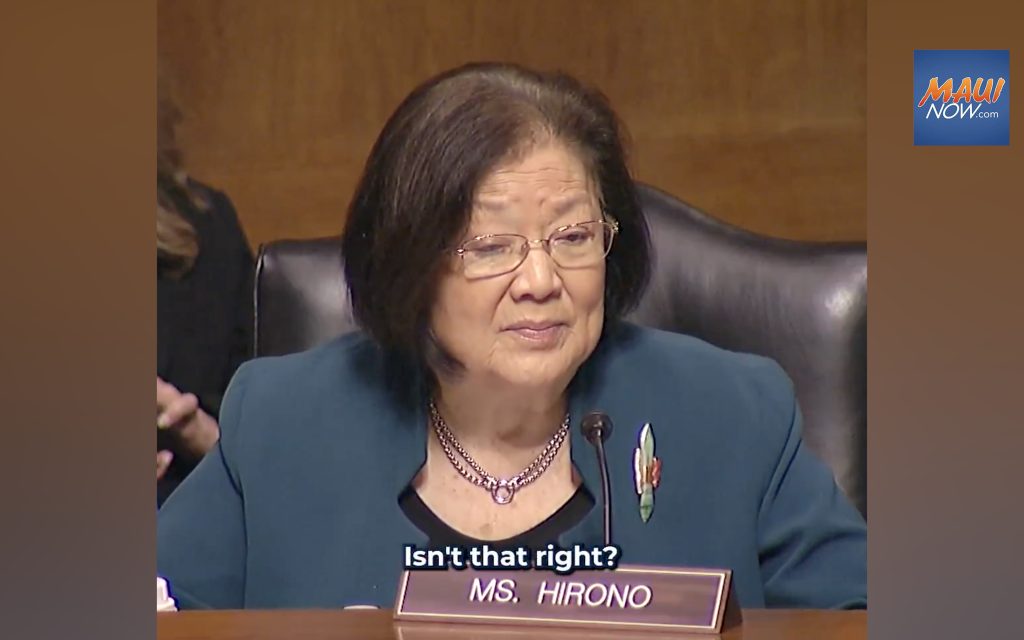
Hawaiʻi US Sen. Mazie Hirono convened a forum this week to examine the potential effects of the new national private school voucher program on the country’s public school students.
The forum, titled “Raising the Alarm: How the National School Voucher Program Will Be Harmful to Students,” brought together policy and legal experts, education advocates, school district leaders and classroom teachers to discuss the program’s impact on the more than 50 million students who attend public schools nationwide, according to Hirono’s office.
Panelists said the voucher program is expected to redirect more than $51 billion annually in tax-advantaged funding away from public education and toward private schools. They also addressed how participating states could be affected and warned of disproportionate harm to low-income students, rural students, students with disabilities, students of color and LGBTQ+ students, Hirono’s office said.
Hirono criticized the program in a statement, saying proponents have promoted it as expanding “school choice” while, in her view, the real decision-making power rests with voucher organizations and private schools rather than families. She said diverting more than $51 billion a year—citing outside estimates—would reduce funding available to strengthen public schools and create what she described as a “two-tiered system” separating well-funded private schools from underfunded public ones.
The voucher program was established under H.R. 1, legislation enacted last year that created the first national private school voucher initiative, according to Hirono’s office. The law allows individuals to claim a dollar-for-dollar federal tax credit for donations of up to $1,700 to nonprofit “scholarship granting organizations,” which then distribute the funds as vouchers. Under that structure, funding does not flow directly to states, school districts or public schools. Instead, the scholarship organizations determine which students receive vouchers, and private schools decide whether to admit those students.
The program’s cost to taxpayers is projected to reach into the tens of billions of dollars annually; the Institute on Taxation and Economic Policy has estimated the figure could reach $51 billion per year.
The US Treasury Department released preliminary guidance on the program in June and indicated fuller guidance would follow in September, giving state governors roughly three months to decide whether to opt into or out of the program before it takes effect Jan. 1, 2027. As of the forum, Treasury had not yet issued that additional guidance. The preliminary guidance also indicated that states choosing to opt in would face limits on their ability to regulate the program, including restrictions on governors imposing substantive requirements on scholarship organizations operating within their states, according to Hirono’s office.
Hirono also argued the program functions largely as a tax benefit for higher-income families whose children already attend private school, rather than expanding options for a broader range of students. She noted that federal programs supporting low-income students and students with disabilities remain underfunded even as the voucher program directs public funds to third-party organizations.
Sponsored Content