


 Hawai'i Journalism Initiative
Native Hawaiian community group seeks to halt $471M luxury development with limited workforce rentals in Wailea

Maui nonprofit Mālama Kakanilua and five Native Hawaiian residents are trying to halt the $471 million first phase of a sprawling residential development in Wailea that could one day include nearly 1,000 units.
The group is raising concerns about the first 273 units that developer Ledcor Maui LP wants to build near the entrance to the Wailea resort community where longtime families say they’ve slowly been pushed out in favor of luxury development.
“All of South Maui is changing — with new people, gates, expensive homes and the loss of long-time families who cannot afford to pay higher property taxes,” said John Kahawaii, a descendant of the moku, or traditional district, of Honua‘ula, in a statement to the Maui Planning Commission.
“We need to protect this area, and all of Honua‘ula and Kama‘ole from adverse impacts on our waters and fishing grounds.”
Kahawaii, Clare Apana, Kaniloa Kamaunu, Jim Mokuohai Kanunanui Medeiros Sr. and Victoria Nohealani Palafox-Kaluna all filed a petition to intervene on the project, citing fears over impacts to the island’s water supply and cultural resources. On Tuesday, the Maui Planning Commission granted their request — which the developers didn’t object to — and sent both sides to mediation.
Ledcor, the developer behind the 75-unit Wailea resort community La‘i Loa, is proposing to build the first phase of its South Maui Properties project in three multifamily residential communities totaling 273 units, including 233 market-rate units, 36 deed-restricted workforce housing rental units and four income-restricted employee units.
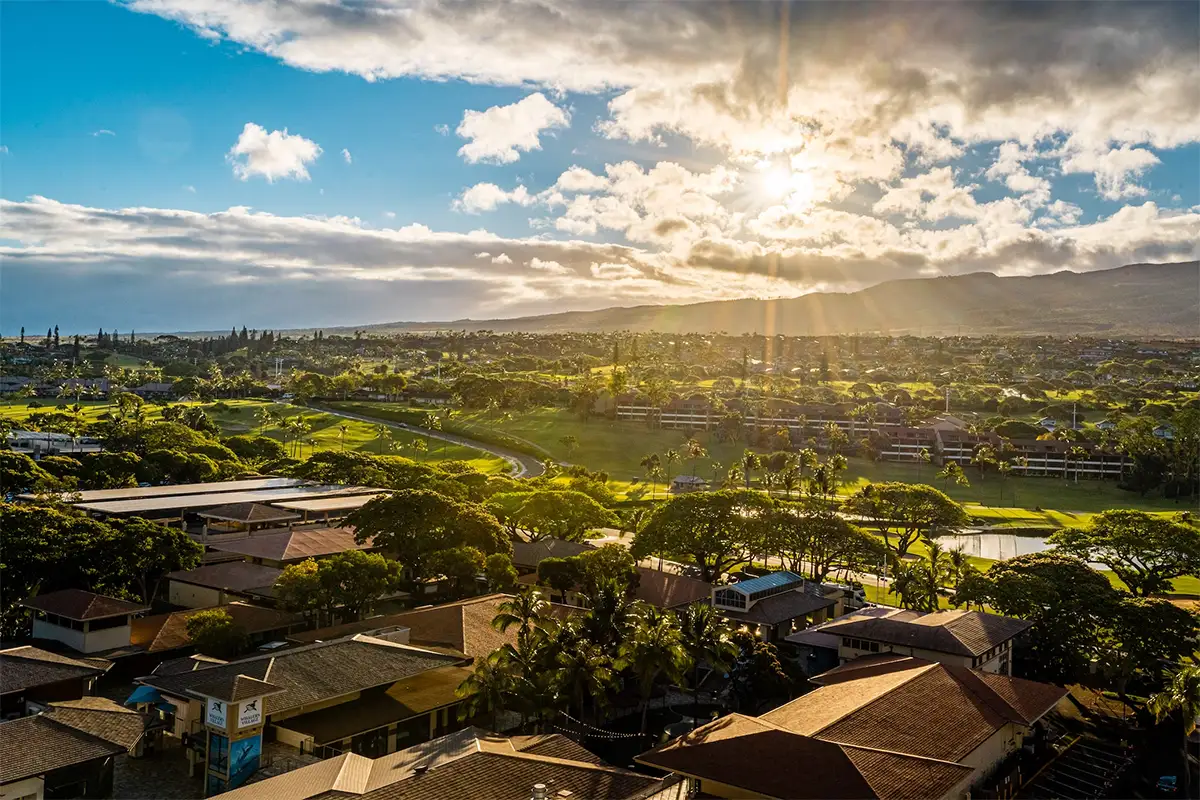
The project would be located on separate parcels of land makai of Pi‘ilani Highway, close to developments like the Wailea Gateway Center, the Residence Inn and Hotel Wailea.
Kimi Yuen, president and chairperson of PBR Hawaii and Associates and lead planner for the project, said that the area “is among the last entitled development parcels from the original Wailea resort, which started over 50 years ago” as a planned 1,500-acre residential resort community.
The market-rate units would be divided between two residential communities, according to project documents. The larger one would include three six-story buildings and two three-story buildings with 147 units ranging in size from one to four bedrooms. It’s expected to cost $270 million and would be built at the intersection of Wailea ‘Ike Drive and Kālai Wa‘a Street.
The other community would include three six-story buildings and two two-story buildings with 86 residential units and layouts of two, three and five bedrooms. Two one-bedroom employee units would also be built on site. It’s estimated to cost $185 million and would be located just down Kālai Wa‘a Street across from the Wailea Fairway Villas.
Each of the market-rate residential communities would include an amenity building with a spa, fitness room, shade pavilions, dining trellis, pool and spa, manager’s office and mail room.

The 36 workforce housing units would be built in a $16 million third community with three buildings of three stories each. They would range in size from one to two bedrooms and would remain workforce units in perpetuity. There would also be a shared garden for residents. The community would be located on Wailea ‘Ike Drive just above the Residence Inn.
Casey Lamb, development manager for Ledcor Maui, told the Planning Commission on Tuesday that the project would not allow for short-term rentals or overnight use.
The project is part of Ledcor’s larger plans to develop a mix of single-family and multifamily residential communities totaling 925 to 975 units across eight properties in the Wailea area. Most of those homes are expected to be sold at market-rate, and only about 10% of those market-rate units are expected to be full-time residences, according to the project’s final environmental impact statement filed in February 2025.
If built to full capacity with 900 market-rate units, the project would require 225 workforce units, which could include a mix of on-site and off-site homes as well as in-lieu payments to the county’s Affordable Housing Fund, though that hasn’t been decided yet.
Lamb said developers “haven’t really furthered or advanced plans” but additional parcels would come forward for permitting later. He said future plans would not exceed the 975 units the developer studied.
The pushback against the project centers on the availability of water. Apana and Kamaunu, the water chair for ‘Aha Moku o Wailuku, live in Central Maui, where water resources are pumped to serve both Central and South Maui. According to the petition, “Apana relies on the same potable water sources that Ledcor proposes to use for its project.”
Apana worried that the project would worsen ongoing water restrictions, and Kamaunu said the demands of Ledcor’s full future development also need to be taken into account.
Within the next three years, demand for water through the Central Maui system is expected to reach 98% to 100% of its maximum reliable capacity, Maui County Department of Water Supply Director John Stufflebean said in a letter to the Planning Department in September. Because of this, “no additional source capacity is available to support new or expanded water service,” Stufflebean said in the department’s comments on the project.
The first phase of the project is expected to consume 106,731 gallons per day, according to the project’s special management area permit application filed Sept. 30. Together, all of the parcels at full buildout are expected to use 558,000 gallons per day, according to the final environmental impact statement.
However, there is a water tank built by previous landowners Alexander & Baldwin to serve the project’s properties, Lamb told the Hawai‘i Journalism Initiative. A&B dedicated the water tank to the county Department of Water Supply, which has been using it since 2008. The two sides reached an allocation agreement that provided a storage credit of 1 million gallons. So far, 360,050 gallons of water storage credit have been used, with 639,950 remaining, according to Stufflebean’s letter.
“There is enough storage capacity in the tank for the project,” Lamb said. “The project will only use a fraction of the available credits. When we receive the available credits, DWS will determine whether there is adequate source.”
Lamb added that “based on our water use estimates, we are using less water storage than the amount of storage originally contemplated in the agreement to serve the project’s parcels” due to water conservation methods and the use of native plants.

Multiple groups, including Maui Tomorrow and Wailea808, have raised concerns about there being enough water in South Maui to go around, especially as the island emerges from consecutive years of drought.
Apana said the scarce water resources should go to “urgent public needs, including truly affordable housing for Kānaka Maoli and local families, displaced Lahaina fire survivors, and community members who have spent years on the Upcountry water meter waitlist.”
In her statement supporting the petition, she said that using water “to accommodate luxury condominiums in South Maui desert directly harms the public interest and prioritizes out-of-state buyers over the housing needs of local residents.”
The group is also concerned about protection of the land and cultural resources in a place where multiple iwi kūpuna (ancestral burials) have been discovered and relocated during the construction of hotels in the past.
To address some of these issues, Ledcor’s Cultural Advisory Group helped develop a nonprofit, Ulu-a-Paeahu, to steward the open spaces and archaeological and cultural resources in the project area. Two and a half acres of open space would be dedicated to the nonprofit in the future to be used for restoration work, a plant nursery and demonstration gardens with canoe crops, lā‘au lapa‘au (Hawaiian medicinal plants), and plants for lei and dye.
The organization includes Program Director Ka‘onohi Lee, a lineal descendant of South Maui; Cultural Director Clifford Nae‘ole, cultural advisor for Ledcor Maui; and Torie Ho‘opi‘i, who is from Lahaina and works with ‘Āina Momona.
The nonprofit’s work would be partially funded by the future condo associations in perpetuity.
Ledcor also studied historical and cultural resources in the area. Tanya Lee-Greig, principal of project consultant ‘Āina Archaeology, said her company tested 88 trenches across four parcels and conducted a pedestrian survey covering the entire project area. The survey found one historic property — low stone enclosures consistent with World War II uses — that will be preserved on site. No intact, historically cultural deposits were identified, Lee-Greig said.
But the studies and the promise of a nonprofit to look out for the cultural resources of the area didn’t ease the concerns of the community members.
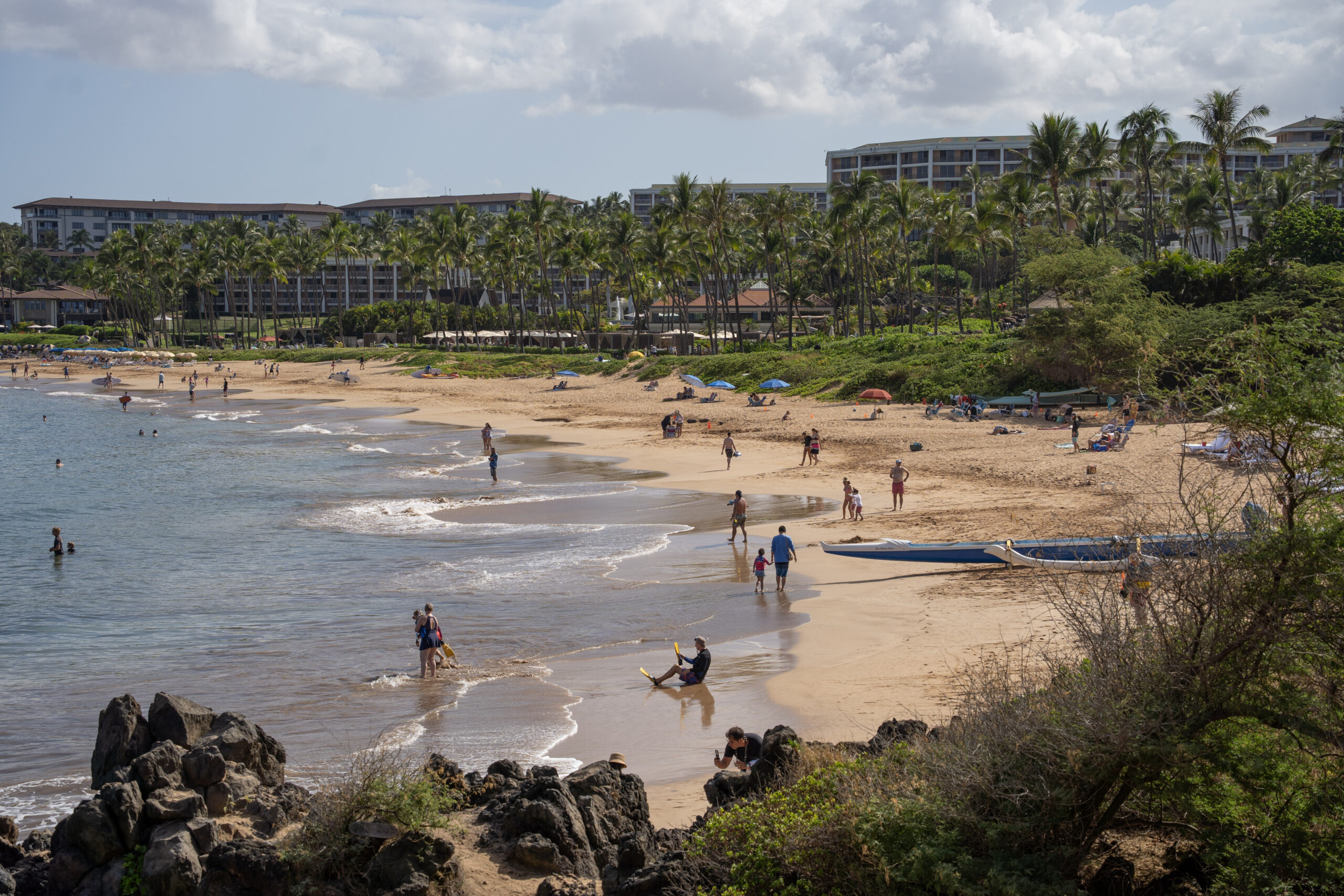
Long before its luxury resorts made Wailea the most expensive place for visitors to stay in the state, lineal descendants and longtime residents say the area has served as a space for Native Hawaiian practices and a resting place for iwi kūpuna.
The five residents who petitioned to intervene are all kānaka maoli (Native Hawaiians) who live in or exercise traditional and customary rights in the area. They worry that the project would threaten “greater displacement of Kānaka Maoli traditions and communities from these lands,” and take up large amounts of freshwater, disrupt the aquifer, remove habitat for the endangered ‘ōpe‘ape‘a (Hawaiian hoary bat) and destroy historic properties, including burial sites, according to the petition.
Kahawaii’s ancestors used the area of Kahamanini, also referred to as Wailea Beach, for traditional and customary practices, and today his family still regularly fishes and gathers along the coast. Kahawaii also cares for cultural sites and protects iwi kūpuna in the area.
Kaluna-Palafox currently lives in Ukumehame but said her family has historic connections to the land. She has “a deep responsibility (kuleana) to care for (mālama) and protect the land and water in this region,” as well as to prevent ancestral remains and cultural sites from being “dug up, desecrated or damaged by development.”
Medeiros has familial ancestors among “the highest-ranking Maui ali‘i line, with historical, cultural and genealogical relationships to the lands of Maui Nui, including Kama‘ole and Honua‘ula moku.” He also has a kuleana to protect and care for the “cultural, religious and historical resources of Maui Nui, including those impacted by the proposed project.”
The issues, including water, likely won’t be hashed out until the two parties go through mediation and a potential contested case hearing, where they would have to call witnesses and present evidence.
“We are not at the point of presenting or identifying the witnesses for the contested case,” Cal Chipchase, attorney for the developers, said Tuesday. “That will happen at a later phase.”
The Planning Commission implemented a 60-day deadline for the mediation, which ends Dec. 27.
On Tuesday, the sides agreed on retired Maui judge Joel August as the mediator.
If mediation fails, they’ll move on to a contested case with a hearings officer, which will be the Maui Planning Commission. Given the lack of water, planning commissioner Mark Deakos wondered why they would go through the trouble of a hearing if there reportedly wasn’t enough water for new projects.
Michael Hopper of the Maui County Department of Corporation Counsel said the merits of the case would be decided during the hearing.
“You could ask those questions on a lot of issues that the applicant has the burden of showing,” Hopper said. “And now I would advise it’s not necessarily the time to do that. That’s what the hearing is going to be about in part.”