
 Hawai'i Journalism Initiative
Maui County now making Lahaina historic guidelines clearer and enforceable after agreement with state
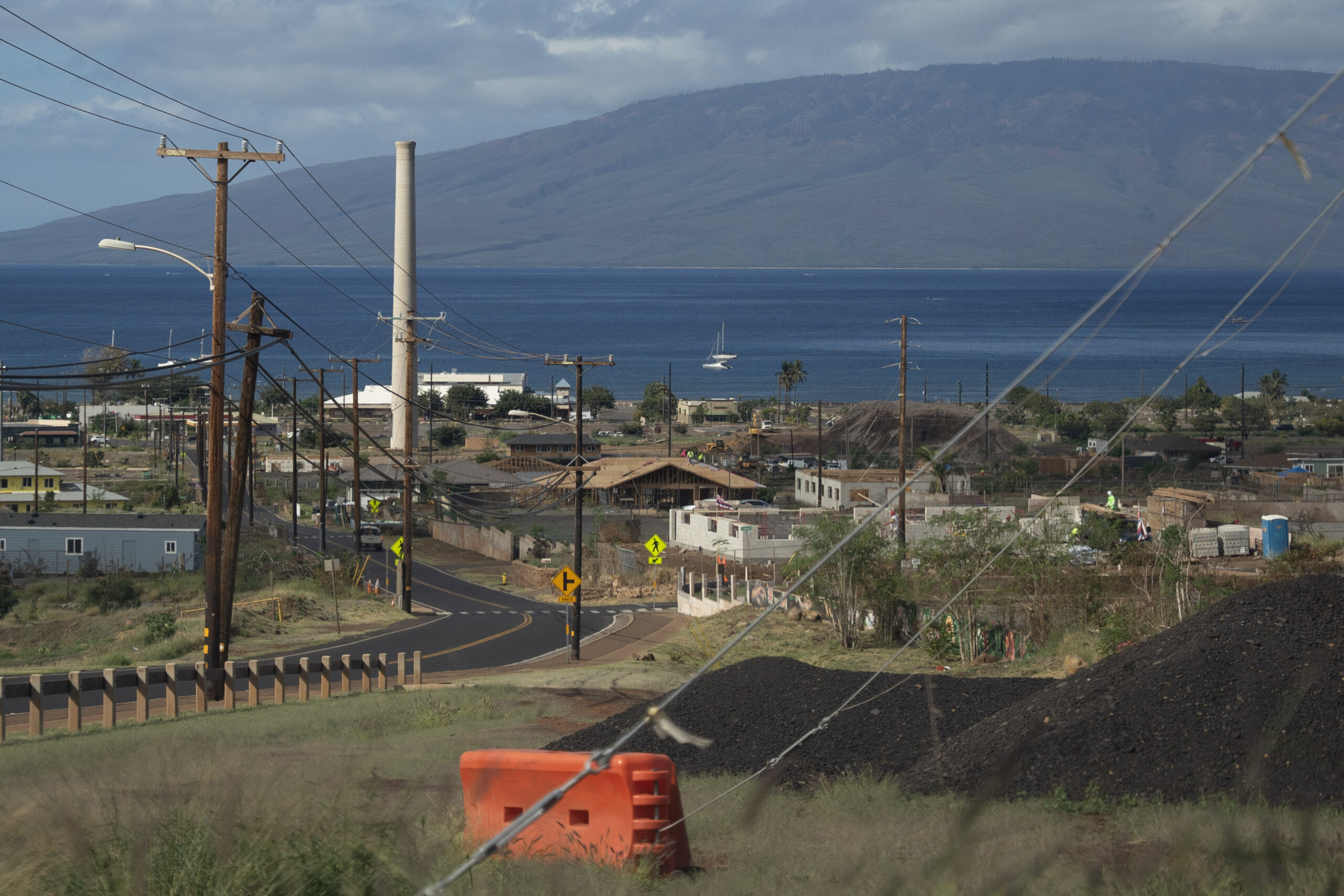
LAHAINA — Kelli Keahi and her husband Bear were among the first to start rebuilding in their wildfire-decimated Lahaina community just across from the aquatic center.
With their neighborhood located in both the historic and nearshore area, they worked to follow the proper guidelines, keeping their plans to rebuild their five-bedroom, four-bathroom plantation-style home on Alio Street to the same specifications as when it was built in 2005. And, as it was before the Aug. 8, 2023 wildfire burned it down.
But after their application was denied on the first try, they were forced to downsize their main home to three bedrooms and three bathrooms in order to avoid a costly and lengthy environmental study.
The process was frustrating and costly, with the Keahis having to sink nearly $20,000 into new building plans and the permitting process. It was even harder to watch a home in the same neighborhood get the green light to move forward with an even larger footprint and characteristics that don’t match the area’s historic nature.
“I’m just trying to figure out why there’s inconsistencies where some are held to standards that others are not,” Keahi said.
The other home in Keahi’s neighborhood was one of the properties that received building permits before government officials started enforcing historic district guidelines following an agreement in April between Maui County and the State Historic Preservation Division.
Under the agreement, the county became the primary point of contact for residents planning to rebuild homes in the Lahaina National Historic Landmark District, which primarily covers the neighborhoods oceanside of Honoapi‘ilani Highway between Lahaina Jodo Mission and Puamana.
The county looks over the permit applications and submits the documents for review to the state, which has 30 days to respond. If they don’t, the county can assume the division concurs with them and move forward, Deputy Planning Director Ana Lillis explained in an interview with the Hawai‘i Journalism Initiative earlier this month. The point was to try and streamline the process while still making sure the historic guidelines were met.
Before the agreement, the state was suggesting changes to make the homes align with the historic district, but the changes weren’t being required. Now, Maui County requires homes to meet the historic guidelines before they can get their building permits.
The State Historic Preservation Division was recommending and suggesting adjustments. Sometimes people complied, “but there were many that did not,” Lillis said.
Some were minor adjustments, but Lillis said the state and county were most concerned with not complying with the guidelines for roofs and building materials.
The home in Keahi’s neighborhood is a prime example. The owners of the Ilikahi Street property, which county records show are Owen Langer and Larissa Williams, applied to build a 4,422-square-foot home with a 466-square-foot detached ‘ohana unit.
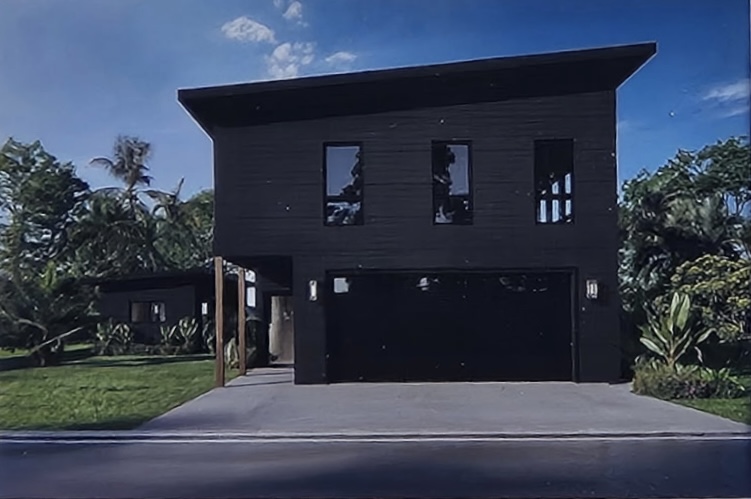
Prior to the fire, the property included a 1,050-square-foot dwelling that was built in 1972, according to a Jan. 24 letter from the state to the county. The State Historic Preservation Division had some recommendations that included adding wood trim to the windows and changing the style and materials of the shed roof, which wasn’t a common type of roof for homes in the historic district.
But they weren’t required to make the changes, and Lillis said the consultant told the county the owners did not plan to alter the roof design.
Langer, one of the property owners, declined to comment.
Now, in the wake of the April agreement, a home like that would have to comply with the guidelines before getting a permit, Lillis said.
“We’ve never changed what the expectation is,” Lillis said. “It’s whether or not (the homeowners) have to follow that expectation.”
The department did not immediately have the number of homes that were approved before the agreement with the state, and the number of homes that received recommendations for changes to match the historic district.
When the community raised concerns over the home at a meeting in Lahaina earlier this month, Lillis said the home had been incorrectly approved because of an administrative error, and that the county was considering whether to issue a “stop work” order. She later told the Hawaiʻi Journalism Initiative that after checking on the date of the permit, which according to county records was issued on March 24, she realized the home had been approved correctly because it came before the agreement with the state.
Residents at the meeting, including Keahi, were frustrated by what they saw as massive, modern homes getting through the permitting process and changing the character of Lahaina’s historic areas. Mikey Burke, a Lahaina resident who lost her home in the fire, said the architects and draftsmen behind the projects should know better.
“They live and work and do business on Maui, and they are the ones making these designs that are going to change the character of the district,” she said.
For Keahi, who split time between Maui and the Midwest growing up, and whose husband was born and raised in Lahaina, it’s important that the rebuilt homes reflect the community’s history, especially at a time when the county is trying to revive sites like Moku‘ula, the former residence of Hawaiian royalty that now sits beneath a public park next to her neighborhood.
As she drives around the community and sees posters of future massive homes that will be built, she worries about what Lahaina will look like in the end.
“We have all these things that we’re trying to save,” Keahi said. “Are we saving the town’s integrity of building back historical?”
Keahi said it’s not too late for the county to make things right and require homes to comply with historical guidelines that weren’t enforced before. She said she doesn’t want to create any problems for people rebuilding their homes, “but I just want to hold the county accountable for what they’re doing.”
“It just feels like … the rules apply to some, but they don’t apply to all,” Keahi said.
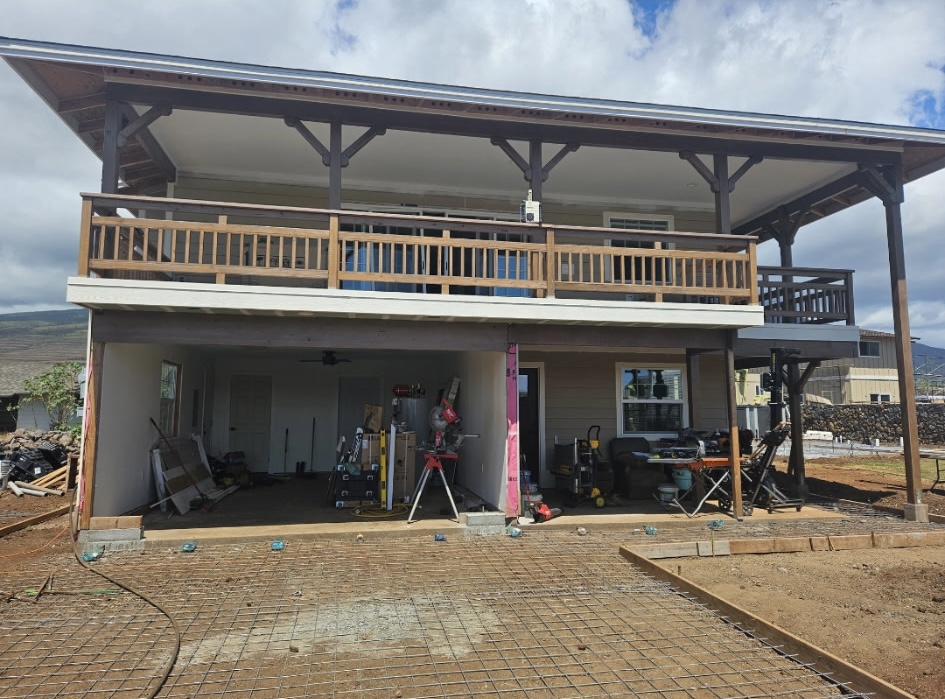
The Keahis, who received the building permit for their home in July 2024, according to county records, have done the exterior of their main home and are now working on the interior. But, she said, they ran out of money to build the ‘ohana unit, which they’d gotten a permit for prior to the fire but hadn’t built yet. She said she’d been told the ‘ohana unit counted against their total square footage which is why they had to downsize their main home.
When asked about the denial of the Keahis’ permit, Lillis said their design was compliant with the historic district. But they were forced to downsize in order to qualify for an exemption from an environmental assessment, a lengthy and costly process.
Lillis said the county is working to update the historic district guidelines to make them clearer for people who are rebuilding. The county plans to put the updates up for public comment and consideration by the Cultural Resources Commission possibly in August. Lillis said the rules “won’t change in a way that will make it more stringent.” The goal is mainly to clear up expectations in the types of materials and designs that people can use.
It’s something the State Historic Preservation Division has been supportive of, stating in a letter in January that the county should formalize the Lahaina Design Guidelines into its laws “as applicable and ensure that these guidelines are readily available to the public.”
Jessica Puff, deputy state historic preservation officer, wrote that “early, consistent application of the Lahaina Design guidelines is critical” to ensure that future applicants are aware of the district design guidelines for projects within the Lahaina National Historic Landmark District.” She said they should be known prior to the design phase of their project.
The State Historic Preservation Division recommends that Maui County Planning work with property owners “to ensure rebuilding efforts preserve views and visual relationships to ensure compatibility with the historic character” of the Lahaina historic district, Lillis said.
Although some homes with historical issues were approved prior to the agreement, Lillis said that given the number of homes that have been completed so far, “I think we caught this at a really good junction.”
According to the Maui County recovery dashboard, 38 homes have been completed in the Lahaina burn zone so far. A total of 443 building permits have been issued and 322 are being processed.
She said that’s why the agreement with the state is so important: “What it means for the consistency, and the expectations now that we can communicate to the public … this is exactly what we needed to preserve the character.”
She acknowledged the need for consistency as the community recovers and said that many things have changed as the rebuilding process unfolds in what has been an unprecedented disaster for the island.
“I agree that we could have done better … but we are improving the process,” Lillis said. “I think we’re making meaningful change. I think we are finally nailing down a permitting process that (makes it so) their neighbors will get to rejoin them home, and I think that’s the most meaningful thing we can do.”