 Hawai'i Journalism Initiative
Second anniversary of Maui wildfires brings more hope as recovery progresses, but survivors still yearn to come home
One year ago, on the first anniversary of the Aug. 8, 2023 wildfire in Lahaina, Dustin Kaleiopu and his cousins gathered together at their family’s burned-down property on Hale Street.
The memories of the flames, the stressful evacuation through Front Street traffic, the 102 deaths, the destruction of their hometown were still painfully fresh.
But today, with recovery in full swing, the second anniversary of the fire feels different to Kaleiopu.
“The trauma will always be there for sure,” Kaleiopu said. “But the image that I have in my mind of that day, it’s hard to picture that when you see frames being put up and you see construction happening and you see trees coming back.”
He said it is getting easier with everybody building back. “It is a beautiful sight to see.”
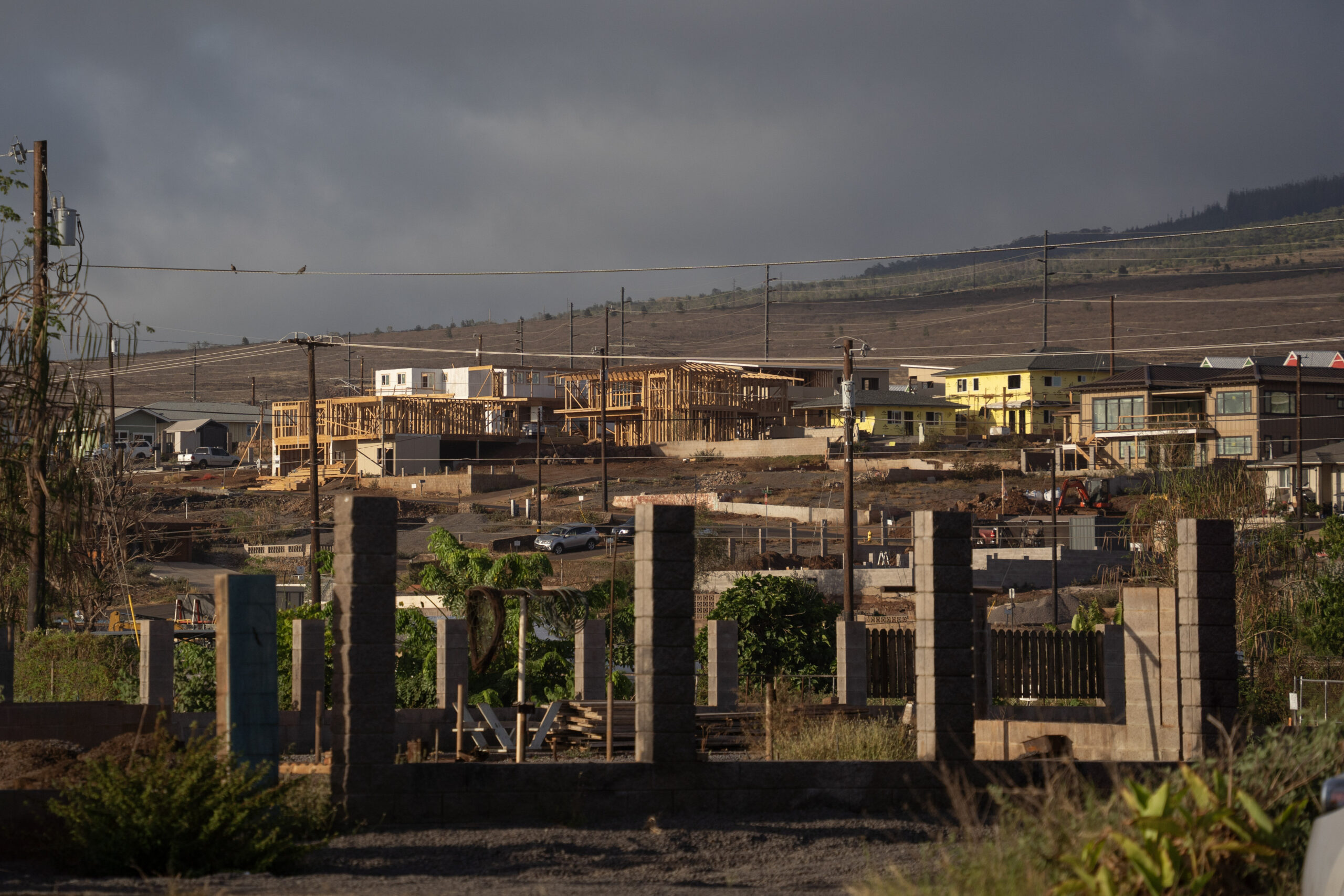
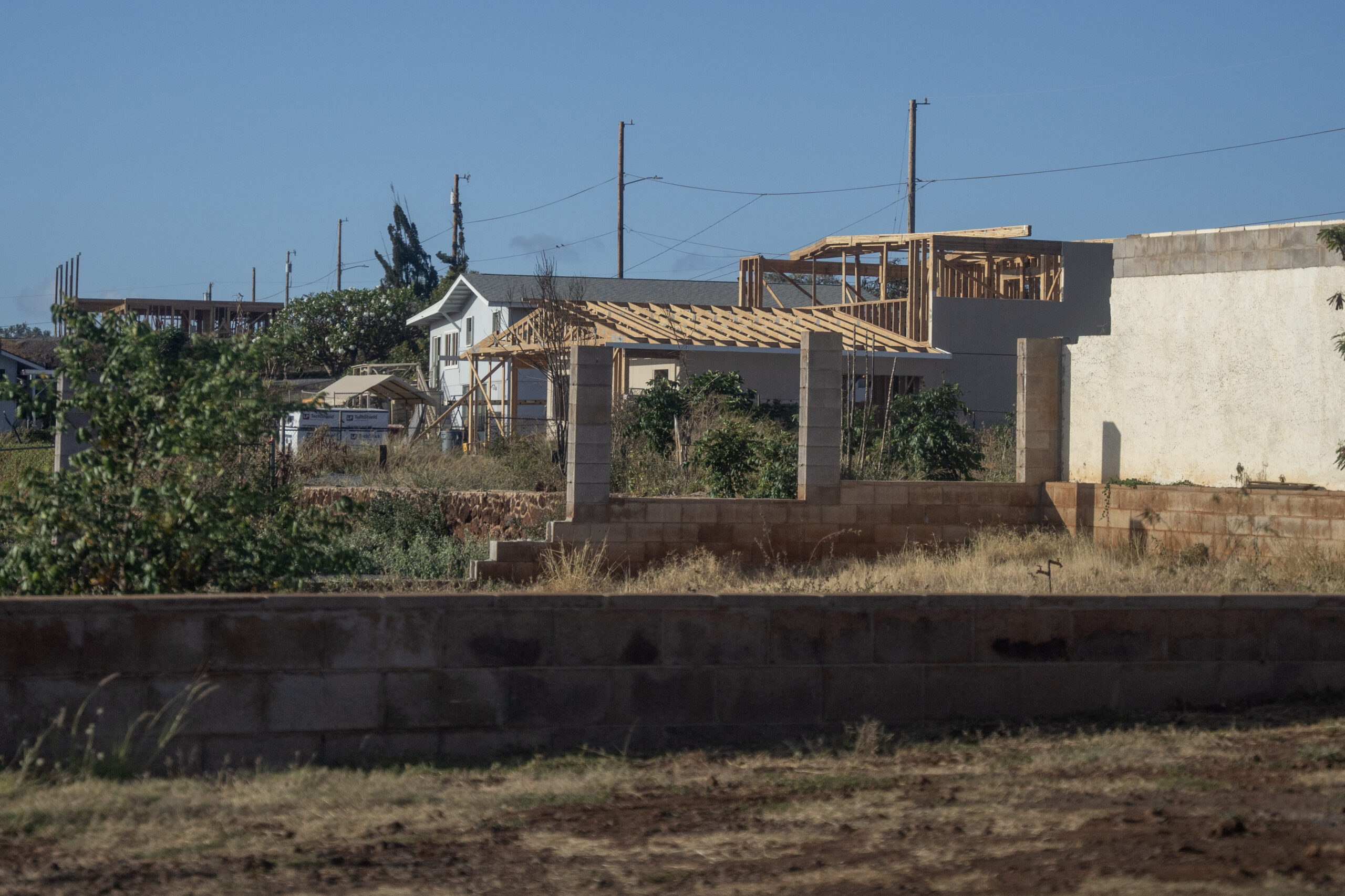
And hear. The sounds of saws and hammers fill the air in Lahaina and Kula, where 26 homes were destroyed by fire on the same day. There are currently 280 homes under construction, with 50 homes already completed in the burn zones, according to the Maui County recovery dashboard as of Wednesday.
Maui County Mayor Richard Bissen said rebuilding has progressed at an even faster pace than he’d hoped. Shortly after the fires, Bissen had predicted that it would take two to three years for building to get started, based on what had happened in other communities on the Mainland in the wake of major wildfires.
Instead, construction began on the first home in the Lahaina burn zone in June 2024, and the first homes were completed in both Lahaina and Kula in November 2024.
So far, 465 building permits have been issued and another 339 are being processed.
“Those are not numbers that we were either expecting … or counting on. We just wanted to get folks as fast as possible back to their properties,” Bissen told the Hawai‘i Journalism Initiative last week. “So I think that’s a really good start.”
More people are getting out of temporary housing and into permanent places. As of July, 37.4% of fire-impacted people in a University of Hawai‘i Economic Research Organization survey said they were in temporary housing, a decline from the one-year anniversary in August 2024 when that number was 47.8%.
Some have returned to West Maui, but many are still displaced. As of July, 46% of respondents from the Lahaina burn zone remained displaced from their home and the area, while 44.7% remained displaced from their home but not from the area. A year ago, in August 2024, 53.8% of people said they were displaced from both their home and the area.
UHERO has so far surveyed more than 970 people, with an average monthly sample of about 430 responses.
Kaleiopu’s ‘ohana is among those who are still displaced. He currently lives in one of the 50 temporary homes at Ke Ao Maluhia at Maui Lani, while his father and grandfather rent in Wailuku. The three used to live together on the Hale Street property in Lahaina where Kaleiopu’s grandfather was born in 1942.
They’ve thought about moving back, but his grandpa is in his 80s, and “there’s not much for him out there.” It’s far from medical care and other resources, so they’ve put any plans to return on the backburner for now.
“Now that he’s getting up there in age, it’s the thought of ‘I was born at home, I want to die at home,’ but maybe not,” Kaleiopu said. “He is in a beautiful home in Wailuku Heights and he has a beautiful view of Central Maui and it is nice there, but it’s definitely not home.”
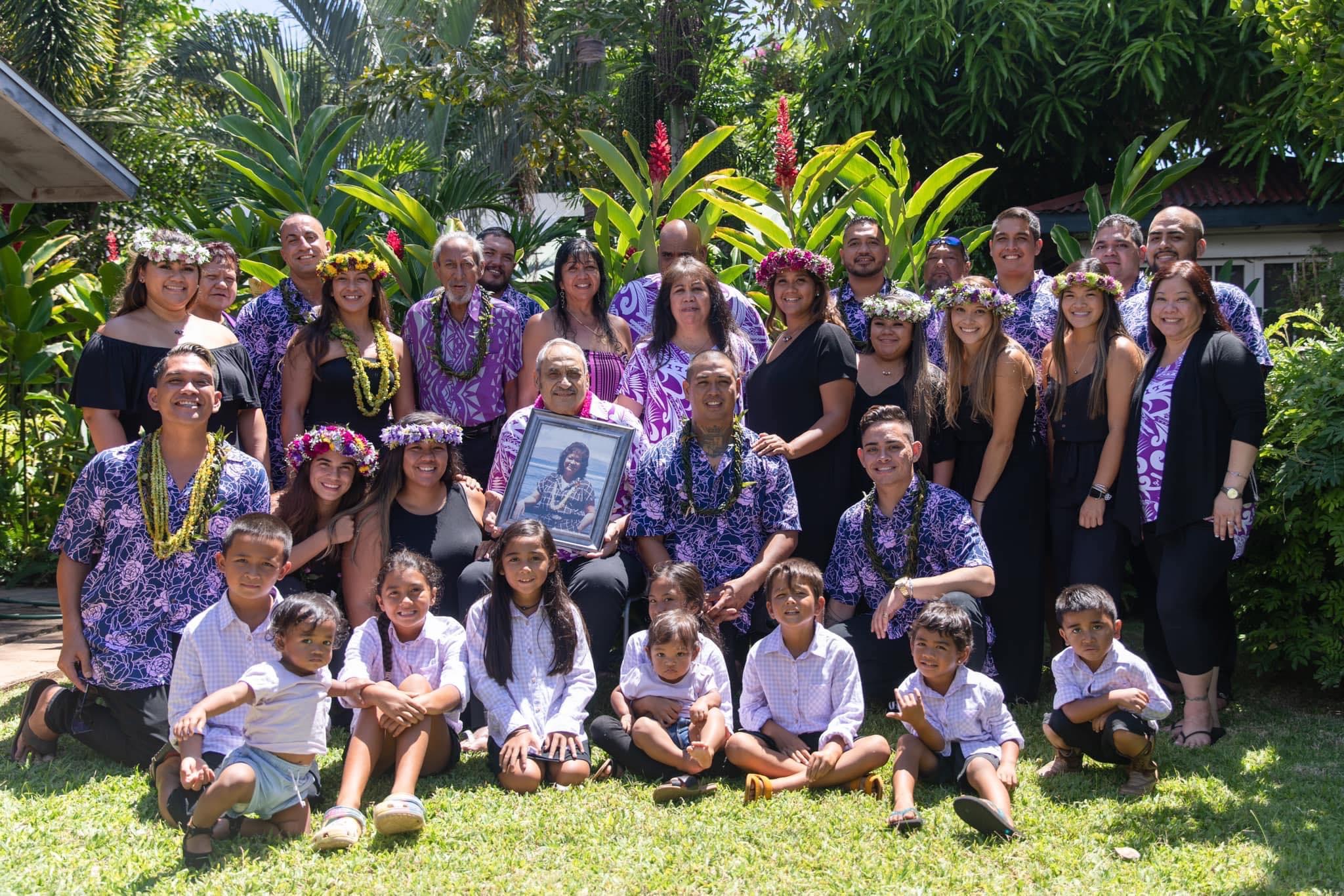
Home was Lahaina, where Kaleiopu’s great-grandfather, who worked for the sugar mill and served as a deacon at historic Waiola Church, bought their Hale Street property sometime in the late 1920s or early ’30s. Kaleiopu’s grandmother was a manager at the former Lahaina Broiler restaurant, and his grandfather was a police officer who ticketed tourists up and down Front Street for parking illegally.
Their home hosted countless parties and generations of the family. When relatives from Moloka‘i visited unannounced, “We’d hear them rolling their suitcases down the street, and they knew that they had a place to sleep, and that’s how it was for anyone in the family or anyone who knew the family.”
“The front door was always unlocked,” Kaleiopu said.
The Kaleiopus want to rebuild the home that once meant so much to them, but even with their insurance payout, they can’t afford a complete rebuild without tapping into their own funds. Then, there’s the question of what will be there when they return. Their neighborhood isn’t like other areas of Lahaina where multiple homes are under construction and street lights are back on. It’s quiet and eerie, especially at night, and while that won’t stop the community from coming back, Kaleiopu said his neighbors are “a little more cautious.”
“There’s a lot of death concentrated in that area, and we want to be able to move back into our neighborhood where we’re there together, not just one house in the dark all by itself,” Kaleiopu said.
Still, he misses home. Whenever he goes to Lahaina, he drives down to the family’s property and parks on the gravel lot. He sits there and just enjoys the breeze, the sight of the plants that are regrowing and the sound of the waves crashing nearby.
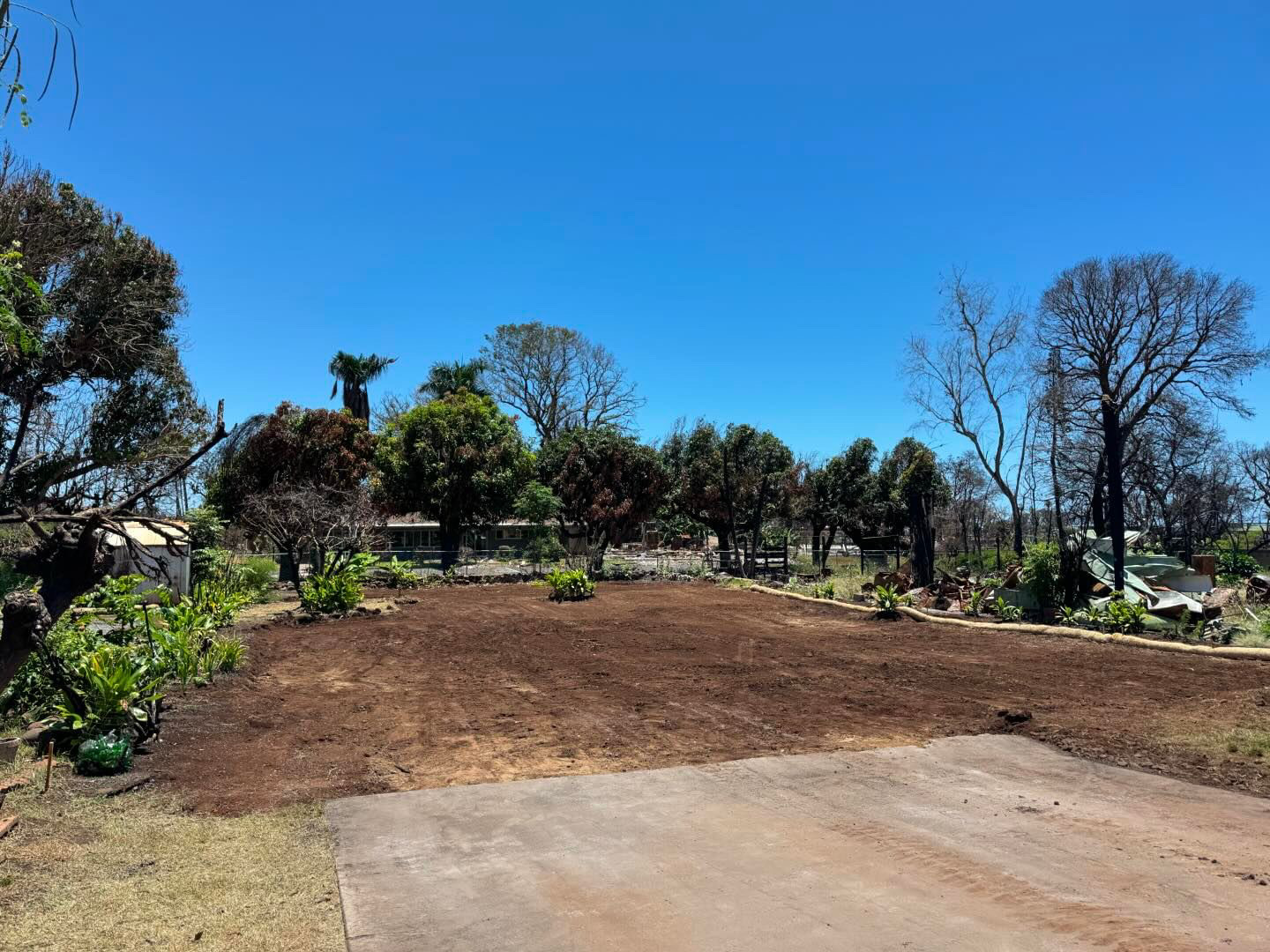
Each phase of the recovery has been another step towards healing for Kaleiopu, who works as the community care navigator lead for the Council for Native Hawaiian Advancement and has been involved in the organization’s Kākoʻo Maui hub. He remembers the relief of seeing the mounds of debris and ash disappear and give way to dirt and gravel. And with rebuilding progressing and new sources of funding available to help fire survivors, he’s feeling more optimistic.
“The last 365 days have been a lot more hopeful,” Kaleiopu said. “I know there’s still people that are struggling and not everyone is as hopeful, but I think the collective is in a good place.”
Archie Kalepa, whose home in the Villages of Leiali‘i survived, said he was losing a little bit of hope after nearly two years of living in the burn zone and growing frustrated over the challenges that people were up against to rebuild. Kalepa was part of the mayor’s Lahaina Advisory Team until May 2024, when he stepped down to serve on the Hawaiian Homes Commission. He’s also the head of Lele Aloha, which launched a program earlier this year to offer grants for rebuilding in Lahaina.
A couple of months ago, Kalepa took a break to captain the voyaging canoe Hikianalia as she journeyed to Tahiti alongside Hōkūleʻa in June. He came back refreshed and ready to dive back into community projects like the renovation of the Veterans Hall in Lahaina that has served as one of the few community spaces still standing after the fire.
“People just got to listen to their souls and realize when they’re feeling down, they seek help … and whatever people need to fill their cup, know what it is and go and fill that cup,” he said.
Kalepa is glad to see the progress in the recovery, but he hopes it won’t erode Lahaina’s history the way that decades of over-commercialization did.
“I think that’s what a lot of original people from Lahaina would like to see, that we bring forth all of the historical things and build our economy around Lahaina’s history,” Kalepa said.
But most importantly, Lahaina needs “our multi-generational people to come home,” he said. The more families the community loses, the greater the chance they’ll lose the traditions that have long made the place special.
Bissen said housing for kama‘āina is one of the top priorities in the recovery moving forward. A big part of that is the $1.6 billion in Community Development Block Grant Disaster Recovery funding from the federal government that will be available to help fire survivors rebuild or buy new homes. Another virtual meeting on the program will be held Saturday, and applications will open on Monday.
“The goal is to get people back home as much as possible, those who were from that area, and whatever we need to do, using DR (disaster recovery) funding, using nonprofits to assist, using philanthropy,” Bissen said. “We know a lot of folks can get started but may not have enough to complete their home.”
If there’s anything the response to the fire has proved two years later, it’s that the community will come together to make things happen, Bissen said.
“We learned how resilient our community is. We learned how much they’re willing to come together for a common goal, help each other and help their neighbors,” he said. “So I’m very, very proud of our community. … Everyone in some way was impacted.”