 Hawai'i Journalism Initiative
Maui Film Festival’s 25-year run is over; Wailuku Film Festival to start in 2026 with different focus
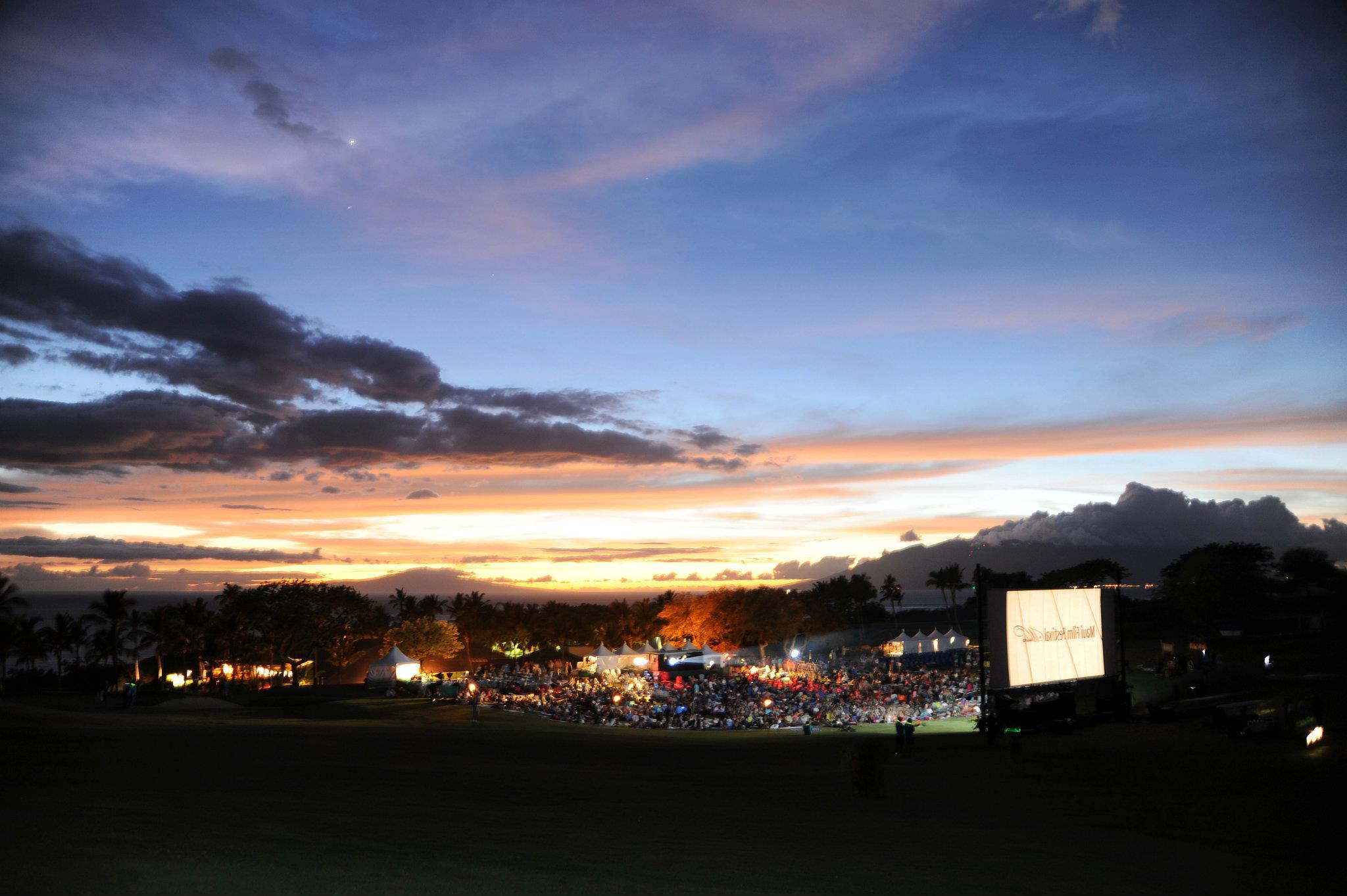
For 25 years, the Maui Film Festival was a beloved event, bringing new movies to the island and for more than a decade featuring “Celestial Cinema” nights on the joint driving range of the Emerald and Gold golf courses in Wailea.
The festival drew Pierce Brosnan and other A-list Hollywood stars to the Valley Isle, and hosted movie premieres.
But there will not be a No. 26.
The Maui Film Festival filed for Chapter 7 bankruptcy on May 30 in the U.S. Bankruptcy Court District of Hawai’i. The filing cited debts of $157,040 and assets of $15,869. Most of the debt is from a U.S. Small Business Administration loan that the Maui Film Festival secured during the COVID-19 pandemic in October 2020.
Married couple Barry and Stella Rivers, both in their mid-70s, were director and vice director of the event that ran from 2000 to 2024. Stella Rivers declined to comment about the bankruptcy.
“We did our last Maui Film Festival last year and are done,” said Stella Rivers in a text message to Hawai’i Journalism Initiative on Monday. “A great ride, but tons of work. We are now wanting to retire.”
To help fill the void, Maui Film Commissioner Brian Kohne is launching the Wailuku Film Festival in 2026. But this festival will have a different goal of developing Maui talent to become film stars of the future and bolstering the local film industry.
But the loss of the Maui Film Festival will be felt. It is leaving behind quite the legacy.
“It really was an aspect of Maui’s face in the world,” said Rick Chatenever, who covered many of the festivals while serving as the entertainment and features editor of The Maui News for 20 years. “I know that in the film industry, it had quite a reputation. For the celebrities who came, they just had this really magical feeling. It really had this magical quality for visitors.”
Chatenever added, “For people who lived on the island it was a source of pride. It was the Maui Film Festival. It really gave a certain identity to Maui, not just as a venue for seeing movies, but really as a state of mind about movies and about the place of Maui in the world. It was a really nice feather in the island’s cap.”
Celestial Cinema nights would routinely draw 2,000 people under the stars while watching movie stars on a 100-foot big screen.
“It was spectacular,” Chatenever said.
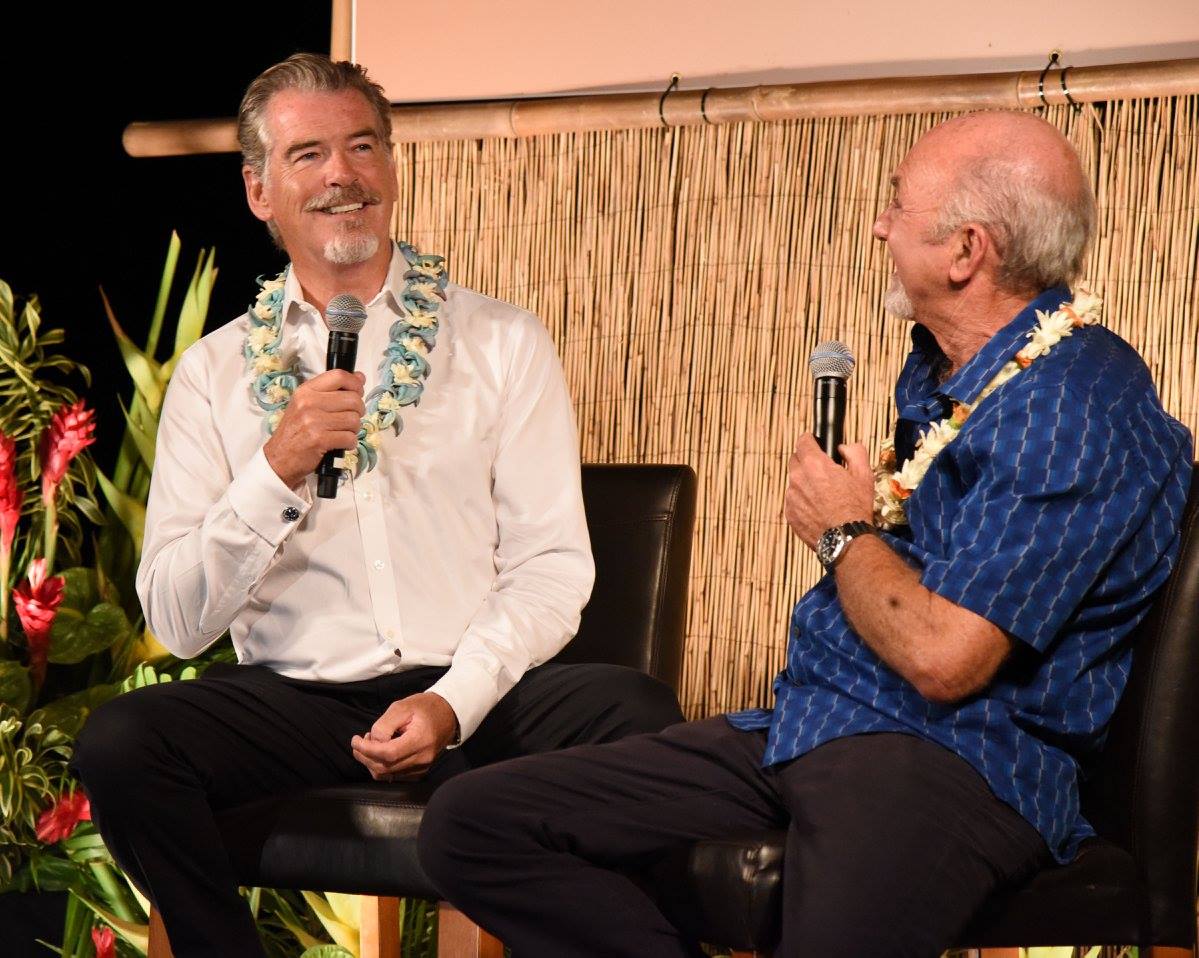
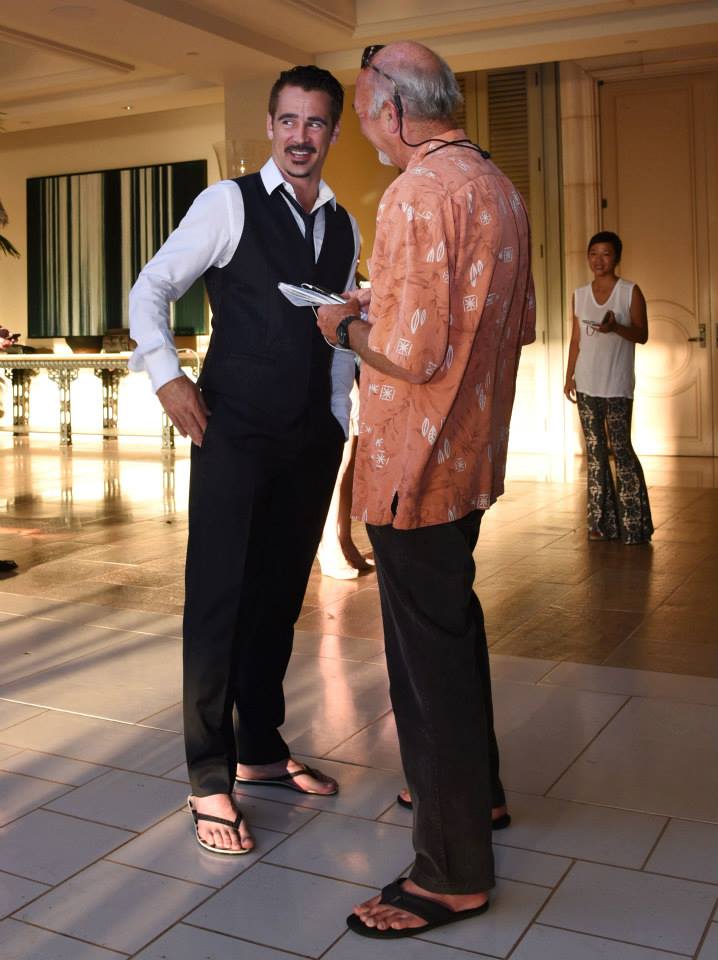
During a phone interview from his home in Arizona, Chatenever listed the mega stars, in addition to Brosnan, that he talked to that came to the festival: Colin Farrell, Jessica Chastain, Laura Dern, Brian Cranston, Viola Davis and Adam Driver.
“They gave awards to people like Clint Eastwood and William Hurt and Gina Davis,” Chatenever said. “But in the last probably 10 years that I was with them, they started finding up-and-coming stars. And one of the tributes that they gave was called the rising star, the shining star.”
Young stars who attended the Maui Film Festival and went on to make it big included Michael B. Jordan and Brie Larson.
“They would find people, basically young performers … they would catch them right at the moment where they went from being unknown to being Hollywood A-list Academy Award nominees,” he said. “Brie Larson was one. That was a really favorite interview.”
Larson attended the Maui Film Festival in 2013, where she received the Rising Star Award. Two years later, she won the Oscar for best actress for the movie “Room.”
“I did that (interview) actually in a parking lot outside (Bev) Gannon’s restaurant as we were going in,” Chatenever said. “So here she is, no one’s ever heard of Brie Larson. Next thing you know, she’s winning an Oscar.”
Kathleen Costello, the director of marketing and communications for the Wailea Resort Association, said the Maui Film Festival was a welcome annual event in South Maui until the COVID-19 pandemic forced a change of venue in 2021 to the Maui Arts & Cultural Center.
“It was an amazing 20-year event in Wailea,” Costello said.
The association hosted many ancillary events, which Costello said “created amazing buzz” with celebrities and film industry executives. “And, most importantly, our kama‘āina and community loved it.”
Costello said the festival was “a great five days on Maui. … Barry Rivers had an amazing vision back then. Watching it come to life was perfect.”
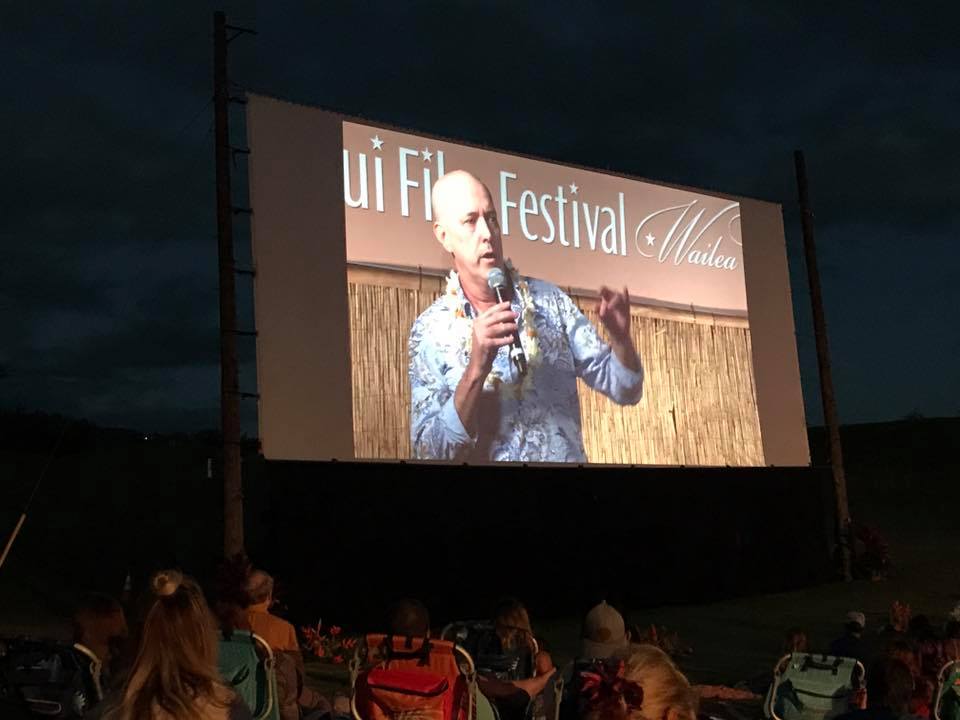
With the Maui Film Festival’s run over, the Wailuku Film Festival is in line to come in with a different focus. Kohne said the emphasis will be on helping find young filmmakers, actors and other film industry workers from Maui.
The first Wailuku Film Festival is set for June 18-21, 2026, using the ‘Iao Theatre and the Maui Academy of Performing Arts building, both in the town of Wailuku.
The $90,000 earmarked for the Maui Film Festival in the Maui County fiscal year 2025 budget has been reallocated to the Wailuku Film Festival and Kohne said $90,000 more has been allocated to the Wailuku Film Festival in the Maui Film Office budget for fiscal year 2026.
These startup funds will be used for branding, a website and sponsor search, Kohne said.
Film submissions can begin in November 2025, “and we can roll into 2026 on track,” he said.
Kohne plans to do several one-night-only events to introduce the festival’s brand and categories. Starting in October, the festival will seek sponsors and donors.
Maui County Mayor Richard Bissen said he supports the new festival whose film categories will be: students, Hawai‘i, Indigenous and water sports.
“The Wailuku Film Festival is a vital investment in the future of Maui’s creative economy,” Bissen said. “By providing funding for the Maui County Film Office and important initiatives such as this new festival, the county is demonstrating its commitment to fostering local talent, creating meaningful employment opportunities, and promoting cultural expression through film.”
Bissen said the festival also strengthens the creative industries and contributes to economic development on the island and the long-term wellbeing of its communities.
“A lot of our people are making movies and growing and learning,” Kohne said. “So the Wailuku Film Festival is an initiative that springs from that idea, that in order to connect education through to industry, we need a festival that prioritizes the youth.”
Kohne said the Wailuku Film Festival will have unique characteristics that are essential to build an industry that is currently struggling in the county and state.
“It’s a gathering event,” he said, explaining that student filmmakers will have four days to hang out and network with established filmmakers.
The film categories of the Wailuku Film Festival will work together to help fledgling filmmakers.
“We want to bring the youth around the state that are active here in our community for their benefit and ours,” Kohne said.
Kohne also wants it to be a place where Indigenous filmmakers from around the world can network with Hawai‘i filmmakers and “experience their work and examine other models.”
“Let’s bring those personalities and those role models into our community,” he said.
The Hawai‘i category holds a special place in Kohne’s heart. His 2017 film “Kuleana” was honored at the Maui Film Festival with the Audience Choice award.
“The category of Hawai‘i is more broad. It could be something shot here, it could be something about here, it could be somebody from Hawai‘i who’s out in the big wide world making a movie that’s unrelated,” Kohne said. “It could be and should be some of our many kids who have gone off to film school that are producing graduate-level work. Those works aren’t being exhibited here.”
Kohne is an art and radio/TV/film graduate of San Jose State University who returned to Maui in 2005 from Silicon Valley after having excelled as a national director of sales and marketing in corporate video production, sports broadcasting, and as senior user interface architect for an interactive television corporation.
When Kohne, a 1982 graduate of Baldwin High School, returned home 20 years ago, he said it was “career suicide.”
”We have to change that,” he said. “We have to give our up-and-comers that are here now a reason to believe there will be something waiting for them when they go receive that training.”
Kohne also is Director of Academy for Creative Media at the University of Hawai‘i Maui College. He said the two-year program there leads right in to a four-year bachelor’s degree program at UH Mānoa.
“Not only can people get their start here on Maui, but the institutions on Oʻahu have matured,” he said. “Mānoa is now Mānoa School of the Cinematic Arts. It mirrors the (University of Southern California) program, and they focus on storytelling in animation and film, with a heavy emphasis on diversity, inclusion and Indigenous storytelling.”
In recent years, the state has lost television shows “Rescue: HI-Surf,” “Hawai‘i Five-O” and “NCIS: Hawai‘i.” The state is working to boost the film industry through its Department of Business, Economic Development & Tourism.
James Kunane Tokioka, director of the state department, said events like the Wailuku Film Festival fit right into the plan.
“Hawai‘i is developing a comprehensive film strategy to modernize incentives, expand local studio and post-production capacity, and streamline permitting,” he said in an email to Hawaiʻi Journalism Initiative. “Through the Hawai‘i First Strategic Framework, DBEDT is aligning workforce programs, creative media education and industry partnerships to grow a sustainable production ecosystem.”
With the current success of “Chief of War,” an Apple TV+ miniseries that is a passion project for Jason Momoa, there appears to be momentum in the state film industry. Momoa is hopeful that the drama series can catch on for a second and perhaps third season to show government officials that increasing incentives and infrastructure to help the film industry here is essential to success.

Most of the $340 million “Chief of War” project was filmed in New Zealand, where the infrastructure, tax incentives and studios are already in place.
“The ‘Chief of War’ series highlights the critical need to invest in local capacity,” Tokioka said. “Despite being based on true events in Hawaiian history, much of the filming occurred outside Hawai‘i due to the lack of sound stages and competitive incentives.”
The Department of Business, Economic Development & Tourism is using the series as a case study to engage stakeholders and accelerate a coordinated “open for business” campaign to bring more culturally aligned productions home and to strenghthen Hawaiʻi’s local film production, Tokioka said.
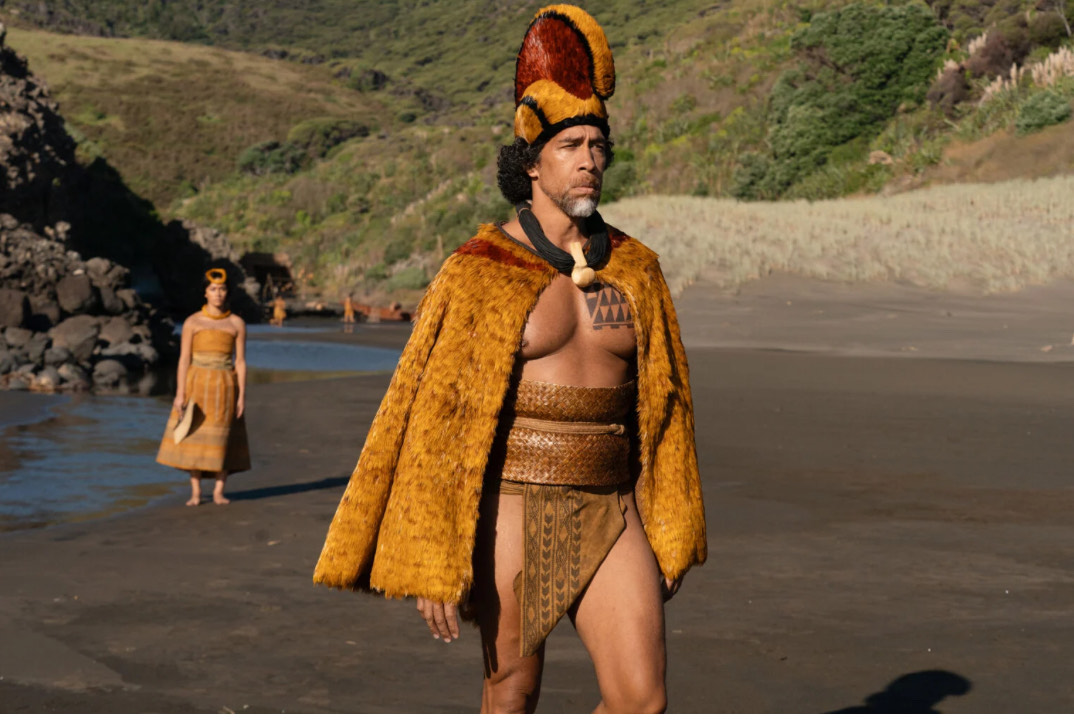
Moses Goods, a 1995 Maui High School graduate, plays Moku in “Chief of War.” Moku is a chief advisor to Kamehameha, his main general, a fierce fighter and renowned strategist. Moku appears in every episode of the miniseries except the first one.
Goods said the time is now to jump on the momentum of Momoa’s dream project, which is No. 1 on Apple TV+ after the drop of the first two episodes last Friday. Goods lives on O’ahu and works with youngsters in the Honolulu Theatre for Youth several times per week.
“This is really for them, because right now it’s still going to be some time before effects are felt when changes are made, but we got to think like that right now,” Goods said. “It’s not going to be instantaneous. ‘Chief of War,’ if we do get a season two and three, is likely not going to film all in Hawai’i, just because the infrastructure has already been set in New Zealand.”
Goods’ start in the industry happened at Maui High.
“Mrs. Johnson, Carolyn Johnson used to be at Maui High, and she ran the drama program there. And in my junior year, I enrolled in that course,” he said. “She was a huge advocate for the arts, particularly theater, and was very passionate about her work. So that was my first real exposure to theater.”
Goods will be back on Maui this weekend to attend his 30th high school reunion. There are several high school media programs around the county and the graduates who participate in them will be following a path Goods did three decades ago.
“It’s about planting seeds for the future,” Goods said. And, “making sure that the changes are being made now so that we can adjust the future of the industry.”