



 Hawai'i Journalism Initiative
Burying power lines along Lahainaluna Road part of Hawaiian Electric’s grid hardening plan
Two years after a downed power pole sparked a wildfire in 2023 that burned down much of Lahaina and killed at least 102 people, Hawaiian Electric unveiled plans to harden the electric grid in the seaside town on Maui.
The plans include burying 2.5 miles of power lines along Lahainaluna Road, which could be done in conjunction with Maui County’s plan to widen the major thoroughfare in Lahaina, said Colton Ching, senior vice president of planning and technology for Hawaiian Electric.
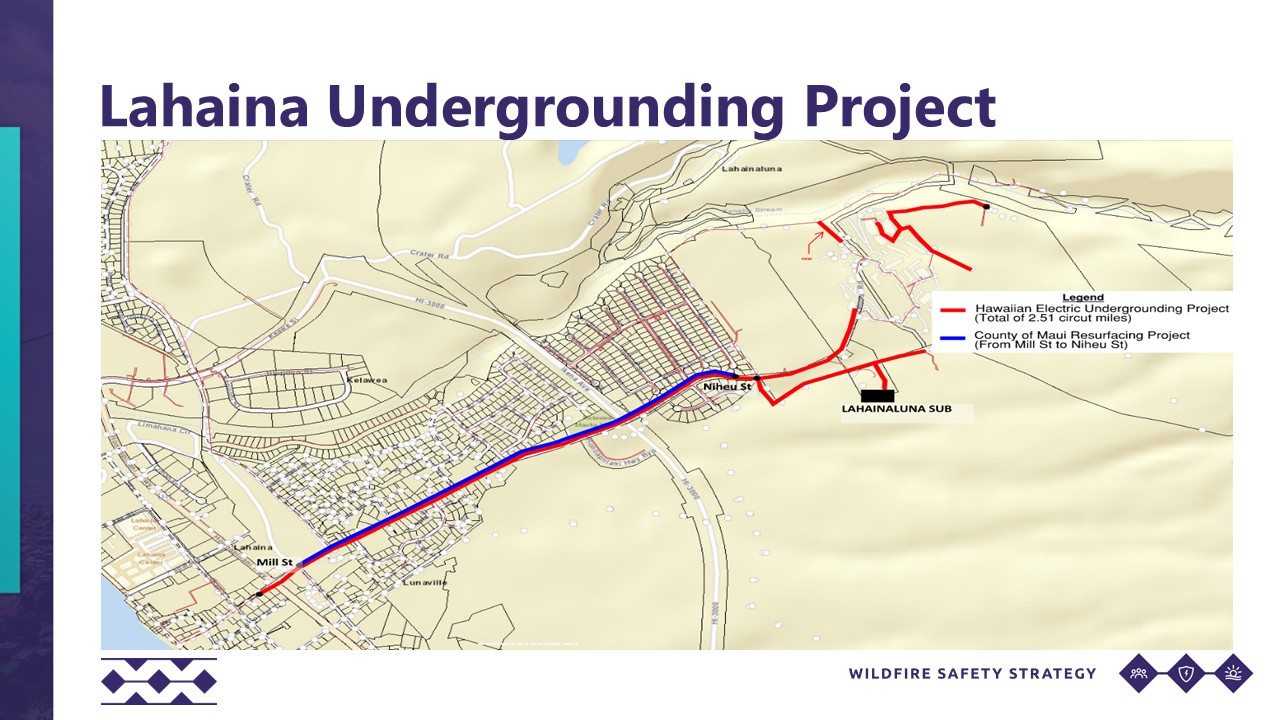
“It’s a rare win-win opportunity for both Hawaiian Electric customers and residents of Maui to benefit from both efforts together,” Ching said.
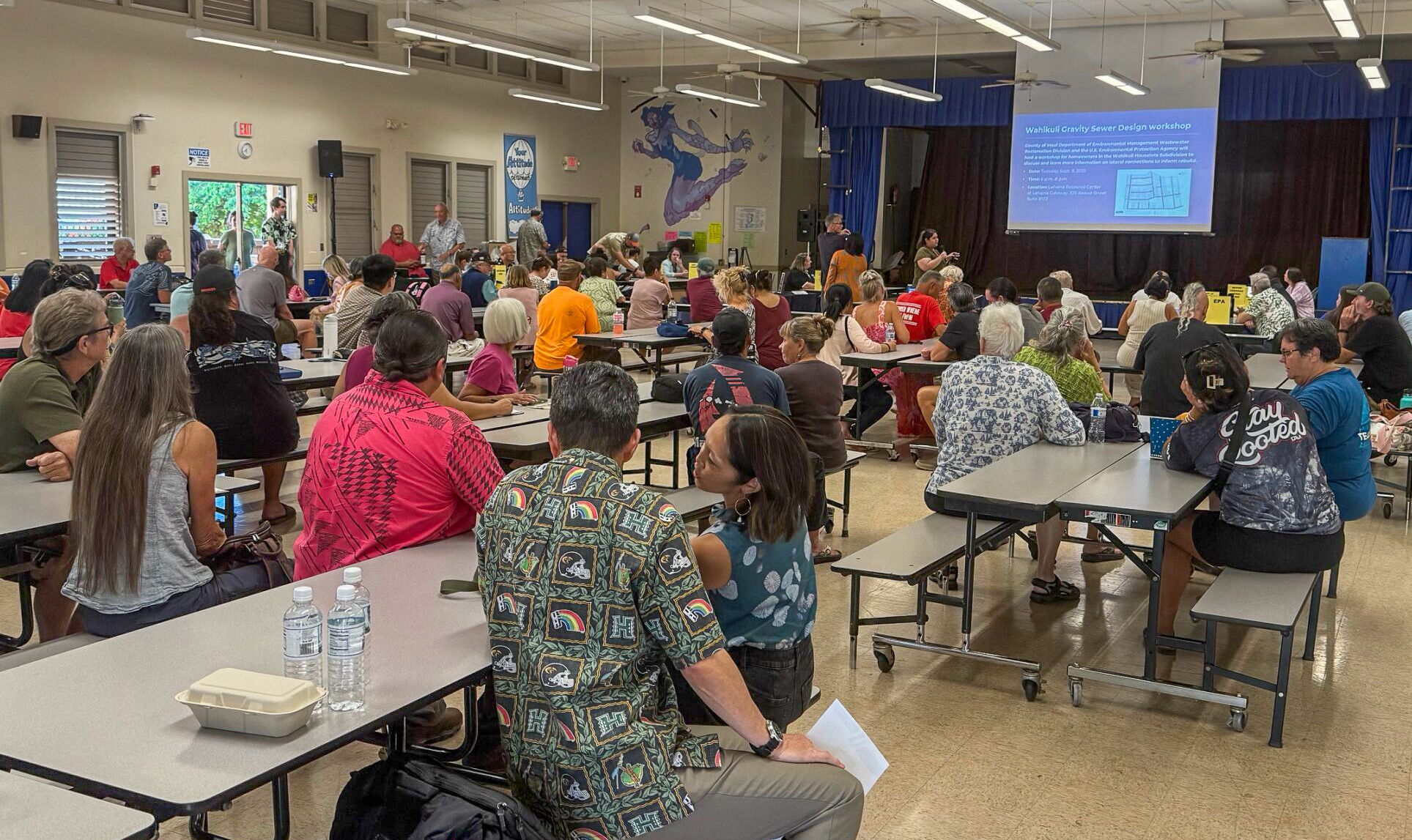
Specifics of the utility company’s fire mitigation plans for Lahaina were announced Wednesday night during a Lahaina fire recovery community meeting.
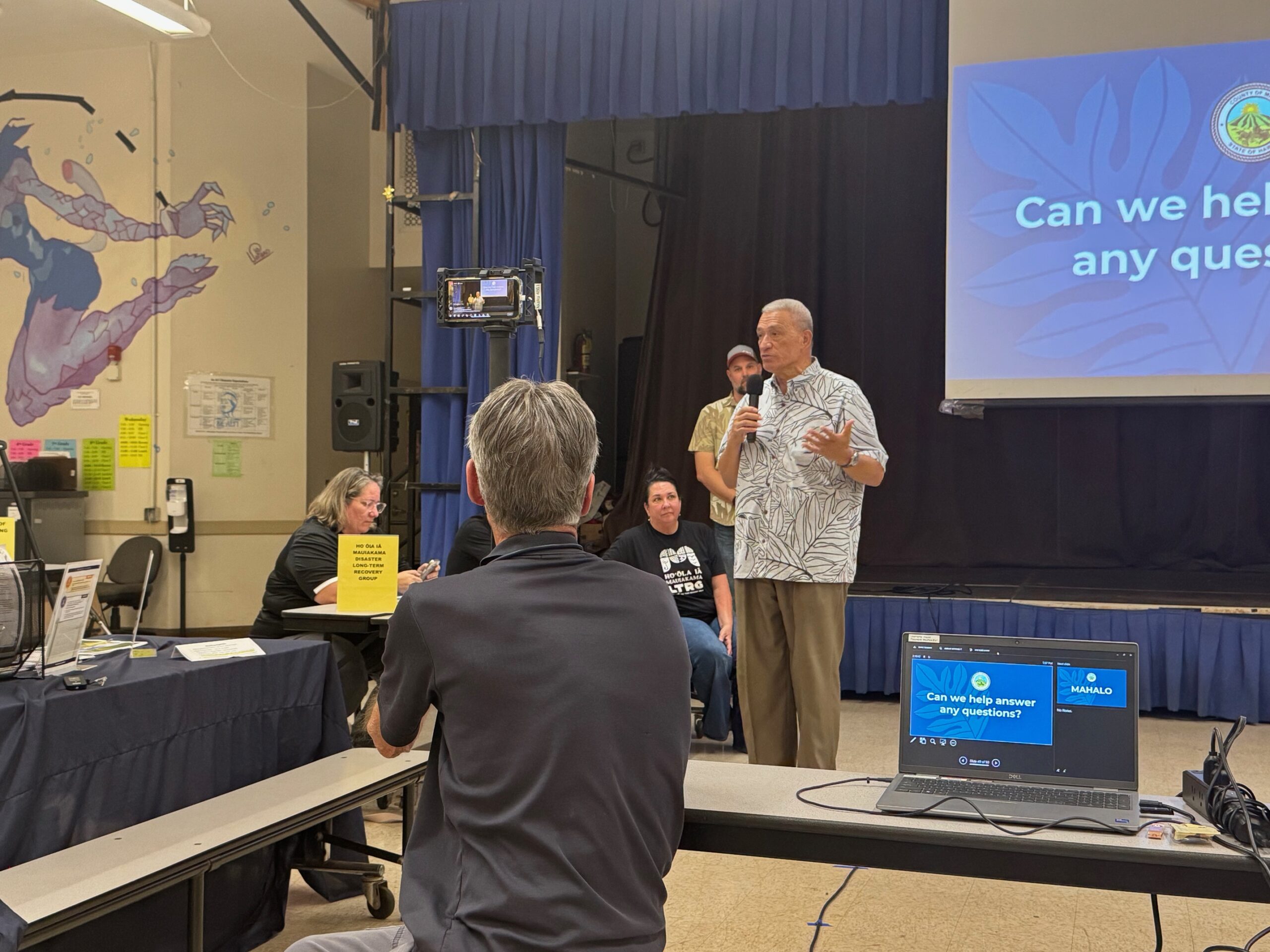
Maui County Mayor Richard Bissen said at the meeting that targeting Lahainaluna Road for the underground wiring makes sense.
“Major road, major poles,” Bissen said. “We can’t afford to have that be blocked off in an emergency.”
The Aug. 8, 2023, fire “originated off Lahainaluna Road in the unmaintained vegetation near utility pole 25 as a result of molten metallic material (sparks) ejected from the re-energization of broken power lines above,” according to the Origin and Cause Report of the Lahaina wildfire. The report was released on Oct. 3, 2024 by the Maui Fire Department and the U.S. Bureau of Alcohol, Tobacco, Firearms and Explosives.
Downed utility poles, as well as fallen trees, both caused by the strong winds that gusted at more than 60 mph on that August day, also blocked roads and people’s ability to evacuate. Some people who died in the Lahaina fire were trapped in their cars that had nowhere to go to escape the flames.
Hawaiian Electric’s hardening strategy in Lahaina is part of the company’s overall wildfire safety strategy that had been in the works prior to the Lahaina wildfire, Ching said.
“Going back over 10 years, we recognized that we needed a dedicated program to take existing infrastructure and replace them before they fail,” Ching said.
The Lahaina wildfire accelerated some of the plans of the safety strategy, with the aid of federal funding for fire recovery and mitigation, he said Thursday.
But the timeline still is “several years” for completing the burying of the 2.5 miles of power lines along Lahainaluna Road. The project is estimated to cost $11 million per mile, which Ching said will be covered by a U.S. Department of Energy grant.
Bissen added that as the Front Street area is redeveloped, underground wiring is likely to be a part of the electrical plan there.
But that project, and others, will only become more challenging as time goes by, Ching said: “We’re facing a very different environment: storms, winds, flooding, wildfire risks and so going back to 2019.”
He said Hawaiian Electric had asked state utility regulators to approve a program to increase the resilience of our grid.
“That was still being evaluated by the Hawaiʻi Public Utilities Commission when the Lahaina wildfires and Kula wildfires occurred,” Ching said.
Now, Hawaiian Electric can utilize some of the $95 million allocated to Maui by President Joe Biden in 2023 when he visited 12 days after the fire. The U.S. Department of Energy approved the $95 million in federal funds in the wake of the Maui windstorms and wildfires to harden the energy grids on the five islands served by Hawaiian Electric and enable them to better withstand severe weather-related events fueled by climate change, the company announced on Aug. 30, 2023.
“The accelerated wildfire mitigation work really began in earnest after the Lahaina wildfires,” Ching said. “We learned a lot.”
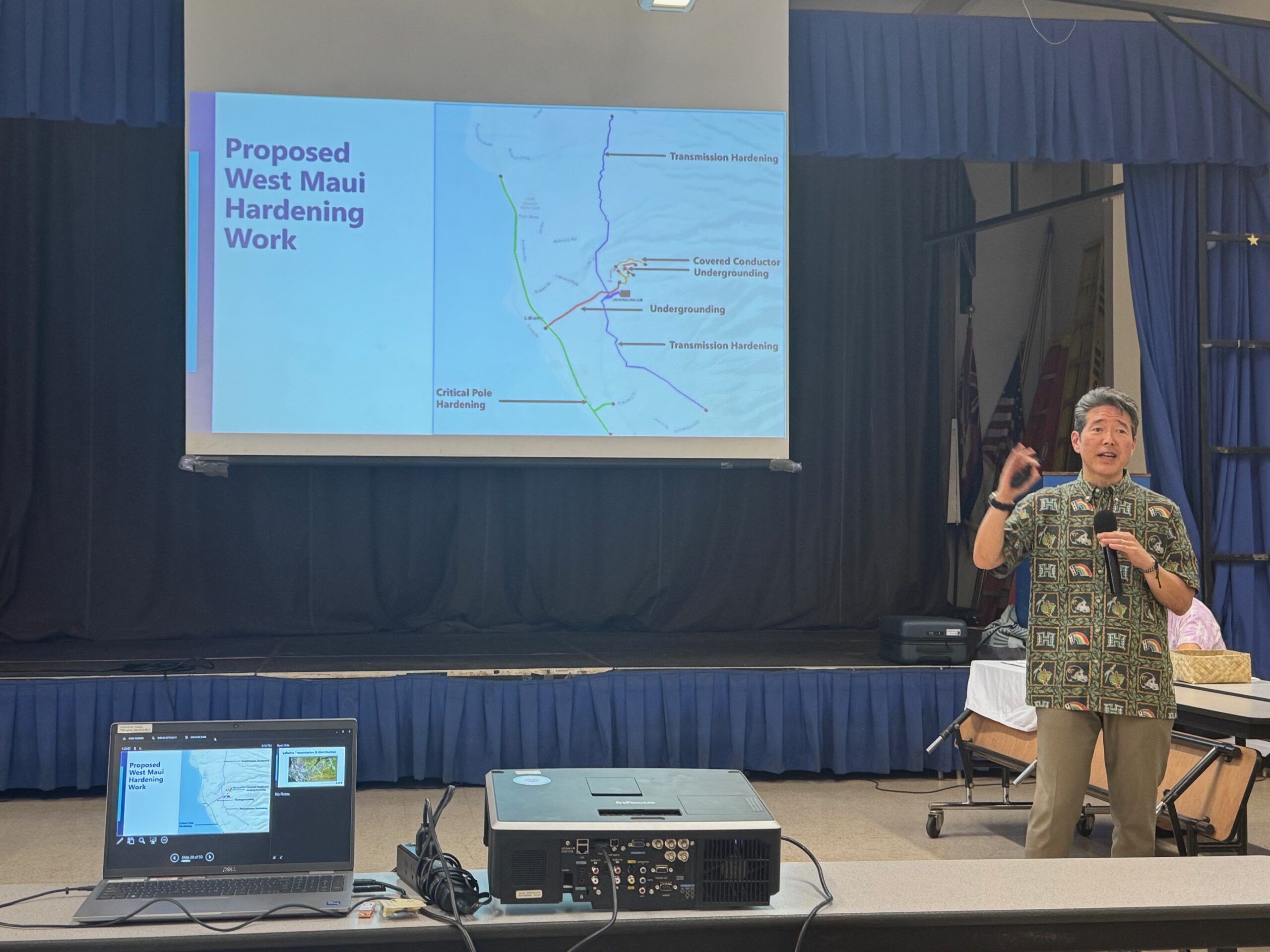
Hawaiian Electrics grid hardening also includes replacing bare conductors with covered conductors; replacing transmission poles with higher strength poles; and replacing aged conductors. Wooden electric poles along vital egress routes also will be replaced with more durable steel or composite poles.
There had been plans to underground the power lines at Lahainaluna High School at the top of Lahainaluna Road, but after a meeting with a “working group” of select members of the community about a month ago those plans changed.
“We had a meeting with the working group, including the administration from Lahainauna, and they asked us to not underground the circuit as it goes through the high school because the construction … would be disruptive to the campus as well as to the classes,” Ching said. “So we’re looking to keep the circuits overhead, but harden those poles and conductors in the area.”
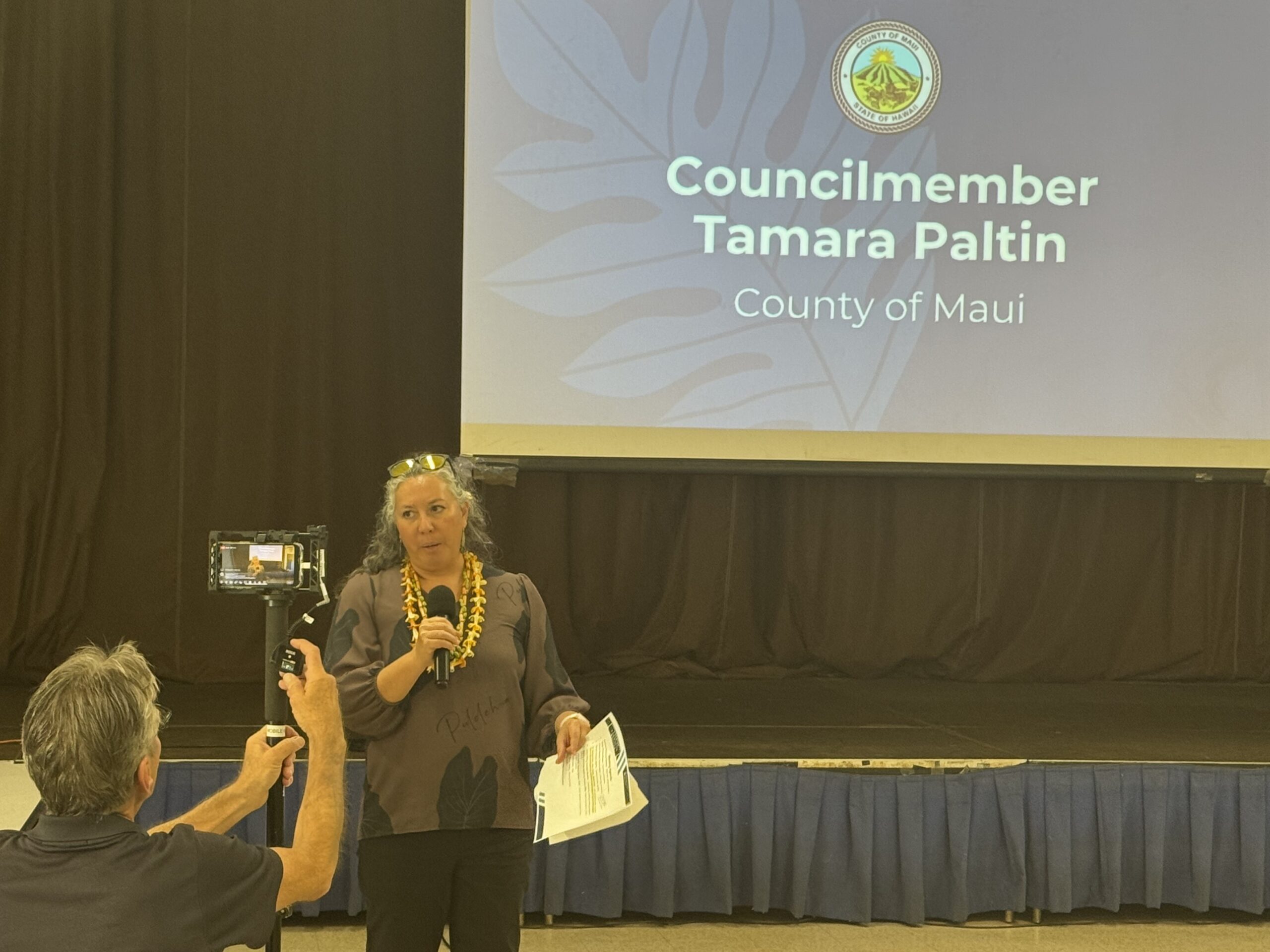
Tamara Paltin, who holds the West Maui residency seat on the Maui County Council, said that burying the electric wires along Lahainaluna Road is an important step to making the community safe from fire dangers in the future.
Paltin also said if the fire had destroyed Lahainaluna High School — the oldest school west of the Rocky Mountains dating to 1831 — “our recovery would look a lot differently.”
“Lahainaluna is a huge source of our community coming together and … community pride,” Paltin said. “And if you see the drone footage of how dry it is up there, it just makes sense.”
Lahainaluna, Princess Nahi’ena’ena Elementary School and Lahaina Intermediate School all are on the mauka end of Lahainaluna Road.
“If you see the drone footage of how dry it is up there, it just makes sense,” to bury the lines along Lahainaluna Road, Paltin said.
“These things don’t happen overnight and that’s kind of the downside,” she added. ”The planning and everything of it is going to take a lot longer than everyone would like.”