
 Hawai'i Journalism Initiative
SNAP benefits to be suspended next month due to federal government shutdown, affecting 18,000 in Maui County
More than 18,000 people in Maui County who rely on food stamps are set to miss out on their benefits next month as the federal government’s shutdown reaches Day 25.
The Food and Nutrition Service, a federal agency under the U.S. Department of Agriculture, notified states Friday that all Supplemental Nutritional Assistance Program benefit allotments for November will be suspended effective Nov. 1, and will remain suspended until sufficient federal funding is appropriated or the agency issues updated direction.
The Hawai‘i Department of Human Services, which handles the food assistance program for the state, is required to immediately suspend benefits for the more than 165,000 people who rely on the program and notify the affected households.
“Our teams are working quickly to provide timely information, answer questions, and coordinate local community food resources,” Ryan Yamane, director of the department, said in a news release Friday. “We will be ready to resume issuances as soon as the federal government allows.”
In Maui County, there are 9,408 households totaling 18,611 people who rely on the federal program known as SNAP. Benefits total about $6.4 million per month in Maui County, an average of $343.74 per person, according to Scott Morishige, administrator of the state Benefit, Employment and Support Services Division.
Hawaiʻi Gov. Josh Green said the state would share more information on Wednesday about the Hawai‘i Relief Program, which will help eligible families with dependent children pay for housing and utilities.
“We stand with the thousands of Hawaiʻi residents who rely on these benefits,” Green said in a news release. “Our state will move forward with urgency and aloha to support those impacted.”
Joseph Campos, deputy director of the Hawai‘i Department of Human Services, told the Hawaiʻi Journalism Initiative on Friday that “we’re looking at releasing up to $100 million of the TANF (Temporary Assistance for Needy Families) reserve that we have” as part of the relief program.

In the meantime, SNAP benefits issued before Nov. 1 will still remain on electronic benefit transfer cards and can be used at authorized retailers.
“If you have a balance on your EBT card from October or prior month, that’s still accessible to you,” Morishige said. “If you receive cash benefits from the state on your EBT card, cash benefits are not impacted.”
Morishige added that applicants who qualified for SNAP benefits after Oct. 15 will get a combined October/November issuance that will be limited to the prorated October amount. Remaining benefits will be issued retroactively once the suspension is lifted.
The suspension also doesn’t affect eligibility; households on SNAP will stay certified.
New applicants may still be approved, and certification periods will continue as normal.
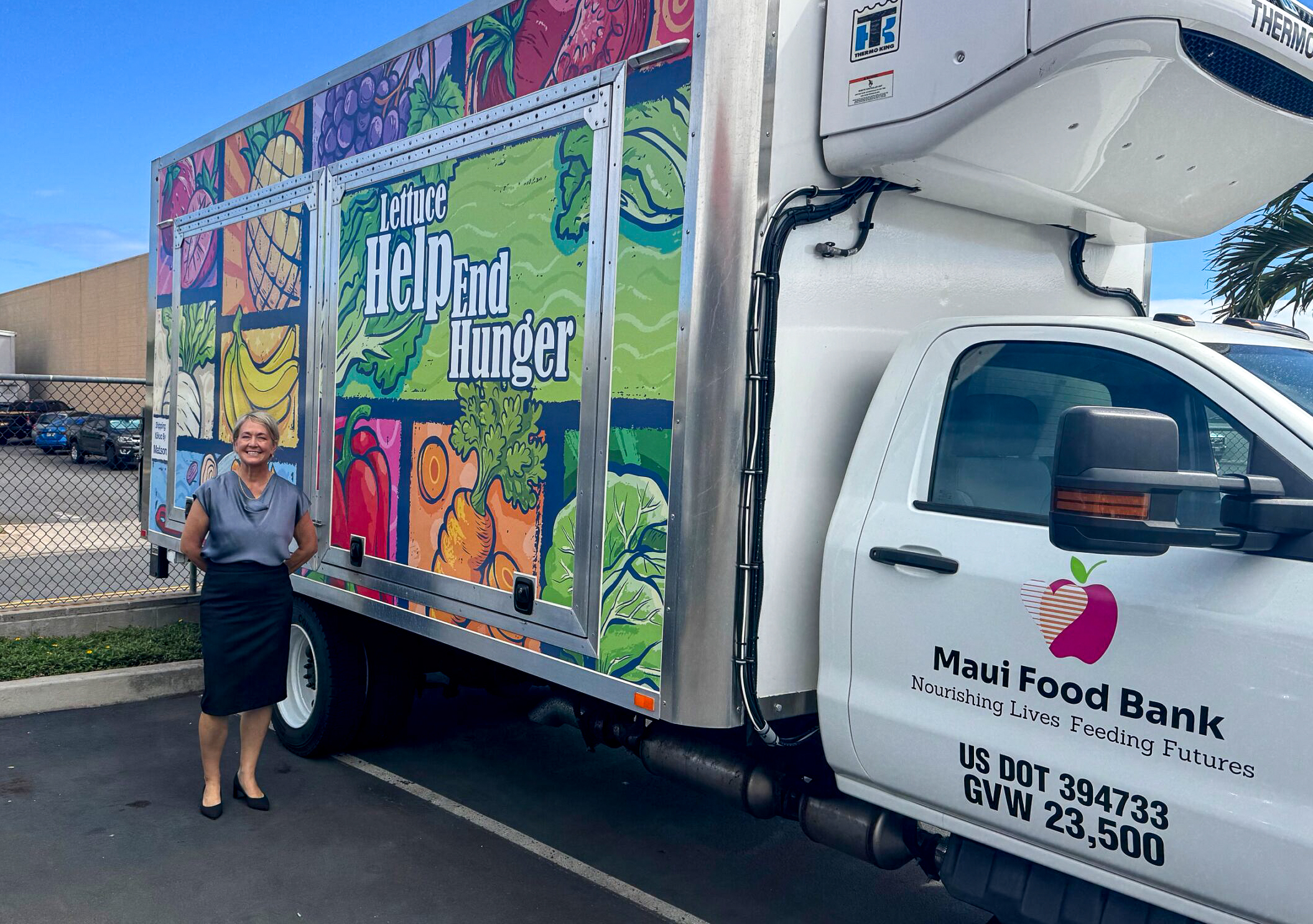
The Maui Food Bank was bracing for impact in a situation that had been changing “two to three times per day” until Friday afternoon’s announcement, Maui Food Bank CEO Lisa Paulson said.
“We’re all trying to react and we’re all trying to figure it out,” Paulson said.
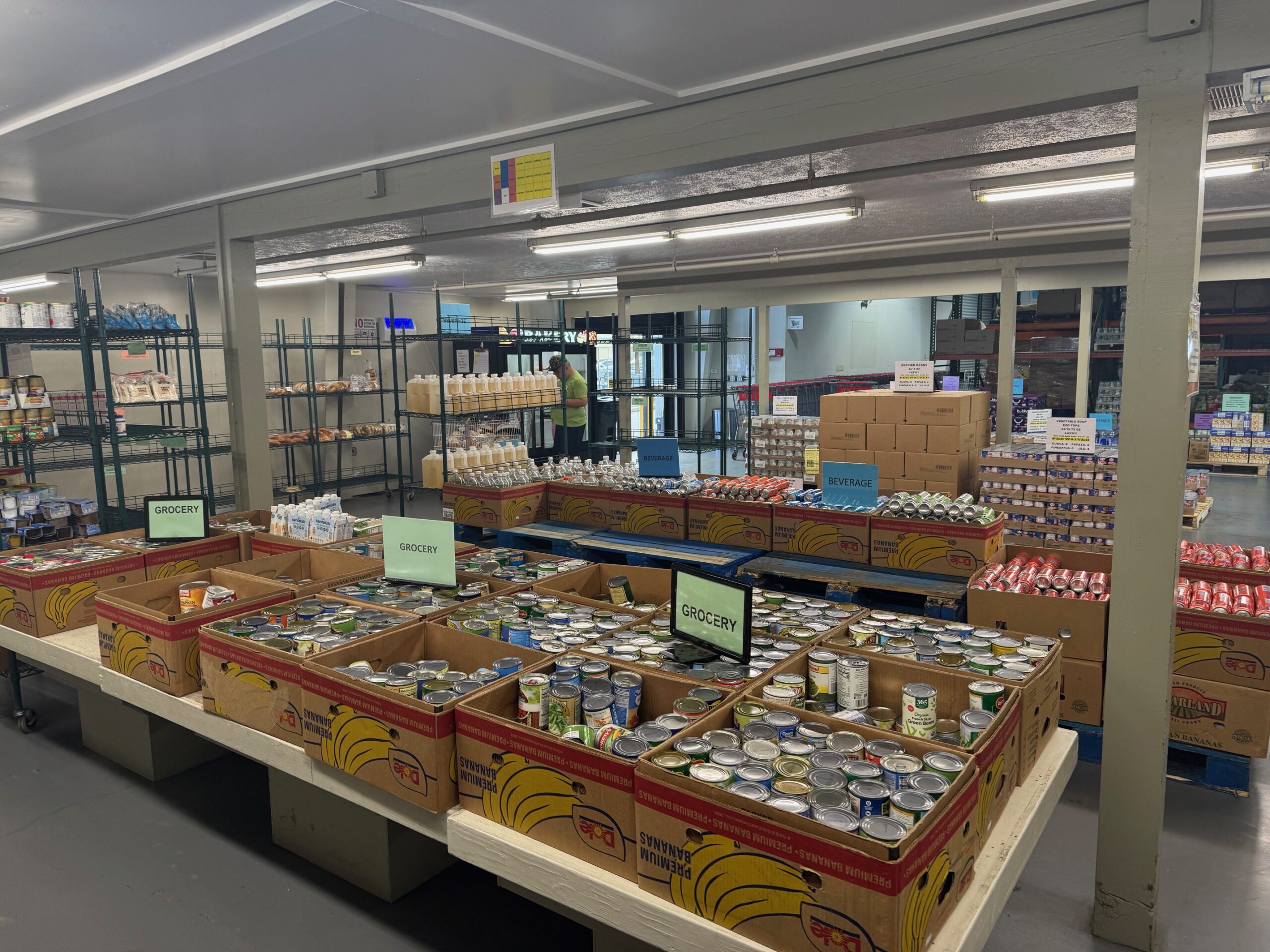
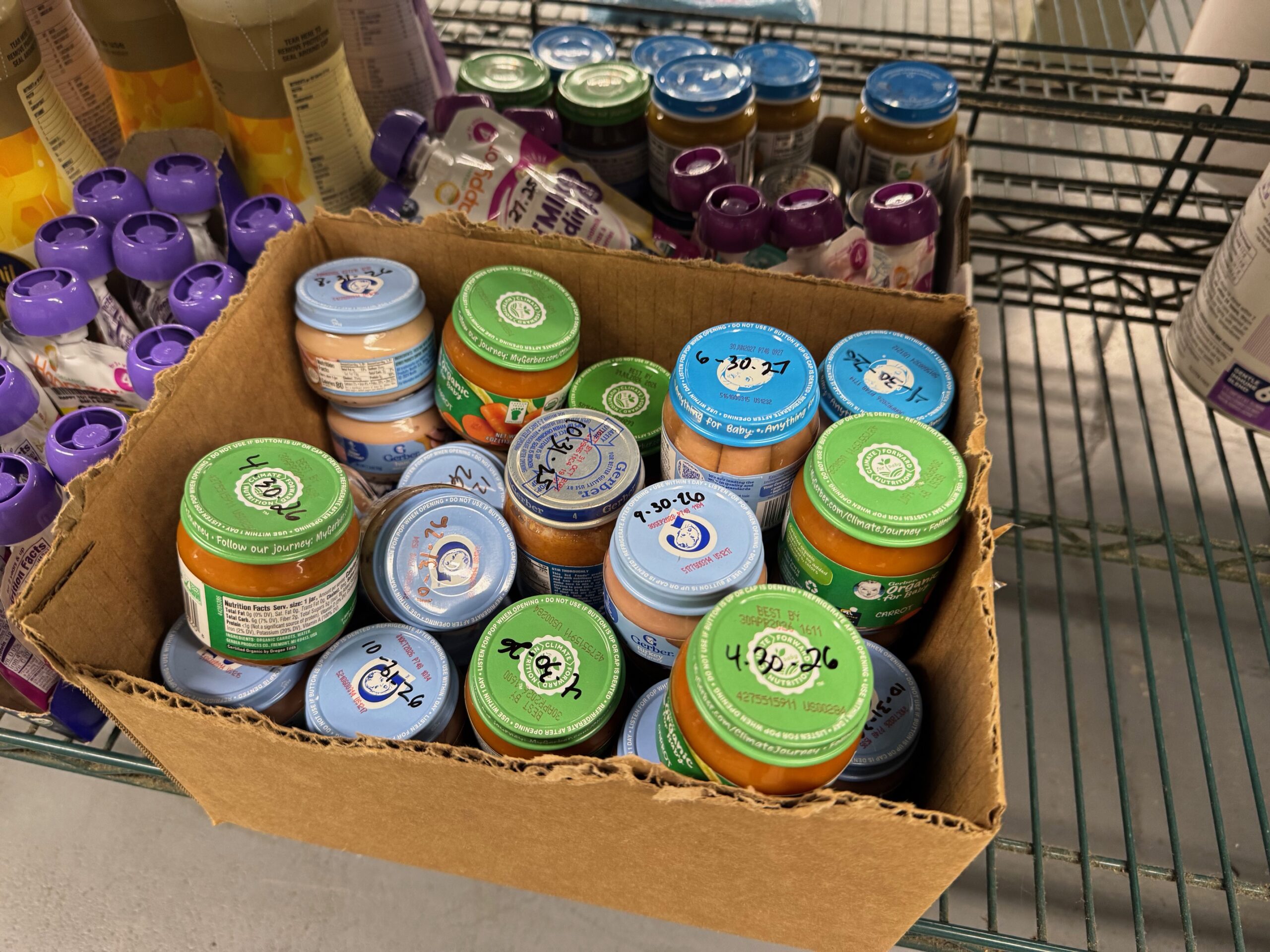
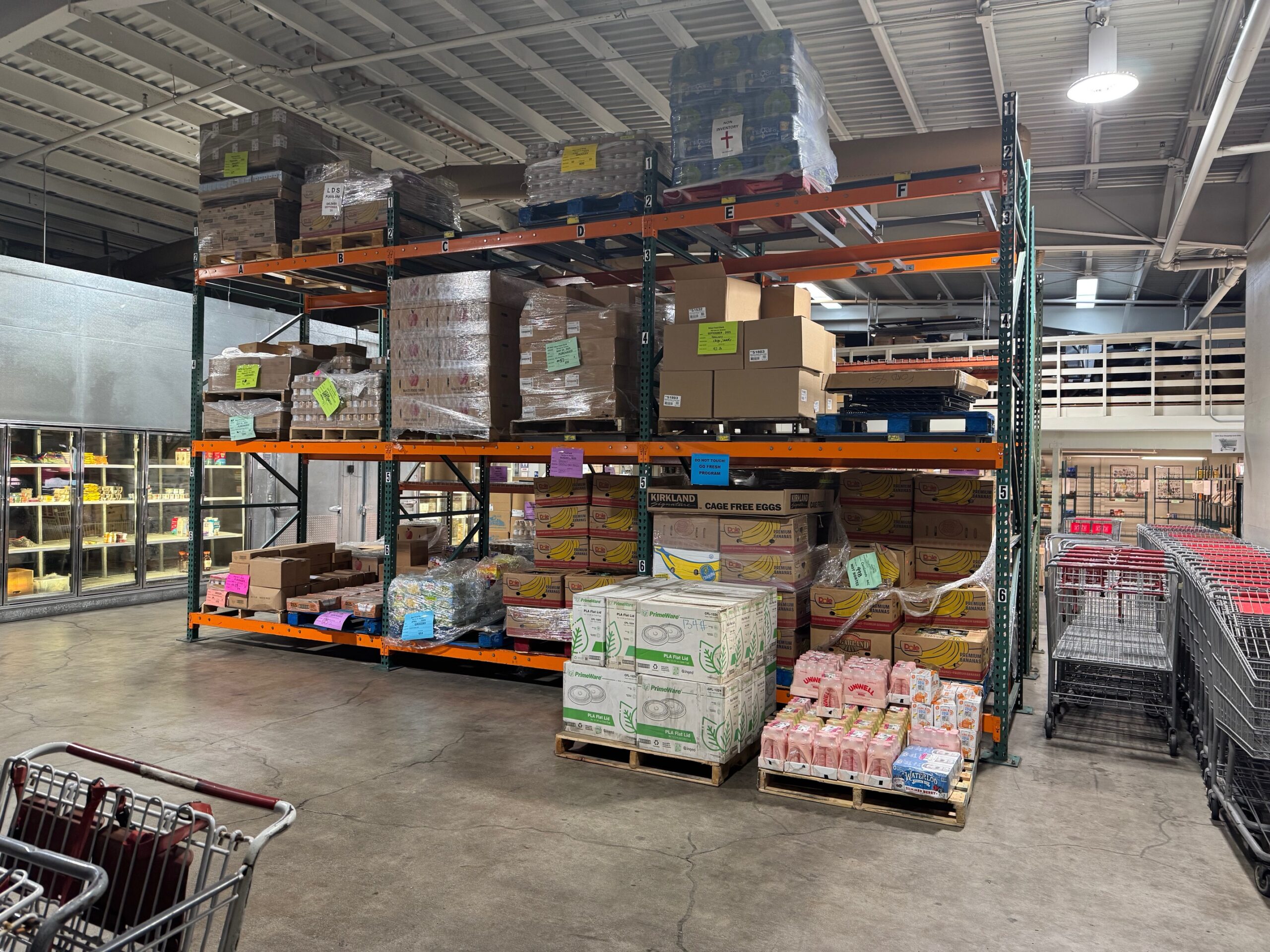
The food bank is stocking up on shelf-stable food that comes in cans, boxes or jars that can be safely stored at room temperature in a sealed container.
In 2019, the budget for the Maui Food Bank was just under $5.8 million. Paulson said for the 2026 fiscal year the budget is around $11.5 million due to the growing number of food-dependent people in Maui County, much of the increase due to the Aug. 8, 2023, Lahaina and Kula wildfires.
In the fiscal year 2023, which ended shortly before the fire, the Maui Food Bank brought in nine Matson containers of food from the Mainland. That grew to 65 containers in fiscal year 2025 when the budget was just under $10 million, according to Paulson.
The food bank distributes more than 8 million pounds of food each year, including 2.3 million pounds of fresh produce.
While there has been a considerable uptick in shelf-stable food, Paulson emphasized that the Maui Food Bank still counts heavily on Maui farmers and ranchers to supply fresh food options for the Maui County’s families and people in need.
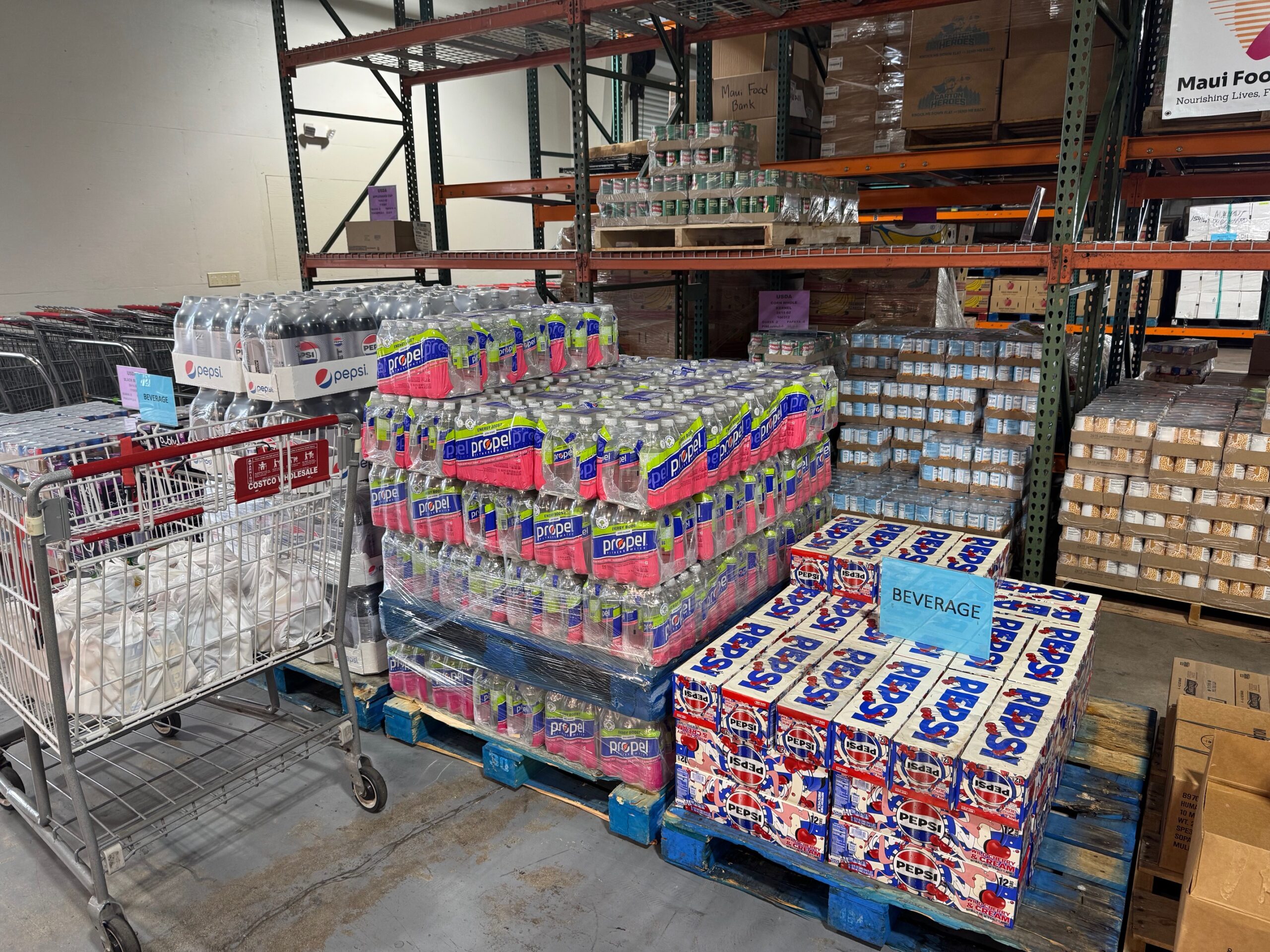
“If we continue having to rise to meet the needs with the federal shutdown and potential of the SNAP program going away, we would need to look at pivoting and our food sourcing,” Paulson said before the announcement of the SNAP suspension.
Paulson said the cuts will have far-reaching effects, noting that the loss of the federal funding to SNAP recipients also will result in those millions of dollars not being spent in grocery stores across the county.
“So everything is just this trickle-down effect,” Paulson said.
U.S. Rep. Jill Tokuda, a member of the House Agriculture Committee, said in an email to Hawaiʻi Journalism Initiative Thursday: “Without immediate action from the administration, federal dollars will run out, leaving Hawaiʻi with the burden of using limited emergency funds, or letting keiki, kūpuna and working families go hungry.
“Hawaiʻi already bears some of the highest food and living costs in the country. Many families are still reeling from Republican cuts that reduced benefits earlier this year. Stripping away this lifeline — even temporarily — would be devastating to those who depend on it to put food on the table.”
Tokuda, a Democrat, put the blame for the federal government shutdown on Republicans, who have tried to blame Democrats as the two sides clash over health care subsidies. Tokuda said the administration “can release SNAP contingency funding to states to cover most November benefits and use every available authority to transfer the remainder.”
“The resources exist to keep people from going hungry; what’s missing is the political will to act,” Tokuda said, adding that a solution is needed with Thanksgiving just around the corner.
Anneliese Tanner, the Hawai‘i Department of Education’s School Food Program administrator, said the department is encouraging all families receiving SNAP benefits to apply for the free lunch program through the Community Eligibility Program.
Eligibility for the program depends on how many students come from households receiving SNAP benefits. The more families who qualify for SNAP, the more schools can qualify for the program. And, when all students at a school receive free meals, participation increases, and the Department of Education gets more federal funding “to invest in better food and staffing,” Tanner said.
Maui County schools that qualify for the program are Hāna High & Elementary, King Kamehameha III Elementary, Lahaina Intermediate, Lahainaluna High, Princess Nāhiʻenaʻena Elementary, Waiheʻe Elementary and Wailuku Elementary, Kaunakakai Elementary, Kilohana Elementary, Maunaloa Elementary, Moloka‘i High and Moloka‘i Middle School.
“A reduction in SNAP benefits will translate to fewer students having access to free meals at school,” Tanner said. “It also raises HIDOE’s administrative costs because we have to print and process meal benefit applications for more schools and students. Without CEP, lunch lines move slower because of the added checkout steps, leaving students with less time to eat.”
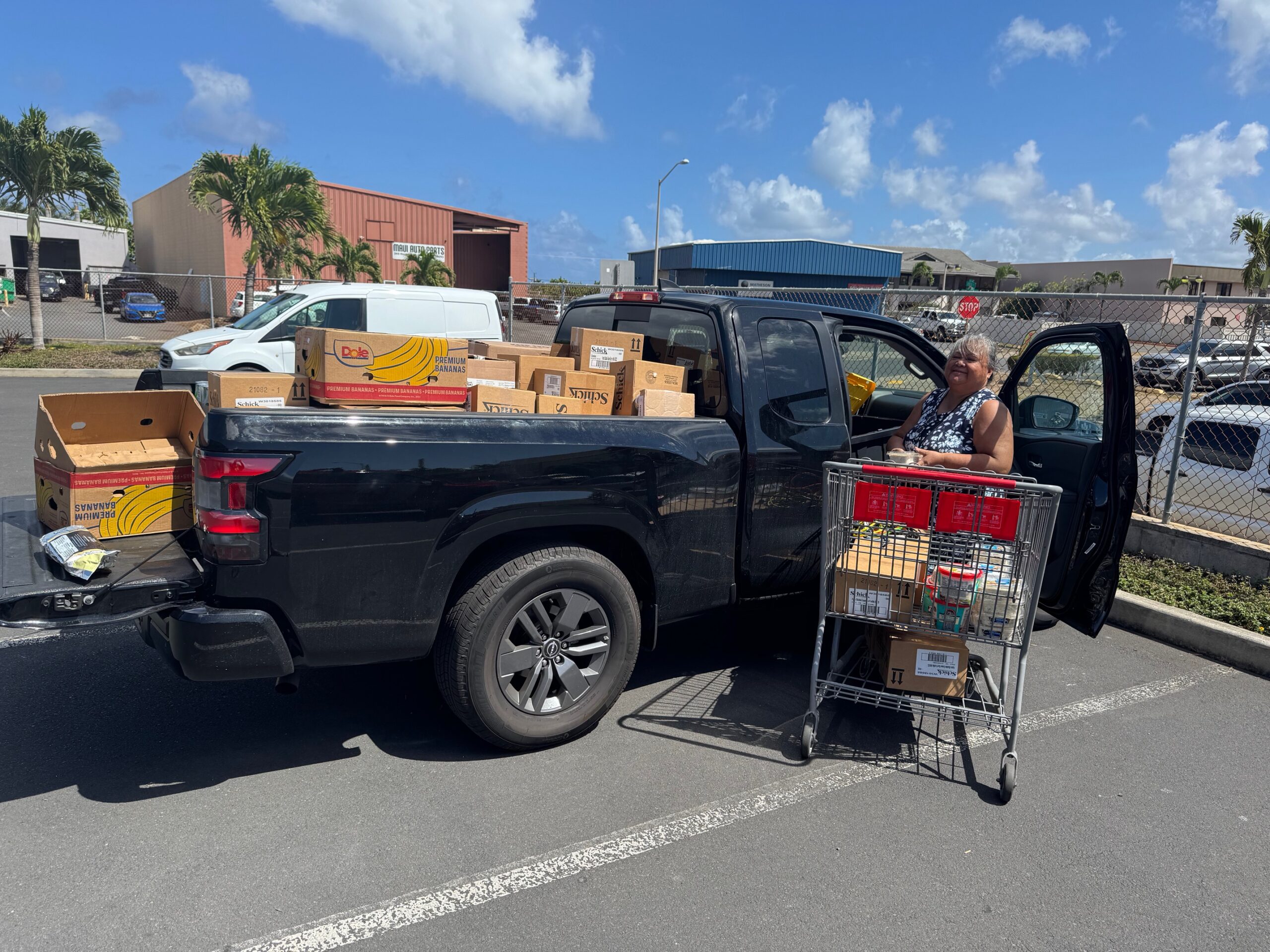
Melen Agcolicol was at the Maui Food Bank’s Wailuku warehouse on Thursday, filling her pickup truck with food for the Binhi At Ani Filipino Community Center’s weekly Sunday lunch for kūpuna and residents of Hale Mahaolu ‘Elua and ‘Akahi, and the Maui Adult Daycare Center.
“We serve lunch to about 250 kūpuna every Sunday,” Agcolicol, the past president and current coordinator for the health and wellness program for Binhi At Ani, said. “The kūpuna look forward to it every week.”
Paulson was busy in meetings Friday morning trying to find ways to help 210 Transportation Security Administration employees in Maui County who did not receive their paychecks as scheduled on Friday due to the federal government shutdown. Space Force on Maui also contacted the food bank because its federal employees need assistance.
Paulson said she had no doubt the Maui community would rise to the occasion, with many hunters, ranchers and farmers already assisting with some of the federal distribution programs.
Campos said the Maui Food Bank is an essential partner with the Department of Human Services, and that the state is also looking at different options, including working with philanthropic groups and programs like Meals on Wheels to get food to kūpuna.
“We are also looking at various ways that we can help mitigate some of the impact besides working with the food bank and seeing what we can do through the legislative Act 310 that came out last year, which has $50 million in grants and aid,” Campos said.
The use of the state’s rainy day fund requires a special session or legislative approval. “If that happens before the January session starts that would have to be a special session,” he said.
Morishige and Campos both emphasized that information will be updated as soon as possible at humanservices.hawaii.gov,
A statewide public assistance information toll-free phone number is also available at 1-855-643-1643.
Residents can also get more information through:
- SNAP Outreach Providers. The Department of Human Services contracts eight different nonprofits throughout the state to conduct outreach to households eligible for SNAP benefits and to provide assistance with referrals to food resources in the community.
- Aloha United Way 2-1-1. Aloha United Way is a SNAP outreach provider that maintains a database that can provide referrals to other helpful food resources in your community.
- Maui Food Bank. Call 808-243-9500.