

UH joins $25M national AI project to better monitor volcanoes, wildfires, more
The University of Hawaiʻi at Mānoa will play a leading role in a new $25.6 million National Science Foundation project designed to take artificial intelligence out of the lab and into the natural world.
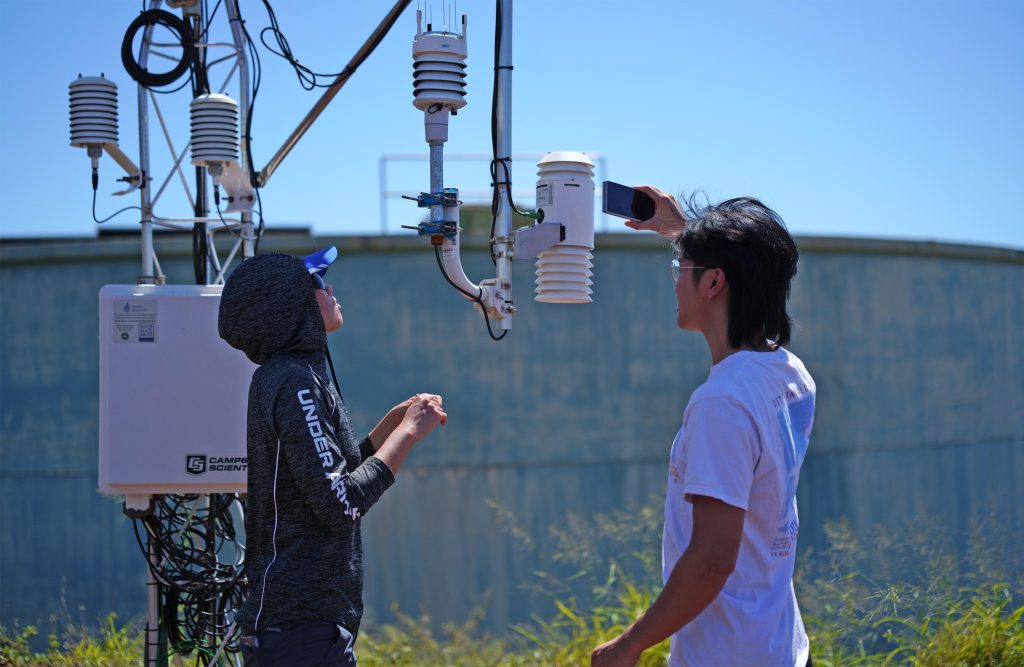
The initiative, called Sage Grande, will place 300 advanced sensor systems in locations across the country to monitor the environment and provide faster warnings for natural disasters such as wildfires, floods and volcanic eruptions.
The new funding allows UH researchers and students to join a nationwide team working to build the next generation of AI-powered “smart” sensors. These devices can analyze information directly where it is collected, without waiting for data to be sent to distant servers. That means communities, scientists and policymakers can get quicker updates on changing conditions, whether it is smoke from a fire, shifting weather patterns or unusual volcanic activity.
“By joining Sage Grande, UH is not only advancing disaster preparedness and environmental science, but also giving our students hands-on experience with cutting-edge AI,” said professor Jason Leigh, director of the Laboratory for Advanced Visualization and Applications in UH Mānoa’s Department of Information and Computer Sciences. “We’re ensuring Hawaiʻi is at the forefront of innovation where it matters most.”
Leigh said they plan to deploy two to three sensors across the Hawaiian islands next year at sites that are still to be determined. The UH Mānoa team comprises Leigh, and Chris Shuler, Han Tseng, Anke Kügler and Tom Giambelluca of the UH Mānoa Water Resources Research Center.
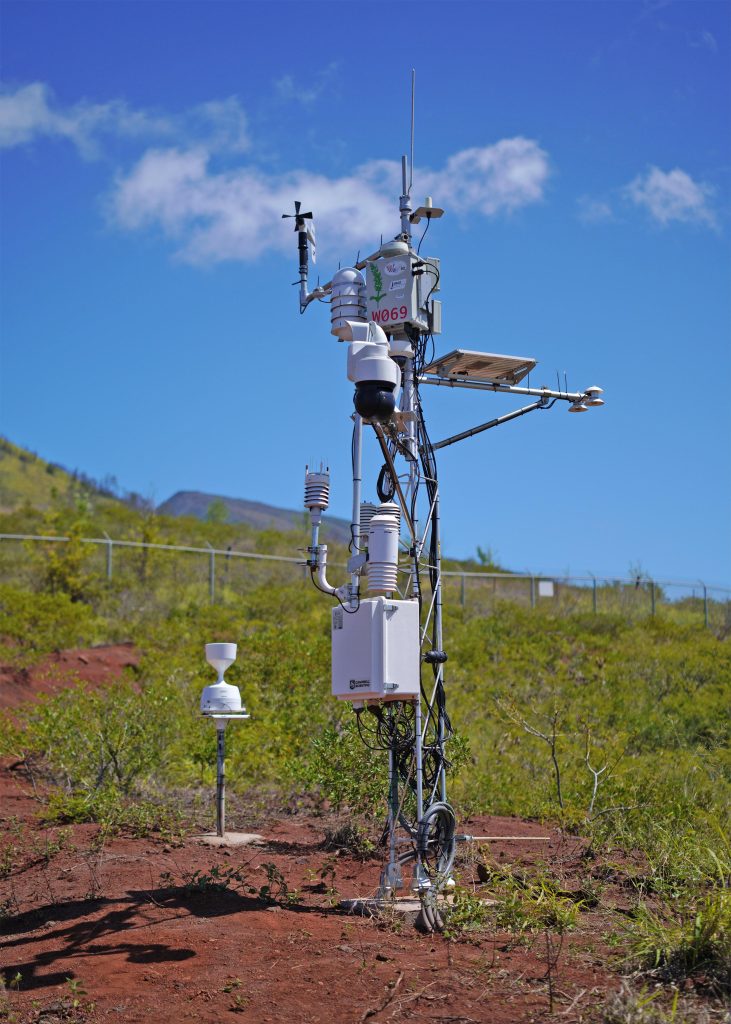
UH already has experience with this technology. In Hawaiʻi Volcanoes National Park, a current-generation Sage sensor has been used by UH students to test generative AI tools that analyze real-time data from Kīlauea. Their early work demonstrated how AI can help answer basic but important questions, such as whether an eruption is underway.
And on Maui, UH has installed a similar sensor in Lahaina that connects to the internet via satellite. The system is being programmed to track air quality and fire risks in an area devastated by the 2023 wildfires. Supported by a separate National Science Foundation grant, the Lahaina project is also collecting climate and pollution data to aid recovery efforts and guide future planning. Local students are helping with the instruments, gaining hands-on training in both environmental science and advanced AI.
Sponsored Content




_(1)_1787857947612.webp)