 Hawai'i Journalism Initiative
Hawaiʻi urges national transportation secretary to spare state from mandated flights cuts due to federal shutdown
Maui’s Kahului Airport, as well as the other airports in the state, have managed to deal with the record-long federal government shutdown that began on Oct. 1 with minimal impacts. But that is about to change with the Federal Aviation Administration mandating that flights be cut at major airports and with transportation employees about to lose a second paycheck.
“Just given the cancellations that are occurring up in the Mainland, I would have assumed to see those impacts to Hawaiʻi,” said Ed Sniffen, director of the Hawaiʻi Department of Transportation, during an interview on Wednesday. “We have not so far. That being said, I’m sure we will soon.”
One major reason is the FAA’s mandate announced earlier this week by National Transportation Secretary Sean Duffy for airlines to cut 10% of their flights at 40 of the busiest airports across the nation — including Daniel K. Inouye International Airport in Honolulu. This mandate takes effect Friday in an effort to maintain air safety and alleviate stress on air traffic controllers.
On Thursday afternoon, Hawaiʻi Department of Transportation spokesperson Shelly Kunishige said the department is still awaiting the formal directive from the FAA.
But in the meantime, Sniffen sent a letter to Duffy on Thursday urgently requesting that Hawaiʻi be spared from the 10% reduction.
“Hawaii is uniquely vulnerable as the nation’s most isolated population center, with no viable
alternative to air travel for commerce, health care, or national security needs,” Sniffen wrote in the letter. “Imposing these restrictions would inflict immediate and severe harm in four critical areas.”
Sniffen said those include access to medical services (noting that residents routinely travel to the Mainland for specialized care unavailable in the islands — cancer treatment, organ transplants, neonatal intensive care and emergency surgeries); disruption of cargo movement and food security (Hawaiʻi imports 85% of its food); national defense and military family wellness (hosting more than 45,000 active-duty personnel and their families); and economic hardship (tourism and related industries account for over 20% of Hawaiʻi’s economy and employ 1 in 4 residents).
Sniffen said the state is working closely with Hawaiʻi’s congressional delegation to monitor the shutdown situation.
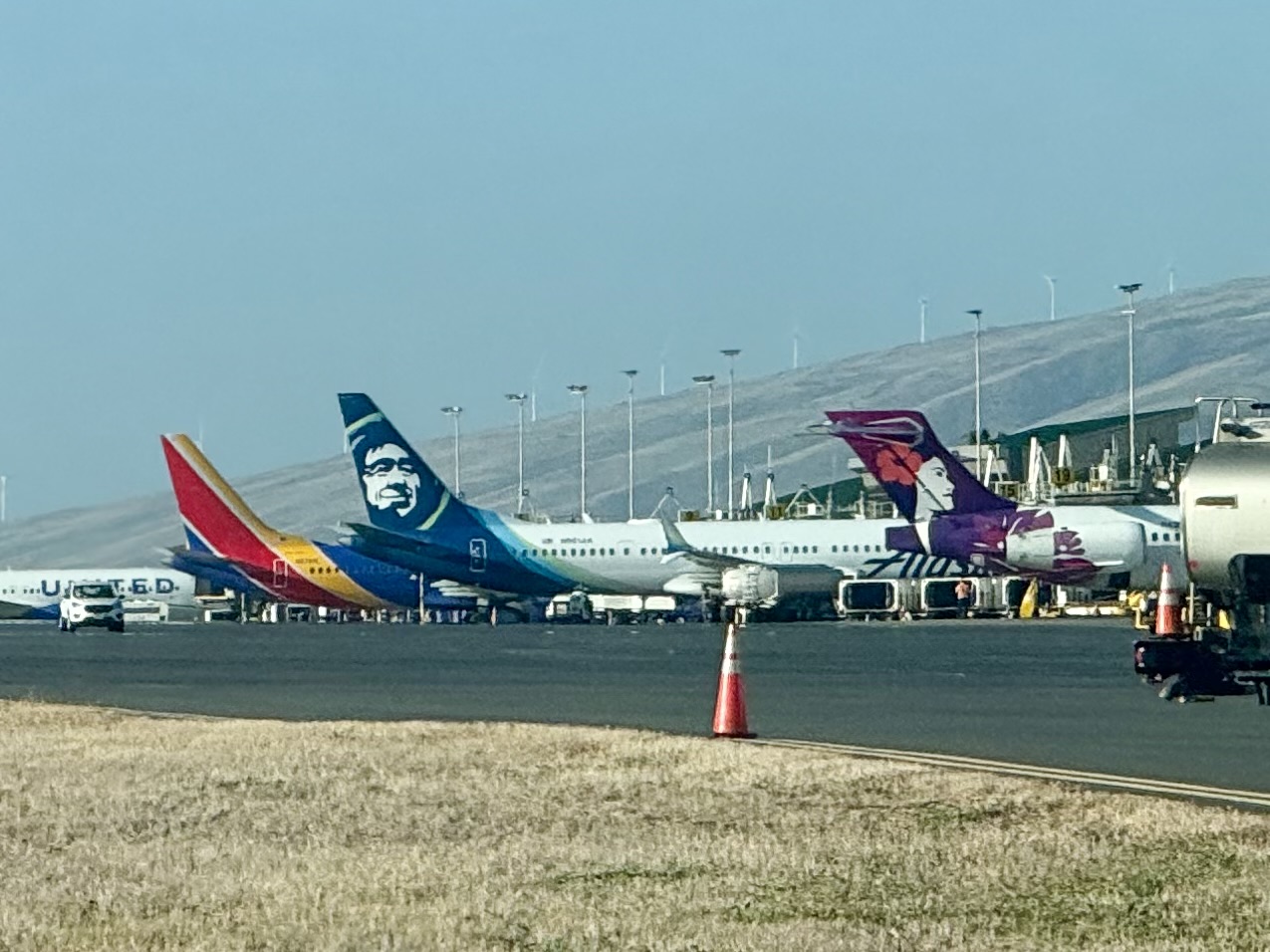
Already, flight cancellations have begun in Hawaiʻi. On Thursday, Hawaiian Airlines announced it is cancelling four interisland flights for Friday, two of which are a round-trip from Honolulu to Kahului, flights 1066 and 1155. The other two cancelations for Friday were Honolulu-Kona flights.
So far, Hawaiian and Alaska airlines flights between Hawai‘i and the continental U.S., as well as international routes, are not impacted. Flights 1066 and 1155 also are still scheduled to run Saturday, the airlines said.
“We are assessing future impact,” Alex Da Silva, regional communications director for Hawaiʻi for Alaska Airlines/Hawaiian Airlines, said via text message Thursday.
In a statement, Hawaiian Airlines said: “We know how much our residents and visitors rely on our Neighbor Island service, and we will continue to operate a robust schedule with 20 Honolulu-Maui roundtrips and 15 Honolulu-Kona roundtrips.”
The Alaska Group, which now is the corporate leadership of Hawaiian Airlines after the merger, said: “As we assessed the FAA’s directive and our schedule, we worked to ensure smaller and remote communities that are reliant upon air travel are protected.”
But the Hawaiʻi Tourism Authority sent a news release on Thursday acknowledging the 10% reduction in flights would impact travel to and from the Hawaiian Islands.
“In this interconnected world of air travel, a change in Boston could very well change an itinerary in Honolulu,” the authority said. “So, we encourage everyone traveling to or from the U.S. to stay connected and prepared.”
While flight delays and cancelations in the wake of the federal government shutdown already have plagued the U.S. Mainland, Sniffen said the airports in Hawaiʻi have been running at normal levels of efficiency for the past five weeks.
“Across the state, including Maui, it looks to me like our operations are seamless,” Sniffen said in a phone interview with Hawaiʻi Journallsm Initiative on Wednesday afternoon.
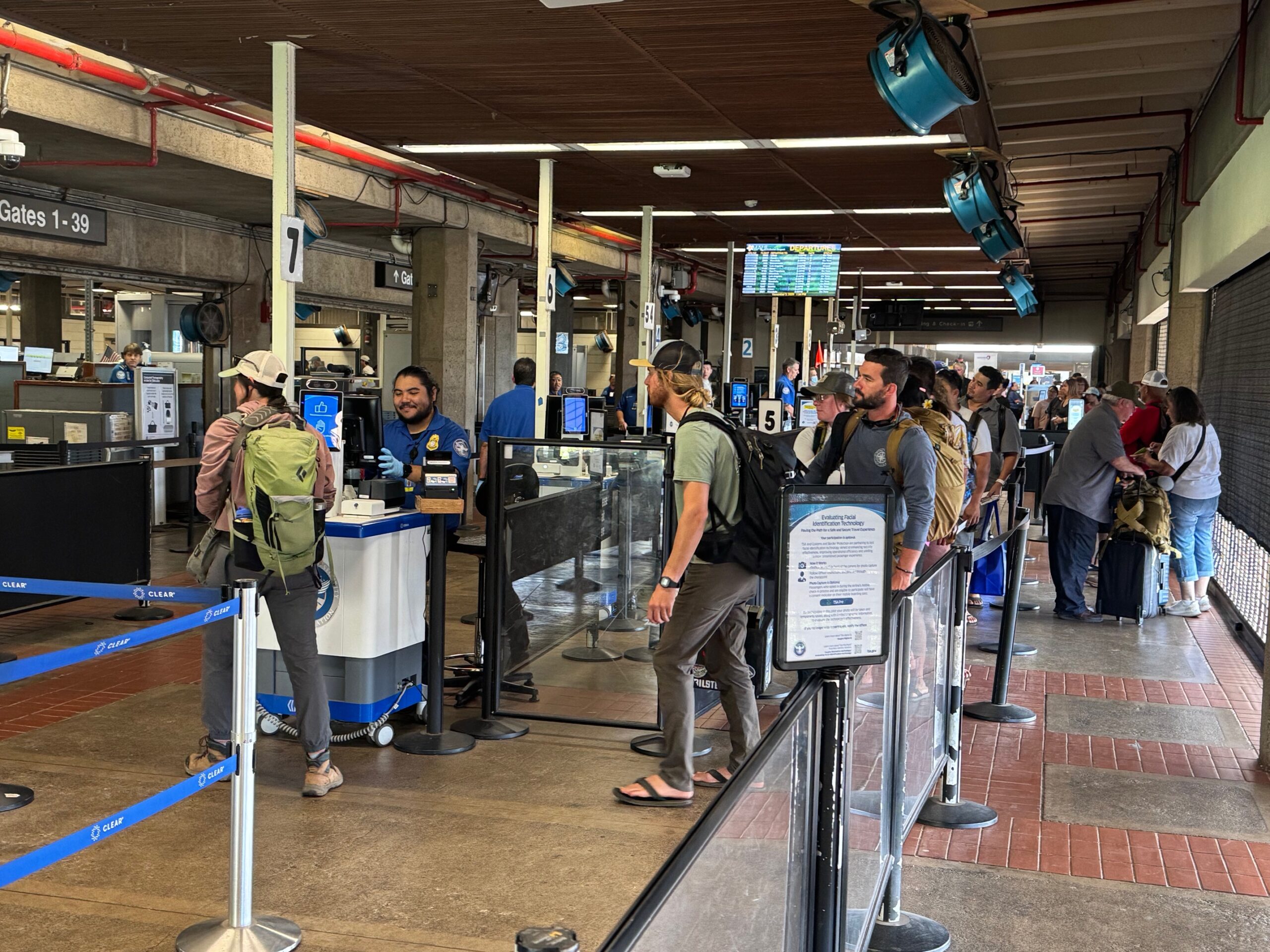
Although federal workers have not been paid since Oct. 1, Sniffen said that staffing levels for the 2,369 federal employees that support the airports in Hawaiʻi — 1,500 Transportation Security Administration workers, 300 U.S. Customs and Border Protection workers, 310 U.S. Department of Agriculture workers, and 259 workers for the Federal Aviation Administration and Air Traffic Control — have remained normal.
Kunishige said that staffing levels at Kahului Airport for all of the federal agencies is about 30% of the state totals, or about 700 to 800 people.
“We are blessed that our federal partners and their staff continue to come to work every day to minimize any impacts to our economy in Hawaiʻi,” Sniffen said via phone on Wednesday. “I can honestly say, talking to the federal employees that we work with, they understand how important the airports are, not only to our number one industry in tourism and our number two industry in defense, but they also understand how important it is for the everyday local person who has got to get to and from the different islands for their job, or to connect to family, or even medical needs.
“They understand how important airports are to us. And, they keep coming to work every day.”
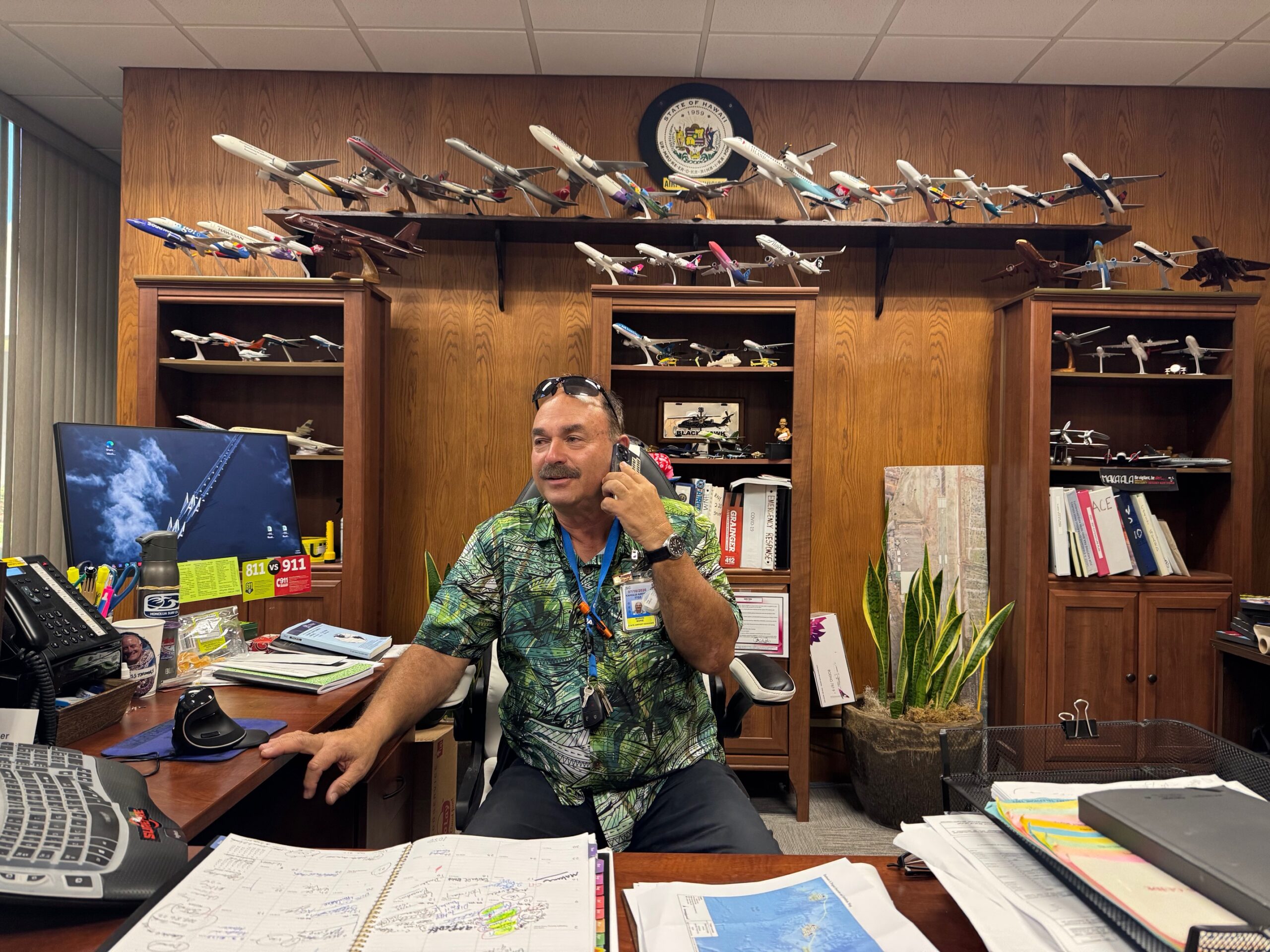
Marvin Moniz, airports district manager for six airports in Maui County, said on Tuesday that operations at Kahului Airport had so far been running normal throughout the federal government shutdown.
But it is not known how much longer workers will continue to be willing to work without pay as the government shutdown became the longest in U.S. history on Wednesday, at day 36.
“When we miss a second paycheck things are going to get real,” said a TSA agent who works at Kahului Airport and requested anonymity during an interview on Wednesday.
On Maui, TSA agents are set to miss that second paycheck on Saturday.
The same agent said there is growing frustration amongst the TSA ranks at Kahului Airport and that several co-workers are looking for other jobs to pay the bills.
But Maui also has semi-retired workers who can ride out missing paychecks. U.S. Department of Agriculture workers Michael Tomoso and Clint Komoda both said they plan to continue to come to work at Kahului Airport during the federal government shutdown.
The 70-year-old Tomoso has been an agricultural inspector for 11 years and the 64-year-old Komoda has been an agriculture plant protection and quarantine aid for eight years.
“I never thought of it,” Tomoso said of not coming to work. “Everybody comes to work. I miss it when I’m not there. I like see people. I’m committed to the job.”
But both are retired from longtime jobs — Tomoso in retail and Komoda as a pharmacist. The three-days-a-week airport job supplements their retirement incomes. They don’t have to depend on it, like other workers.
With the Thanksgiving holiday looming — traditionally the busiest travel week of the year — Sniffen said his department and its partners anticipate that the delays and cancellations rolling across the Mainland will affect Hawaiʻi at some point. The estimate from TSA on holiday travel increases is 15% at the Honolulu airport and 20% at all Neighbor Island airports.
Moniz said a typical day for Kahului includes 8,000 to 9,000 passengers, a number that is expected to bump up to between 12,000 to 14,000 per day for the Thanksgiving holiday week. Thursday’s news comes during a year that so far has seen visitor arrivals grow to 1,892,194 on Maui through September, compared to 1,743,691 through September for 2024, representing an increase of 8.5%.
Moniz, who also oversees smaller Maui County airports in Hāna, Lānaʻi, Moloka‘i, Kalaupapa and Kapalua, said there is a family feeling amongst the approximately 6,000 employees who carry access badges at OGG (Kahului Airport).
“We’re an airport community,” Moniz said.

The airport held a mākeke event on Tuesday near the entrance to go through TSA security. Employees set up 20 booths to sell food, candy, clothing and jewelry, with 35% of the vendor fees donated to the Maui Food Bank.
“We chose this date today to do this fundraiser to be able to contribute to the outside community, not just within the airport,” Moniz said. “So, we’re pretty excited about having that opportunity. … And a lot of these employees, they’re all facing challenges as well, like all of us are, trying to keep our economy moving along. A lot of the vendors are donating a portion of their sales to the food bank as well.”
Tomoso, the 11-year veteran agriculture inspector, said he could stay solvent through another month of missed paychecks and has full faith that backpay will be coming his way when the government shutdown is solved.
“It cramps my style a little bit, because I go to the Ale House a couple times a week where my friends and I, we watch games and sports,” Tomoso said. “I get friends, I do a fantasy league. I love the camaraderie there, but gotta cut back on that right now.”
Komoda said he has had to pay two health insurance premiums of about $180 apiece for he and his wife during the shutdown, but he treasures his job and is not about to leave it.
“There’s not too many jobs out there that you can apply for and be happy with,” Komoda said. “So job satisfaction and not as much work out there, I think is a big reason why people are going to work.”
Duffy predicted last week that there could be “mass chaos” in the skies if air traffic controllers missed a second paycheck, which is scheduled for Nov. 11.
“Many of the controllers said: ‘A lot of us can navigate missing one paycheck. Not everybody, but a lot of us can. None of us can manage missing two paychecks,’ ” Duffy said to The Associated Press on Tuesday. “So if you bring us to a week from today, Democrats, you will see mass chaos. You will see mass flight delays. You’ll see mass cancellations, and you may see us close certain parts of the airspace, because we just cannot manage it because we don’t have air traffic controllers.”
The Trump administration has tried to blame Democrats for the shutdown in public videos at airports, but several major air hubs, including Hawaiʻi, have refused to air the videos, calling it a violation of the Hatch Act that limits certain political activities by federal employees to ensure government programs are administered in a nonpartisan way.
When asked if statements like Duffy’s worry him, Sniffen said, “Overall, nationally it does. In Hawaiʻi, it doesn’t. … Our Hawaiʻi partners have been amazingly resilient in these times and they keep showing up.”
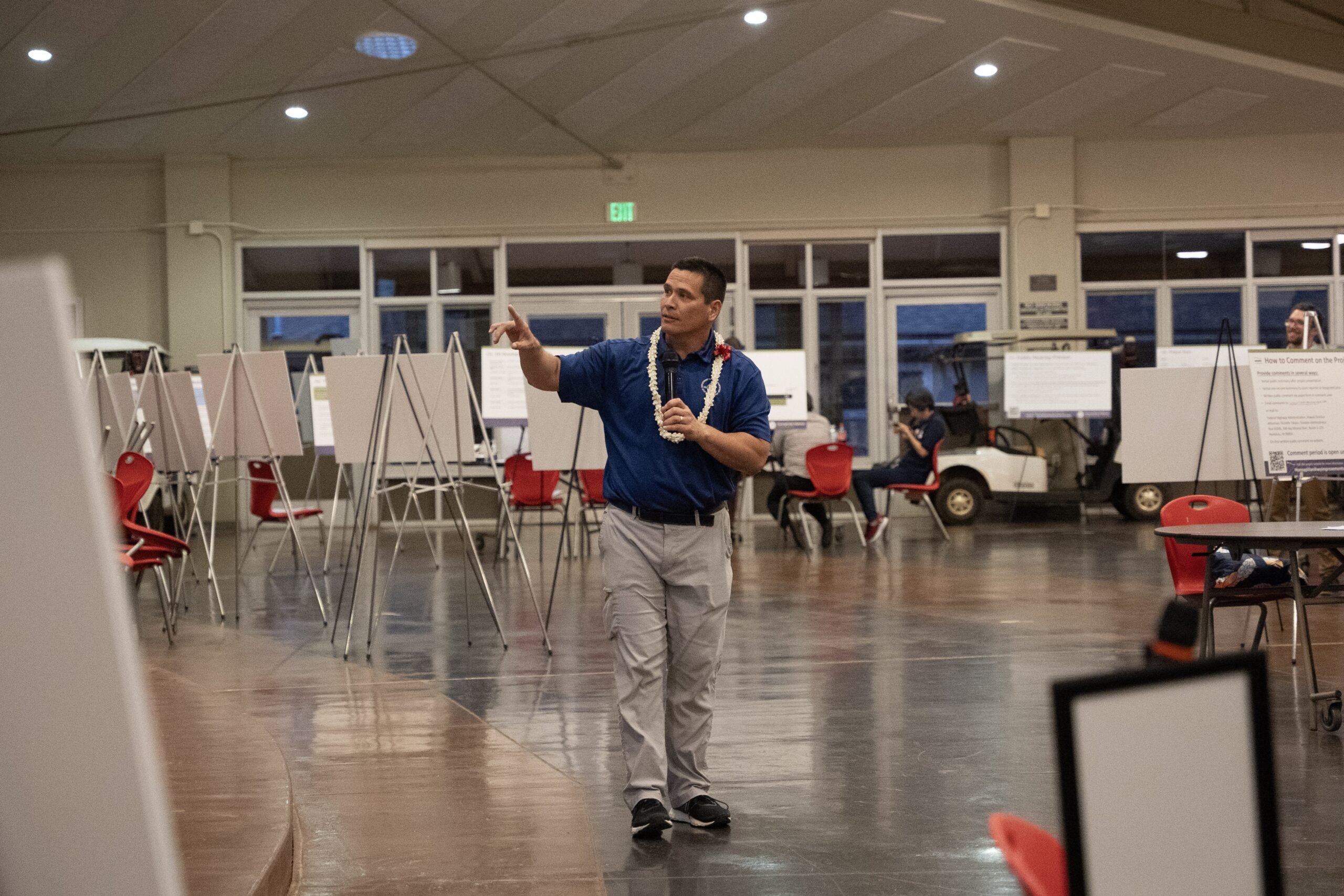
But Sniffen said he is concerned about the federal workers at Hawaiʻi airports as the shutdown continues. He said he has visited all 15 airports in the state since the shutdown started.
“In Hawaiʻi, we are not the most affordable state to live in,” he said. “Missing one paycheck is hard already. Missing two, very, very difficult. … So I’m concerned that this may push some of our really strong partners to be looking for jobs in other areas. We may lose that resource after the shutdown is done.”
U.S. Rep. Jill Tokuda met with air traffic controllers last month on Maui, O‘ahu and Hawai‘i island to thank them for their service. She was at the Kahului Airport on Oct. 17.
“These men and women are the reason families reach their destinations safely, the reason medical transports land on time, the reason our islands stay connected to one another and the world,” Tokuda said in a news release on Oct. 28. “They continue to show up, even without pay, out of love for their work and care for Hawaiʻi.”
Tokuda added, “I have nothing but the deepest mahalo for their professionalism and sacrifice, and I stand ready to work around the clock, with anyone negotiating in good faith, to reopen the government and give these workers the pay and stability they deserve.”
Moniz said he is confident that the staffing levels for federal workers will continue to stay at normal levels through the Thanksgiving weekend.
“They take pride in working here on Maui and at the airport,” Moniz said. “So I’m 99.9% sure that they’ll continue to do what they’ve been doing. It’s been amazing. And hats off to all of them considering what they’re dealing with.”