Flu on the rise in Hawaiʻi this month
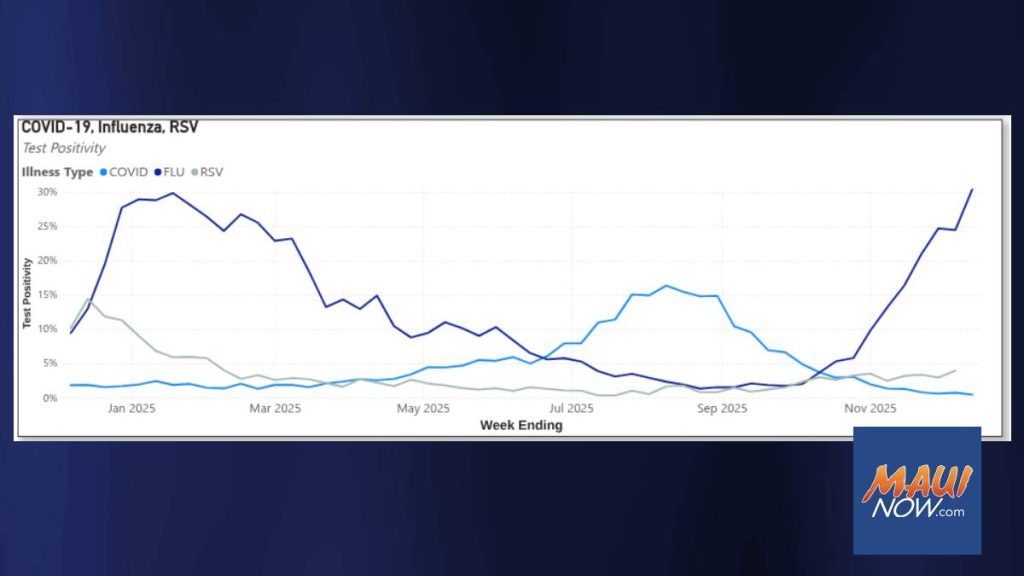
With a surge in cases of influenza — otherwise known as the flu — across the state, the Hawaiʻi Department of Health urges residents to take precautions to protect themselves and their families from respiratory viruses during the winter season.
The risk of contracting contagious respiratory diseases rises during the holidays as people attend family gatherings, visit crowded shopping malls or engage in seasonal events.
Data from the DOH Respiratory Virus Dashboard show that the current respiratory surge is being driven predominantly by seasonal influenza, with flu test positivity and flu-related emergency department visits rising sharply statewide. Respiratory syncytial virus (RSV) activity is also increasing.
New data updated as of Dec. 11 show a sharp increase in flu test positivity and flu-related emergency room visits in Hawaiʻi.
At the same time, Hawaiʻi is experiencing its highest weekly respiratory-related 911 emergency medical services (EMS) encounter totals since July. EMS responders recorded 352 respiratory-related encounters for the week ending Nov. 20; 344 on the week ending Nov. 27; and 332 transports for the week ending Dec. 4. Respiratory-related EMS encounters are up 45% this month compared to this past June.
Approximately 83% of EMS respiratory encounters result in transport, and an estimated 40% to 50% of transported patients require admission, which can contribute to emergency department crowding and inpatient bed shortages.
“Respiratory illness activity is rising across the state and emergency services are feeling the pressure,” said Garrett Hall, acting state EMS chief of the DOH Emergency Medical Services and Injury Prevention Systems Branch. “We are asking the public to take simple steps now to protect themselves and to help preserve access to emergency care for those who need it most.”
To reduce strain on the health care system and protect personal health during the winter virus season, DOH recommends the following:
- Get vaccinated: Flu, RSV, and COVID-19 vaccines remain the best protection against severe illness, hospitalization and death. Vaccination also helps reduce spread in the community. Flu vaccines are recommended for everyone 6 months and older. Effective RSV immunizations are available for infants and older adults.
- Stay home when sick: Avoid school, work, gatherings and travel if you have fever, cough, sore throat, or any respiratory symptoms.
- Get help early: If experiencing mild to moderate flu symptoms, consider seeking care from your health care provider or an urgent care center, rather than emergency departments. Influenza self-test kits are available for purchase at pharmacies.
- When to seek emergency care: If you are experiencing severe or worsening symptoms, such as difficulty breathing.
- Practice healthy hygiene: Wash hands frequently, cover coughs and sneezes and consider wearing a mask in crowded indoor settings.
- Protect kūpuna and keiki: Older adults, young children, pregnant people and those with chronic conditions are at higher risk for severe respiratory illness.
For up-to-date respiratory virus information, visit the DOH Respiratory Virus Dashboard.
Sponsored Content

_(1)_1787857947612.webp)