



 Hawai'i Journalism Initiative
FEMA housing assistance for Maui wildfire survivors extended 18 days while yearlong extension under review
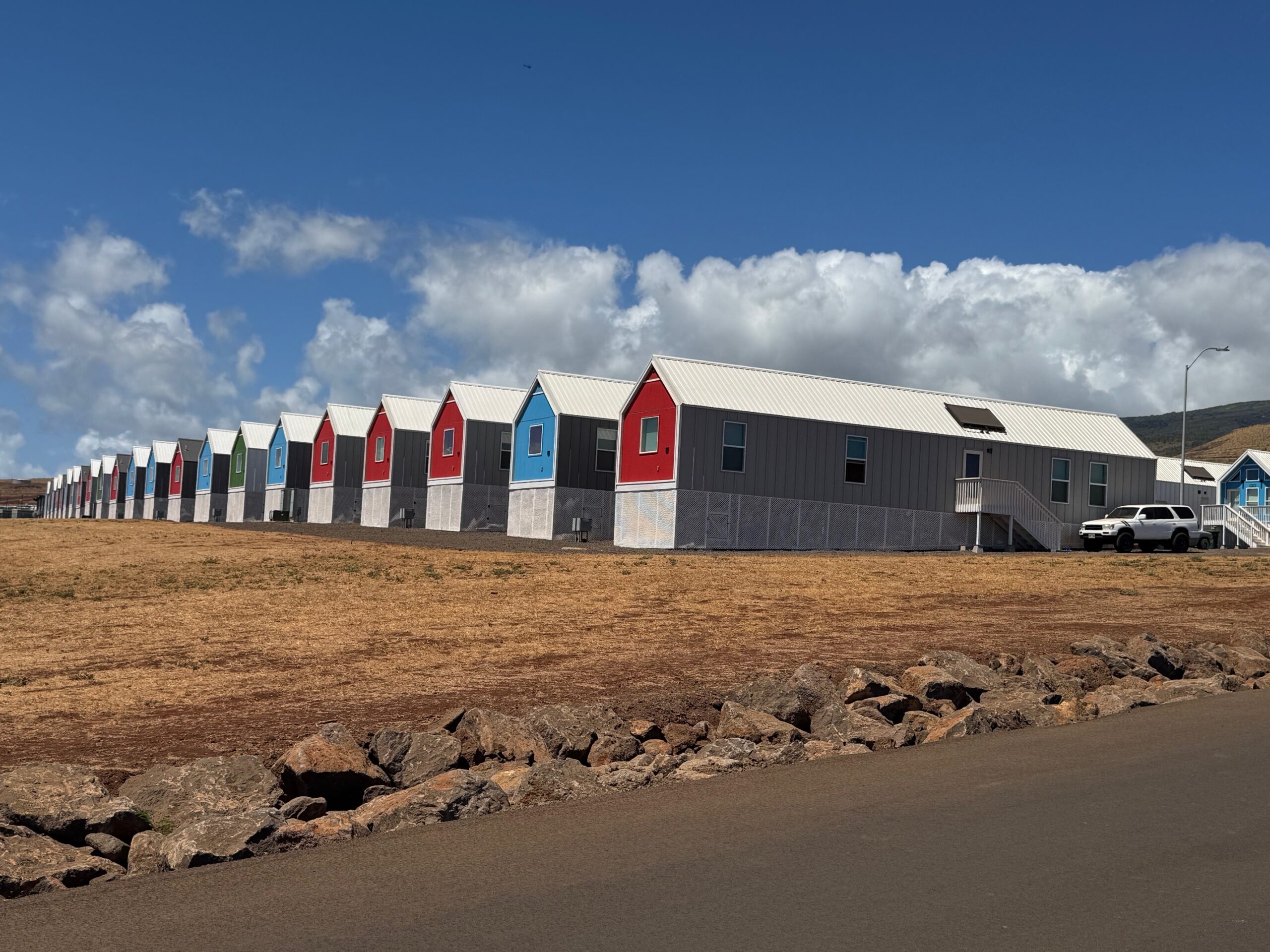
The Federal Emergency Management Agency has extended its temporary housing and financial assistance to Maui wildfire survivors to Feb. 28, which is 18 more days than the previous deadline.
But FEMA said it still is reviewing the State of Hawai‘i’s request, which was submitted months ago on May 30, for a yearlong extension to Feb. 10, 2027.
“We recognize this is an incredibly stressful time, yet we want to emphasize that the State and County is committed to working together to ensure all Maui wildfire survivors, whether they are involved in a federal or non-federal funded program, continue to receive necessary support for their recovery,” state Department of Human Services Deputy Director Trista Speer said in an email to Hawai’i Journalism Initiative on Monday. “We recognize that the most pressing need has almost always been housing support — and we are proud that we have always been able to find solutions to meet that important need.”
Speer’s statement continued: “The State and County remain committed to support critical programs to ensure and protect all survivors’ health, safety, well-being, and overall recovery from this tragic disaster — including housing solutions. The State and County are working closely together to closely monitor the situation and working diligently to prepare for the transition between the programs when that time comes.”
Joe Campos, deputy director of the state Department of Human Services, said the extension is “crucial” as Maui continues to recover from the disaster that killed at least 102 people.
Campos said Dec. 29 that FEMA funding provided housing for 6,775 individuals immediately after the Aug. 8, 2023 wildfires in Lahaina and Kula. Since then, about 5,300 have found their own housing.
The original number of households in the FEMA Direct Housing program was between “3,300 to 4,000,” according to Campos, and is now down to 754 households for a total of about 1,475 individuals.

If FEMA does not grant the state’s extension request, all FEMA housing assistance for fire survivors would cease at the end of February. This means all FEMA Direct Housing units must be vacated without exception, including: direct lease units, the Kilohana temporary group housing site in Lahaina where 150 households are currently living in Lahaina, private site units and secondary site units.
“The state remains hopeful that FEMA will continue to support the state and county in our collective efforts to ensure the recovery, self-sufficiency, and basic housing needs of the survivors of the Maui Wildfires,” Speer said Monday. “We are hopeful for an approved extension from FEMA for continuation of the housing programs and the Disaster Case Management Program, which will enable a successful, seamless systematic transition between these federally funded programs to locally led programs which adheres to the state’s commitment to a trauma-informed disaster response.”
It was less than a year ago when the 167-unit Kilohana project was completed.
A FEMA news release posted Wednesday announced the 18-day extension and said: “The program was initially approved for 18 months following the wildfire and was subsequently extended at the request of the State of Hawai‘i through February 28, 2026.”
The news release said FEMA will provide advance notice of the program’s end date as soon as possible.
To date, FEMA said it has provided more than $80 million in individual assistance to Maui residents affected by the wildfires, which includes over $50 million delivered for rental assistance funding.
A FEMA spokesperson told the Hawai‘i Journalism Initiative last month that “Direct Temporary Housing is intended to be a short-term solution to help survivors stabilize after a disaster. FEMA’s goal is to support survivors as they transition into permanent housing as quickly as possible.”
The Department of Human Services has said that it is working on possible solutions if the deadline is not extended for another year but has not disclosed what those measures might be.
EDITOR’S NOTE: This article was updated with a statement emailed to Hawai’i Journalism Initiative from the state Department of Human Services on Monday afternoon.