Housing dilemma: Maui Planning Commission strikes compromise between housing urgency and due diligence
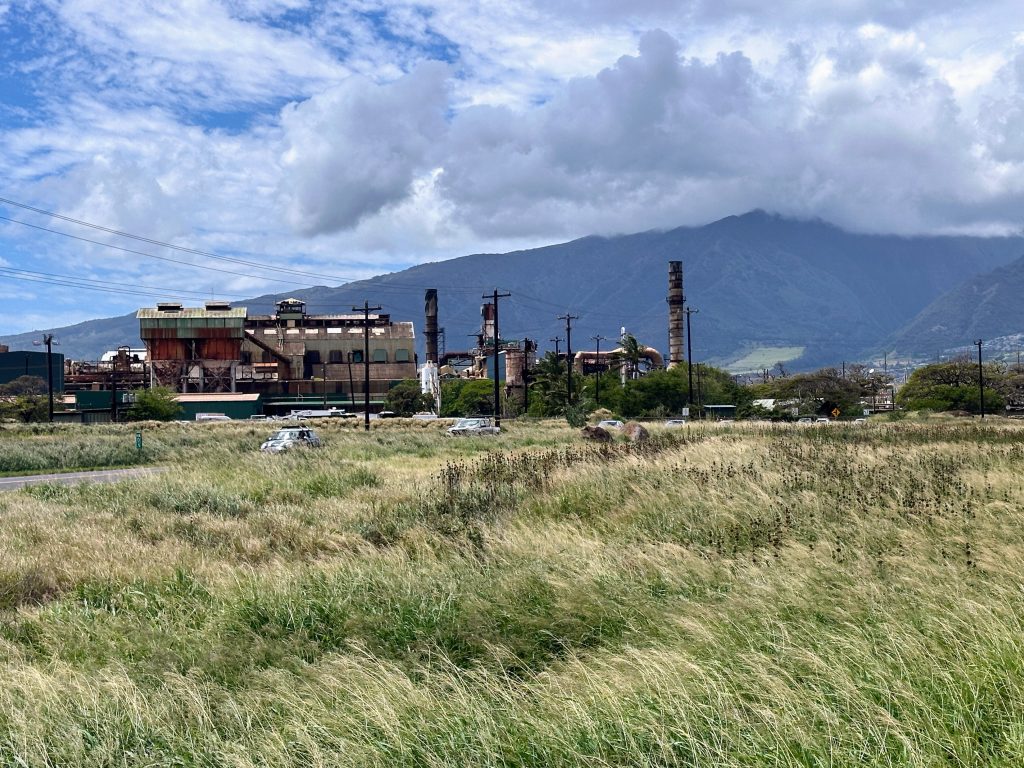
The Maui Planning Commission unanimously recommended Tuesday that the Maui County Council defer action on the 1,608-unit Hoʻonani Village project near Kahului Airport until a draft environmental impact statement is published.
The 5-0 vote represents a compromise intended to accelerate the housing timeline somewhat without skipping essential environmental analysis and public review.
The decision came after a daylong meeting where the commission wrestled with a dilemma: Does Maui’s affordable housing crisis justify bypassing standard government reviews? Ultimately, the commission decided that while speed is essential, blind approval is not.
The human cost of delay
While Maui’s post-wildfire disaster housing shortage is undisputed, the debate continues about how to secure urgently needed housing, especially when new development proposals bump up against constraints such as finding appropriate project locations, water availability, wastewater management, and roadway capacity.
For the Hoʻonani Village project and its Maui County Council-initiated land use measures, the Planning Department recommended deferral of legislation until a final environmental impact statement is accepted by the State Land Use Commission.
In testimony before the commission, Council Member Nohelani Uʻu-Hodgins, chair of the Council’s Housing and Land Use Committee, disagreed with the department’s recommendation for a more thorough review in its 46-page staff report.
Uʻu-Hodgins said such delays and the County’s estimated 5-year-long entitlement process for housing developments leave longtime residents living in crowded housing or moving away to the Mainland.
She disputed the department’s characterization of the area as a “new town” or “future growth” that should be within urban growth areas. She argued that the area is where local families, including her own grandmother, lived for generations before the development of Dream City.
She noted that the project area is adjacent to the current urban growth boundary and described the proposal as a continuation of the existing Central Maui community plan area.
Uʻu-Hodgins criticized the county’s reliance on a community plan that was completed in 2002 and expired 14 years ago. She expressed frustration with the timeline for updating community plans, suggesting it could take another 20 years before the Council addresses this specific project area through the standard planning update cycle. She linked these delays and the lengthy entitlement process to the “unintended consequences” of local population loss.
Uʻu-Hodgins defended the Council-initiated change in zoning as being well within the provisions of the Maui County Charter.
She said the Council-initiated process for a development is not new and has been done “a couple of times” before; however probably nothing on a scale of the proposed Hoʻonani Village development.
Finally, she questioned the Planning Department’s decision to abdicate its authority as the accepting agency for the environmental impact statement. In September, the department withdrew its submission of an environmental impact statement preparation notice for the Hoʻonani Village project, maintaining that the State Land Use Commission would be the “more appropriate agency to be the accepting authority.”
“I am tired of waiting for housing providers to come to us,” Uʻu-Hodgins told the commission. “If we don’t get comfortable with losing small percentages of our ag land, then we’re going to have to go higher because our population is only growing.”
Project supporters emphasized the dire need for housing inventory. One testifier told commissioners that “economic stress is the No. 2 cause of suicide” in the county, framing the approval of housing as a matter of life and death.
The risk of approval without data
However, the Planning Department and several commissioners pushed back, arguing that the legislative process used for Hoʻonani Village bypassed essential checks, such as complete agency reviews and comments.
Planning Director Kate Blystone told commissioners the department and administration of Mayor Richard Bissen “are supportive of affordable housing, and we’ve put a number of items before this body and Council to increase affordable housing; and we’re working closely with other projects that you haven’t even seen yet.”
With the land use measures requested by the proposed 1,600-unit development, the matter is “more than just affordable housing,” she said. “We need to be thoughtful and planful so our jobs as planners is to see around corners and anticipate unintended consequences (with) decisions just like this one.”
Throughout the meeting, the lack of hard data became a recurring stumbling block. The Department of Water Supply reported that the project sits atop the Pā‘ia aquifer, which is already being pumped at nearly double its sustainable yield.
State water regulators are currently re-evaluating sustainable yields for Central Maui aquifers and acknowledge that current groundwater pumping withdrawals exceed official limits. However, they note those limits are conservative estimates that don’t take into account the return of water to the aquifers through crop irrigation.
Another point of contention is the project’s location in Puʻunēnē, directly under the flight path of aircraft approaching Kahului Airport, raising concerns about noise and quality of life for future residents.
Commissioner Mark Deakos agreed that affordable housing is a critical need, but added that the commission should not proceed “recklessly.” Speaking in support of a motion to defer, Deakos raised concerns about the lack of specific details, noting that the decision currently relies too heavily on “trust” rather than guaranteed outcomes.
He questioned how much of the housing would actually be affordable versus priced at “140%” of the area median income. Deakos also pointed out that the applicant was not present at the meeting to answer questions.
Deakos highlighted the absence of a “full infrastructure analysis” regarding water, wastewater, traffic, schools and emergency services, as well as the lack of a completed environmental review. He argued that approving the project without this data would be a “huge gamble,” particularly given that the proposed zoning could allow for extensive development driven by “what the market dictates.”
Deakos also defended the integrity of the community plan process, arguing that it is not a “fair process” to dismiss the existing plan simply because it’s old. He suggested it would be premature to bypass the community plan update that is currently upcoming.
Deakos also argued that this project would divert county water and wastewater resources away from alternative housing sites that already have infrastructure in place. While he said his personal preference would be to deny the project, he concluded that he is “willing to defer until there’s actual information.”
A middle ground
The dispute came to a head when an initial motion to recommend a full deferral — waiting for a final environmental impact statement — failed to get the five votes needed for passage.
Facing a deadlock that would have sent the project to the Maui County Council with no recommendation at all, commission Chair Kim Thayer proposed a compromise to break the logjam. Instead of recommending deferral until there’s a final EIS, the commission would call for waiting until the project’s draft EIS is published — potentially shaving months or more off the entitlement timeline.
“It’s a little give and take,” Thayer said. “You still think you need something, so don’t go blind. But at least with the draft… you have more information.”
Terms of the recommendation
The approved motion advises the Maui County Council to defer the Maui Island Plan urban growth boundary amendment and the community plan amendment until the draft environmental impact statement is published and the Planning Department’s land use inventory is updated.
It also recommends deferring the change in zoning until the Land Use Commission approves the district boundary amendment.
The commission included proposed zoning conditions that — should the project eventually be approved by the Council — there should be a commitment by the developer to build a minimum of 1,000 residential units and a requirement to construct amenities such as parks, a civic center, and entertainment facilities in earlier phases rather than at the end of the project.
Commissioners also stipulated adherence to the phasing plan represented to the commission and ensured that 100% of units are priced at 140% of the area median income and below.
The recommendation now moves to the County Council, which has the final authority to approve or deny the land use entitlements.
In other action, the commission recommended approval of a bill to amend the definition of agricultural retail structures in the Maui County Code. The change would permit vehicles and structures on wheels to be classified as accessory uses in the agricultural district. With the change, food trucks could function as retail stands for agricultural products under specific provisions. A staff report on the proposed bill is here.
Tuesday’s commission meeting went beyond 5 p.m., and commissioners agreed to defer other items on their agenda to their next meeting on Jan. 27.
Sponsored Content