 Hawai'i Journalism Initiative
Maui’s major winter attraction – the humpback whales — are back, drawing visitors to recovering tourism industry

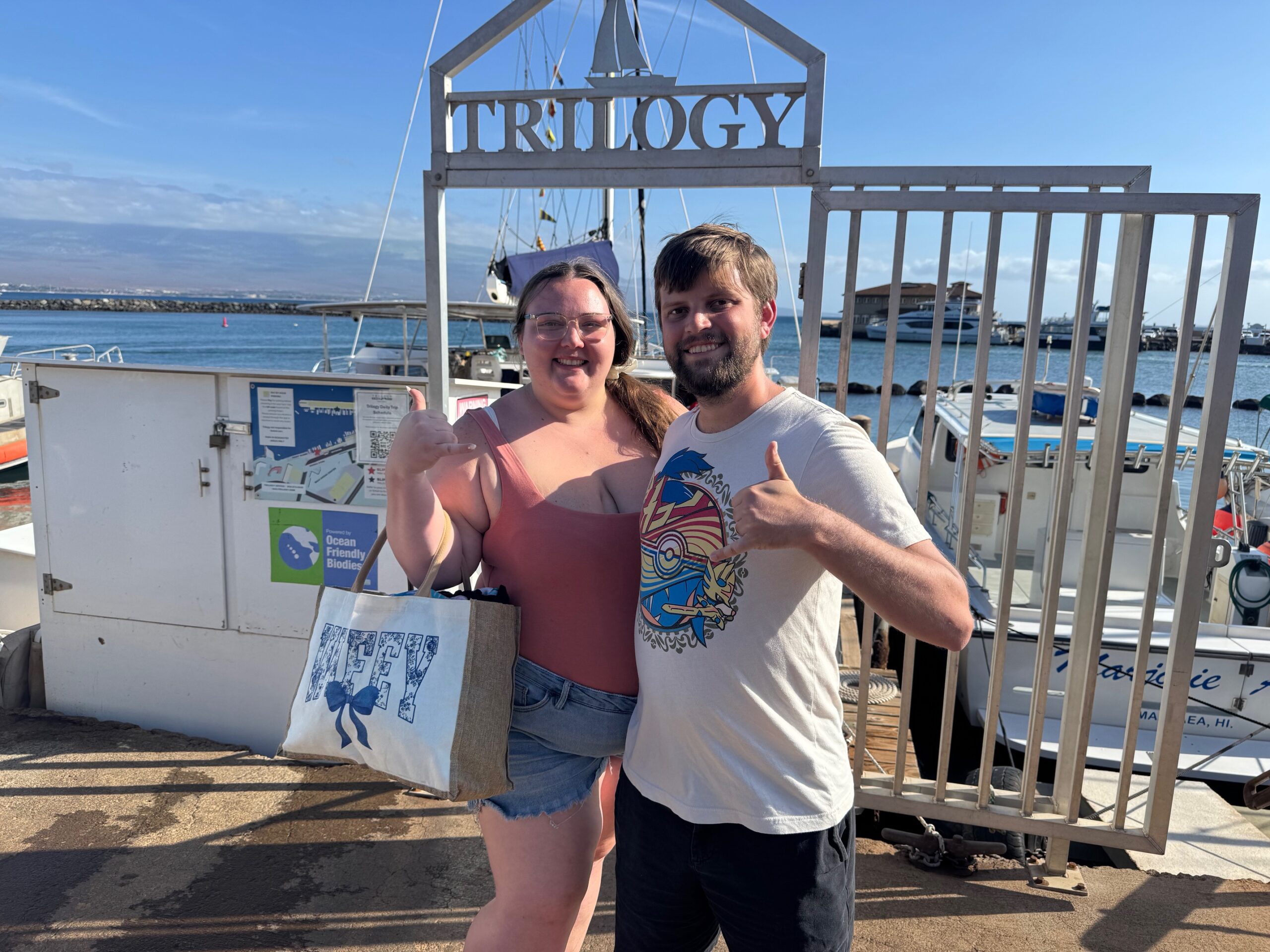
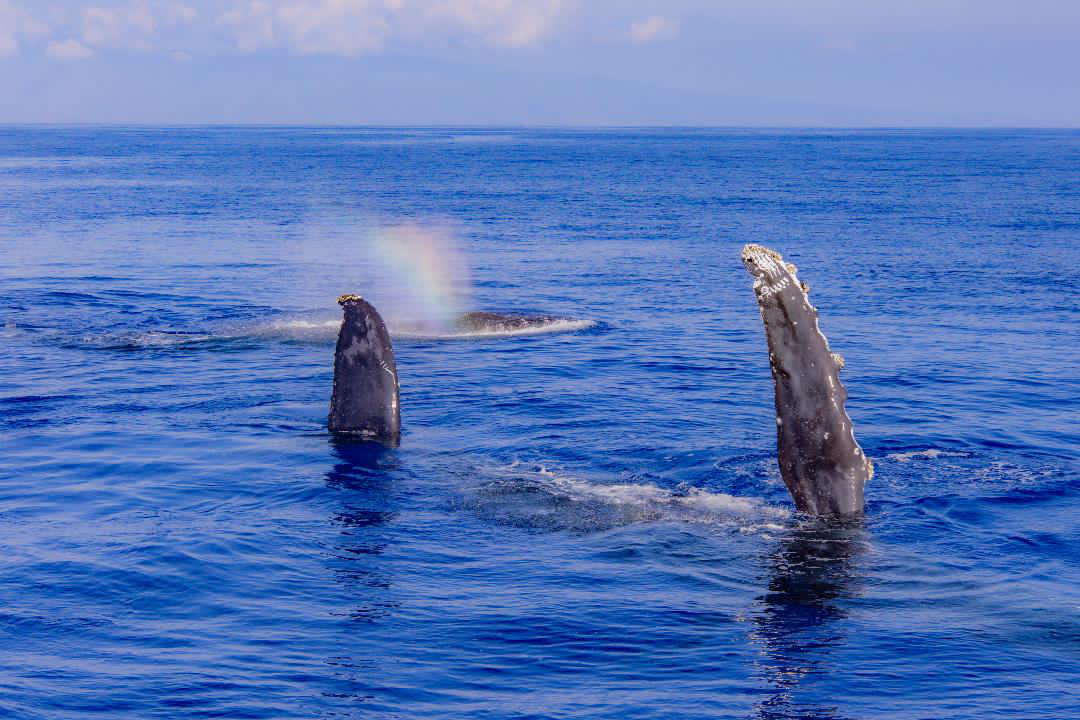
Sarah Hart and Peter Watson from Florida have been enjoying their honeymoon on Maui, but nothing compared to the trip Tuesday aboard Trilogy I and the spectacular nature show put on by about 40 humpback whales.
“Oh, that was perfect,” said Hart, 25, after stepping onto the dock at slip 99 of Mā‘alaea Harbor.
“It was unexpectedly great,” added Watson, 27. “There’s so many whales.”
While Maui’s main economic driver of tourism has yet to fully bounce back in the past few years due to the COVID-19 pandemic shutdown in 2020, followed by the Lahaina wildfire of 2023 and now the uncertainty of the short-term rental market, the island can always count on the draw of the humpback whales, known as koholā in ‘Ōlelo Hawai‘i.
The North Pacific whales were near extinction in the 1970s. But due to successful conservation efforts, they have recovered and now migrate by the thousands to Maui’s warm, shallow waters around October or November. The come to mate, give birth and nurse calves. When they are done, around March through May, they head back to cooler waters off Alaska and Canada.
Winter months are generally the peak time to spot the gentle giants. At the end of this month, whale researchers and volunteers on Maui will join forces on the first of three monthly counts of the whales. Registration for the events on Jan. 31, Feb. 28 and March 28 is now open.
“It’s not just like a blue whale that maybe you’ll see take a breath,” said Morgan Wittmer, eco tours manager for Pac Whale Eco-Adventures. “These animals are out competing and having babies and doing all sorts of neat stuff. So they’re a massive draw.”
Denver Coon, a member of the Ocean Tourism Council, the Maui Economic Recovery Commission and the Marine and Coastal Zone Advocacy Council, said the whales annual migration to Maui waters is “priceless.”
Coon, who also is one of the family owners of the seven-boat Trilogy fleet, said the whales are an essential annual boost to the boating industry on Maui that is still struggling while it waits for Lahaina Harbor to completely reopen after being destroyed by the 2023 fire.
In 2019, when the Maui tourism industry hit record numbers, visitor arrivals through November on Maui were 2,795,637 — 18.7% higher than the 2,272,476 through November of 2025, the latest numbers available from the Hawaiʻi Tourism Authority.
But visitor spending on Maui in the first 11 months of 2025 was $5.31 billion, which is higher than the first 11 months of 2019 at $4.61 billion. Increased lodging rates accounts for much of the spending.
While the cost of Maui vacations go up, there are few other places in the world that are better for whale watching.
And while whales also migrate to other areas of the Hawaiian Islands, they do so at much fewer numbers than they do in the waters surrounding Maui County’s four islands (Maui, Molokaʻi, Kaho‘olawe and Lāna‘i). The habitat surrounding Maui Nui is so important for whales that it was designated 33 years ago as the Hawaiian Islands Humpback Whale National Marine Sanctuary, covering approximately 1,400 square miles.
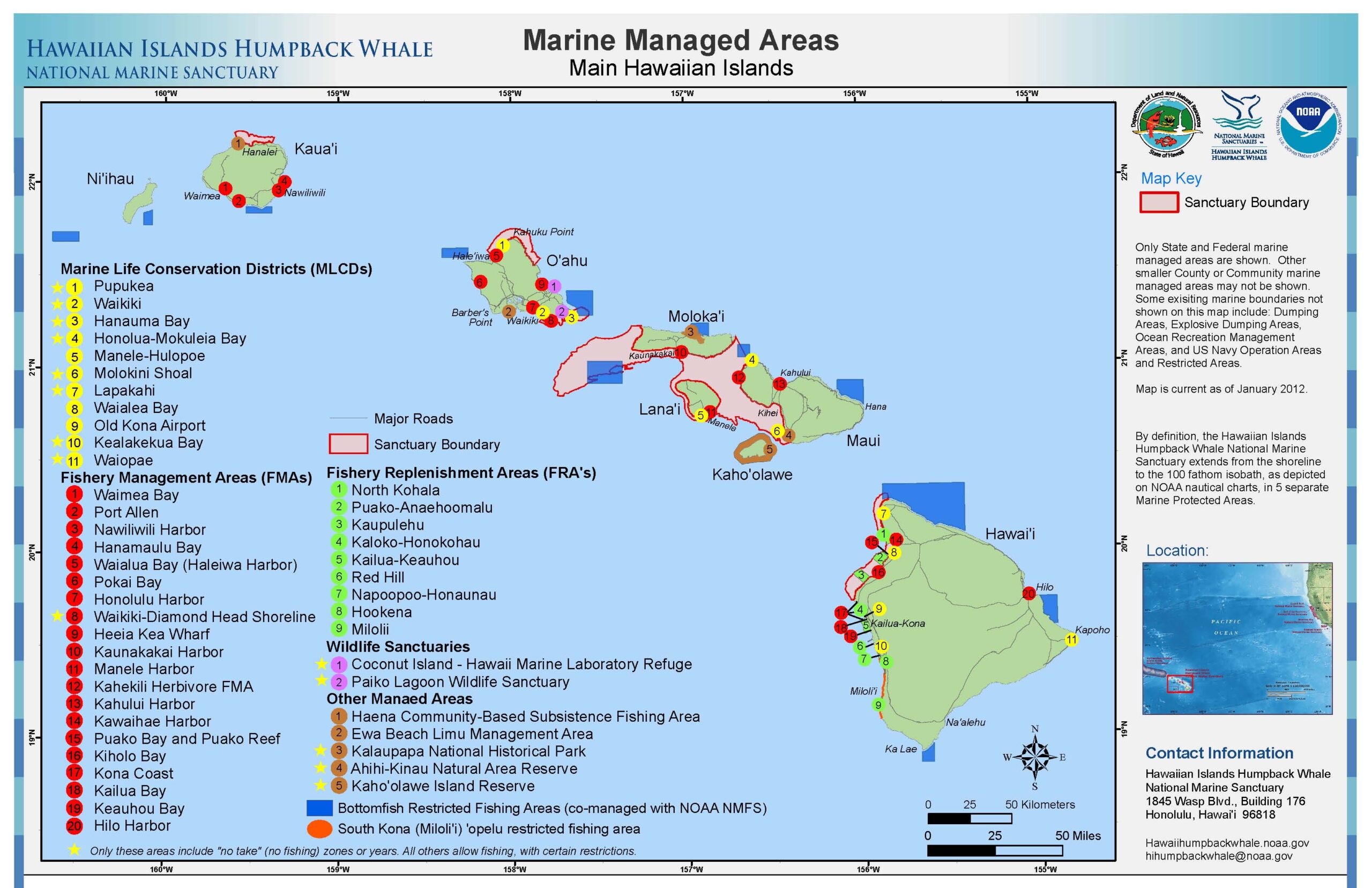
The National Oceanic and Atmospheric Administration, along with the Hawai‘i Department of Land and Natural Resources, runs the marine sanctuary designated by the U.S. Congress on Nov. 4, 1992, to protect humpback whales and their crucial mating/calving habitats in the Hawaiian Islands.
NOAA runs several educational programs, including at Maui County schools to teach youngsters about the majestic creatures.
From Dec. 15 to May 15 thrill craft operators are not allowed to operate in Maui’s protected waters.
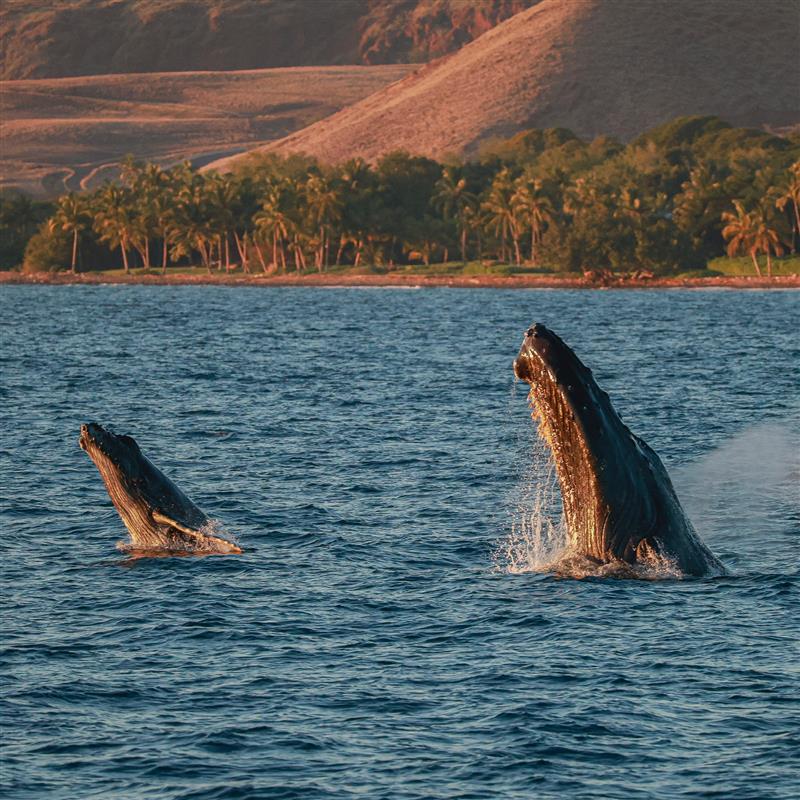
This period also is the annual high point of business for Trilogy, Coon said. Trilogy dedicates as much as half of its 15 or so daily trips to whale watches, with the other trips for sunset cruises and going to spots like Molokini crater for snorkeling. Trilogy also transports people between Maui and Lānaʻi year round.
Last year, Trilogy booked 20,041 passengers on 739 whale watching excursions, about 25% of its total trips.
“I don’t want to imagine a day where Hawaiʻi doesn’t see Hawaiian humpback whales,” Coon said. “They just make Hawaiʻi that much more special than it is otherwise.”
Wittmer with Pac Whale Eco-Adventures, which funds the Pacific Whale Foundation through whale watches, said: “We joke that they’re our middle name.”
“We began understanding that not only do people want to research whales, they want to hear about that research and then go see them,” she said.
Wittmer said Pac Whale Eco-Adventures runs as many as 10 to 14 trips per day dedicated to watching the majestic mammals during whale season on its five boats, at a cost of $85 to $140 per person.
Watson and Hart, the honeymoon couple, said they already are planning to return to Maui, especially after watching the whales.
“They were experts, so they were able to describe everything,” Watson said of the Trilogy staff on board. “They had a hydrophone so we could hear the whales and everything. It was really cool.”.
Dave Treinen, a 68-year-old from Omaha, Neb., and Wesley Mims, a 29-year-old from Memphis, Tenn., part of a 12-person family trip to Maui, were thrilled after a whale watching excursion aboard Trilogy.
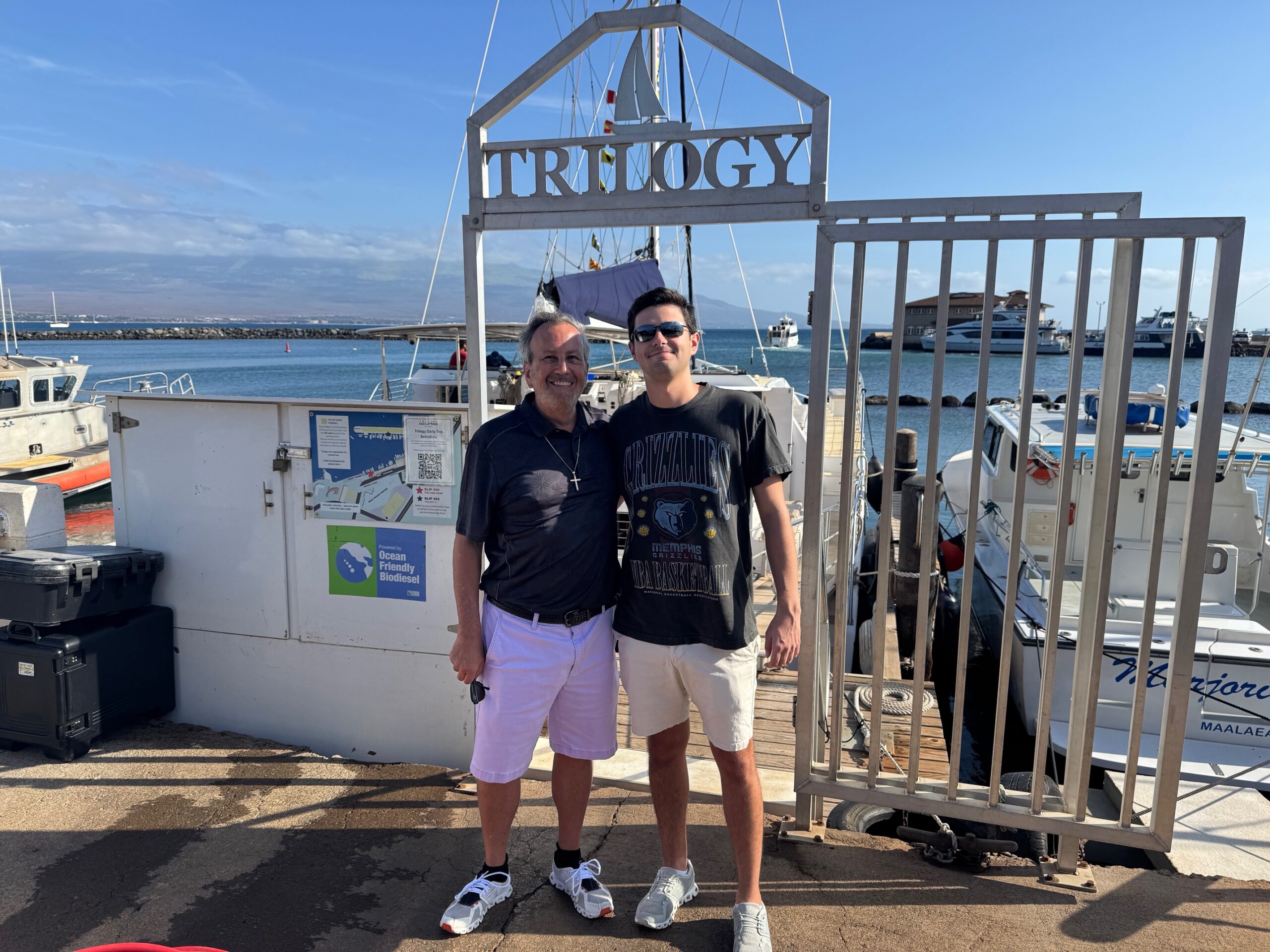
“What we saw today was 5 to 10 times as many whales,” said Dave Treinen, an annual visitor to Maui with his wife. “It was phenomenal. It was way over our expectation.”
Mims said he went on the excursion with no expectations. “I was just, ‘I’ll be happy with whatever I see.’ ” But he returned thrilled: “We saw a baby breach and probably 40 breaches overall.”
Wittmer said Pac Whale Eco-Adventures has carried nearly 1.3 million people on their boats since 2019.
“People that maybe would never go on a cocktail cruise or dinner cruise or go to Molokini or try snorkeling, will go out to see these creatures because they’re so accessible here and exciting,” Wittmer said.
They had more than 300,000 passengers in the peak year of 2019.
The number was only about 124,000 in 2025, although the trend now is going up as Maui recovers from the 2023 wildfire, Wittmer said.
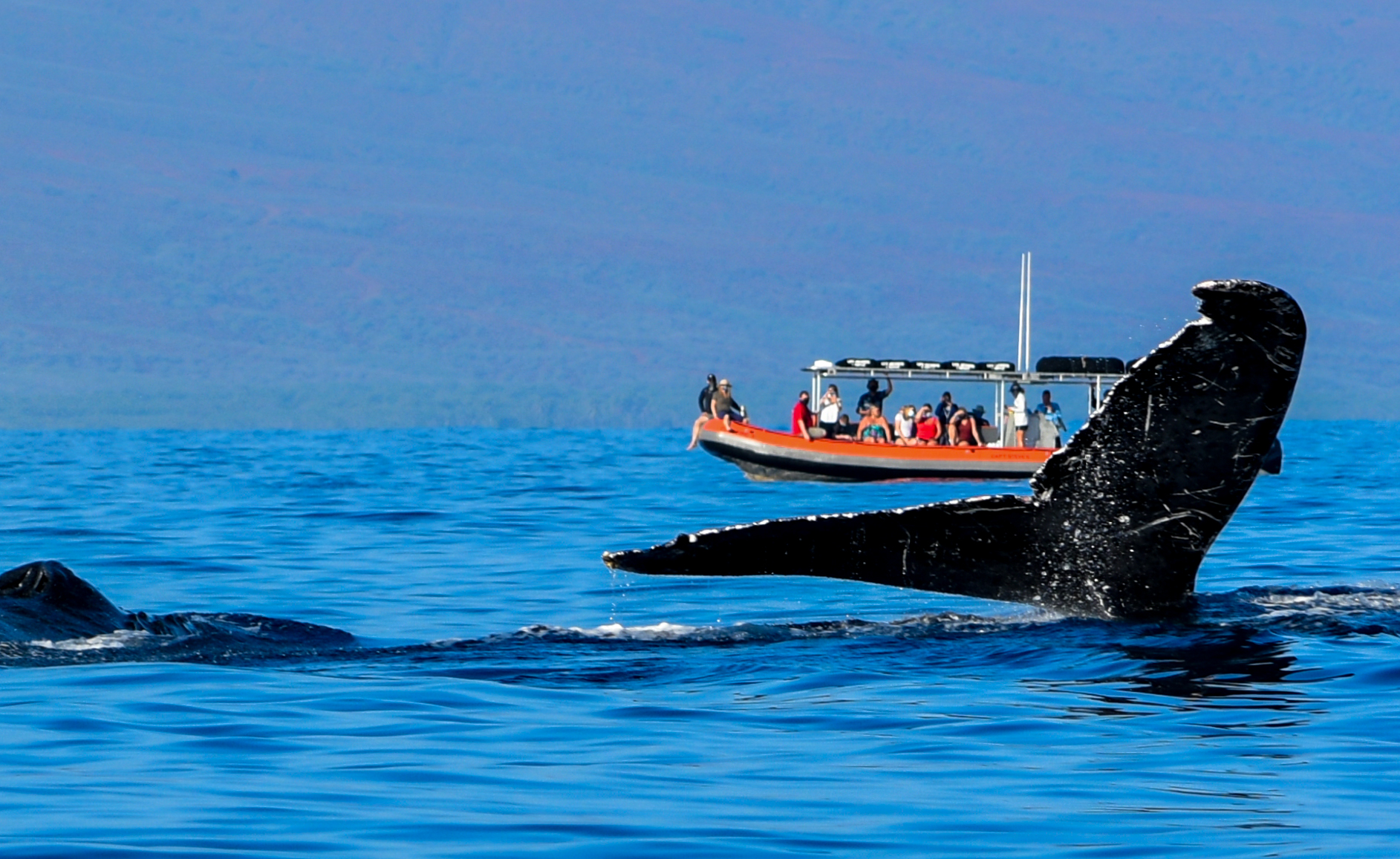
Jens Currie, the chief scientist for Pacific Whale Foundation, said humpback whales now number more than 20,000 in the North Pacific, up from the 500 or so when the species was fighting extinction in the 1970s due to whaling.
“The whales have recovered,” Currie said. “And so we’re past the worry point of extinction, which wasn’t the case back in the 1970s.”
But Currie said other factors now are a threat to the North Pacific whales, which numbered between 25,000 and 30,000 about 10 years ago but now have fallen to a little more than 20,000.
“What we’re seeing is they are being impacted by climate change and environmental changes that are impacting their food or prey resources up in their feeding grounds in Alaska and British Columbia,” Currie said.
“We certainly are seeing impacts as the numbers struggle to continue to increase over time.”
Last year during the Great Whale Count, the number of whales spotted in January, February and March was less than in the same months in 2024. This was in contrast to counts in recent years that typically saw an increase over the previous years.
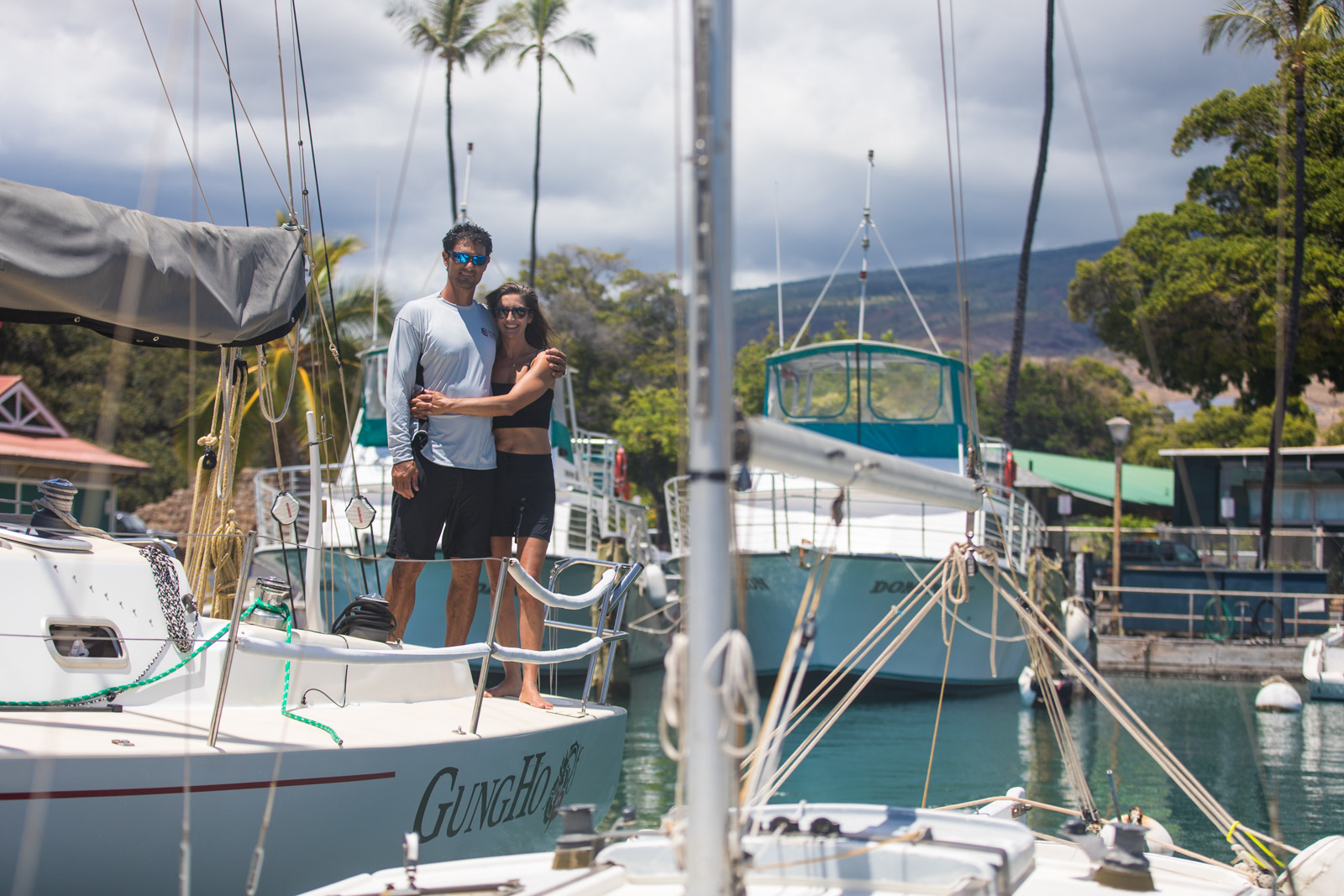
Keahi Ho, captain and owner of GungHo Sailing, runs a one-boat charter operation with his girlfriend Ali Grimes. Ho said his 27-foot Hunter sailboat makes three chartered trips a week and the whales are always a huge draw.
“The whales are a big part of any charter business in Hawai‘i,” Ho said. “We see them and they definitely add a lot to our charter. They’re real important for the charter industry here.”
Ho added that after losing a boat in Lahaina Harbor during the fire, the whales are a welcome and key constant that bring people back to Maui.
“They’ve helped get us through this really rough spot … people want to see whales,” Ho said. “Whales are always awesome when you see them and times like right now, you’re pretty much always going to see them.”