Invasive ramie moth, targeting māmaki, detected on Kauaʻi
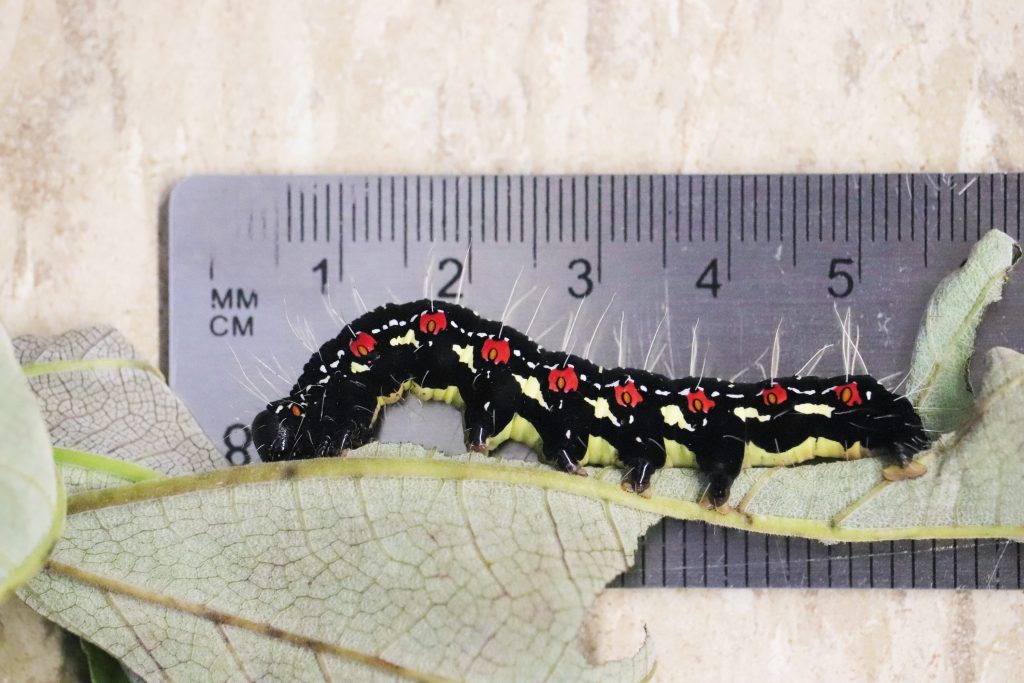
A community report to the Kauaʻi Invasive Species Committee last month led to the collection of a single live ramie moth (Arcte coerula) caterpillar, the first detection of the invasive pest on Kauaʻi.
This situation is being cooperatively managed by DLNR’s Division of Forestry and Wildlife, KISC, and the Hawaiʻi Department of Agriculture and Biosecurity, with assistance from the University of Hawaiʻi at Mānoa.
Ramie moth caterpillars are voracious feeders of māmaki (species in the genus Pipturus) leaves and quickly defoliate entire plants. Caterpillars will also feed on other endemic nettles such as maʻoloa (species of Neraudia) and ōpuhe (Touchardia sandwicensis). This pest poses a threat to native invertebrates such as the Kamehameha butterfly and native snails by competing for the same plants.
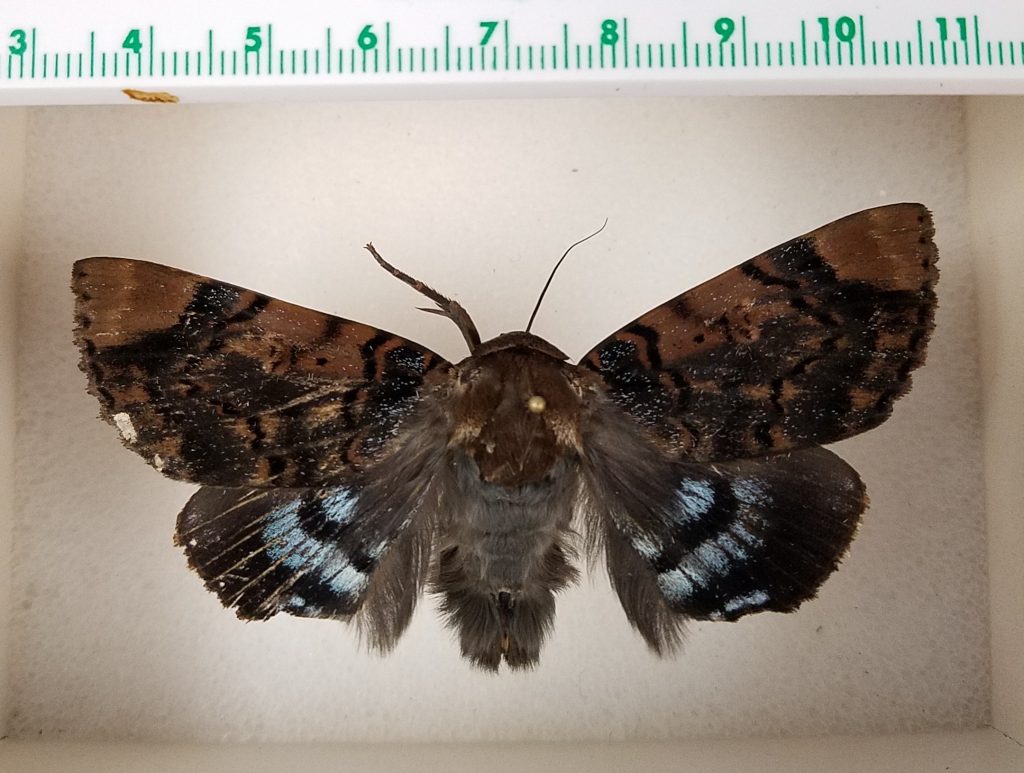
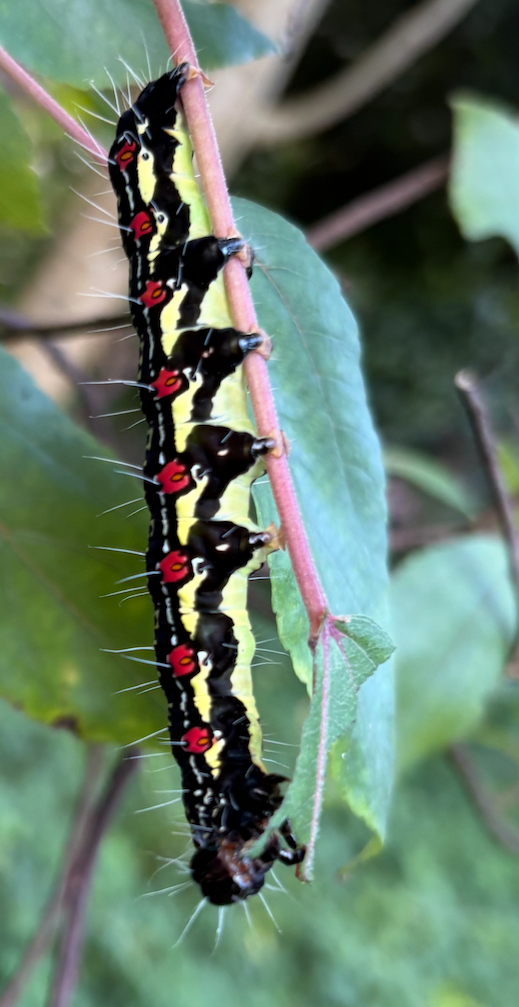
As larvae develop, ramie moth caterpillars can range in size from 1/16 inch up to 4 inches long and in color from green to yellow and black with bright orange-red spots and thin white hairs. Adult moths are dark brown with black and silver markings on their wings and their wingspans can reach 3.5 inches.
The first detection of this moth in Hawaiʻi was on Maui in 2018. This was followed by a detection on Hawaiʻi Island in 2020, with another on Oʻahu in 2025. Only a single caterpillar has been found on Kauaʻi thus far; however, officials ask the community to be on the lookout for others. While eggs and caterpillars may move from island to island on host plants, it is possible for adults to disperse via flight and air currents.
Early detection of the ramie moth with help from residents will play a critical role in the prevention of a rapid island-wide spread into our native forests. If you see a ramie moth or ramie moth caterpillar on māmaki or other host plants, please take photos and report the sighting immediately to 643pest.org.
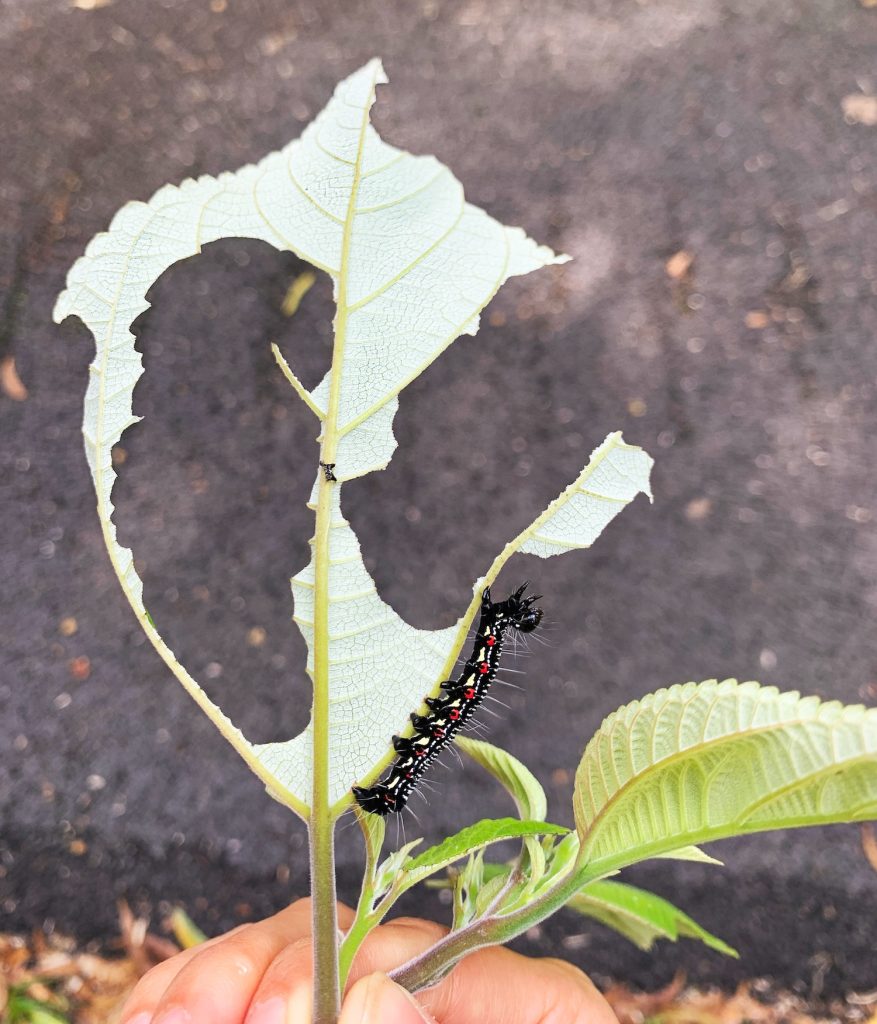
Ramie moth caterpillars may look similar to those of the Kamehameha butterfly. Comparison photos of the two species are available online here: https://cms.ctahr.hawaii.edu/ce/mamaki.
Sponsored Content