MISC: Reducing overgrown vegetation is key to lowering coqui frog numbers
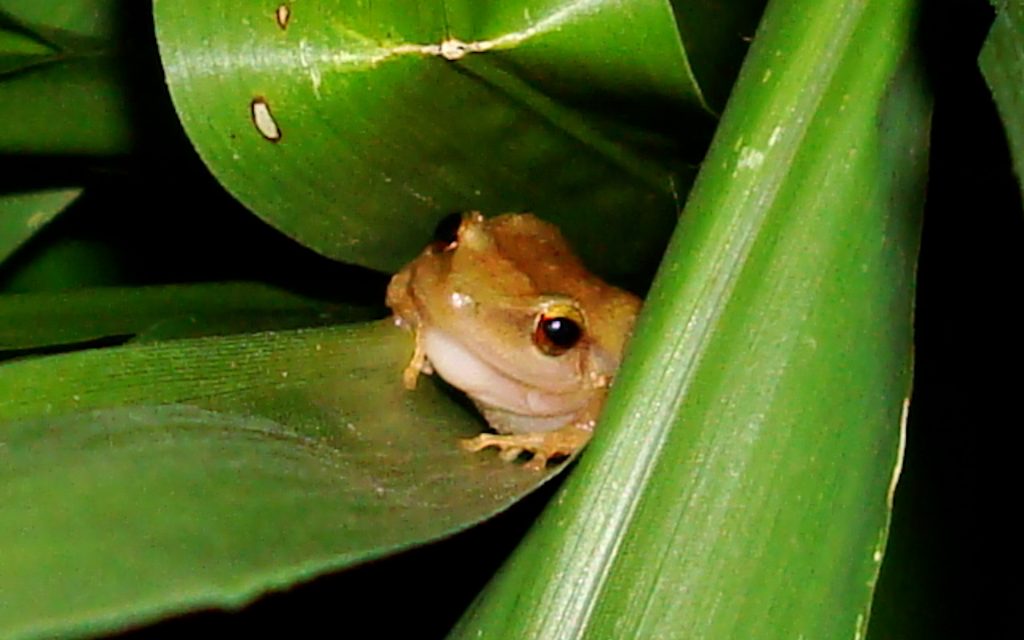
By Serene Gunnison / Maui Invasive Species Committee
For a subset of Maui residents—especially in the neighborhoods east of Maliko Gulch—a warm wet evening will bring the calling of coqui frogs. The invasive frogs have spread slowly since arriving via imported nursery plants in the late 1980s. Coqui frogs reached Maui and the Big Island at roughly the same time, yet their expansion on the Valley Isle has been tempered by the efforts of Haʻikū residents and the Maui Invasive Species Committee.
Native to Puerto Rico, these tiny tree frogs thrive in Hawaiʻi. The climate and vegetation are so similar between these subtropical islands, especially along windward slopes. But coqui have no predators in Hawaiʻi. Consequently coqui can saturate gulches and residential properties, reaching populations two to three times more dense than in their native habitat. However, even in affected neighborhoods of Haʻikū, coqui frogs can be overwhelming in some pockets and barely noticeable just a short distance away, reflecting differences in habitat.
One part of managing invasive species is considering their habitat. Though outside temperature and rainfall lie beyond direct control, vegetation remains a factor people can influence. Haʻikū homeowner Jeff Runge has experienced this first-hand.
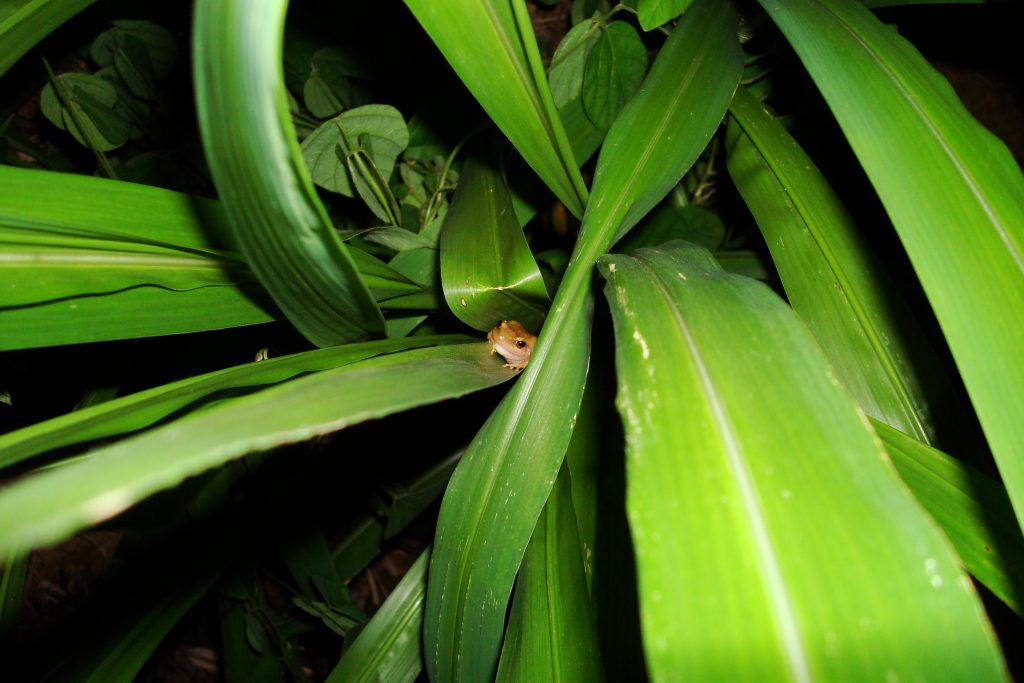
Runge learned about coqui frogs shortly after purchasing his home in 2025, when he heard a few calling frogs on his property. Rather than waiting for numbers to increase, he began clearing overgrown vegetation and green waste left by previous owners.
This approach is backed up by research. Scientists studying coqui frogs on Hawaiʻi Island found a compelling relationship between vegetation habitat and population density. A 2013 study conducted in the Nānāwale Forest Reserve near Hilo showed that areas with deep leaf litter and thick, dense vegetation support significant coqui populations. When that habitat was reduced, coqui populations declined and stayed low, even when the surrounding areas of forest remained infested.
The study also found that habitat removal makes citric acid treatment more effective. These findings reflect a common approach to invasive species management. Making conditions unfavorable for survival is an effective first step to control. By altering habitat structure, humans can manipulate where coqui populations take hold.
Runge recognized his property was ideal for coqui. “Deep vegetation, wet leaves and everything, it would’ve been a perfect habitat for [coqui frogs,]” he said. After significant habitat removal and one citric acid treatment, the frogs have yet to return. “I can spray when I hear them again, if I hear them again,” he says.
Vegetation management doesn’t have to be large-scale to make a meaningful difference. It can look like thinning or trimming plants, clearing up leaf litter, or even just mowing tall grasses. For Haʻikū residents within a coqui-infested area, this means that knocking back local coqui populations is often as simple as keeping your yard tidy. For residents on the border, consider how coqui populations follow habitat. Altering landscapes remains one of the most effective tools to manage their spread.
Coqui control works and Runge’s experience highlights why homeowner action matters. “But my message is, homeowners need to be proactive. I love it when the Maui Invasive Species Committee can help, but I also think it’s kind of the homeowner’s responsibility to take care of it.”
The Maui Invasive Species Committee (MISC) provides resources to support community treatment. Including spray tanks and treatment supplies. Combined with habitat management, this helps reduce noise around homes. MISC’s coqui team focuses on areas where they can stop island-wide spread, prioritizing areas that border critical forest reserves and eliminating populations outside the infested sections of Haʻikū.
Residents seeking guidance or resources, such as sprayers and citric acid, can request resources online or contact the Maui Invasive Species Committee. Coqui frogs outside of the established population should be reported at 643PEST.org or on MISC’s Coqui Frog Response page.
Serene Gunnison is the education and outreach assistant with the Maui Invasive Species Committee. Kia’i Moku, “Guarding the Island,” is prepared by the Maui Invasive Species Committee to provide information on protecting the island from invasive plants and animals that can threaten the island’s environment, economy and quality of life.
Sponsored Content