 Hawai'i Journalism Initiative
‘Green fee’ proposals to boost Hawai‘i’s environment, disaster resilience on path to approval
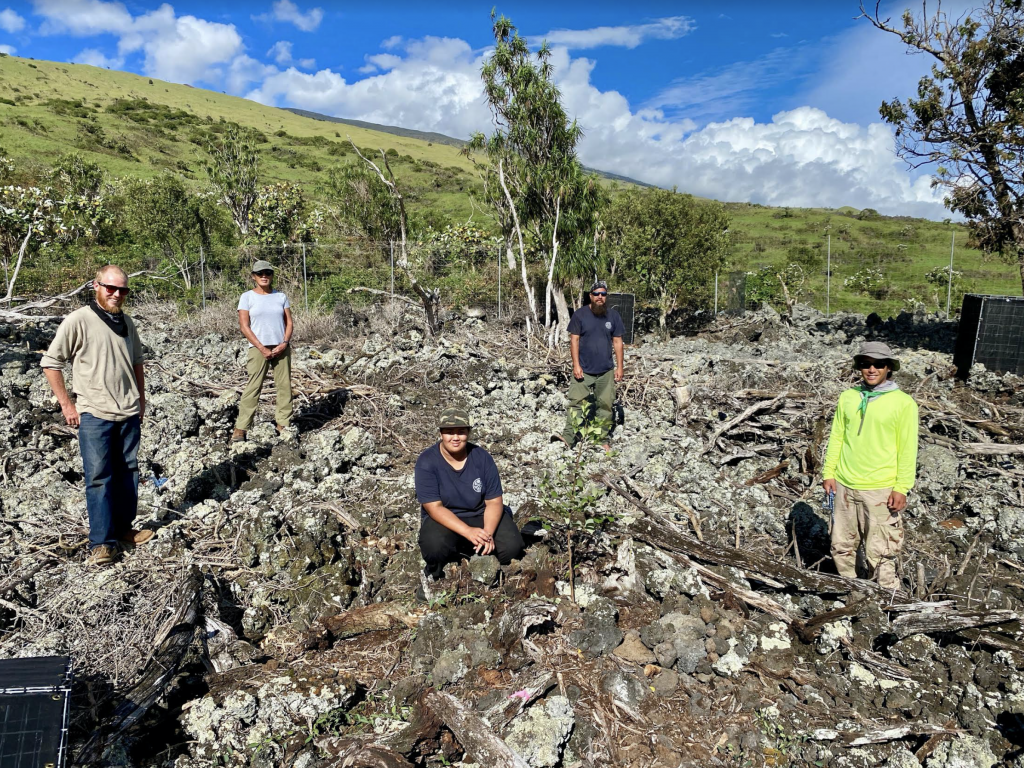
For nearly 30 years on the leeward slopes of Haleakalā, the Auwahi Forest Restoration Project has been actively converting pasture land back into Hawaiian dry forest.
Thousands of saplings have been planted at Auwahi, an area known for its diversity with about 30 different species of trees. Still, it’s “only a small fraction of the once vast forest system on the leeward side of Maui,” said Robert Pitts, a Kīhei resident involved with the project.
That’s why Pitts is eager to see state lawmakers approve a sweeping plan to invest about $130 million in climate impact taxes, known as “green fees,” into 75 projects, many of which are aimed at restoring the environment and improving Hawai‘i’s resilience in the face of disaster.
On Wednesday, that plan survived a key hurdle when the Hawai‘i House of Representatives’ Finance Committee approved a draft of the state budget that included support for nearly all of the recommended projects. The budget now heads to the Senate for its consideration.
For community members involved with conservation, the green fees are a priceless opportunity.
“Reconnecting the people of Hawai‘i to the importance of dry forests like Auwahi is something that needs to happen if we are going to save what’s left of these areas,” Pitts told the committee in written testimony. “The Green Fee project portfolio has the potential to change our trajectory of irreversible loss.”
Hawai‘i became the first state in the country to pass a climate impact tax on visitors, by adding .75% to the existing lodging tax. It took effect Jan. 1. Now, state officials have to decide how to use the first rounding of funding, about $131 million expected to come from those fees during the rest of fiscal year 2026 and fiscal year 2027, which ends on June 30, 2027.
A 10-volunteer Green Fee Advisory Council created by Gov. Josh Green spent months combing through more than 600 applications requesting over $2 billion.
Eventually they settled on 75 projects totaling $126.41 million including $42.54 million for environmental stewardship, $41.72 million for climate resilience and hazard mitigation and $42.15 million for sustainable tourism.
Projects that were shovel ready got priority, and many were driven by disaster preparedness concerns after the August 2023 wildfires in Lahaina and Kula. That included $6 million to reduce wildfire danger in neighborhoods, $1 million for satellite data to monitor ground changes in areas of dry vegetation and unstable terrain, and $1 million for containers stacked with shelf-stable meals that could be placed in hard-to-reach communities who could be cut off by disasters.
At a time when the state is bracing for a major Kona low storm that has led Green and Maui County Mayor Richard Bissen to issue disaster proclamations, the plan also calls for projects to improve coastal resiliency to storms and harden homes to protect them from disasters.
The advisorycouncil had urged state lawmakers to approve the proposal in its entirety.
“Hawai‘i faces escalating climate and hazard risks, including wildfire, sea level rise, extreme rainfall and coral reef degradation, all of which threaten public safety, cultural resources and economic stability,” Advisory Council Chair Jeff Mikulina wrote in public testimony for Wednesday’s hearing on the budget. “Strategic mitigation and resilience investments today reduce long-term disaster recovery costs and protect both communities and critical infrastructure.”
The Finance Committee supported nearly all of the recommended projects. The only changes they made were to the request for $500,000 for each funding category to help with monitoring and evaluation. Instead they set aside $500,000 overall for all three categories.
The organizations that would receive the funding haven’t been chosen yet. First, the funding will be awarded to state agencies, which will issue requests for proposals and choose the organizations to carry out the projects.
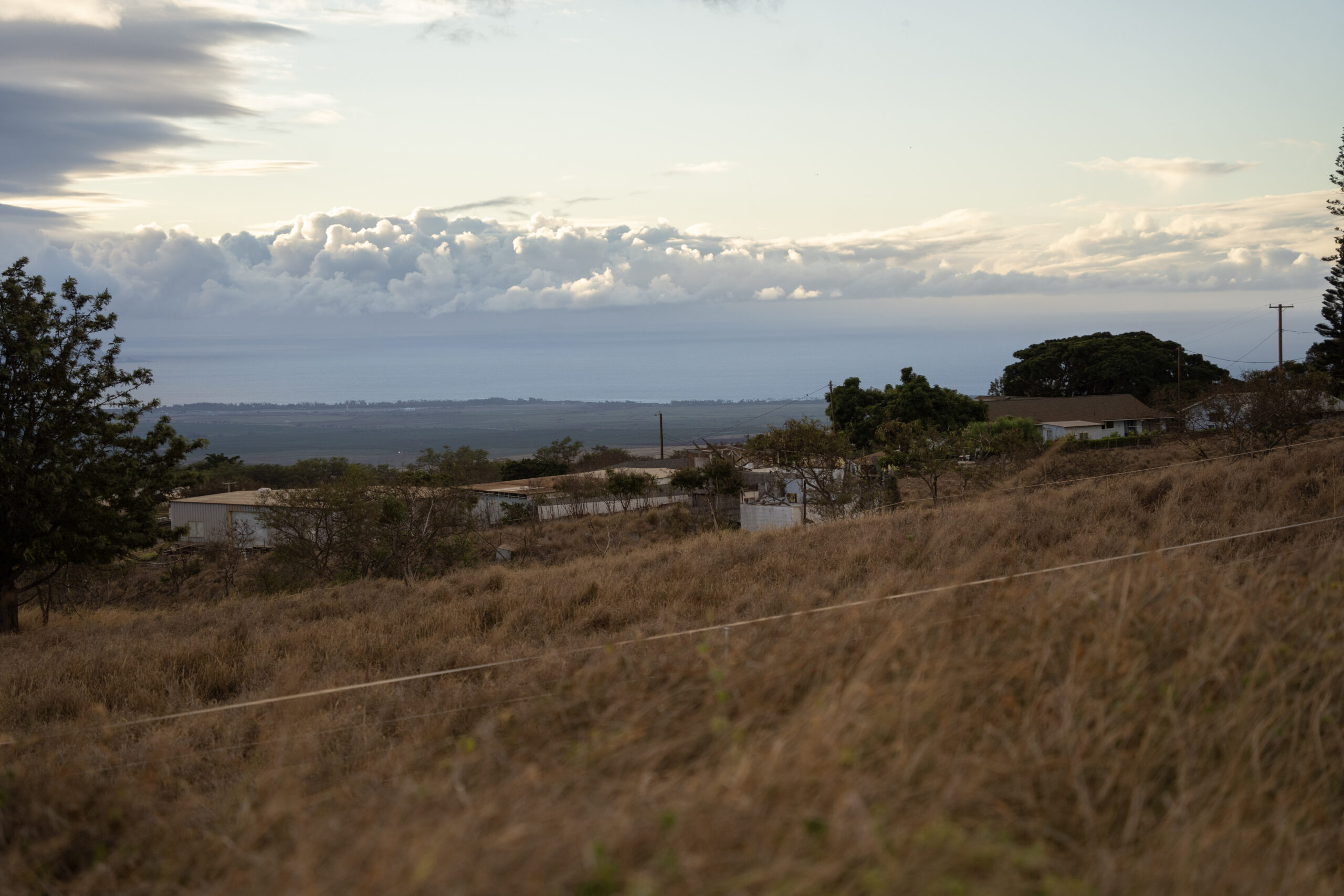
State agencies are widely supportive of the funding, saying it will prove critical in tackling wildfire risk and other climate issues.
Kali Watson, director of the state Department of Hawaiian Home Lands, said the Lahaina wildfire “underscored the growing wildfire threat throughout Hawai‘i.”
“Many DHHL subdivisions are located in high-risk areas and are surrounded by unmanaged fuels and dry vegetation,” Watson told the committee in written testimony. “The Green Fee funding will support both large-scale land management strategies and homestead-based wildfire preparedness efforts.”
He said the $2 million in green fees set aside for the department would help with five priority projects across the state: maintenance of the Leiali‘i Parkway landscape on Maui and ground maintenance of dry streambeds on Moloka‘i, 6.88 miles of firebreak construction and maintenance on O‘ahu, ground maintenance and firebreak work on Kaua‘i and fire hazard and erosion mitigation on Hawai‘i island.
The funding would also support a specialist to guide 15 to 20 homestead communities through the Firewise certification process and provide grants for 10 to 15 projects led by homestead communities to tackle defensible space, brush clearing, vegetation removal and evacuation route maintenance.
The Department of Business, Economic Development and Tourism also backed the council’s call for $7.6 million in green fee funds for community-led programs to educate visitors and residents on native ecosystems, cultural practices, safety and responsible behavior at popular attractions. The initiative would also include stewardship work such as habitat restoration, invasive species removal and protection of culturally significant places.
James Kunane Tokioka, director of the department, said this would scale up programs that are already working across the state and that the Hawai‘i Tourism Authority is prepared to carry out the initiative on the state’s behalf.
“Investing in community-led stewardship reduces impacts on natural and cultural resources, improves safety, strengthens cultural understanding and respect, and builds long-term capacity through place-based, culturally grounded approaches,” Tokioka said.
Maui residents also were eager to see the green fee funds put to good use after watching invasive species and coastal erosion take a toll on the environment and seeing the devastation left by the 2023 wildfires.
One of the green fee projects calls for $10.56 million in green fees to go toward reforestation and habitat recovery efforts in places like Kula, Kahikinui and Haleakalā on Maui; Kānepu‘u on Lāna‘i; and Kapuāiwa on Moloka‘i.
Art Medeiros, founder and project manager of the Auwahi Forest Restoration Project, has seen firsthand how investing in the environment pays off down the line. Decades of fencing, invasive species control and planting of native species have increased plant diversity, improved habitat for native species and made the landscape more resilient to climate stress, he told the committee.
“Native forests are also essential ecological infrastructure,” Medeiros said. “They stabilize soils, support watershed function, and provide natural resistance to wildfire compared to landscapes dominated by invasive grasses. All on Maui are worried that the sad situation at Lahaina could be repeated. In this case, the cost of prevention is orders of magnitude lower than the cost of disaster recovery.”
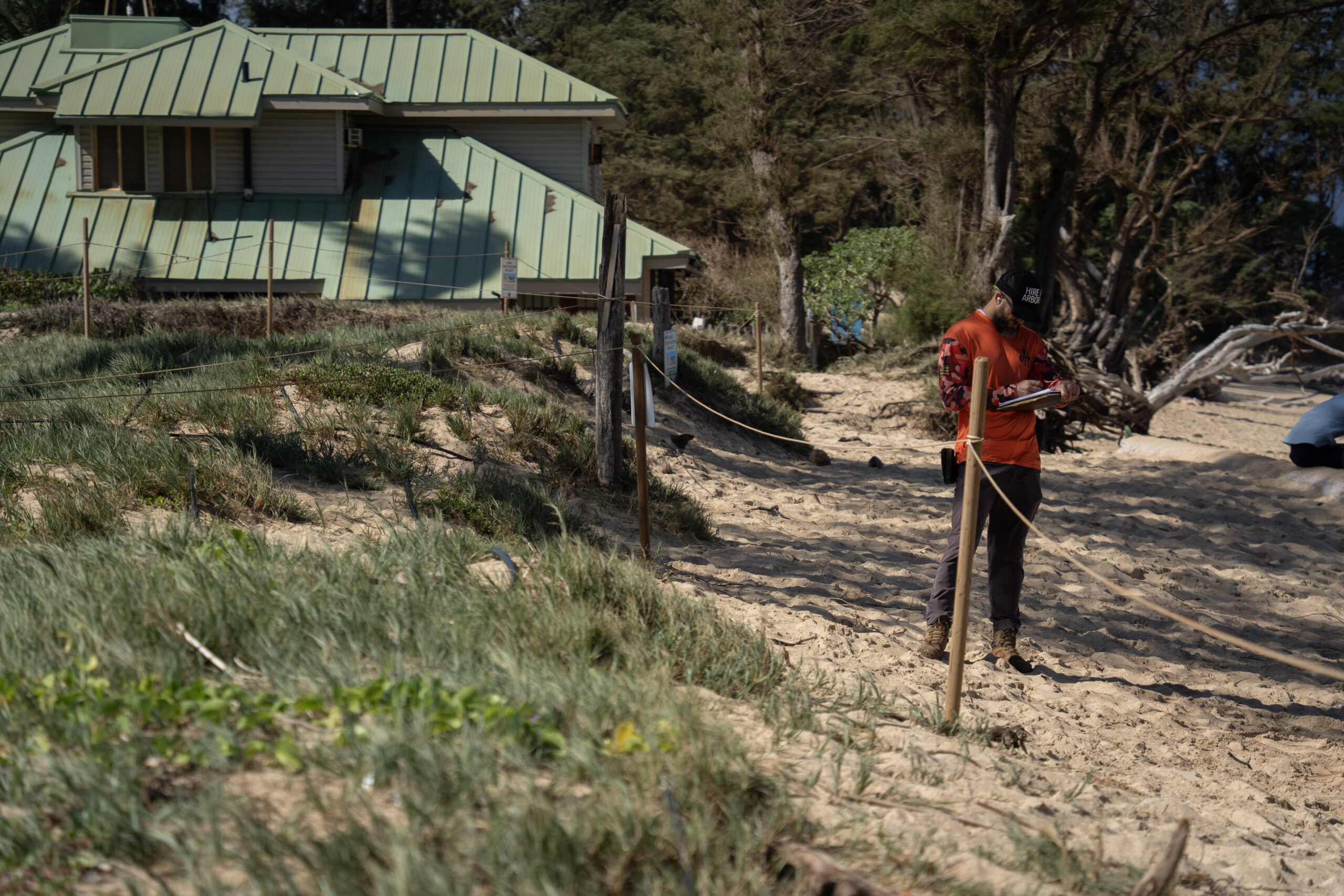
Green fee projects also include $2 million for coastal resilience projects in areas such as West Maui.
In Kahana, Rugmini Shah noted that shoreline erosion and the large sandbags used to keep it at bay have impacted the ability of people to enjoy the beach. Funding to mitigate beach erosion “is a starting point” to address the immediate needs of the buildings at risk of crumbling into the ocean while beach restoration is done, Shah said.
The green fee projects are so popular that both hotel lobbyists and environmental organizations, groups typically at odds over the impacts of tourism, are in full support of them.
Jerry Gibson, president of the Hawaii Hotel Alliance, said the projects offer “a path to sustain the natural and cultural resources that our communities and the visitor economy depend on.”
“By strengthening resilience immediately, we can mitigate the unmanageable costs of future disasters and ensure that Hawaiʻi remains a safe, beautiful and thriving home for generations to come,” Gibson said.
Madelyn McKeague, director of advocacy for the Hawaiian Council who supported projects for visitor education and stewardship, ahupua‘a restoration, hurricane home retrofit programs and cesspool conversions in coral hotspots, said the green fee funds “will have direct, reverberating effects across Hawaiʻi’s visitors and residents alike.”
McKeague pointed to the ʻōlelo noʻeau (Hawaiian proverb) stating “hoʻokahi no lā o ka malihini,” meaning “a stranger only for a day.” The saying, McKeague noted, “encapsulates the concept that everyone — visitors and residents alike — share a collective kuleana (responsibility) to contribute towards caring for our lands.”