Baldwin High School wins 30th Annual Honolulu Festival Maui Mikoshi Contest
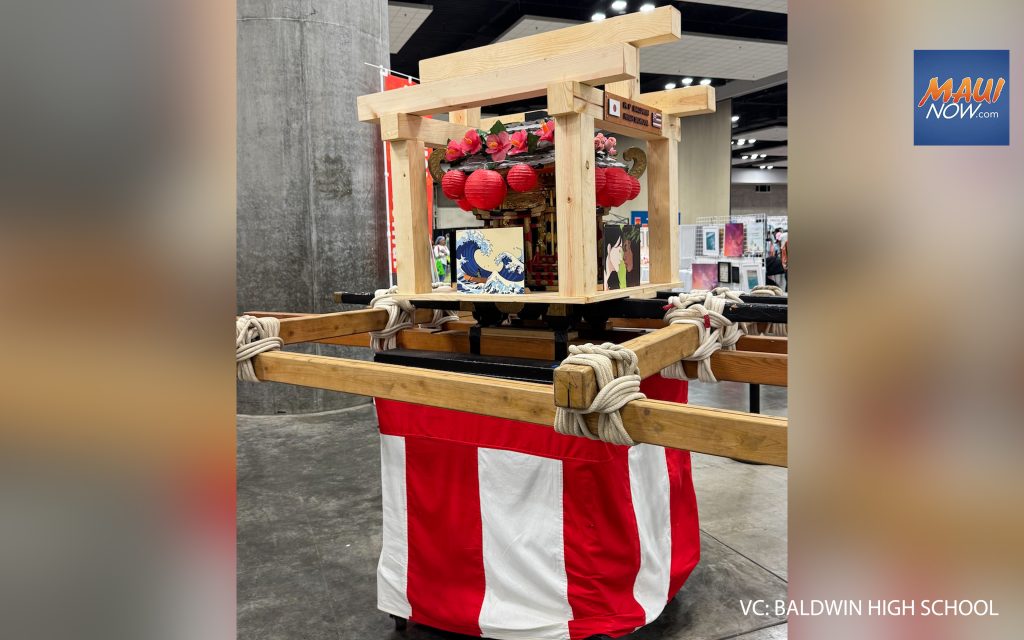
The Honolulu Festival Foundation announced Baldwin High School as the winner of the Maui Mikoshi design contest at the 30th Annual Honolulu Festival. The winning mikoshi design was unveiled on Saturday, March 14, at the Hawai‘i Convention Center.
A mikoshi is an elaborate portable shrine traditionally paraded through the streets of Japan as a part of Japanese festivals. Mikoshi typically resemble a mini building and are carried on the shoulders of individuals in a procession using two to four poles.
Every year since the contest began in 2003, Maui schools are invited to submit unique designs inspired by the festival’s overarching theme.
To depict this year’s theme, “Aloha and Mahalo – 30 Years of Cultural Celebration,” the Baldwin High School team, comprised of Leah Nguyen, Kailee Miyake, Nikki Toyama, Jermalyn Tamag, and Isaiah Coppa, incorporated images expressing the cross-cultural goals of the Honolulu Festival while giving a nod to the joyful atmosphere of a festival.
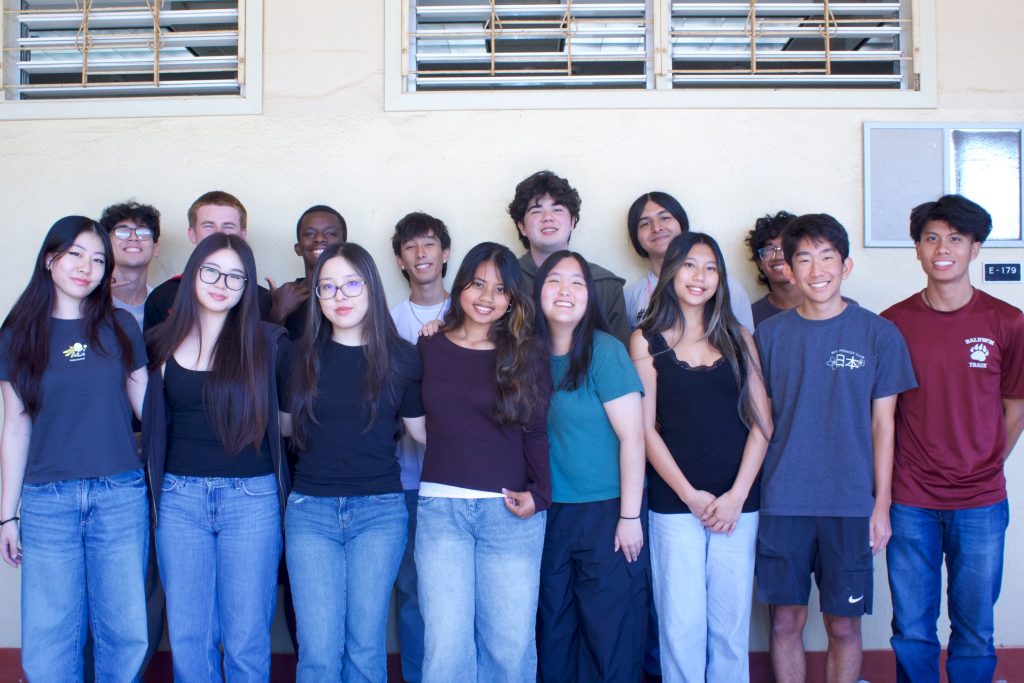
“Our students always embrace the challenge of the Maui Mikoshi design contest, and it is a privilege to watch their collective creativity take shape,” said Rory Sato, Baldwin High School teacher and Maui Mikoshi team advisor. “This year, particularly with the festival’s theme of Aloha and Mahalo – 30 Years of Cultural Celebration, the students wanted to illustrate the importance of bringing together cultures and showcasing the strong relationship between Hawai‘i and Japan. We are honored to participate in this milestone event and so proud to see our students’ vision come to life in Honolulu.”
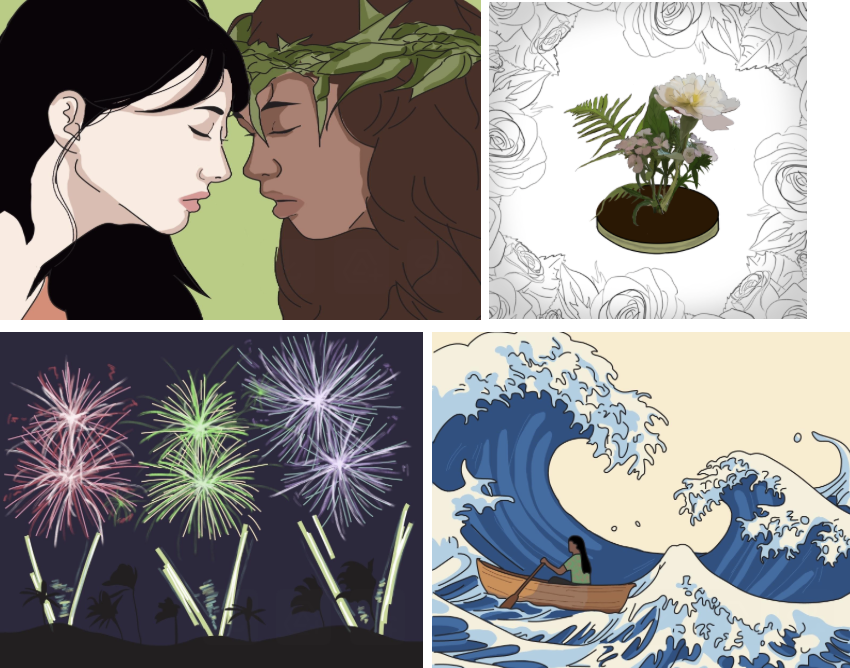
Baldwin High School Mikoshi Design Elements:
- Ha (Breath of Life): A side panel depicts “Ha” to show the connectedness across the Pacific Ocean that the festival has nurtured. By featuring two different ethnicities, the students illustrated the idea of cross-cultural interaction. Additionally, “Ha” is part of the word “Aloha,” further tying the imagery to the 30th-anniversary theme.
- Hanabi (Fireworks): Another panel references the Nagaoka Fireworks that has traditionally concluded the weekend of events for the Honolulu Festival, capturing the aims of celebration. Because these fireworks were not always part of the annual cultural celebration, the design also represents the evolution of the festival over its 30-year history.
- The Great Wave: Inspired by the iconic woodblock print, this panel features a slight twist by substituting boats with a canoe. The students explained this symbolizes that while bringing two cultures together can initially feel overwhelming, the effort is worthwhile because it leads to a better understanding of similarities and differences, allowing people to say “mahalo” and celebrate each other.
- Ikebana: The inclusion of ikebana embodies harmony, beauty, and peace. It nods to the hope for peace through cultural exchange and acknowledges that it takes someone to arrange all the elements to achieve the desired outcome.
- Roof Panels: The roof features a lei wrapping around all four sections, showcasing a different flower to represent Japan (sakura and camellia), the State of Hawaii (hibiscus), the island of Oahu (ilima), and Maui (lokelani). Intertwined with the flowers is a ti leaf lei, representing good luck, strength, and protection, symbolizing the hope that the strong ties between Japan and Hawaii will continue.
As a celebration of their victory, the Baldwin High School student group traveled to O‘ahu to showcase their winning mikoshi design at the Honolulu Festival, in the Hawaiʻi Convention Center Kamehameha Exhibit Hall throughout the weekend of March 14-15.
Sponsored Content


_(1)_1787857947612.webp)