UH Hilo astronomer studies galaxy collision, explains what it means for our own Milky Way
Astronomers studying a slow-motion collision between two galaxies have uncovered a massive burst of new star formation. The new study co-authored by Dr. R. Pierre Martin, an astronomer at UH Hilo, takes a look at the interaction between two spiral galaxies, NGC2207 and IC 2163.
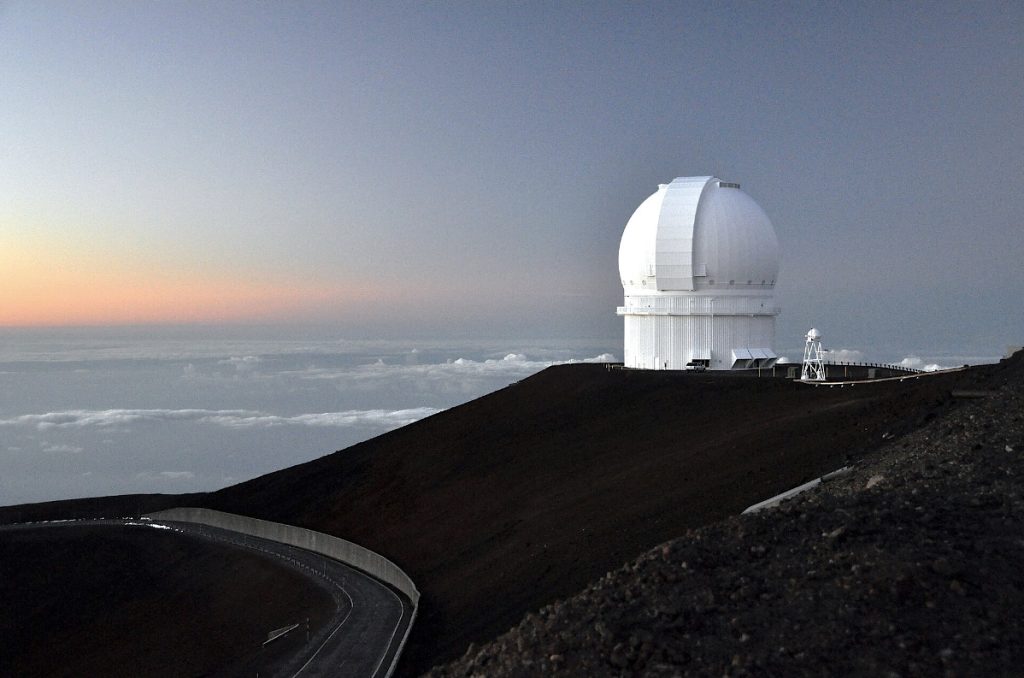
Using the integral field spectrograph SITELLE at the Canada-France-Hawaiʻi Telescope (CFHT) atop Maunakea, the team analyzed more than 1,000 regions where new stars are forming — a group roughly 20 times larger than any previous study.
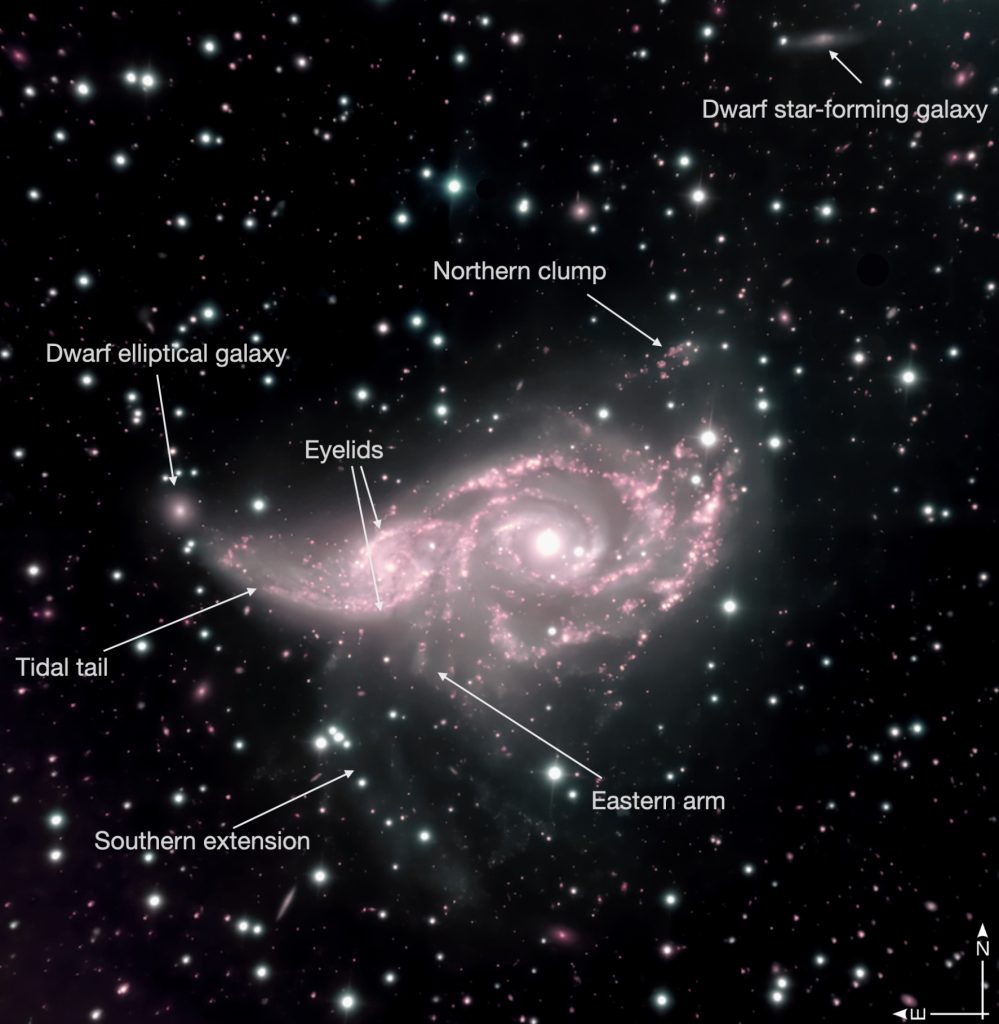
The research reveals that the collision, which began 440 million years ago, has ignited star formation up to 10 times the normal rate while dramatically scrambling the chemical composition across both galaxies, according to researchers. After circling one another for another 200 million years, the galaxies are expected to merge into a single galaxy.
Maui Now discussed the implications of the study with Dr. Martin and explored what it means for our own Milky Way galaxy.
Maui Now: Is the Milky Way at risk of a galaxy collision in the future? If so, what will happen to our home galaxy, and when will it happen?
Dr. Martin: The Milky Way is located among a group of galaxies called the Local Group, and the largest galaxy in that group is the Andromeda galaxy, located at about 2.5 million light-years from us. The Milky Way and Andromeda, both spiral galaxies, are currently moving toward each other at about 300 km/s. Therefore, in theory, both galaxies should collide in the future. One scenario suggests that in about 4 to 5 billion years, both galaxies will collide face-to-face. In that event, both galaxies as we know them today will be profoundly changed. In fact, they might merge to form a single object, likely a giant elliptical galaxy that is very different from the present-day Milky Way and Andromeda.
Maui Now: Is the future collision scenario widely accepted, or are there other theories?
Dr. Martin: Until very recently, a full face-to-face collision scenario was widely accepted. Last year, however, new data from the Hubble Space Telescope and the Gaia space observatory showed that other galaxies in the Local Group also play a role, as they may exert gravitational “push and pull” effects on the Milky Way and Andromeda, slightly altering their trajectories. In this scenario, the collision might not be completely head-on. The chances of a full collision are now considered to be about 50/50.
The system we explored in our paper, which also involves the collision of a pair of spiral galaxies similar to the Milky Way and Andromeda, shows what happens over a span of about 500 to 600 million years, from the moment the galaxies begin interacting to their complete merger. Even if the collision does not result in a full merger, both galaxies are still significantly changed. Therefore, even if the interaction between the Milky Way and Andromeda does not lead to a single merged object, both galaxies will certainly look very different in about 4 to 5 billion years.
Maui Now: Has the Milky Way experienced galaxy collisions in the past? Please explain?
Dr. Martin: Yes, many. New data from Gaia indicate that about 10 billion years ago, when the Milky Way was much younger, it collided with a dwarf galaxy known as Enceladus. The collision was head-on and reshaped many components of the Milky Way. Then, about 3 billion years ago, another smaller but still significant collision occurred. Many other interactions and collisions with much smaller galaxies have taken place since, with some being completely absorbed by the Milky Way, a process often referred to as “galactic cannibalism.”
Even today, the galaxy is strongly interacting with an object called the Sagittarius dwarf galaxy. By examining the imprints these collisions have left on Milky Way stars and their motions, astronomers estimate that such events have occurred at least 60 times since the galaxy formed. However, none of these interactions were as significant as a full head-on collision with the Andromeda Galaxy would be, because Andromeda is a much more massive and larger object.
Maui Now: Any interesting facts about the Milky Way galaxy and its collision course history?
Dr. Martin: Every time a collision occurs, something changes in the Milky Way. New stars can form, and the orbits of existing stars may be altered. In some cases, new stars and gas clouds from the colliding galaxy are added to the Milky Way. Galaxies are dynamic systems that evolve, even over very long-time scales. There are now clear indications that our own Sun, which formed about 5 billion years ago, may have been one of the stars created when the interaction with the Sagittarius dwarf galaxy began. Although it is difficult to comprehend the vast scales and time frames involved in these collisions, studying them is essential for understanding our own star and its system of planets.
Sponsored Content