 Hawai'i Journalism Initiative
Neighboring islands show aloha as donations pour in to Moloka‘i to aid storm cleanup of homes, fishponds
While a Kona low storm was dropping nearly 10 inches of rain on parts of Molokaʻi, Sumu Asano was awakened at 1:30 a.m. Sunday by a neighbor calling to ask if his family’s house in the Kapa‘akea homestead was flooding.
Asano, who was on O‘ahu at the time, called his mom and brother, who said the floodwaters hadn’t reached their yard yet. But by around 5 a.m., runoff was flowing over the road and gushing underneath the house. By daylight they could see the muddy waters had seeped into the yards of all but a handful of the roughly 50 houses in the neighborhood.
“The whole island, our town, everyone along the south shores … was impacted,” Asano said.
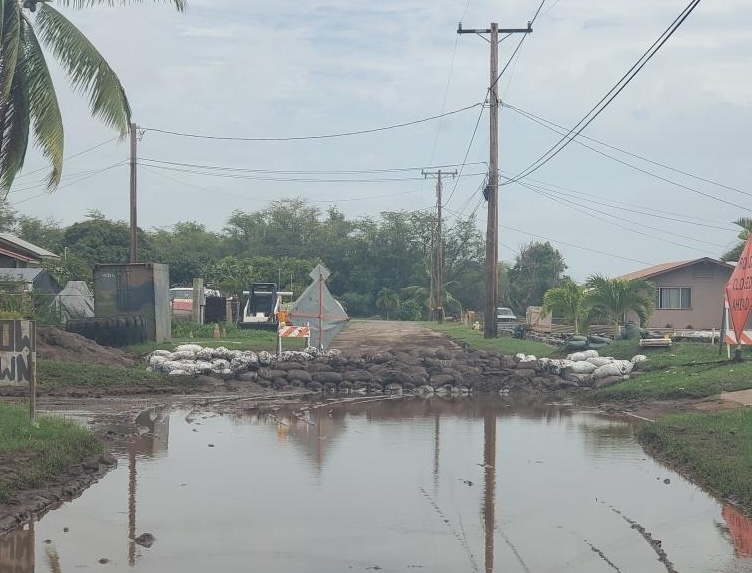
Moloka‘i residents say they likely have weeks of cleanup ahead as they work to clear the mud and debris from their homes and fishponds along the low-lying south shore after the second Kona low storm in two weeks.
In just a few days, donations have flowed into the island, with many items coming from just across the channel in Lahaina, where residents remember when the Moloka‘i community was among the earliest to arrive on boats with emergency supplies after the 2023 wildfire.
“It’s really cool how Lahaina didn’t forget,” Asano said. “We accept all the blessings. They wanted to give back and help the way we helped them during the fire.”
On Moloka‘i, the first Kona low that arrived the weekend of March 14 “was really big,” with strong winds and water flowing through ditches and crossing the street, Asano said. But the second storm had an even bigger impact because the ground was already saturated, and the water “had no place to go.”
At Kapa‘akea, a river that normally goes under the road overflowed. It caused a “big, huge wave over the street” that went straight to people’s homes, Asano said. Shingles fell off roofs, water leaked into kitchens and bedrooms, and plants were destroyed. Two homes on the opposite corners of the neighborhood had flooding in their ground-floor rooms.
Many people secured large vehicles and appliances, putting lawnmowers on higher ground and washing machines on skids or in their trucks. Still, the floodwaters — which rose as high as 2 to 3 feet, Asano was told — picked up coolers, beach chairs, trash bins, dog kennels and took them into other neighbors’ yards.
“We don’t know who’s one it is, so we’re trying to return it to the owners,” Asano said.
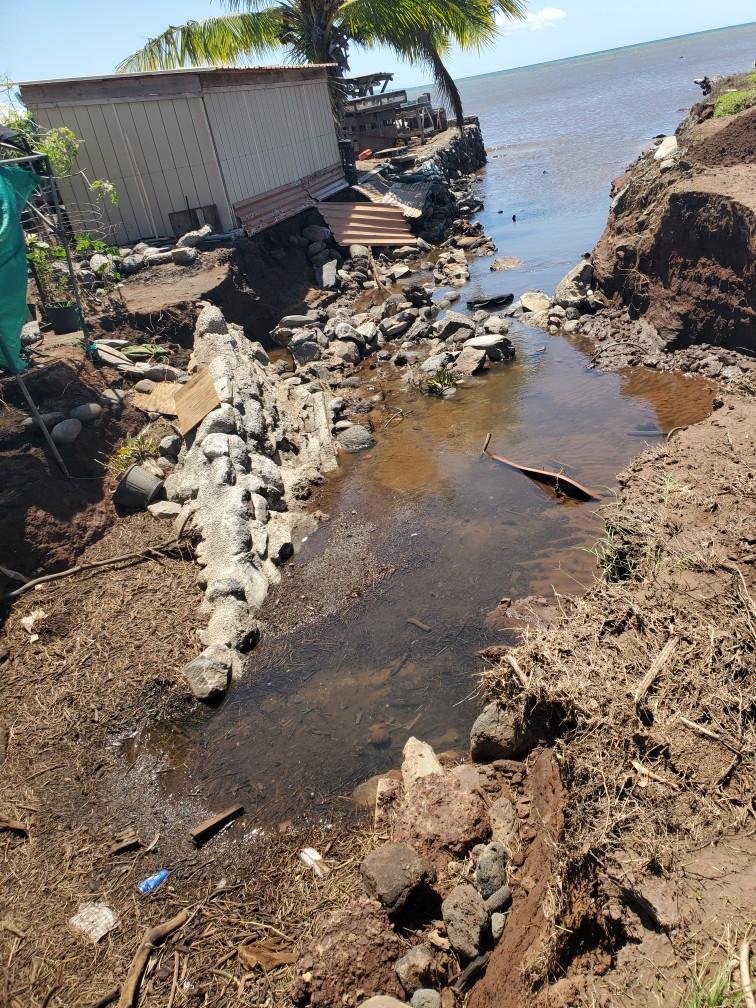
Asano’s grandfather built the family’s home on a slightly raised driveway, which helped them avoid flooding in their home. But the floodwaters still rushed under the home, across the backyard and broke down their front wall that protects their property from waves and high tide.
With some people unable to leave their homes or start their cars due to flooding, the community has been organizing donation drives this week, handing out essentials like water and toilet paper and providing hot meals to kūpuna, Asano said.
Residents and volunteers from off island have also come by to help people remove debris, take out damaged carpet and tiles, and bring in fans and vacuums to help dry out the flooded interiors. Once the mud removal and debris is taken care of, then they’ll move on to the structural work like fixing the bathrooms or roofs damaged by the storm, Asano said.
“It’s a small island, so everybody knows everybody,” Asano said. “So when you help one, you end up eventually helping everybody else.”
During a bad storm a few years ago, the full cleanup of Kapa‘akea took months “because we were doing it on our own.” But this time, Asano hopes they can clean up the neighborhood in two to four weeks “with all the help that we have so far.”
On Monday, the organization Moloka‘i Cares put out a call for coolers, vacuums, propane tanks, generators, gas cards, first aid kits and other emergency supplies. Kui Adolpho said within days they were swamped with donations, to the point where she is having to figure out how to use it all. On Wednesday, a Coast Guard boat dropped off 50 shovels from Maui.
“We also don’t want to waste knowing that there’s other places that need across the state,” Adolpho said.
Some of the biggest needs were for cleaning supplies because of the “huge mold situation” from water sitting around after the storm. Adolpho said some families returned from spring break to find their homes damaged by the rain.
On Maui, organizations like Kāko‘o Haleakalā, Lahaina Strong, Hawaiian Council and the Hawai‘i Longshore Division held a donation drive in Kahului on Wednesday. Lahaina Strong said on its Facebook page that it was “especially humbled to be able to give back to Moloka‘i, a community that showed up for us with so much love and support in the aftermath of the fires.”
On O‘ahu, which also experienced devastating flooding, the Lāhui Foundation collected and sent over donations.
On Hawai‘i island, residents organized a donation drive on Wednesday and Thursday with plans to ship over a container of supplies on Friday.
For Adolpho, the outpouring of support in just a few days was a reminder of “how much people love Moloka‘i.” It was especially fitting coming from Lahaina, given that Moloka‘i Cares was created specifically to help in response to the 2023 fires.
“They’re like, ‘we’re coming,’ because we were the ones that responded first to them, right?” Adolpho said. “They were just like, ‘whatever you guys need, we’re on our way,’ so that was awesome.”
Adolpho agreed that while the first storm was worse in intensity, the second one was more damaging because it came barely a week later and “we didn’t quite have the time to shore up things.”
“Everything was overly saturated, rivers were running,” she said.
The double whammy impacted an active fishpond on the east end that had avoided major damage during the first storm thanks to a series of seven swales, shallow channels dug into the nearby hillside to capture runoff.
Walter Ritte, founder of the organization ‘Āina Momona that is based at the Keawanui Fishpond and Cultural Learning Center, said they’d been discussing solutions to protect the fishpond from big storms and came up with the idea for the swales last year.
“I think it’s a really good idea. Places like Kīhei, they have the exact same problems that we have,” Ritte said.
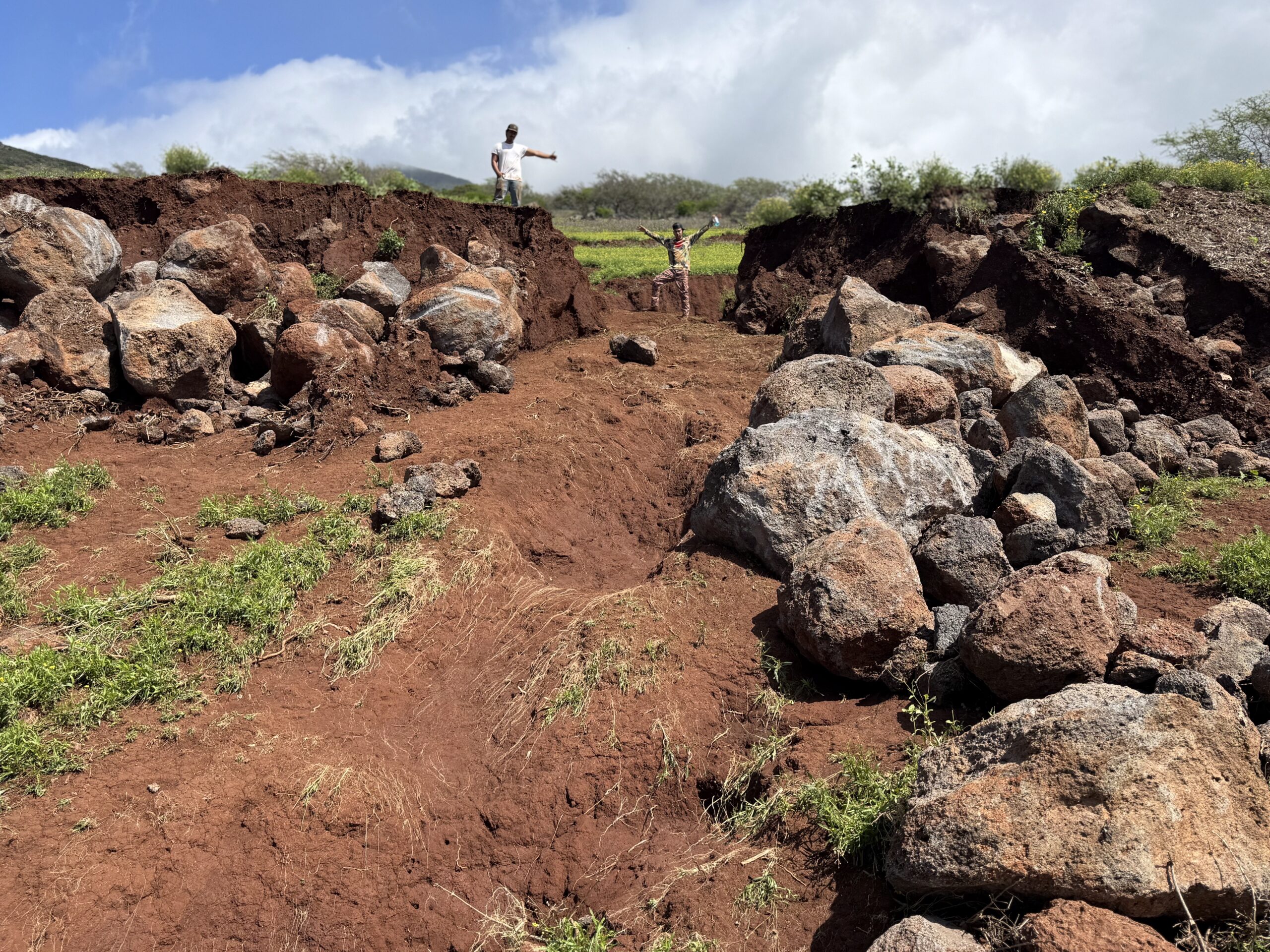
The swales play an important role in not just holding back stormflow but also allowing the water to soak into the ground and create the fresh springs that are vital to nurturing the fishpond, Ritte explained. After the first storm, they proved a success story, holding back the mud and runoff from reaching the fishpond.
But when the second storm hit, the walls of three or four of the already impacted swales broke with the force of the runoff, which traveled downhill and muddied the waters of the 55-acre fishpond.
“The second storm was just so bad,” Ritte said. “Moloka‘i was right in the crosshairs on that one.”
The organization, which manages the 55-acre fishpond and 8 acres of agricultural land in partnership with Kamehameha Schools, couldn’t even access the full property after the storm, with trees down and mud caked across the landscape.
However, it could’ve been much worse. Ritte estimated that the swales stopped about 60 to 70 percent of the mud, and while the fishpond’s waters are murky, he’s just glad it’s not filled with mud. Now, the challenge will be digging out the swales again. The topsoil, which is perfect for growing plants, will be put to good use.
Ritte said the storm provided important lessons, including how to build their swales to handle the next major storm. He thinks the big landowners of Moloka‘i, including Kamehameha Schools and state agencies, should come together and come up with a plan to help keep runoff from flowing downhill to homes and fishponds in the future.
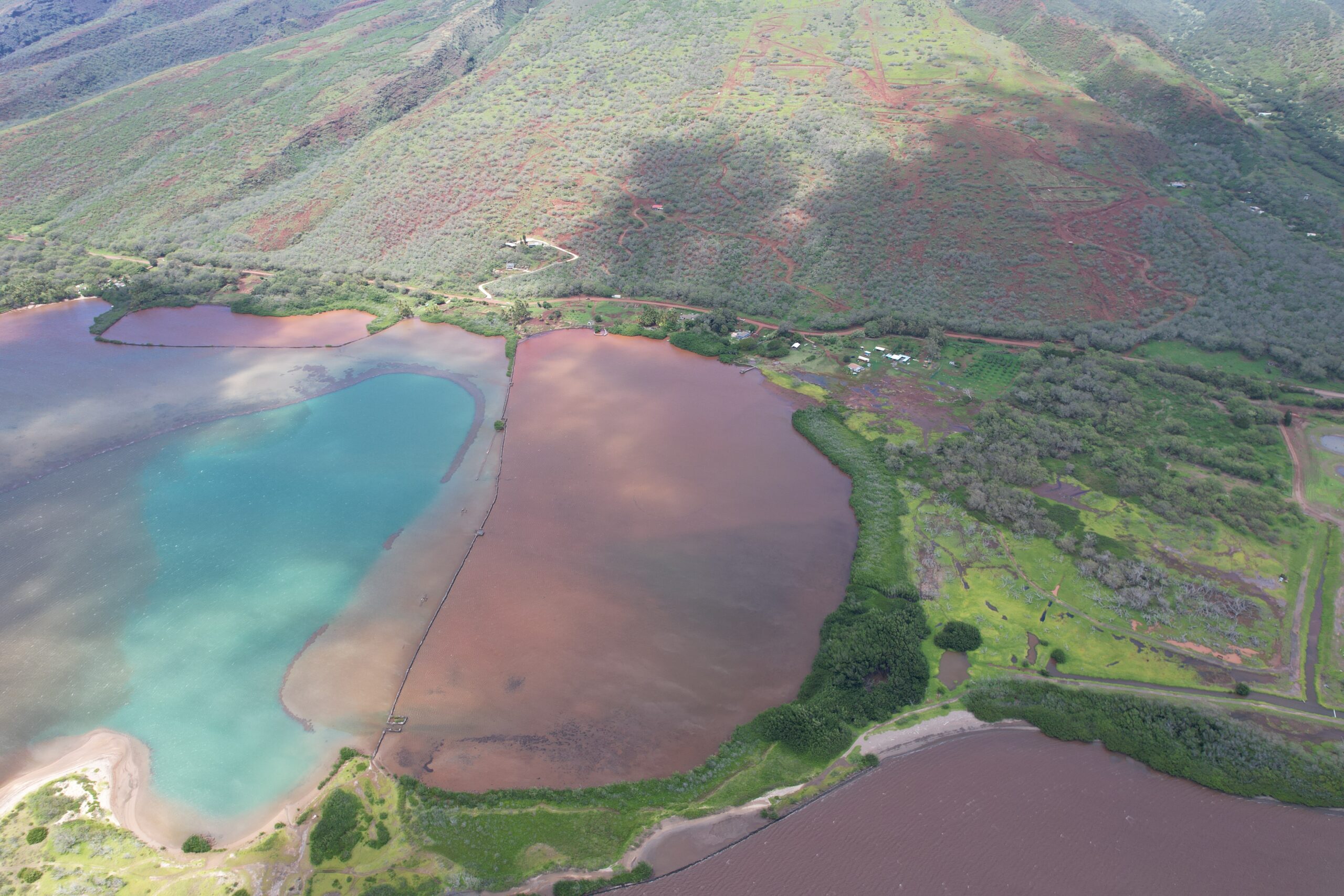
Tiani Cook, executive director of Ka Honua Momona, a nonprofit that takes care of the Ali‘i and Kaloko‘eli fishponds just a few miles east of Kaunakakai town, said the area was also impacted by heavy mud flow coming down the mountain, dealing her team “another setback in returning to our work area.”
“The conditions have made it difficult for us to access parts of the site while we focus on cleaning up and restoring the ‘āina,” Cook said via email. “On a positive note, our dam held strong and helped protect the area from a much larger impact, which we are very grateful for.”