 Hawai'i Journalism Initiative
Lahaina fire survivors urged to apply for housing rebuild programs as August deadline approaches
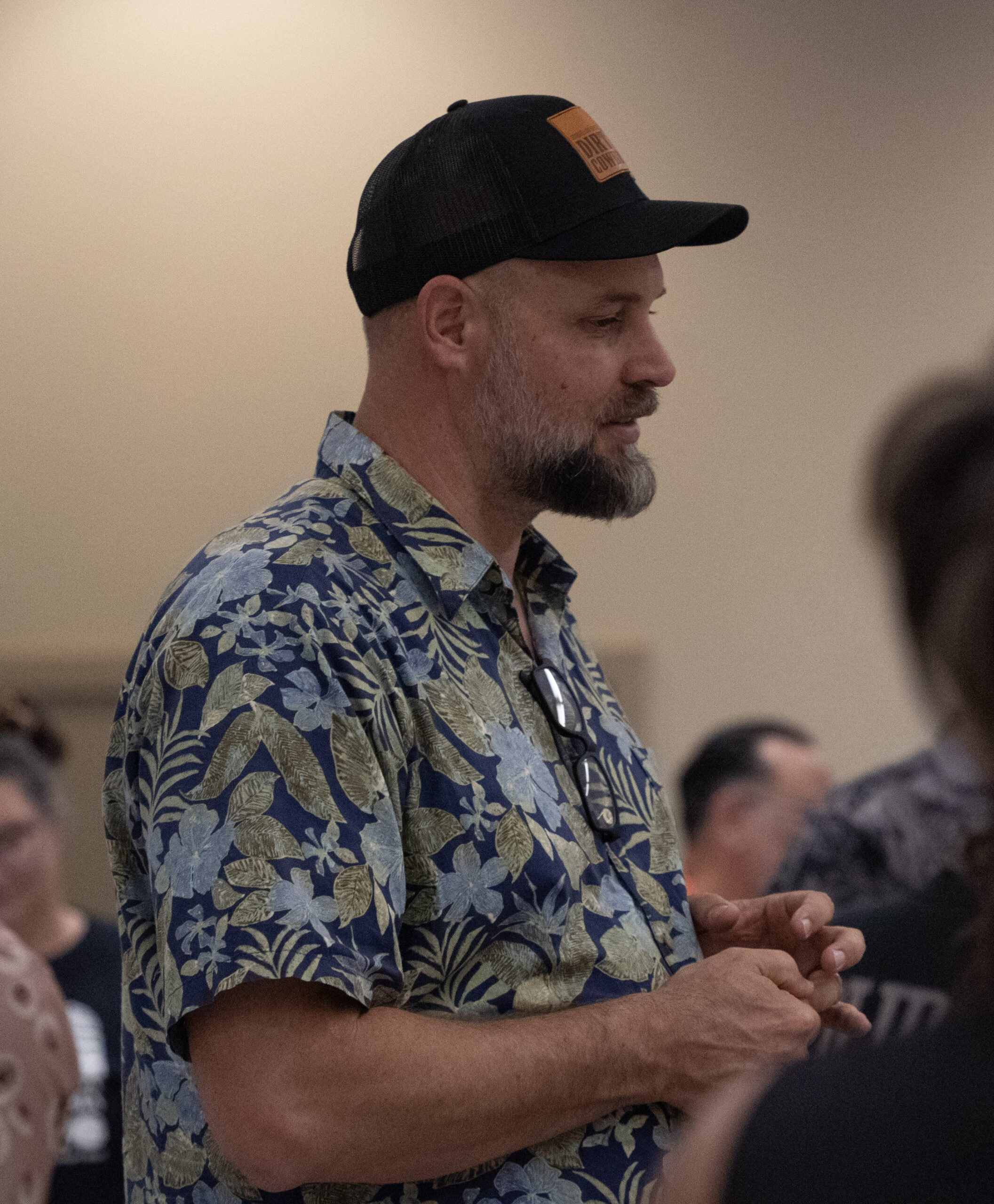
LAHAINA — Kekoa Mowat didn’t think he would qualify for a federally funded program to help rebuild the 3-bedroom home his family lost in the August 2023 Lahaina wildfire. But in March, he gave it a chance and applied.
Now, he’s picking out a floor plan and getting ready to finally rebuild nearly three years after the fire destroyed his home and displaced over 50 members of his family.
“Get to the program and try to get in,” Mowat urged Lahaina residents at Maui County’s monthly disaster recovery meeting last week. “If you cannot afford your house, don’t think that someone else is coming. Don’t think that the lawsuit is going to make everything great, because it’s not. Take the money, choose the house.”
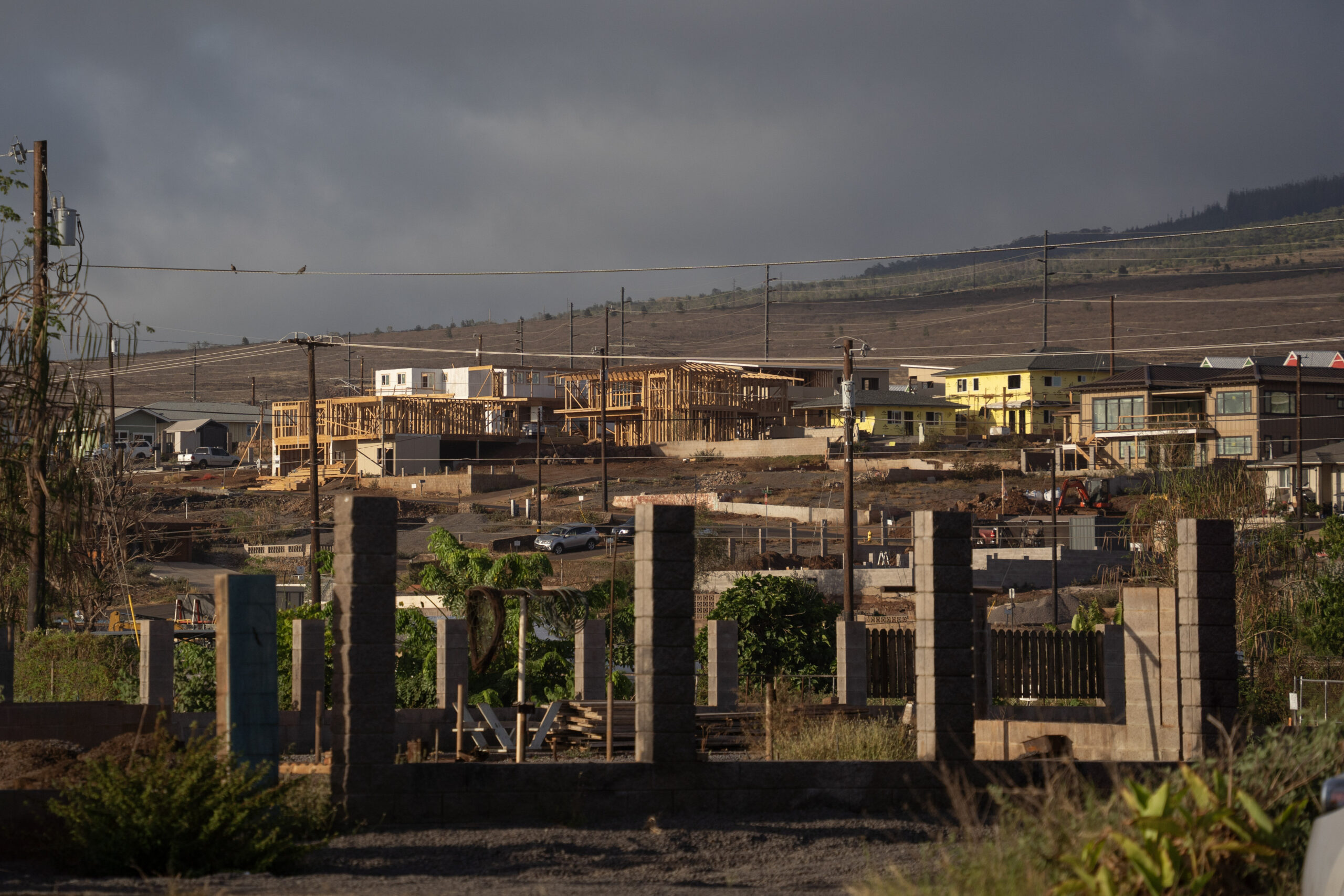
Mowat is among the many Lahaina fire survivors who have applied for one of three housing aid initiatives launched by Maui County last summer that included a first-time homebuyers program, a single-family reconstruction program and a reimbursement program for people who have already rebuilt their homes.
Office of Recovery Administrator John Smith said at last week’s meeting that the first-time homebuyers’ program is “pau” already, with 3,215 applications received.
But as the Aug. 31 deadline for the reconstruction and reimbursement program approaches, there is still more available funding available for applicants.
Smith said that if people’s homes aren’t fully completed with a final building inspection by the deadline, they can’t apply for the reimbursement program. The county hopes to push the deadline to December, which is the absolute limit for reimbursements due to congressional restrictions on the funds, Smith explained.
“We are going to harp on that message like you wouldn’t believe because we don’t have flexibility on that,” he said.
As of Tuesday, 195 homes had been rebuilt, including 191 in Lahaina and four in Kula, according to the Maui County recovery dashboard.
The housing aid initiatives are part of the Ho‘okumu Hou program created to use the $1.6 billion federal disaster relief grant that Maui County received last year. The county’s action plan for the funding set aside $298.6 million for the single-family homeowner reconstruction program, with the option to reimburse people who’d already rebuilt, and $92.5 million for the first-time homebuyers program.
The first-time homebuyers program has been the most popular by far with the 3,215 applications. So far, 61 applications have been approved, with 13 having closed on their new homes, the county said Friday. A total of $39 million in funds have been obligated, which is an estimate based on the maximum award amount per approved applicant.
So far, 188 have applied for the single-family homeowner reconstruction program and 155 have applied for the single-family homeowner reimbursement program.
Maui County said that now that it has a construction contractor, the Ho‘okumu Hou team is working through the homeowner reconstruction and reimbursement applications and working with applicants on other required steps of site inspections, including environmental assessments.
The team is finalizing the first approved applicants for the reconstruction program “with more approved applicants expected soon” for both programs.
While the homebuyers’ program is full, Smith said the other two county programs are open for applications. The county Communications Office did not respond to questions about how many more applications the programs could take and how much funding has been obligated for each.
Any funds not used by the deadline — whether it remains Aug. 31 or is pushed to December — will go back into the full pot to be put toward another program that’s already rolling or “a new need that surfaces in the recovery that we didn’t think about,” Smith told the Hawai‘i Journalism Initiative. The county has until May 2031 to use all of the funding, most of which has already “been spoken for,” he added.
In addition to the three housing aid programs, Ho‘okumu Hou announced in March that conditional funding totaling about $529 million had been awarded to 22 infrastructure and mitigation projects, including the extension of the Lahaina Bypass and the construction of the West Maui Senior Center. Seven multifamily rental housing reconstruction projects with 519 total affordable rental units also received a total of about $195 million, according to the updated action plan.
Efforts to allocate the funds have ramped up in recent months. According to the county’s latest quarterly report on the grant spending released last week, about $1.56 billion has been obligated to date, including $1.17 billion in just the first three months of this year. A total of $20.1 million funds have been expended, including $18.1 million in the first quarter of this year.
Smith said he thinks some people were waiting to see what the home renderings would look like before they applied for the reconstruction program. Floor plans and renderings were released in late January, and Smith said he expects applications to “pick up.”
There are 12 design options, ranging in size from a 2-bedroom, 2-bathroom home of 1,000 to 1,200 square feet at the smaller end to a 4-bedroom, 2-bathroom home of 1,700 to 2,000 square feet at the larger end.

Residents must rebuild what they had before, but the program does allow some flexibility to upsize, as some pointed out that many pre-fire homes weren’t big enough for the growing, intergenerational families who lived together on one property.
But the maximum size available is a 4-bedroom, 2-bathroom home, “so we can’t go much bigger than that,” said Jeannie Sutton of Horne, the company contracted by Maui County to help carry out the Ho‘okumu Hou programs.
Mikey Burke, the board president of the Lahaina Community Land Trust who also lost her home in the fire, urged people to ask for help while funding is still available.
“You don’t want to make that decision too late,” she told Lahaina residents at the meeting. “Every single one of you is important to this community, to the fabric of this community, to the village that we are trying to protect, to raise our children and our grandchildren. Take the help. Do not be shame. Pretty soon, the help is going to leave. And then what?”
Mowat told the Hawai‘i Journalism Initiative that he was critical of Ho‘okumu Hou at first. He’d never qualified for federal aid programs like food stamps, and he thought many working-class families like his wouldn’t meet the income thresholds. However, when he was told that income levels were just one of the factors, he decided to apply in March and was accepted.
He said he “wasted money” waiting and not applying for aid, “but in the end, I’m going to have a house and we’re going to be in Lahaina.”
Mowat’s nearly one-acre property has been in the family since 1987, and he and his wife bought it in 2000. They lived in the main home with their son, his wife and their three kids, and added two ‘ohana units that he admits were built without permits “because we needed to house the people, so we didn’t have time.” His wife’s parents lived in one unit, and his sister-in-law, her husband, their daughter, her husband and three kids lived in the other.
The ‘ohana units were uninsured but were built back with the help of organizations like Samaritan’s Purse. Mowat said the family received $600,000 from their insurance company to rebuild the main home, and while he doesn’t have a cost estimate yet for the full rebuild, he thinks it could be over $1 million. The reconstruction program will help cover the difference.
Mowat hopes other people will seek help to rebuild and return to Lahaina, which has been his home for 40 of his 55 years. He grew up on Moloka‘i but came to Lahainaluna High School as a boarder, where he started dating his now-wife at age 15 and became a part of their deeply rooted Lahaina family.

Before the fire, nearly 90 members of his wife’s family lived in West Maui. The disaster displaced more than 50 of them. They are now spread out around the island, with a few living on the mainland. Mowat’s niece recently got help from the homebuyers’ program to purchase a place in Pā‘ia, and while he’s grateful she has a home, he’s sad that she had to leave Lahaina.
Mowat especially felt the absence of many relatives this week as the family gathered for his grandson’s fifth birthday party. Every party pre-fire used to be a huge affair, with food for 30 to 40 people and chairs crowded around tables.
“Since the fire, we hardly get that opportunity to sit with everybody and have our family stuff together,” he said.
He worries about losing the close-knit neighborhoods where people could walk to each other’s houses to borrow sugar, settle disputes or just let someone know “your mango tree dropping mangos in my yard, come pick ‘um up.”
“We’re just losing our Lahaina people,” he said. “And I don’t know if we’re going to have enough of us to teach everybody else in the community how to take care of each other and how to know everybody in your block. … So that’s the thing that we’re fighting for, to come back to Lahaina, because that’s how it was before the fire.”