


 Hawai'i Journalism Initiative
‘Historic opportunity’: County plans to acquire Maui Land & Pineapple’s water system in West Maui
Maui County has struck an agreement that would allow it to acquire a critical private water system that supplies thousands of customers and would put nearly all of West Maui’s drinking water under public control after more than a century of private ownership.
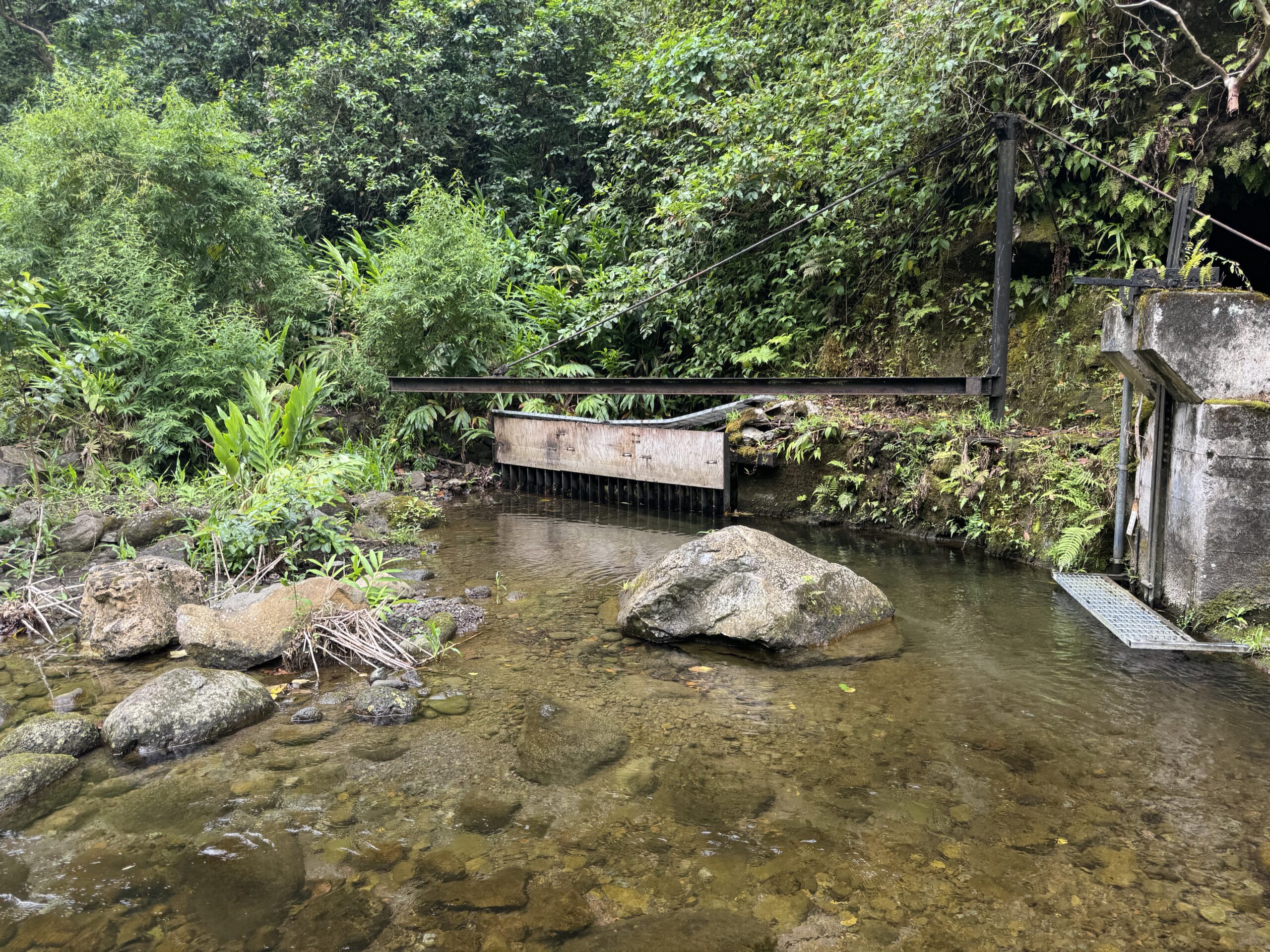
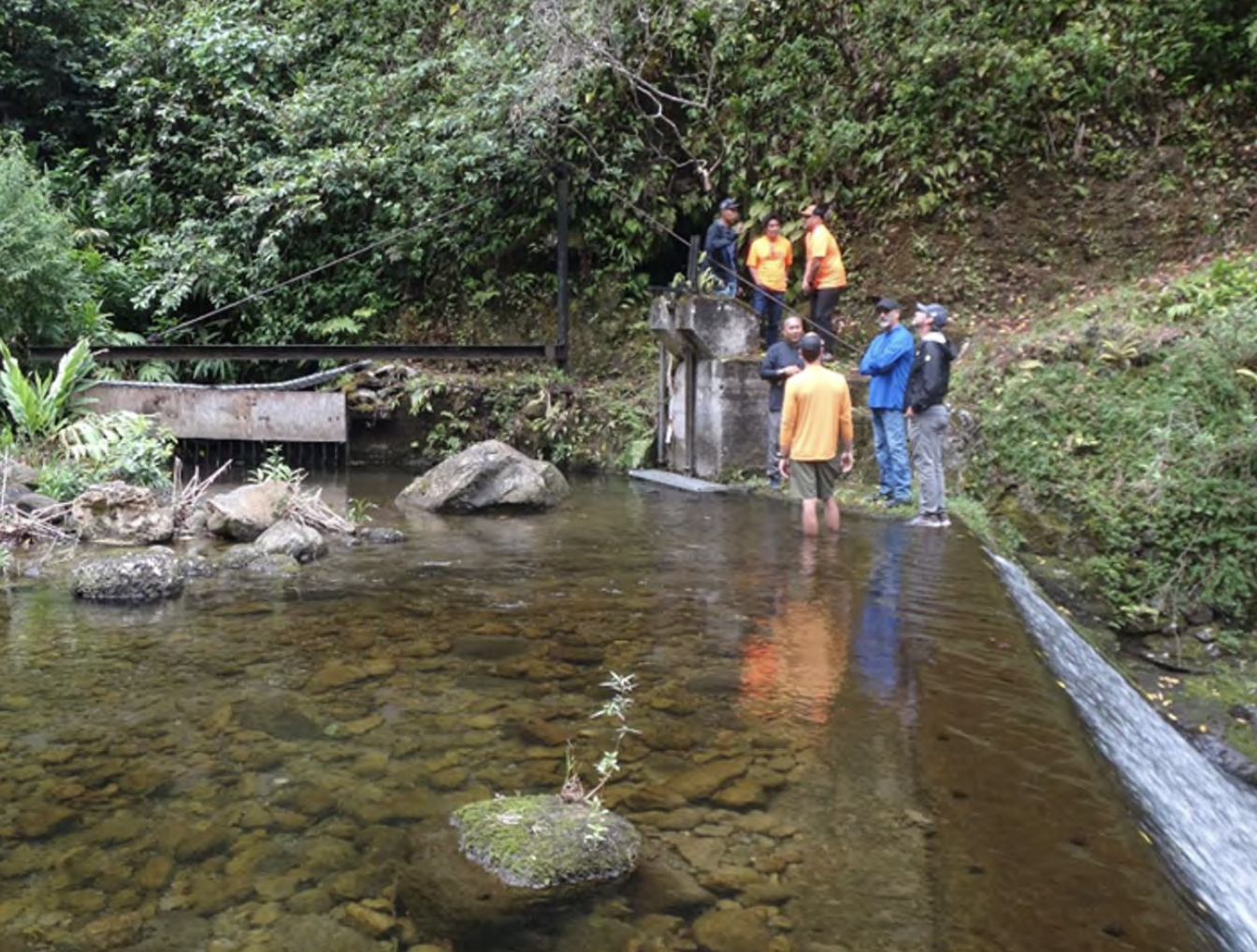
Mayor Richard Bissen announced Monday that the county has reached a memorandum of understanding with Maui Land & Pineapple Co. to acquire its ditch system in Honokōhau, the watershed encompassing a large portion of West Maui, multiple wells and land to develop more sources of water. The land also could be used for the sites of new police and fire facilities.
“Nothing else we do in the county moves without the water,” Bissen told the Hawai‘i Journalism Initiative on Monday morning. “It’s just a historic opportunity.”

The acquisition would increase public ownership of West Maui’s drinking water systems from 45% to 93% and is part of a broader effort to secure additional private water systems in Olowalu and Launiupoko, the county said in a news release Monday afternoon.
But the final price and other details still need to be negotiated, and the Maui County Council has to approve the purchase.
“This is not a done deal by any stretch of the imagination,” Council Chair Alice Lee said via phone on Monday afternoon.
Negotiations to purchase the system have been going on for a year, Bissen said. According to the news release, the memorandum is a “formal declaration of intent that establishes a framework” for the acquisition, which would include:
- Honokōhau Ditch System, including its ditch and associated tunnels, siphons, pipelines and key reservoirs.
- Pu‘u Kukui Watershed, a long-term ground lease for the 8,661-acre watershed preserve to maximize rainfall capture and retention for surface water and groundwater systems in West Maui.
- Four Honokōwai aquifer wells in the Kahana ahupua‘a.
- Three Honolua aquifer wells in the Honokahua ahupua‘a.
- Two proposed, new Honolua aquifer well sites in the Mailepai ahupua‘a.
- Proposed 50-acre, approximately 120-million-gallon reservoir site to support the county’s Mahinahina water treatment facility.
- Kahana Pump Station.
The acquisition also would cover an existing Upcountry well in Pi‘iholo, land for additional well sites and water storage, and non-water infrastructure assets that include a Moku‘ula land parcel, Kahana roadway and land in Hāli‘imaile for a police substation and a fire station.
Maui County is currently a customer of Maui Land & Pineapple. Kimo Landgraf, deputy director of the Maui County Department of Water Supply, said the county has about 3,900 service connections serving about 12,000 customers (an average of three people per connection). Some of the connections include hotels.
Hawai‘i Water Service also purchases water from Maui Land & Pineapple and delivers it to about 1,500 customers in Kapalua. Bissen said Hawai‘i Water Service’s contract would still be honored after the acquisition, but they would be purchasing water from the county instead of Maui Land & Pineapple.
“One of the reasons we are supportive of the county as the steward of these systems is because they have the largest team on the island to maintain and operate water systems,” company CEO Race Randle told the Hawai‘i Journalism Initiative in an interview with county officials. “They have experience all over West Maui, including all of the areas that these systems are located.”
Randle said the company is “confident” the county can integrate Maui Land & Pineapple’s infrastructure into its own system and use existing staff to make the operation more efficient.
If the sale goes through, Maui Land & Pineapple would also continue to contract the nonprofit Aloha Pu‘u Kukui, which maintains the watershed, for the next three years before oversight transitions to the county.
The cost of acquiring the water system and staffing estimates required to operate the system are not available yet, the county said. The purchase price and conditions are still being negotiated, and the County Council must approve the acquisition.
Landgraf said $30 million has been set aside in the fiscal 2027 budget for the acquisition, “but that doesn’t mean that’s the set price.” The $1.6 billion budget passed first reading on Friday and is awaiting a second and final reading.
The county also has created 10 unfunded positions, and once it acquires the water system, “we will figure out how many people we need, and then we will bring those people on board,” Landgraf said. He added that the department could pull from its current staff of about 240.
Lee said that the council put the funding in the budget as a preliminary measure to allow the price negotiations to move forward, but the council still wants to see a “bonafide appraisal” and the potential repairs needed to the system.
“If it’s in serious disrepair, I don’t know that it would be in the county’s best interest to buy it,” Lee said. “However, on the other side, if it just needs normal repairs from wear and tear, and there are no significant liabilities or … unforeseeable problems, then we need to seriously consider purchasing it.”
Lee said the council will “need to weigh everything, not only the potential liabilities and the condition of the system, but does it have additional water for future use?”
“The idea is not to just get control over a system that has no more water to give,” she said.
Last year TY Management, the owner of two Kapalua golf courses, sued Maui Land & Pineapple, claiming that the company had failed to maintain its system and deliver enough water for the courses, which dried out and forced the PGA Tour to cancel the annual Sentry golf tournament.
Maui Land & Pineapple has said that TY Management improperly used water meant for fire protection to irrigate its golf courses during water restrictions, and said that the problem isn’t its system but record-low streamflows in West Maui, which has limited the water available for new housing projects and left Honokōhau Valley kalo farmers with rotting crops.
TY Management had even floated the idea of acquiring the system and turning it over to the state.
Kenji Yui, general manager of TY Management, said in a statement on Monday that the memorandum “in concept, marks the beginning of an important transition: from private to public ownership of this century-old, plantation-era water infrastructure in West Maui.”
“We look forward to bringing to the table, and discussing options that could save the county millions of dollars in repair and infrastructure costs in the future as this potential sale proceeds,” Yui said.
When asked if the system needed repairs in order for the county to operate it, Randle said, “I think they’ll go through their own due diligence, but we dispute claims that repairs are required for the system. They do require ongoing operations and maintenance.”
Randle said the lawsuit was not a factor in the company’s decision to sell the system. He said even before the lawsuit, the company was in talks with the county and other potential buyers.
Bissen said the lawsuit would not affect the county’s prospective acquisition. But neither he nor Randle were sure how the acquisition would affect the lawsuit and whether the county would become the defendant.
Putting private water systems into public ownership has been a key tenet of Bissen’s administration, a priority he has emphasized this year at his State of the County speech, a post-disaster meeting in ‘Īao Valley and a campaign event in Pā‘ia as he seeks reelection. The mayor has said that public ownership would create more accountability for water resources.
He added in the news release on Monday that the county’s acquisition of Maui Land & Pineapple’s system would “improve water resiliency and support critical affordable housing projects, traditional and cultural practices, emergency response, agriculture needs and environmental protection.”
During the Lahaina fire in August 2023, “had we been connected all as one water system, the private and the public side, that would have obviously opened up more capacity or surge,” Bissen said.
Now, Landgraf said, if the county owns the system, “we’re going to be able to manage all the water in the whole area now, right? So we know where it is and what’s happening with it and where we need to deliver it to.”
The acquisition of land would also allow the county to develop more wells and create more storage that could set aside more resources for housing and other needs.
Jonathan Scheuer, co-author of the book “Water and Power in West Maui,” said putting nearly all of West Maui’s drinking water under public ownership would be “revolutionary in the good sense.” For decades, water in the area has been controlled by private companies, “and while the general public got some benefits, most of the benefits and all of the decision-making was held by an elite minority.”
“It makes a huge amount of difference as to who the operator is for a number of reasons,” Scheuer said. “This is not saying anything negative or positive about MLP as an operator, but … it’s not the same level of transparency that you get when a county department of water supply or a county agency is running the system.”
He said he hopes the sale goes through.
“There is no way to achieve all of the community’s goals in West Maui unless we have sufficient water available,” Scheuer said.