 Hawai'i Journalism Initiative
West Maui water quality testing finds few impacts after Lahaina wildfire
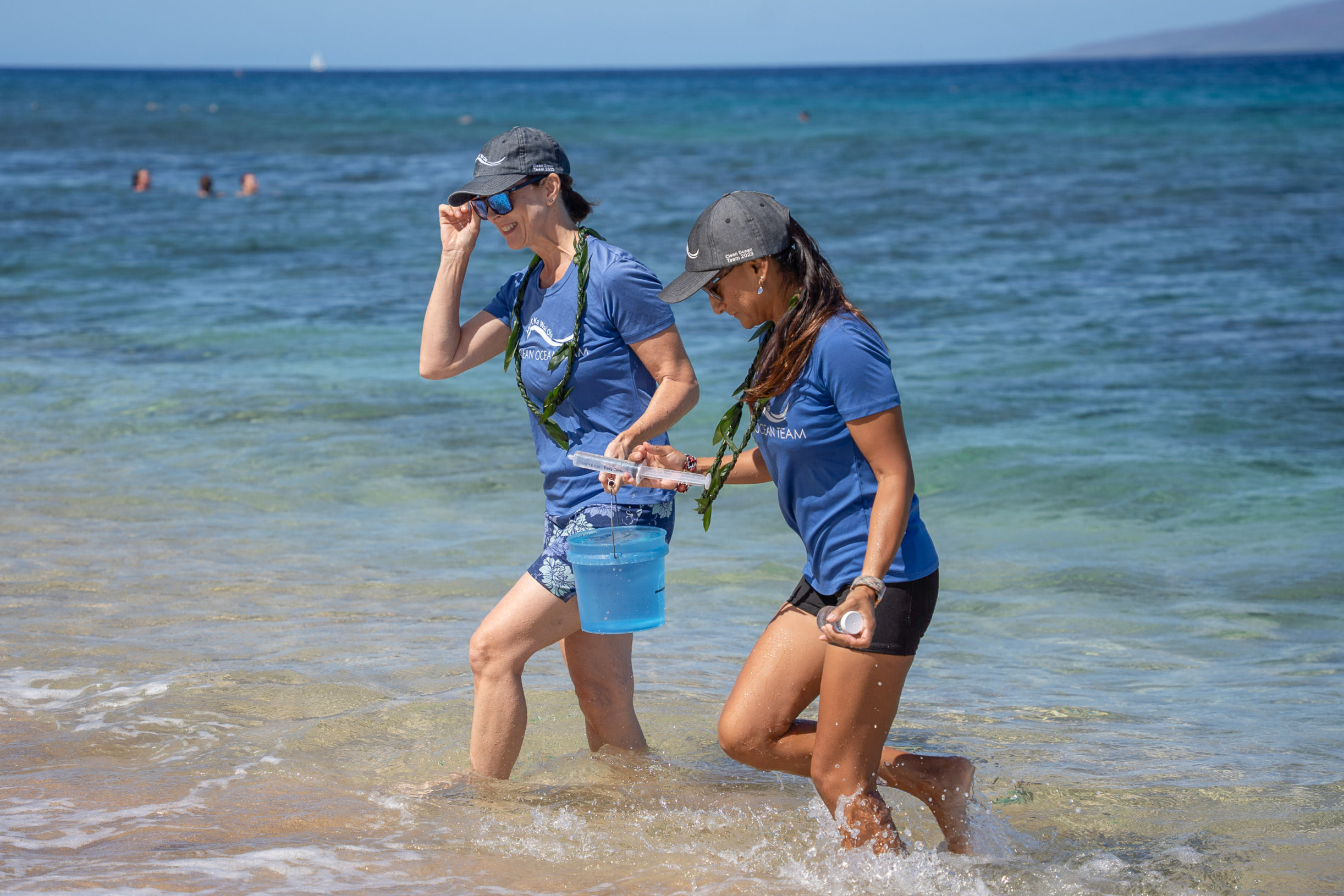
KĀ‘ANAPALI — When volunteers with Hui O Ka Wai Ola, a network of marine citizen scientists, scooped samples of ocean water from Lahaina’s coastline after the August 2023 wildfire, they weren’t sure what to expect.
Little research was available about what happens when urban wildfires strike so close to the ocean, program manager Liz Yannell said. So they were surprised to discover that Lahaina’s waters did not appear to be significantly impacted by the toxic charred remains of most of the seaside town.
“It’s a big relief,” Yannell said. “It could have been so much worse.”
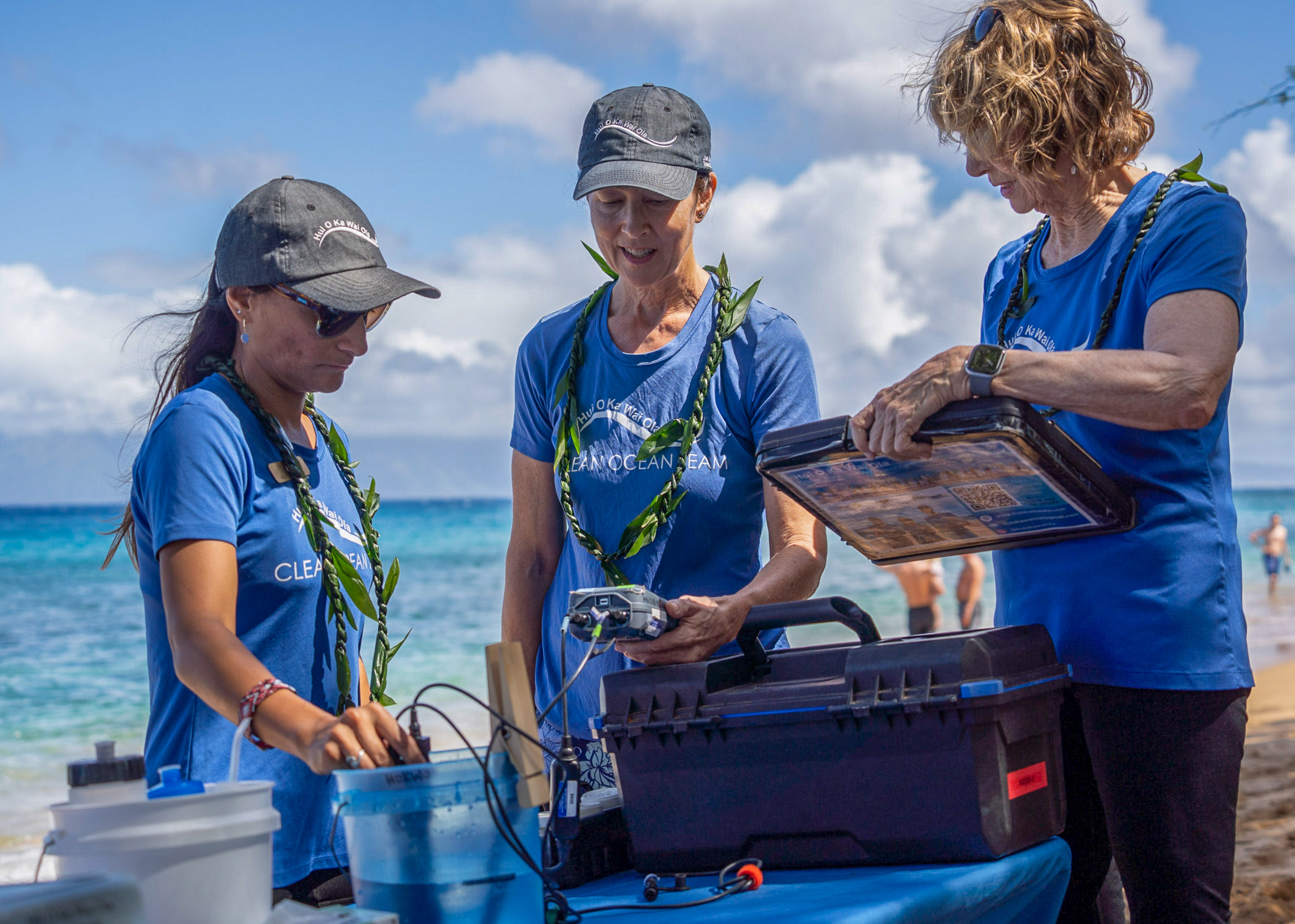
For 10 years, the hui has kept tabs on West Maui’s water quality, collecting more than 5,500 data points since 2016 and creating one of the most consistent and comprehensive records of coastal water quality on Maui. Now their data is proving even more important as the hui and other researchers work to understand the fire’s long-term effects on Lahaina.
“What they’ve been able to do is so important because they’ve been able to generate this record of data that includes what things were like prior to this disaster,” said Nicholas Hawco, an associate professor in the University of Hawai‘i at Mānoa Department of Oceanography.
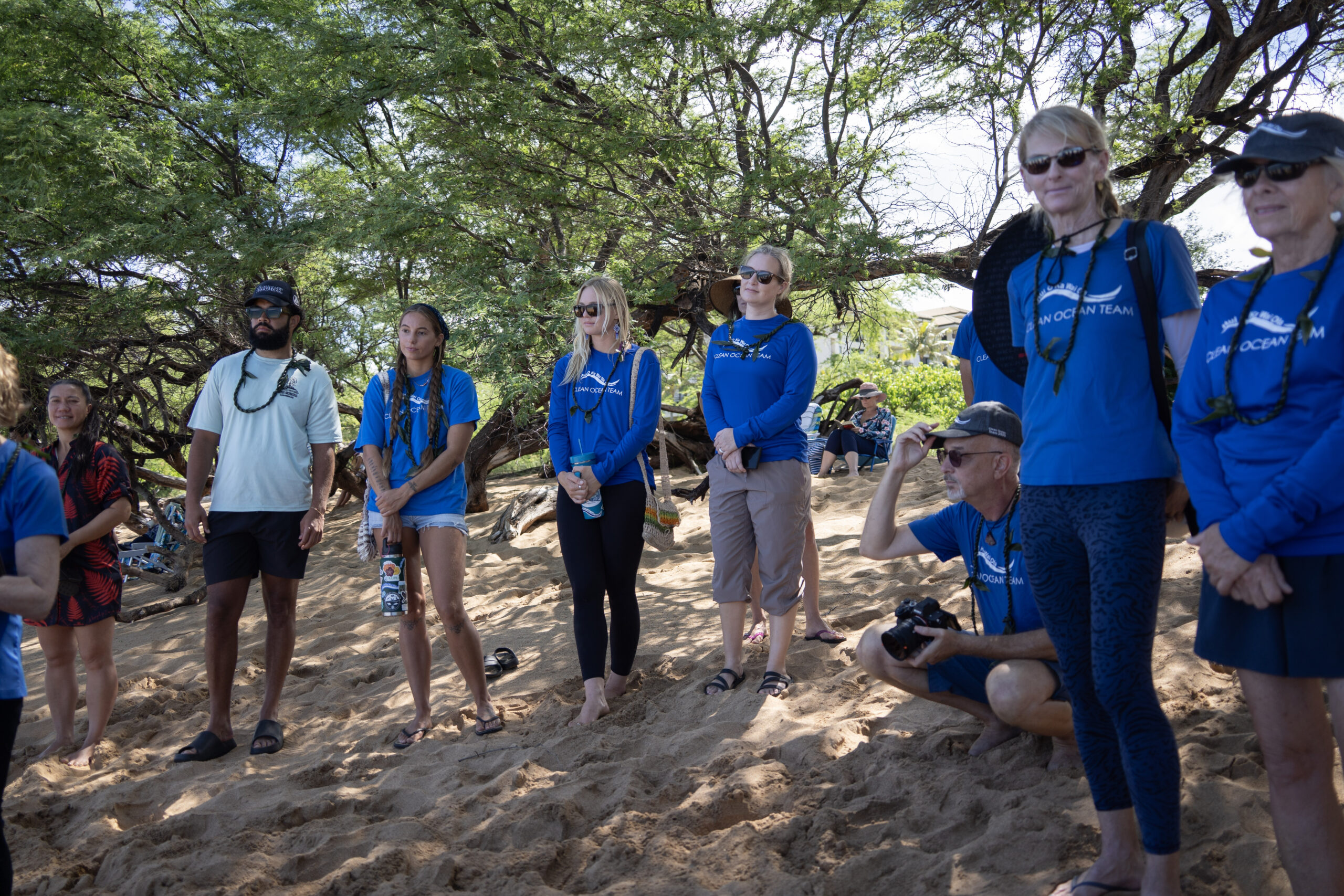
On Sunday, Yannell and other supporters cheered as program volunteers collected a sample from the crystal-clear waters off Kahekili Beach in Kā‘anapali to mark the 10th anniversary of the hui’s sampling efforts in West Maui, which first began on June 14, 2016.
The data collected since then has created a “big picture” of West Maui’s waters — the slow disappearance of lingering pesticides from the sugar cane and pineapple plantation days, and the steady increase of sediment as sea levels rise and coastal erosion increases. And to the hui’s relief and surprise, there is little evidence of declining water quality three years after the fire.
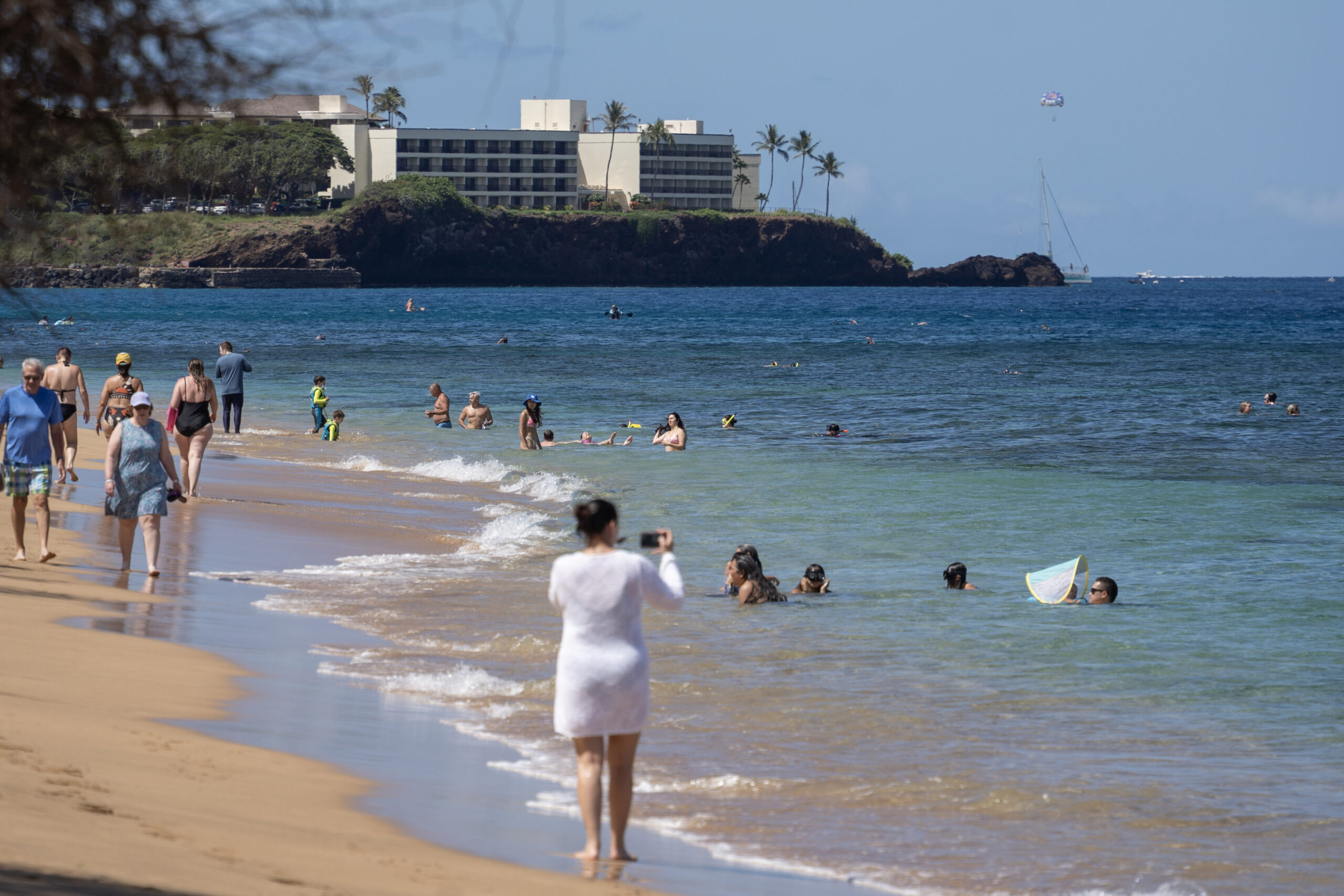
The hui monitors 46 sites across Maui Nui: 22 in West Maui, 19 in South Maui and five on Moloka‘i. It looks for key parameters like salinity (concentration of dissolved salts), turbidity (clarity of the water) and nitrates (associated with wastewater and fertilizers).
What they’ve found in a decade of monitoring is that salinity has increased in Maui at nearly all sites due to extreme drought, turbidity levels are always above state Department of Health standards, and nitrate levels often exceed those standards, according to a report released over the weekend by the hui.
In West Maui, turbidity is the worst at Pōhaku Park, “driven solely by coastal erosion.” It’s also increasing at Camp Olowalu and Ukumehame while decreasing at Kahana Village and Kā‘anapali Shores at the mouths of the Kahana and Honokōwai streams.
Yannell said the high turbidity also is a product of recent major storms like the Kona lows in March. Some of the sediment that makes it into the water is so fine that “it doesn’t really exit out very quickly, if at all,” she said.
Nitrate levels were the highest at Kapalua, Ka‘ōpala Bay, Pōhaku Park and Hanaka‘ō‘ō, also known as Canoe Beach, though levels at Kapalua “dropped significantly in 2020 and remain lower than prior due to sewer repairs. The stretch of coastline from Olowalu to the pali, which are beyond the historical plantation areas, had the lowest nitrate levels. Overall, nitrate levels are declining in West Maui,” Yannell said.
“What that means to us is that a lot of the agriculture from centuries ago — sugar cane, pineapple, coffee, all those things — a lot of that has stopped and so we’re seeing that there’s less in the groundwater supply from decades ago that’s washing in,” Yannell said.
After the fires, UH, Hui O Ka Wai Ola and other agencies were on the lookout for any signs that the waters off West Maui had absorbed the ash and toxic debris left from the devastating blaze. They looked for indicators like “volatile organic chemicals and compounds,” heavy metals and other normal water chemistry parameters, Yannell said. But nothing alarming stood out.
After the fire there was rerouting of water flow in certain areas and some shifts of freshwater flow for awhile, “but things are back to the way they used to be,” Yannell said.
Some theorize the fires didn’t heavily impact coastal waters due to dry conditions, with the heaviest winter rains not showing up until January, five months after the fires. By that time, most of the debris had been removed and emergency crews had tamped down loose ash and dust with a special cohesive spray.
“There was enough time to clean things up and stabilize what we could,” Yannell said.
UH researchers also didn’t find major impacts connected to the fire. Hawco said the most notable discovery was that four samples from Lahaina Harbor tested positive for copper levels over the Department of Health threshold of 2.9 parts per billion. The copper levels were highest in October before washing away over the course of November and December.
Hawco said many harbors have issues with copper because people paint their boat hulls with copper anti-fouling paint to prevent the growth of slime or algae. Researchers think some of that copper was released when all but 13 boats at the harbor’s 99 moorings were destroyed in the blaze. However, Hawco said because they don’t have data on copper levels in the harbor prior to the fire, it’s difficult to determine the impact of the burned boats.
Researchers also looked at arsenic levels. Many homes in Lahaina were built with a material known as canec, a material leftover from processing sugar cane during the plantation days. In order to stop termites and other pests from getting into homes, builders filled the material with arsenic.
“We were really concerned that there would be arsenic coming into the coastal ocean, and that was one of the elements that we really focused on a lot for our observational period,” Hawco said. “But we didn’t see anything in the coastal waters that exceeded the background level, so that was a real relief.”
Researchers also are keeping tabs on the coral reefs in West Maui waters. Hawco said while there’s no sign the coral has been impacted, “they’re not growing as fast as other corals in other parts of the world.
“But they’re still growing and there’s signs that they’re healthy,” he said. “So part of our work now is just to figure out what are ways that we can step in and monitor how well the corals are growing or how can groups like Hui O Ka Wai Ola expand what they’re doing in order to get a comprehensive assessment for how the ecosystem is working.”
UH secured funding from the National Science Foundation to study the ocean impacts after the fires because there is a gap in research about urban wildfires close to the coastline, Hawco said. As development increases, it’s likely there will be more fires in urban areas and higher chances for pollution running down to the ocean.
But it’s difficult to get funding for long-term observation and monitoring, which is what makes the consistent work of organizations like Hui O Ka Wai Ola so important, Hawco said.
UH researchers are no longer visiting the 10 to 12 sites they checked monthly in the wake of the fire, and Hawco said they are looking into developing devices that could be deployed on the reef or in other areas to collect samples automatically. They also hope to work with the hui to collect samples to see if the dredging of Lahaina Harbor, which is taking place for the first time since 1966, kicks up anything left over from the fire debris.
Yannell said the samples of water quality that Hui O Ka Wai Ola team members have recorded over a decade are key in helping to make sense of variations and what factors may be driving them, such as recent storms or king tides. It’s “quality assured” data that can be shared with policymakers at the state and county levels.
“Our hope is that we can keep pointing to something that’s unbiased so we can keep making good decisions for our land, for our islands, and our waters and our people and our reefs and ecosystems,” Yannell said.