

US Coast Guard prepares for Typhoon Bavi, urges Marianas residents to act now
The US Coast Guard team in Guam is coordinating with the National Weather Service, Guam Homeland Security/Office of Civil Defense, the Commonwealth of the Northern Mariana Islands Office of Homeland Security and Emergency Management, and local and federal partners as part of a unified One Marianas preparations for Typhoon Bavi (09W).
Residents and mariners should monitor official guidance from the National Weather Service and local emergency management authorities and take protective action now, before conditions deteriorate.
The Joint Typhoon Warning Center forecasts rapid intensification in the coming days, with Bavi potentially reaching super typhoon strength as it approaches the region around Sunday, July 5. The National Weather Service Guam Weather Forecast Office advises that the potential for a typhoon passage somewhere in the Marianas continues to increase. Track and intensity forecasts carry uncertainty; conditions may change rapidly in either direction, or even a slight shift in track could significantly change impacts to Guam.
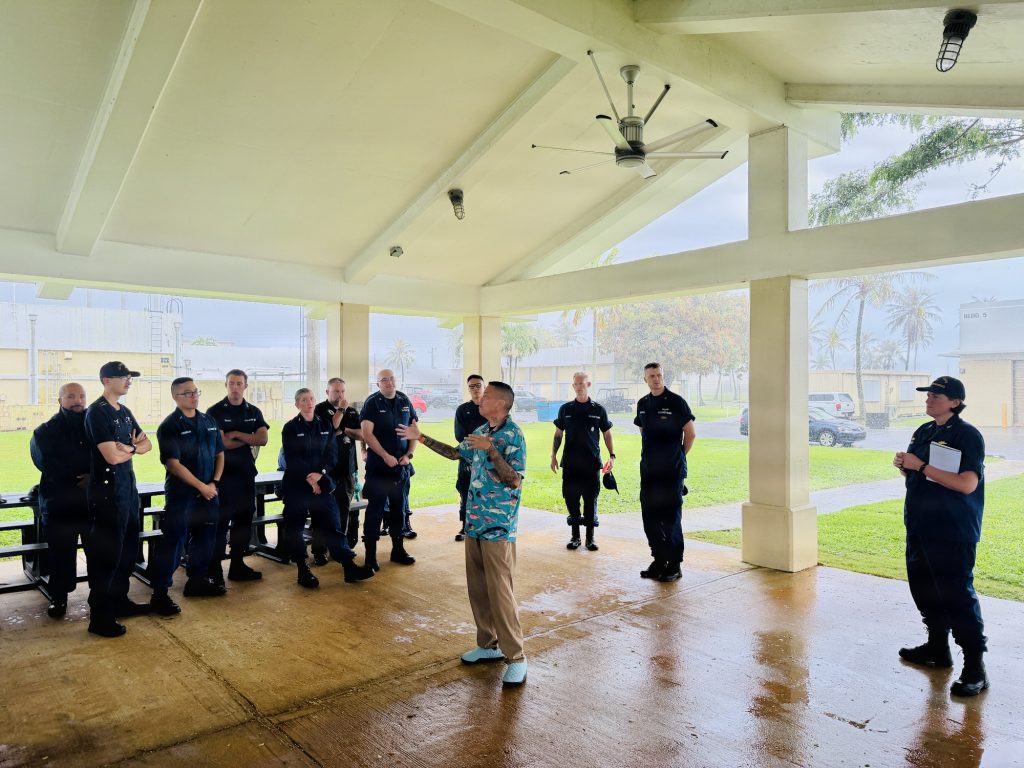
A Message on Readiness “We prepare for every storm as if it’s going to hit us directly, because the better prepared we are, the easier recovery can be,” said Capt. Jessica Worst, commander of US Coast Guard Forces Micronesia/Sector Guam. “Our team is moving boats, securing our base, and getting our cutters underway — the community has that same window to get ready, and it’s closing. Don’t wait for the warning to tell you what you already know is coming. Use today to prepare.”
US Coast Guard Assets and Port Conditions As part of established storm preparation protocols, US Coast Guard cutters homeported in Apra Harbor are scheduled to depart the island ahead of tropical storm force winds. This is standard practice and is not a withdrawal of support. Repositioning preserves the cutter crews’ ability to return quickly and respond to post-storm emergencies, including search and rescue, once it is safe to operate.
US Coast Guard Station Apra Harbor personnel are pulling station small boats from the water and trailering smaller response boats to protect them from storm surge and debris damage. As these assets are secured, on-water response capability will be reduced in the hours leading up to, during, and immediately after the storm. This makes it more important than ever that the public take precautions now and avoid situations that could require rescue.
Port conditions will change as Bavi approaches. Vessel and facility operators should track Captain of the Port Guam port condition updates and be ashore, secured, and sheltered well before ports close to all vessel movement.
What the Public Needs to Do Now Stay out of the water. Beaches, reefs, and nearshore areas will become dangerous as the storm approaches. Waves, surges, and currents during tropical weather events have claimed lives. No recreational activity is worth the risk. The National Weather Service has advised that seas will build, and hazardous surf and dangerous rip currents are expected along east-facing reefs as Bavi nears. Additional watches, warnings, and advisories may be issued as the storm strengthens and its track becomes clearer.
Do not rely on the US Coast Guard or other first responders to retrieve unsecured equipment. Kayaks, paddleboards, jet skis, outboard motors, and other water sports gear that break free during storms may be spotted adrift, prompting emergency calls. First responders are not available to search for property during storm operations, and debris in the water creates real hazards for recovery efforts afterward. Secure or store all water sports equipment now.
Remove or properly secure any small vessels at public marinas. Sunken or damaged vessels after a storm create environmental hazards, obstruct navigation, and recovery costs fall on vessel owners.
If You Are in Distress Social media is not monitored by US Coast Guard watchstanders or emergency responders. Do not post a distress call on Facebook, Instagram, or any other platform expecting a response.
If you or someone else is in distress:
- Call 911 for shore-based emergencies. Note: The SOS function on cellular phones is not reliable in this region.
- Transmit a mayday call on VHF-FM Channel 16, the international hailing and distress frequency, monitored 24 hours a day by the US Coast Guard and mariners at sea.
- Activate a Personal Locator Beacon (PLB) if you have one — it transmits your GPS coordinates directly to search and rescue authorities.
- There are still VHF outages due to equipment damage from Typhoon Sinlaku, meaning VHF service in some areas is limited and may require relay from other operators. Have multiple means of communication, including EPIRBs and PLBs, cellular phones, and satellite phones.
Please recognize that first responders shelter during the height of the storm and are not immediately available for response. They will begin assessment, response, and recovery operations post-storm as soon as it is safe to do so.
Stay Informed Residents should monitor the National Weather Service Guam Weather Forecast Office at https://www.weather.gov/gum and follow official guidance from their respective homeland security officers and local authorities. Conditions can change rapidly. Do not wait for the last possible moment to take protective action. The US Coast Guard will continue to provide updates as the situation develops.
Sponsored Content