 Hawai'i Journalism Initiative
On 250th anniversary of United States, Native Hawaiians remember struggle to keep their own history alive
Every year on Nov. 28, Kau‘i Sai-Dudoit pulled her kids out of school to mark Lā Kū‘oko‘a, Hawai‘i’s Independence Day.
She would take them to historic sites and tell them stories, and each year as they got a little older, she’d print out the stories on pieces of paper for them to read out loud until her 12 kids could recite their history by heart.
“My kids are real solid,” Sai-Dudoit said. “They know their history. They know who they are. It’s not even a question.”
For Sai-Dudoit, the day in 1843 that Great Britain and France signed an official proclamation recognizing the sovereignty of the Hawaiian Kingdom is the true Independence Day here, not July 4th, which this year is being celebrated as the 250th anniversary of the founding of the United States of America in 1776.
To many Native Hawaiians, it’s a reminder of the resilience of a people to hold on to their language and culture in the face of American attempts to suppress it.
“It’s hard to celebrate a nation’s independence when they’re responsible for taking your country’s independence,” Sai-Dudoit said. “So are we aware of the date? Yeah. Do we celebrate it? Some do, most don’t.”
This weekend, American Independence Day events are scheduled across Hawai‘i, with signature events in every county that include the Makawao Stampede today on Maui as well as parades on O‘ahu and Hawai‘i island and a “Concert in the Sky” on Kaua‘i.
Peter Young, chair of the Hawai‘i America 250 Commission created in 2023 through an executive order issued by Gov. Josh Green, said while 4th of July events will likely draw big crowds across the state, “there are going to be people that are not going to feel comfortable, and I understand that.”
“We don’t have to celebrate the United States, we don’t have to celebrate the 4th of July, but we can commemorate it as a significant historical event that happened in the world, and that has a connection to Hawai‘i,” Young said.
Maui County Mayor Richard Bissen, who was made an honorary commission co-chair along with the other county mayors as part of the governor’s declaration, encouraged residents to participate in the celebrations that include a statewide reading of the Declaration of Independence at noon on July 8.
“As Hawaiʻi marks the America250 commemoration, Maui Nui offers a story that is uniquely our own, shaped by aloha, resilience, and the many cultures and traditions that have come together across generations,” Bissen said in a statement.
GENERATIONAL SHIFT
For many in the community, the discourse around Hawaiian and American history has changed from when they were children. The access that their kids and grandkids have to immersion education has raised a generation that is determined to not let the stories of their ancestors get lost in American history books and holidays.
Carmen “Hulu” Lindsey, the Office of Hawaiian Affairs’ Maui trustee, said she’s learned more about Hawaiian history from her two daughters, who are both kumu hula, than she did in school growing up.
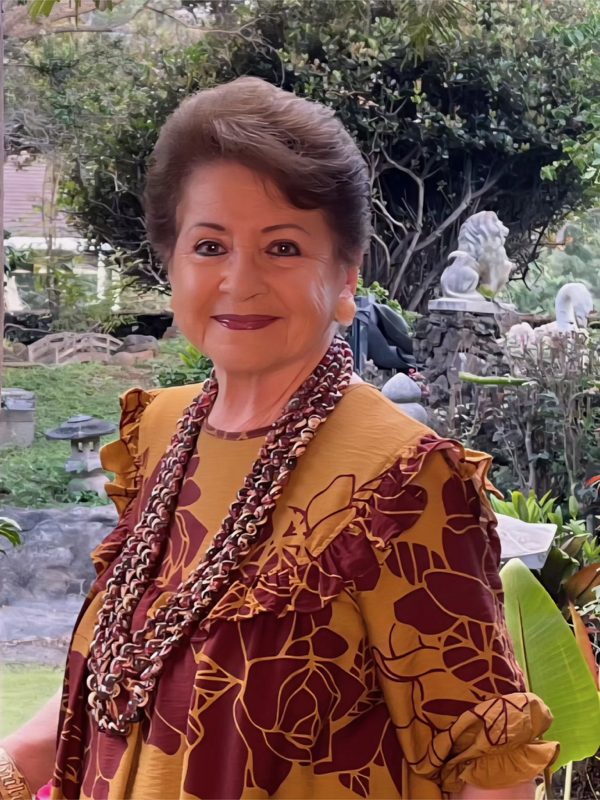
Her daughters don’t celebrate 4th of July because “it reminds them of a different history” of how the Hawaiian Kingdom was an independent nation until it was illegally overthrown with the support of U.S. military forces in 1893 and then annexed in 1898 without a treaty.
In 1993, then-President Bill Clinton signed a resolution passed by Congress apologizing for the U.S.’s role in the overthrow. The resolution recognized that this “resulted in the suppression of the inherent sovereignty of the Native Hawaiian people” and that Hawaiians “never directly relinquished their claims to their inherent sovereignty.”
But the apology was largely ceremonial and didn’t succeed in restoring full sovereignty or land to Hawaiians.
To this day, Lindsey said, OHA is still fighting to get its constitutionally guaranteed share of public land trust revenues that would go to improving the living conditions of Hawaiians.
Lindsey recognized that many people “celebrate both identities” as Hawaiians and Americans.
“Many Native Hawaiians proudly serve in the U.S. military, work in public service and celebrate Independence Day with family gatherings, beach outings, fireworks and barbecues while also honoring their Hawaiian heritage and culture. They see no contradiction in embracing both their Hawaiian identity and their American citizenship,” she said.
“And then there are those that do not celebrate it. So I think for some, July 4 is a day to reflect on the history of the Hawaiian Kingdom, the resilience of the Native Hawaiian people, the ongoing efforts to preserve the Hawaiian language, culture and traditional practices, and discussions about self-determination and the future of Native Hawaiian governance.”
Lindsey was born during World War II and grew up on Hawai‘i island as the granddaughter of a cowboy and a leimaker, who were fluent in ‘Ōlelo Hawai‘i but told her not to speak it at home. More Americans were moving to the islands. At work, they spoke English with their supervisors, and they wanted their children and grandchildren to fit into the changing society.
“At home they would speak Hawaiian, only Hawaiian, and when I asked them what they were saying, they told me, ‘don’t worry about it, just keep learning how to speak in the school way,’” Lindsey recalled.
After Lindsey married a Maui boy and moved to the island in 1971, she made it a point to immerse their kids in Hawaiian culture, starting with hula. Her children later sent their own children to Hawaiian language immersion schools, and now, she has grandchildren who speak ‘Ōlelo Hawai‘i fluently at home and English at school.
Lindsey regrets not learning the language growing up, but she doesn’t blame her grandparents. She knows they were shaped by the era they grew up in.
Kī‘ope Raymond, a retired professor of Hawaiian studies at the University of Hawai‘i Maui College, said his early worldview was also influenced by being born in Lahaina in 1954, five years before Hawai‘i’s statehood. In school, he read the U.S. Constitution and the Declaration of Independence.
“We were inculcated into thinking that we were meant to be Americans, and our own history was erased and the creation of America was the focus,” Raymond said.
As he later went on to teach Hawaiian language and history, Raymond formed his own opinion. What he saw was a country that consistently marginalized Indigenous people and didn’t seem to follow the values it laid out in the founding documents he read as a student.
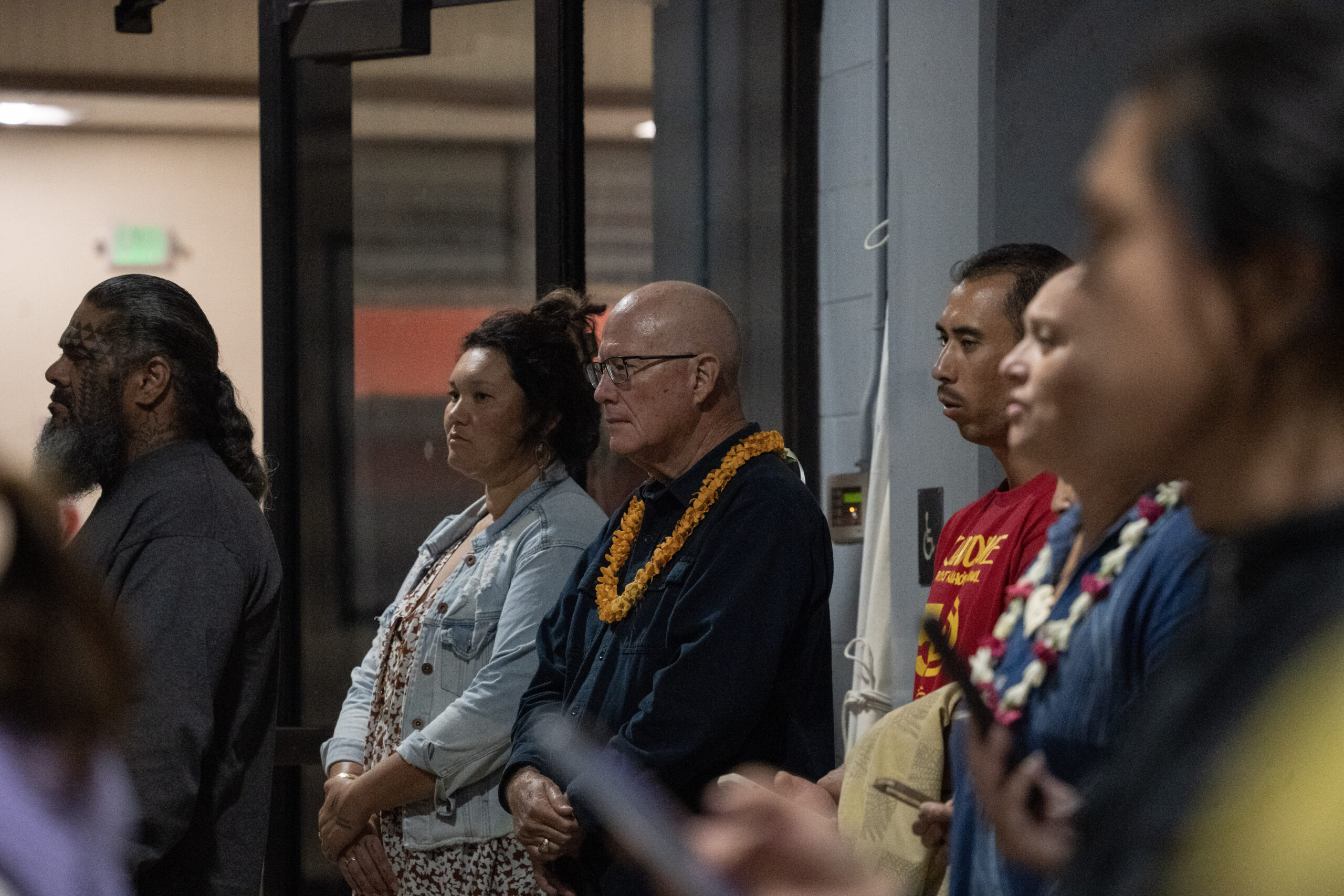
Raymond pointed out that under a constitutional monarchy, “there were so many progressive things that Hawai‘i was doing long before the United States.” Before the overthrow, Hawaiians had universal education and widespread literacy rates as well as universal health care through Queen’s Hospital, which was established in 1859.
“I have no desire to celebrate 250 years,” Raymond said. “I know I’m in an enviable position compared to so many people in the world — freedoms, those kinds of things — but the way I was raised was not as truthful as I would have hoped it would have been.”
Throughout his career, Raymond found ways to create change in his own corner of the world. He taught ‘Ōlelo Hawai‘i for 40 years, and he believes it made a difference.
KEEPING HAWAIIAN IDENTITY ALIVE
Kaleialoha Kaniaupio-Crozier, a 32-year-old Hawaiian language arts teacher at Ke Kula Kaiapuni ‘o Maui ma Kalama, remembers begging her mom to let her join her friends on 4th of July camping trips in high school.
“She’d be like ‘no, it’s 4th of July. No, that’s not our independence,’” Kaniaupio-Crozier remembered. And I’d be so upset. I’d be crying.”
Now that she’s older and understands the history, Kaniaupio-Crozier said she wouldn’t let her own children mark the holiday either.
“The 4th of July is not Hawai‘i’s independence day,” she said. “As a kanaka maoli, I don’t celebrate it because it doesn’t represent the freedom or self-determination of our Hawaiian people. Instead it reminds me that our own nation was illegally overthrown and that our people continue to live with this ongoing impact and impacts of colonization.”
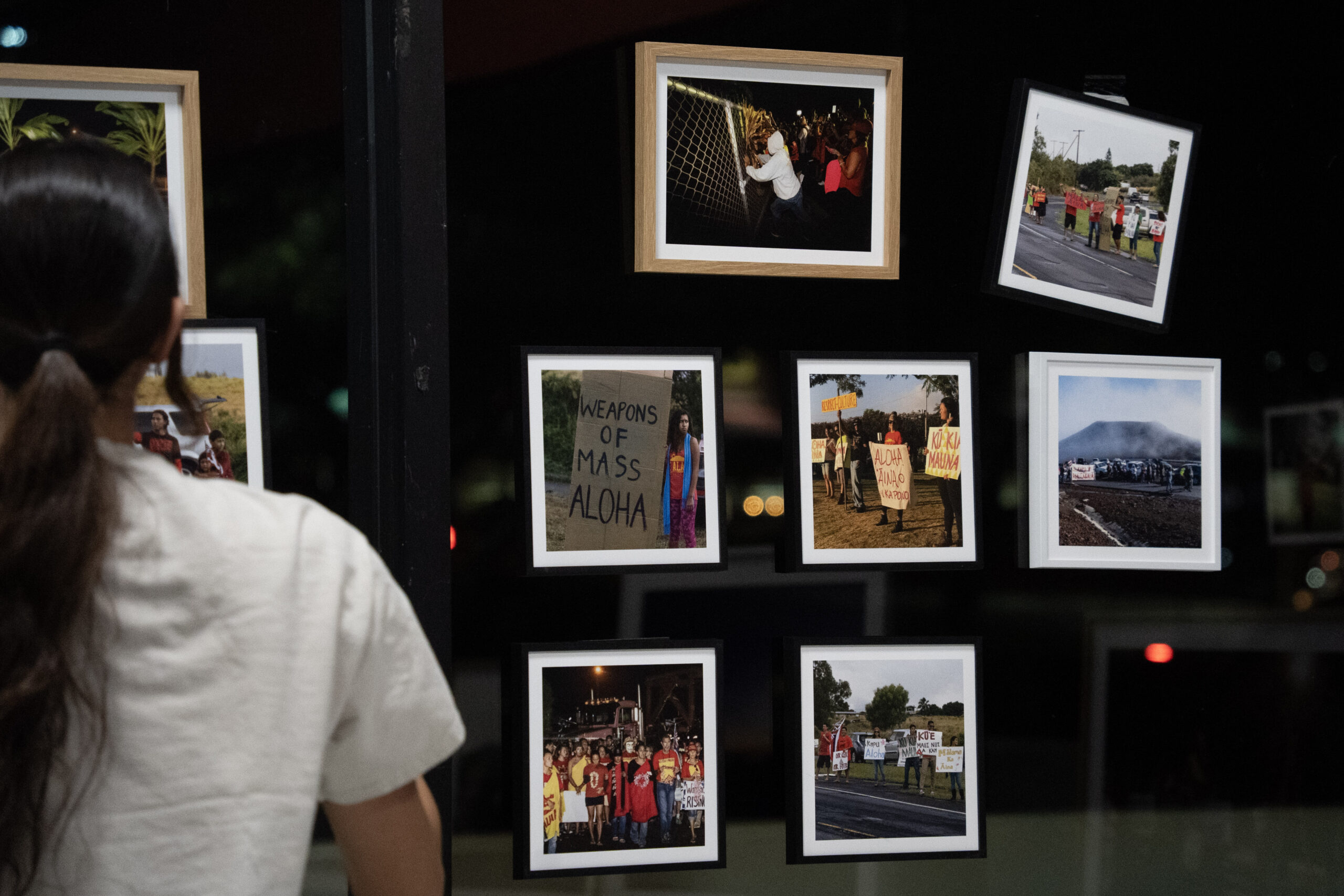
When Kaniaupio-Crozier was going to school, she and her classmates read about American folk heroes like Paul Bunyan and animals native to the Americas like raccoons. So when she became a kumu and started teaching English language arts, she sought to share lessons “through the lens of the Hawaiian, always.” She points them to Hawaiian language newspapers and sources, and encourages her students to talk to their kūpuna and soak up their ‘ike, or knowledge.
Kaniaupio-Crozier said one of her kumu once taught her that if she wanted to help her students develop a strong identity, then she had to set the example.
“There’s things that I can always learn. I’ll always be a haumana (student) for sure,” she said. “But at the same time, there’s no wavering as to who I am as a kanaka, as a Hawaiian.”
Knowing where you come from makes all the difference, Sai-Dudoit says. She remembers teaching a Hawaiian history course at a women’s prison on O‘ahu when one participant stood up and pounded the table, swearing in anger. She wanted to know “why the f” she hadn’t been taught those things growing up, and why her parents and grandparents didn’t know either.
“She said, ‘If I knew this, I wouldn’t have felt so useless, so hopeless, so lost in my own place, in my own home,’” Sai-Dudoit recalled.
Sai-Dudoit, the programs director of Awaiaulu and former director of Ho‘olaupa‘i, a project to preserve newspapers in ‘Ōlelo Hawai‘i, said that for years, Hawaiian history has been “purposely erased” and written by non-Hawaiians. Often, when it’s taught in schools, it starts with the overthrow, telling young Hawaiian students their story “at the end of their country, at the end of their independence” instead of the rich legacy that came before.
Sai-Dudoit said the erasure was systematic. From 1896 forward, ‘Ōlelo Hawai‘i was outlawed in schools and instruction was in English only. Kids were scolded and punished for not speaking English. After the overthrow, thousands more Americans moved to Hawai‘i, and by the time 94% of the population voted in favor of statehood in 1959, Hawaiians were a minority in their own land.
Sai-Dudoit is determined to keep Hawaiian history and language alive, because if it dies in Hawai‘i, she said, “it’ll die in the world.”
“There’s nowhere else to reclaim it, to rebuild it, but here,” she said. “We owe it to our ancestors to keep this boat afloat.”
AMERICA 250 IN HAWAI‘I
Young is well aware of the history between Hawai‘i and the U.S., and it was something he thought about as he and the 19-member Hawai‘i America 250 Commission planned activities.
“It’s always on the back of my mind,” Young said. “Because I don’t want to be part of a problem. I want to help be part of a solution and that better future.”
Young, who was born and raised on O‘ahu and now lives on Hawai‘i island, grew up attending the 4th of July parade in Kailua. One thing he says he thinks people often overlook is the connection between Hawai‘i and the Declaration of Independence and the U.S. Constitution and Bill of Rights.
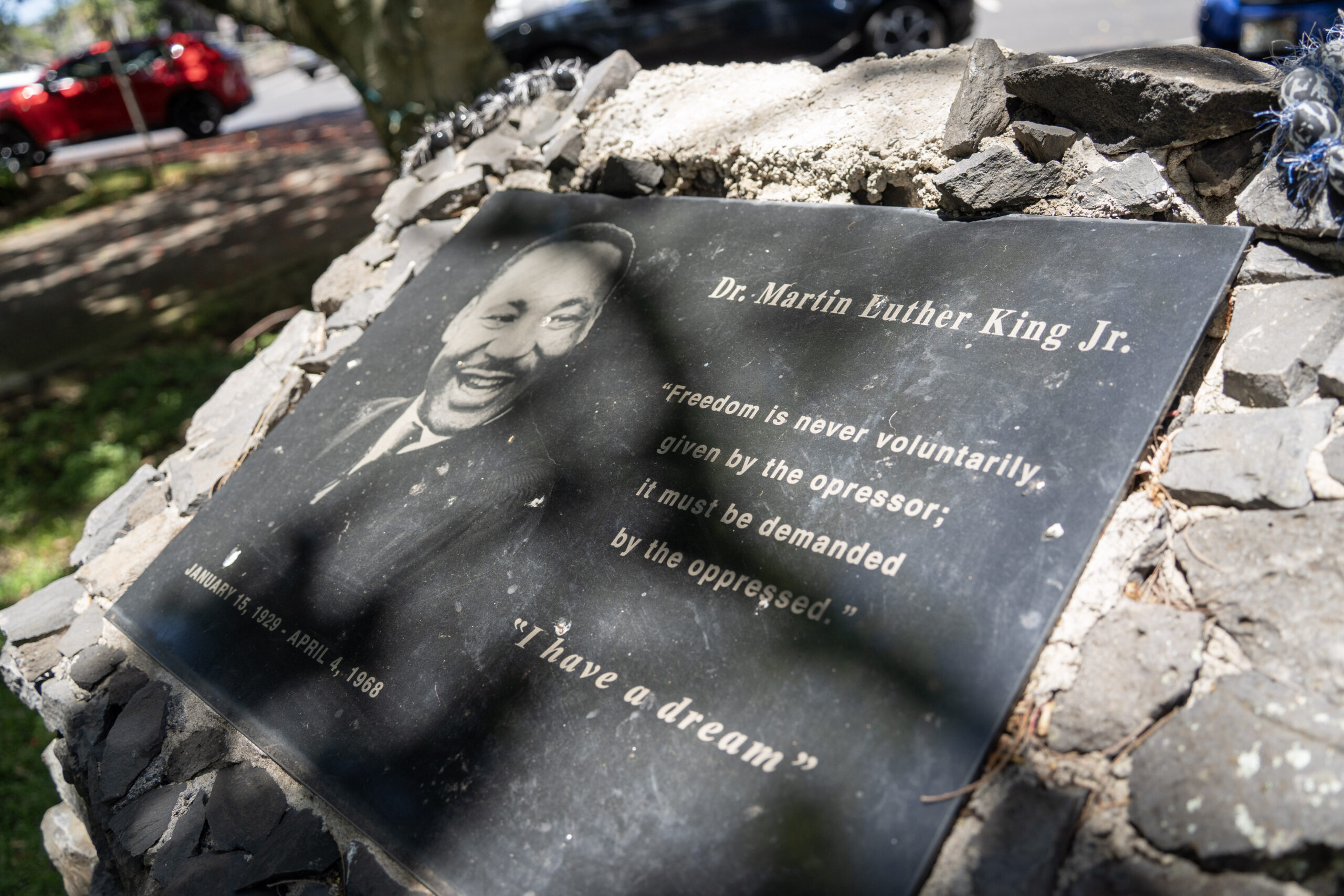
He said there are many similarities between the language and philosophy of those documents and the Declaration of Rights approved by King Kamehameha III in 1839 that established rights for both the makaʻāinana, or commoners, and the ali‘i, or chiefs.
Young believes that upholding the rights enshrined by both the Hawaiian Kingdom and the U.S. government two centuries ago is the key to reconciling a painful history.
“How do we move forward together as a community with diversity of backgrounds and diversity of opinions on the history of Hawai‘i and the U.S.?” Young said. “It takes individual commitment that can then be broadened into a community commitment. None of us were there then. … And none of us were there at the overthrow. But all of us are here now. So how do we work better together?”
Upcountry Maui residents Hanalei and Kelly DeCoite are trying to raise their four children, who range in age from 6 to 15, with both respect for the past and vision for the future. They want their kids to “walk in the freedoms and liberties that America, United States have given us” as well as the knowledge and wisdom of their culture.
“If you allow the past to keep you trapped, then you’ll stay there, and that’s not what I would want for my children,” Kelly DeCoite said.
On Tuesday, the DeCoites were selling 4th of July fireworks out of the Maui Lani Safeway parking lot to benefit King’s Cathedral’s children’s ministry. They see it as a blessing to live in the U.S. and an honor to celebrate the 250th anniversary. Both grew up on Hawaiian Home Lands and went to Kamehameha Schools, and are proud of both their Hawaiian heritage and American citizenship.
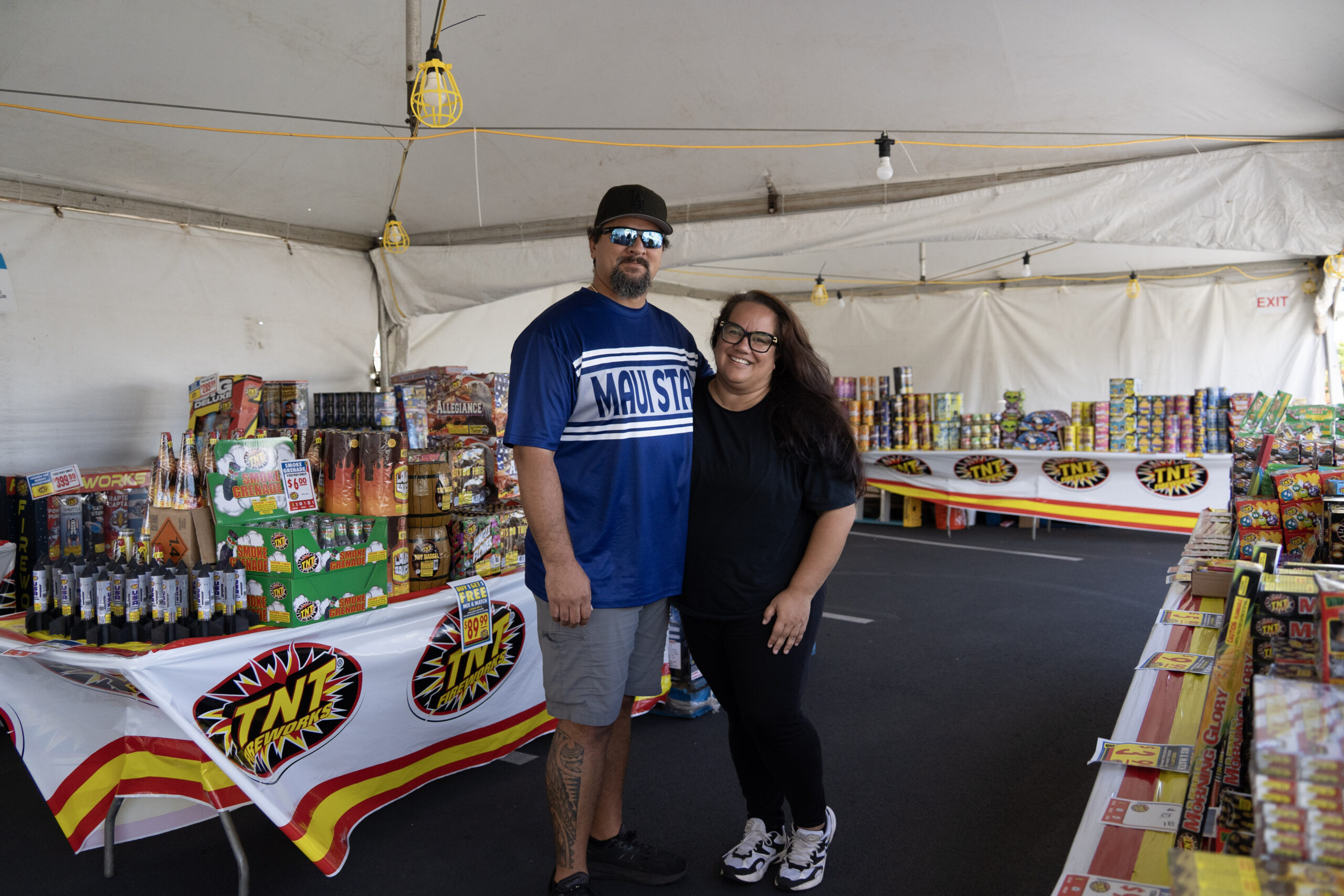
“There’s things that we have to fight for as Hawaiian people, but I believe that as an American, we’re given bigger opportunities to be able to fight for that,” Kelly DeCoite said.
Hanalei DeCoite added that history “can be bad, brutal, sad and tragic, but there’s also beauty in it where we can learn from it.”
“We can’t change the past, but we don’t forget the past, we just learn from it,” he said. “How do we better ourselves? And most importantly, how do we set the next generation up for success? Because like for me, my children, that’s my legacy.”