 Hawai'i Journalism Initiative
North extension of Lahaina bypass needed as a critical evacuation route is finally moving forward
LAHAINA — In the 20 years she’s lived in Lahaina, Karen Comcowich has had to evacuate for multiple wildfires, including three times on the day of the Aug. 8, 2023 blaze that destroyed most of the town.
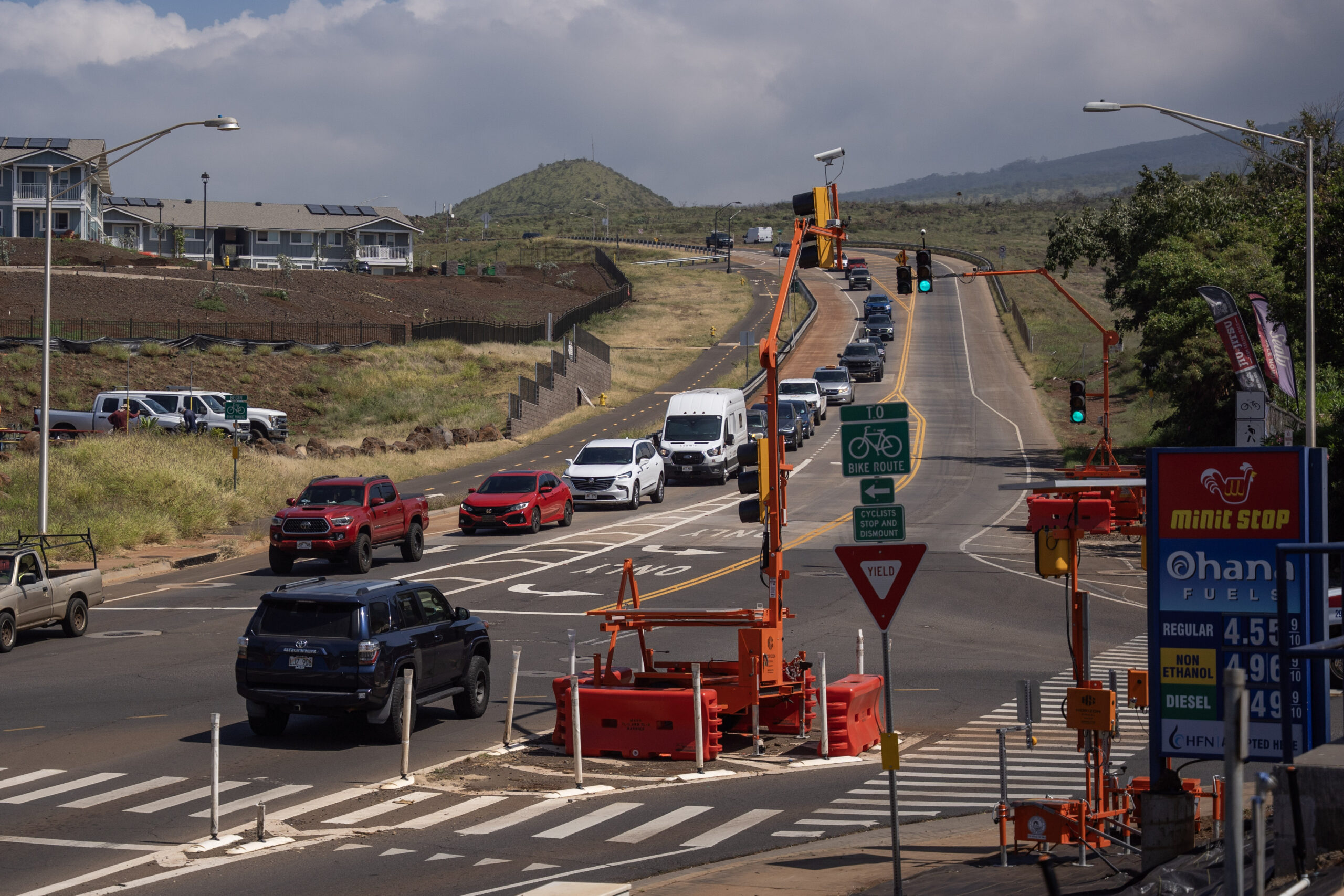
The limited evacuation routes out of the seaside town quickly led to congestion and gridlock on that fateful day, leading many to abandon their vehicles and run to safety or jump in the water to escape the fast-moving fire.
So Comcowich is happy to see the state finally moving forward with plans to build the northern section of the Lahaina bypass that will create another route out of town.
“It’s safer for everybody,” Comcowich said.
The 4.5-mile extension from Lahaina to Kā‘anapali is in the early planning stages, with funding from a $100 million allocation of Maui County’s $1.6 billion federal disaster recovery grant.
Hawai‘i Department of Transportation Director Ed Sniffen had previously told the Lahaina community the state had no active plans to build the northern extension because it didn’t have the $220 to $250 million it would cost to complete the project.
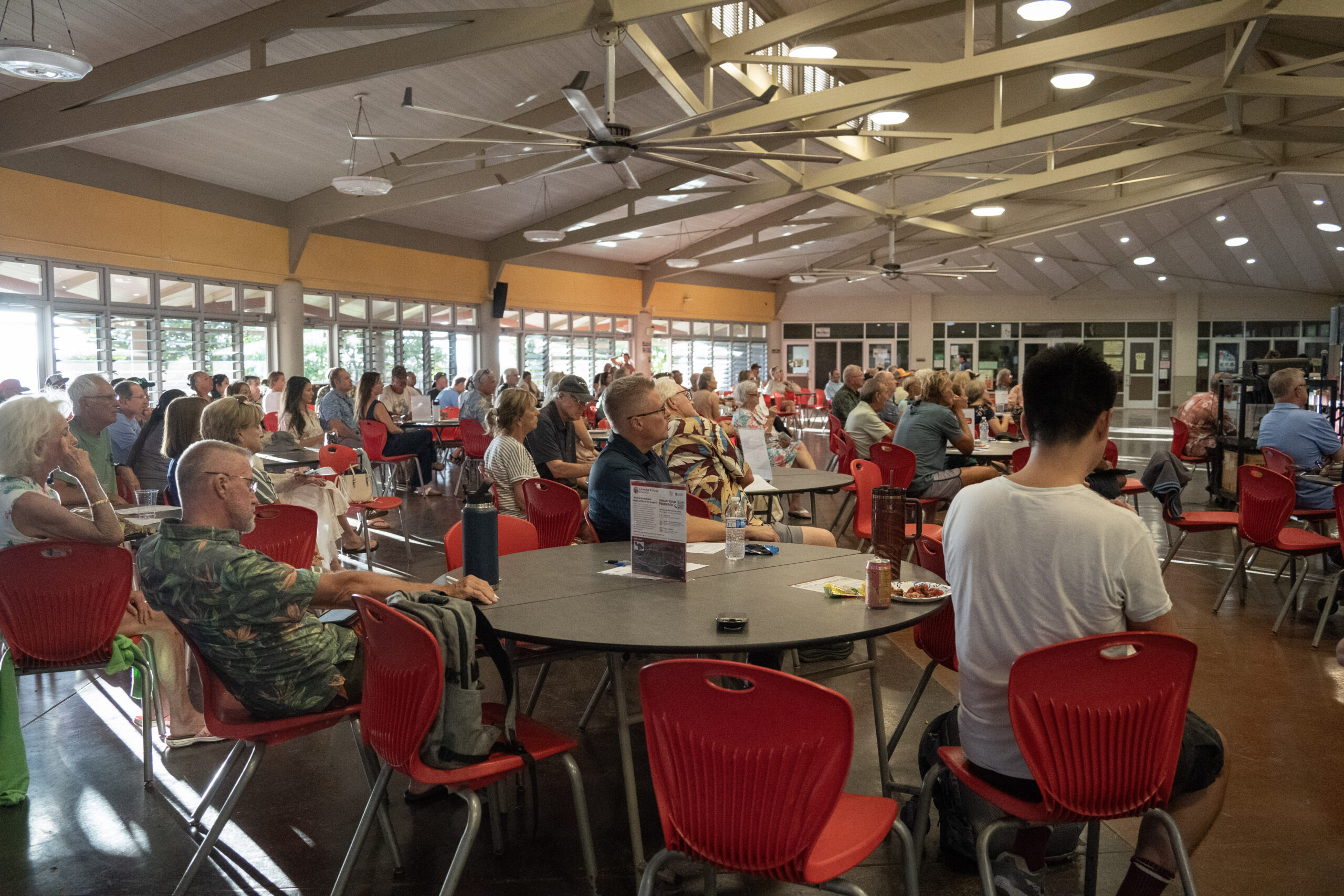
“But we got $100 million from the county, and now we’re building it,” Sniffen told dozens of West Maui residents on Wednesday during a community meeting in Lahaina.
He said the federal government will cover 80% of the state’s portion, which will total about $100 million, and state funds will cover the rest.
The costly bypass, an alternative route to the coastal Honoapi‘ilani Highway that sits vulnerable to high tides and erosion, has been in consideration for decades, with studies dating to 1990.
In March 2013, the state built the $77 million, nearly milelong first phase from Keawe Street to Lahainaluna Road, followed by the $25.8 million, 1.7-mile section from Lahainaluna Road to Hōkiokio Place in December 2013, with 80% covered by federal funding and 20% by the state. In April 2018, the $38.6 million, 2.7-mile section from Hōkiokio Place to Honoapi‘ilani Highway was completed.
The state is currently seeking public input and working on preliminary environmental studies for the next phase, with construction expected to begin in mid-to-late 2028 and finish by December 2030.
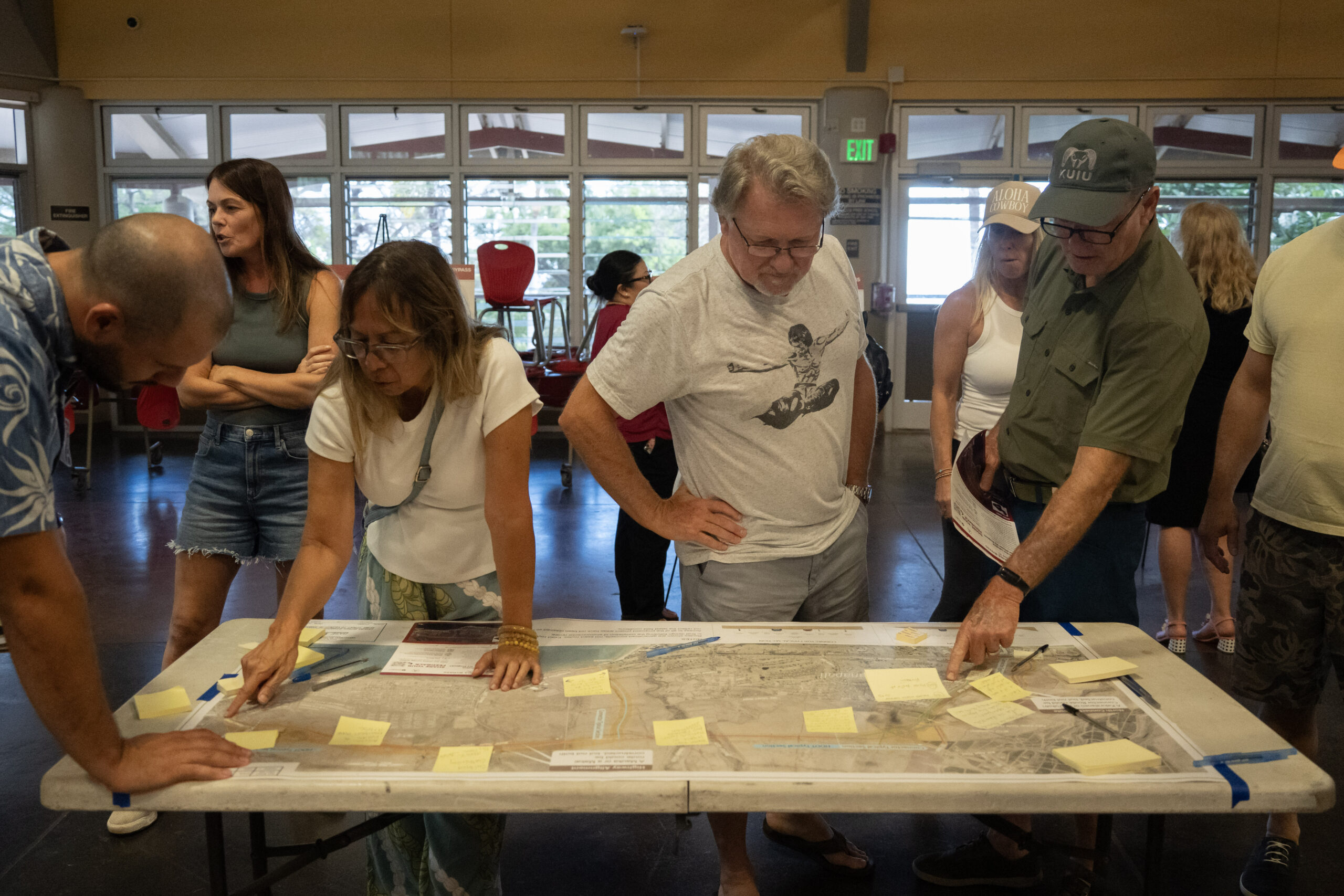
No final decisions have been made on the roadway’s exact design or alignment, but the state generally expects it to extend from the northern part of Keawe Street where the current bypass ends to Kā‘anapali, likely to Kaka‘alaneo Drive.
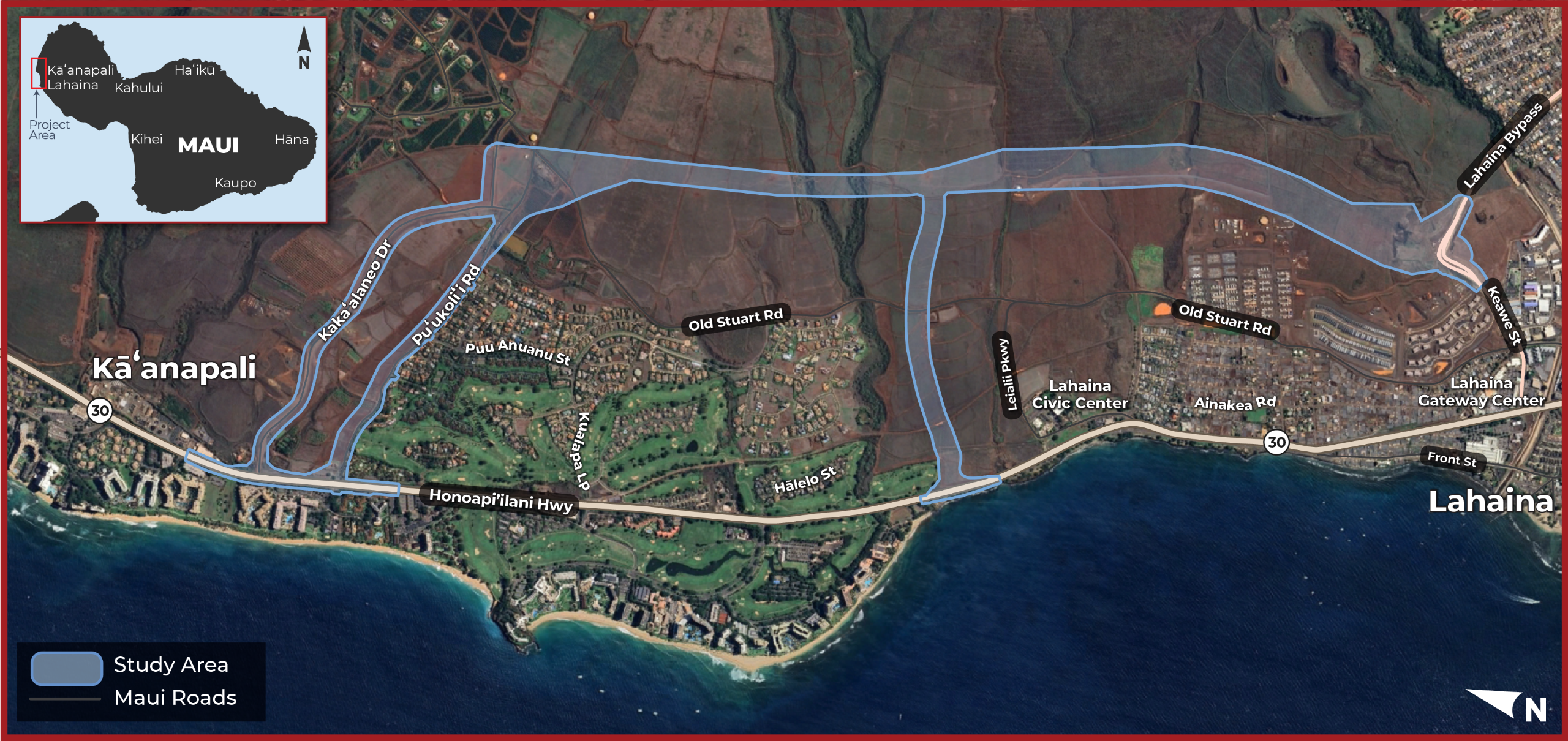
Pu‘ukoli‘i Road, which runs alongside the Kā‘anapali Hillside neighborhood, is also being included as part of the study, but Sniffen said this is just to show the federal government why it’s not a viable option. He insisted that the state prefers Kaka‘alaneo and would not build the bypass to Pu‘ukoli‘i as long as he was the director.
Many residents wanted guarantees that the state wouldn’t connect the bypass to Pu‘ukoli‘i Road, pointing out the hazards: residents in golf carts cross in front of driveways; multiple curves require mirrors to help drivers on blind entrances; and a four-way highway stop at the bottom of the hill.
They included Kā‘anapali resident Stephan Bel-Robert, who urged not connecting to Puʻukoliʻi Road due to increased traffic and potential accidents, saying that building the bypass to Kaka‘alaneo Drive would provide a buffer between the bypass and the neighborhood.
“I think we need a bypass,” Bel-Roberst said. “Just doesn’t make sense to have a road in the middle of a highly residential area when there’s an existing road with nobody living on it.”
Sniffen asked: “How many people are here to tell me that it shouldn’t be at Pu‘ukoli‘i?”
As hands shot up across the Lahainaluna High School cafeteria, Sniffen said: “Perfect. You don’t have to worry about it. It’s not going to be there.”
The northern extension would be one lane in each direction with a median wide enough to expand into additional lanes if needed, Sniffen said. There would also potentially be one connector road from the bypass to Honoapi‘ilani Highway between the Lahaina Civic Center and Kā‘anapali.
The ultimate final phase from Kā‘anapali to Honokōwai is also a future consideration, but Sniffen said the state doesn’t have the funding right now. It’s expected to cost another $80 million to $120 million.
“We’re trying to build these phases in chunks that we can actually afford,” he said.
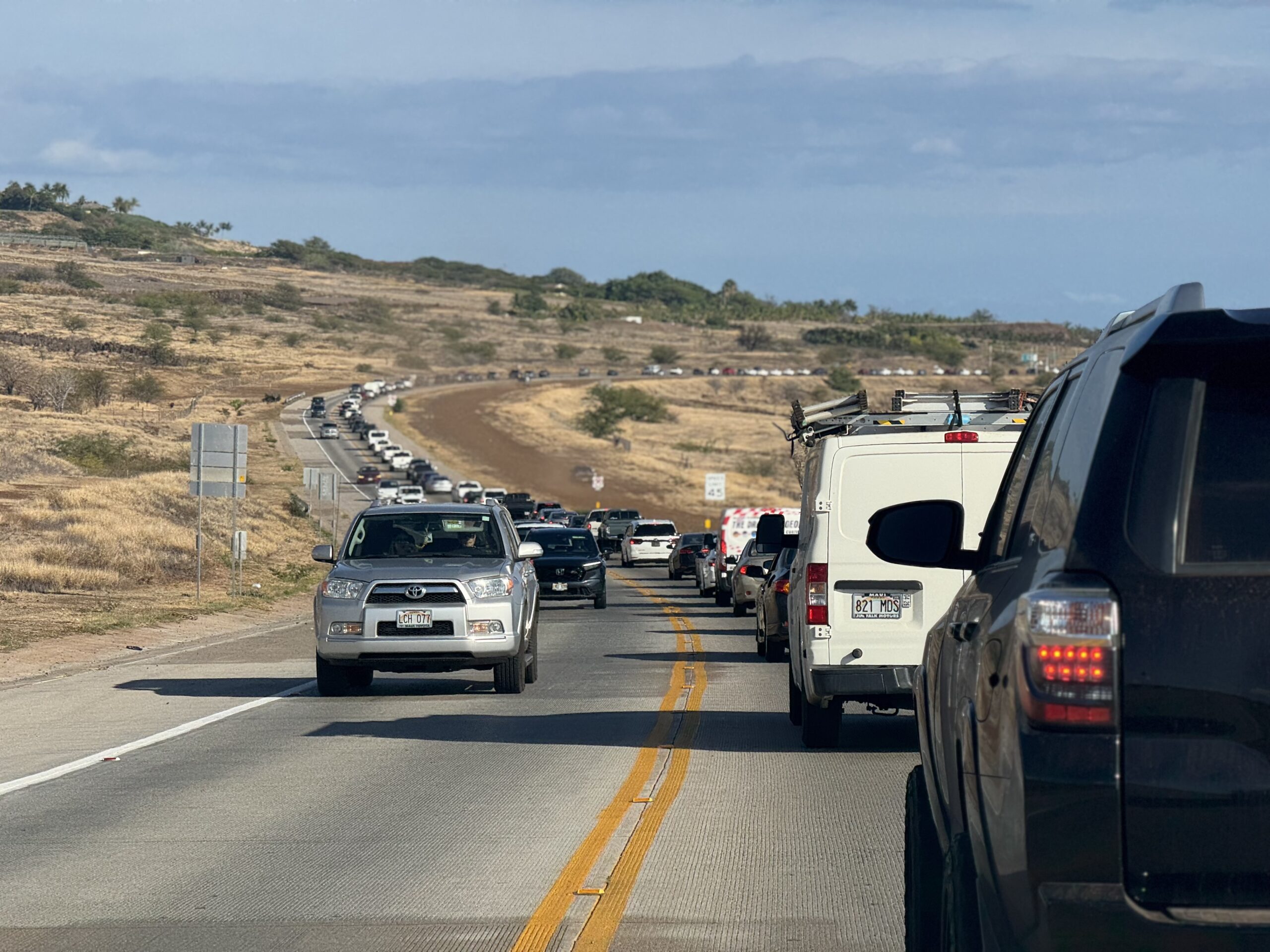
However, the southern extension of the bypass remains the priority as coastal erosion continues to threaten Honoapi‘ilani Highway, the primary connection between West and Central Maui. The 5.5-mile highway realignment from Olowalu to Ukumehame is slated to cost $298 million. Bids are expected to open in a month, with construction starting in a year and a half, department officials said Wednesday.
“This is the reason why I came up to this community last year to say I will never build a northern extension before I build the southern,” Sniffen said. “The southern piece has to work. If there is no connectivity to the southern portion, it doesn’t matter what I build north.”
Once the bypass is completed, the state plans to rename the route Kiha-a-Pi‘ilani, the son of King Pi‘ilani who completed the path started by his father to encircle the island of Maui.
Since the existing bypass was built, Comcowich said her thrice-weekly work commute to Wailuku that used to take 45 minutes to an hour now is shorter, at 35 to 45 minutes.
But, she added, it’s made traffic “more dangerous” because now cars can whip down the bypass at high speeds. She doesn’t let her kids cross Keawe Street because drivers are coming so fast off the bypass. She thinks extending the bypass north will allow cars to drive straight to Kā‘anapali instead.
“Just making it safer for younger people to get around independently will be really beneficial,” she said. “And also giving us other options. … I just support the project. I’m glad they’re doing this.”
Comcowich evacuated during the 2018 fire that burned four homes in the Lahainaluna neighborhood and three times on the day of the 2023 fire — once from her home when the fire started on the hillside nearby, a second time after they had returned home because they thought the fire was out, and a third time from the home of a friend in the Shark Pit area where she had fled.
Maui County Council Member Tamara Paltin, who holds the West Maui residency seat, pointed out that during the tsunami warning last summer, drivers trying to get out of town clogged up Honoapi‘ilani Highway. Paltin said that the community has been asking for the bypass extension for a long time and were upset when the northern section had to be put on hold.
Paltin said the bypass “is critical,” especially if high tides or big swells engulf the coastal highway and cut off residents and the sizable visitor population in West Maui’s resort areas. That could force people to evacuate via Kahakuloa, a longer and more perilous route.
“I think if you’re looking at the overall big picture of safety for West Maui, it sort of makes sense because that small section … is like a choke point,” Paltin said of the northern portion of Honoapi‘ilani Highway where the current bypass ends.
Some were not happy about the county putting disaster recovery funds toward the bypass, saying they wanted the town rebuilt before a new road was put in.
“We’re coming up on the three-year anniversary of the fire,” Kā‘anapali resident Bill Finnerty said. “Nothing has progressed downtown. … So why are we diverting $100 million for a road rather than trying to get Front Street and that area built up? And also support the families that lost all their homes.”
Sniffen said emergency access was a primary driver for building the bypass extension, “to make sure there’s always a viable route for everybody to go on, rather than getting stuck on the lower road.”
Maui County spokesperson Laksmi Abraham said Thursday that as the county worked on its plans for Lahaina’s long-term recovery and ways to use the $1.6 billion federal disaster recovery grant, “residents consistently identified the bypass as a priority, citing the need for an additional evacuation route.”
Abraham said the county also saw a chance to help the underfunded project move forward, with the $100 million coming out of the funding set aside for infrastructure and public facilities investments in the county’s action plan for the grant.
More than half of the grant, about $900 million, is going toward housing programs, with additional funding for disaster mitigation and economic revitalization.
“Recovery is not a choice between housing and infrastructure,” Abraham said. “Both are essential. Safe evacuation routes and resilient transportation networks protect lives, support housing and strengthen West Maui’s long-term recovery.”
While rebuilding Lahaina’s businesses is also “essential,” Abraham said the county “cannot meet every commercial rebuilding need” and is working with the state and federal government to create an opportunity zone “to help attract private investment and accelerate the rebuilding of local businesses.”
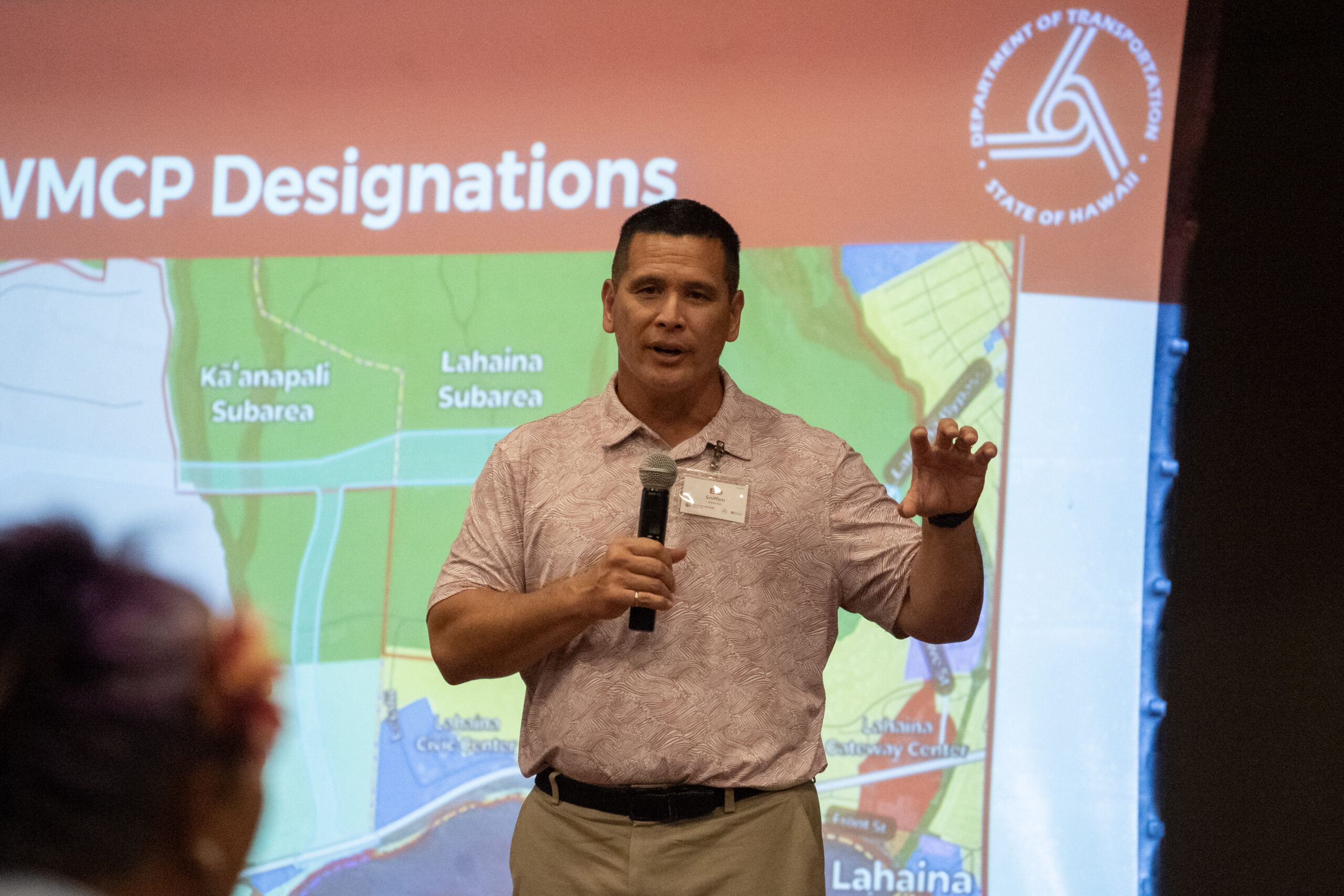
When asked if he thought the town could rebuild faster than the bypass extension considering how long it’s taken to build previous sections, Sniffen said, “I don’t know how quickly the town can move. I hope the town is built before it, because that means Lahaina recovered. That’ll be excellent. And while we’re building, we’ll make sure that they have a great emergency access, no matter what happens.”
Another virtual meeting on the bypass will be held from 6 to 8 p.m. Wednesday. To access the Zoom link for the meeting click here. To learn more about the project or take an online survey, click here.