

Gov. Green signs legislation to establish a clean fuel standard, safeguards for e-bikes
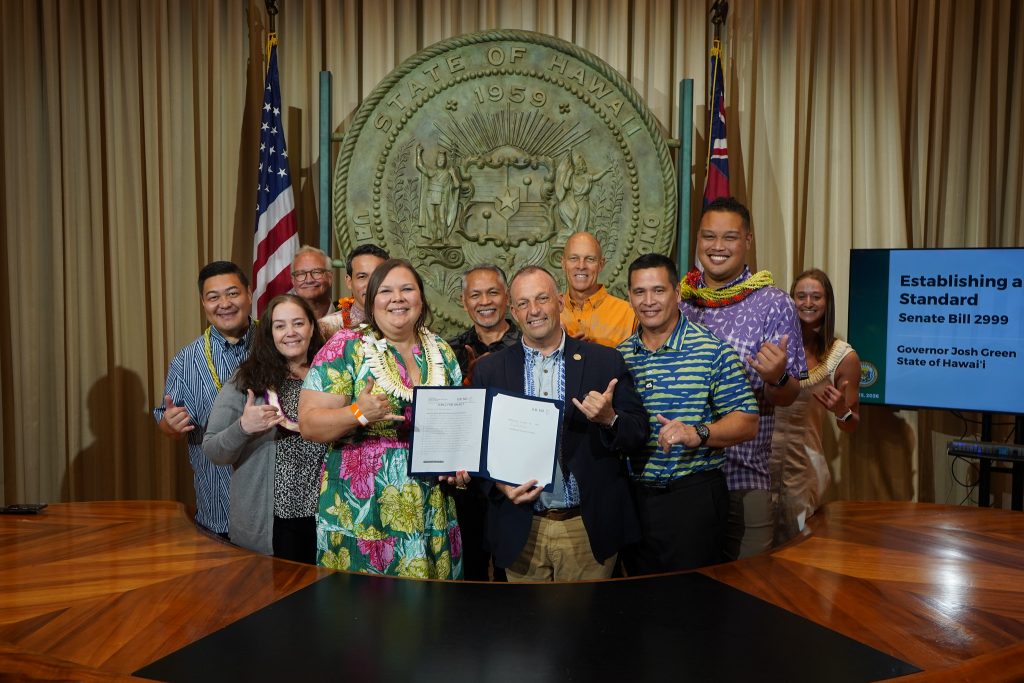
Gov. Josh Green today signed SB 2999, Act 258 and HB 2021, Act 259 into law. The signing of these bills strengthens the administration’s efforts to build a clean energy economy and ensure that Hawai‘i’s laws keep pace with new technologies.
The action marks a transition toward cleaner and safer roads in Hawaiʻi that better reflect the needs of our residents and youth. Transportation connects people to jobs, schools, healthcare and essential services.
“Keeping our infrastructure aligned with modern safety standards and emissions goals will help create a safer, more sustainable future for generations to come,” according to the announcement.
SB 2999: RELATING TO A CLEAN FUEL STANDARD
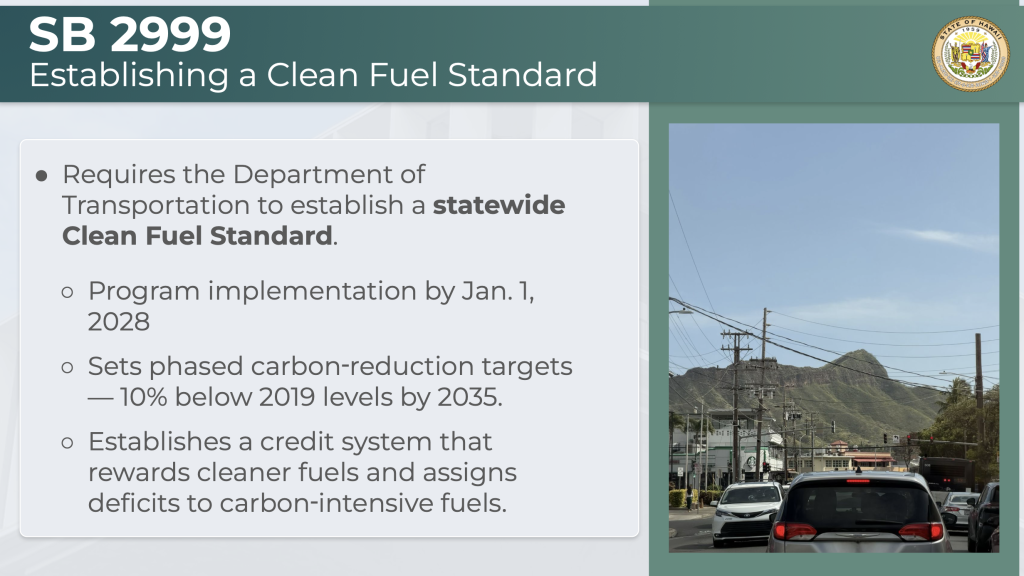
Hawaiʻi’s transportation sector has the greatest potential to reduce greenhouse gas emissions in the state by incentivizing the adoption of cleaner fuels to power everyday travel. SB 2999, Act 258, establishes a statewide Clean Fuel Standard designed to cut the carbon intensity of Hawaiʻi’s transportation fuels while opening the door to cleaner alternatives, minimizing the cost of living impacts to Hawaiʻi residents. By establishing a performance‑based system that rewards cleaner fuels with credits and assigns deficits to more carbon‑intensive fuels, SB 2999 encourages innovation without mandating any single technology. It gives way to public engagement, regular reporting and stakeholder input to ensure accountability throughout the development of the program.
A clean fuel standard supports local agriculture and renewable energy industries and expands markets for homegrown renewable fuels and materials, including options that can turn waste products into energy sources. This transition will incentivize investment and job creation across various sectors, strengthen public and environmental health, improve air quality and bolster energy security. “A resilient Hawaiʻi is defined by sustainable systems,” said Green. “These investments reinforce a commitment to building co-beneficial models, allowing economic opportunities to give way to a cleaner, low-carbon future.”
The Hawai‘i State Department of Transportation will enforce this standard through a transparent, public rulemaking process and requires full implementation by January 1, 2028. “Gov. Green’s signature on SB 2999 empowers HDOT to set a clear, actionable framework for clean fuels that considers all of our state goals including economy and affordability,” said HDOT Director Ed Sniffen.Under the program, HDOT must set lifecycle emissions‑reduction benchmarks and develop a phased plan that steadily lowers transportation fuel carbon intensity, including reaching at least 10% below 2019 levels by 2035 and 50% below 2019 levels by 2045.
Public engagement, regular reporting and stakeholder input will be shared through HDOT’s Energy Security, Community & Culture Portal throughout the development of the framework.
“This is a huge opportunity to create new reinvestment in lower-cost, cleaner transportation options for local residents, using a model already proven in other states,” said Senator Chris Lee, introducer of SB 2999.”Transportation remains Hawaiʻi’s biggest source of greenhouse gas emissions and of air pollution that affects public health,” said Representative Nicole E. Lowen, chair of the House Committee on Energy & Environmental Protection. “Establishing a Clean Fuel Standard creates a clear pathway to transition to lower-carbon transportation fuels, improve air quality and support innovative industries that create good-paying jobs here at home.”
HB 2021: RELATING TO TRANSPORTATION
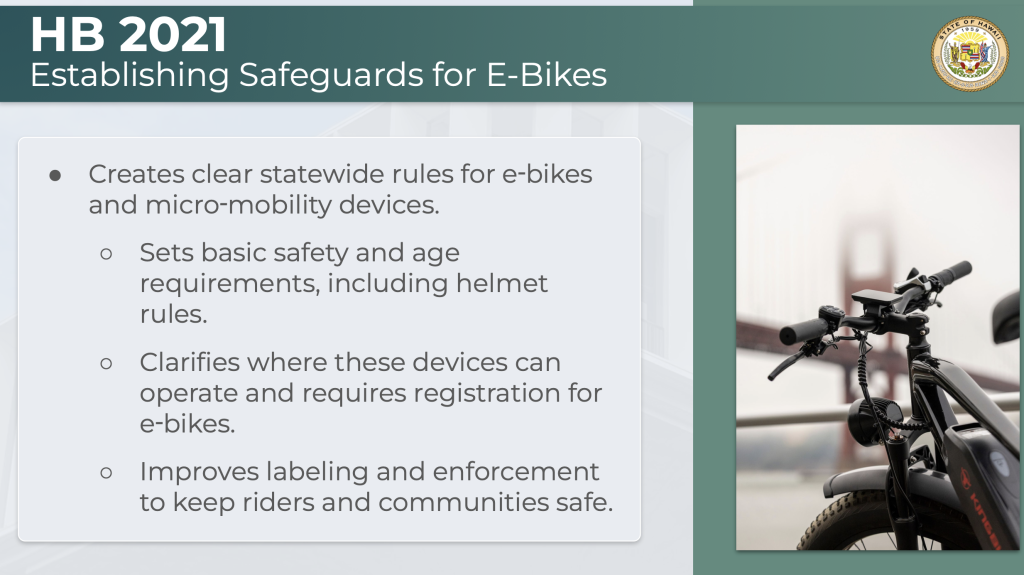
The rapid growth of electric bicycles and other micro-mobility devices has led to gaps in safety standards, confusion about how different devices are defined and uncertainty surrounding where they can be used. Following a record number of traffic fatalities in late 2025, the Executive Order on Traffic Safety highlighted the need to better protect vulnerable users. HB 2021, Act 259 builds upon that effort by creating consistent statewide rules for electric bicycles and micro-mobility devices and strengthening enforcement protocols.
The measure establishes a regulatory framework that updates definitions, sets basic operational safety requirements and creates age‑related standards such as helmet rules for minors and operating restrictions for younger riders. It clarifies where e‑bikes and scooters may operate and requires proper registration, with penalties for failing to comply. It also mandates accurate labeling and disclosures from manufacturers and retailers so riders understand how their devices can be used legally and safely. To support enforcement, the measure provides clearer authority for addressing illegal or noncompliant devices and updates related laws for consistency.
“Biking provides opportunities for community engagement, emissions reductions and cost-saving,” said Green. “This legislation ensures Hawaiʻi’s roadway laws keep pace with an evolving transportation landscape by promoting the safe and responsible operation of e-bikes.”
“Families are using e-bikes as a transformative way to save thousands on transportation costs — and this bill will enable more residents to use them safely while keeping those abusing them off our streets,” said Sen. Chris Lee, chair of the Senate Committee on Water, Land, Culture and the Arts.“Seeing the e-bicycle safety bill become law is a significant milestone and a testament to the dedication and hard work of the advocates, families and community members who worked tirelessly every day to improve safety on our roads,” said Representative Darius K. Kila, chair of the House Committee on Transportation and introducer of HB 2021. “If this law helps save even one life or prevents even one family from experiencing tragedy, then every effort that went into passing it was worth it.”
“Hawai‘i Bicycling League is grateful to the governor, legislators and advocates who helped support this effort to update our e-mobility guidelines, captured in HB 2021,” said Hawaiʻi Bicycling League Executive Director Travis Counsell. “This bill strengthens a framework for safer shared roads for everyone. HBL looks forward to helping educate our community members, decision makers and enforcement agencies about these updated regulations, in an effort to help create communities where more people can walk, bike and roll.”The complete list of bills signed includes the following. Click the links to see full details of the bills enacted into law.
- HB 2023 – Relating to transportation – Act 260
- SB 2851 – Relating to deaf individuals – Act 261
- SB 3234 – Relating to traffic safety – Act 262
- SB 2338 – Relating to housing – Act 263
- HB 2344 – Relating to school facilities – Act 264
Sponsored Content