 Hawai'i Journalism Initiative
Bathrooms, porta-potties, nothing? Dealing with nature’s call a challenge at some Maui state parks
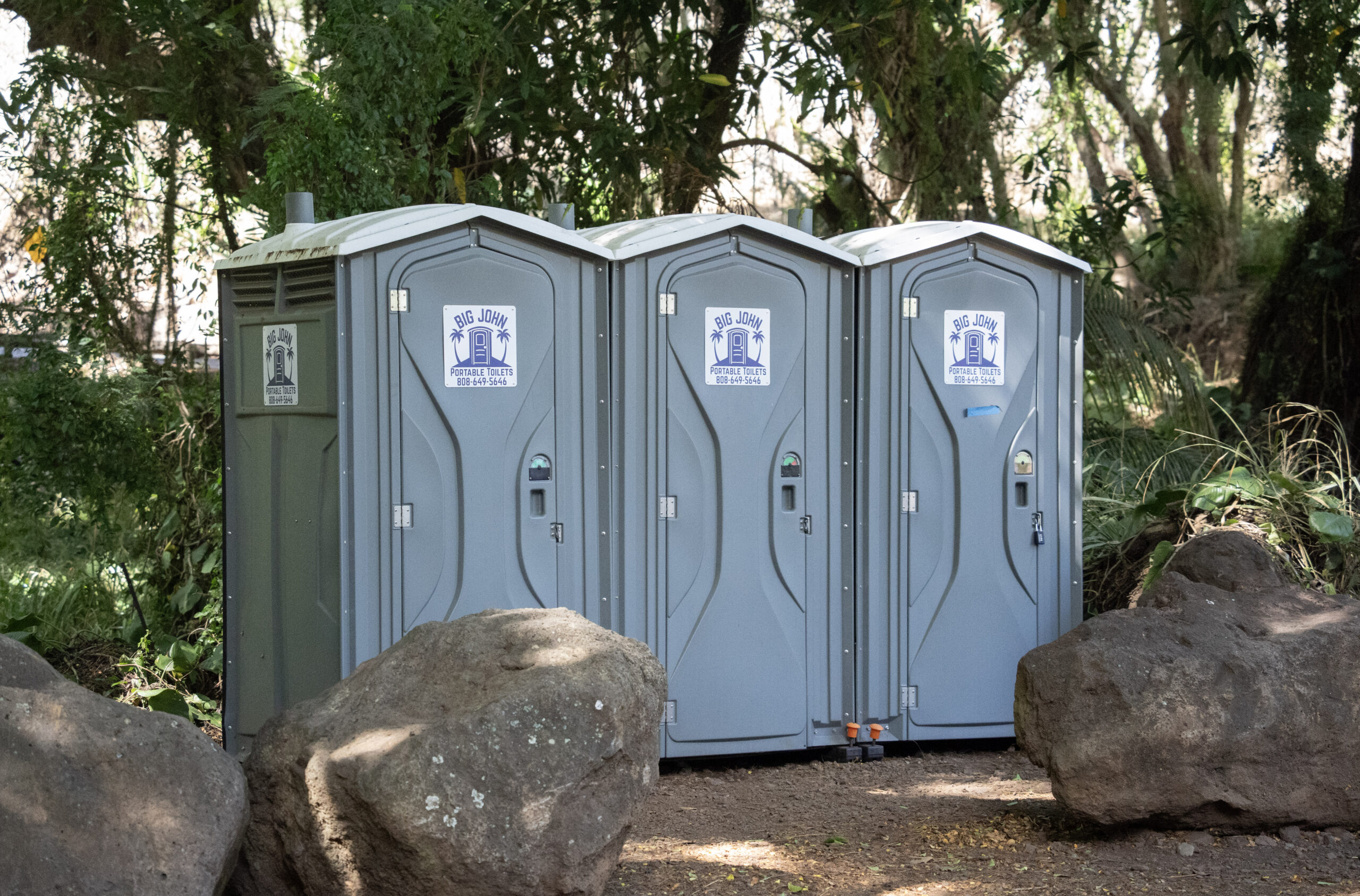
When John Carty got sick of people relieving themselves in the wooded trail leading down to Honolua Bay, he started his own porta-potty company.
Last year he installed some at the entrance, and now, unwanted waste and soiled toilet paper have disappeared from the trails and fewer people are wandering onto nearby ancestral burial grounds.
“It’s been a remarkable success,” said Carty, a founding member of the Save Honolua Coalition.
But 40 miles farther south on the leeward coast, porta-potties at Mākena State Park have seen the opposite results — the plastic stalls get so hot in the South Maui sun that beachgoers take to the nearby woods to relieve themselves.
And, even farther Upcountry in the Makawao Forest Reserve, there are no facilities. The porta-potties had to be removed because people wouldn’t stop vandalizing them.
That’s why deciding what public facilities work at major public parks can be a headache given the vastly different landscapes and users who flock to the forests and beaches around Maui.
“Every park is unique,” said Michael Kahula, the Maui parks superintendent for the state Department of Land and Natural Resources. “It’s not a cookie-cutter process. What works for some doesn’t work for others.”
Earlier this month, the bathroom debate came to a head when dozens of community members spoke out in protest against the department’s plans to install permanent bathrooms and showers at Mākena, a popular beach for tourists and locals. Some community members worried the bathrooms and additional parking will bring more crowds to the unspoiled landscape, while others said they’d been asking for the permanent facilities for decades.
“Hawai‘i is known for having some of the poorest public beach facilities, despite our beaches being among our greatest treasures,” testifier Tiare Lawrence told the Maui County Planning Commission.
Last week, the commission approved a special management area permit for the state project, which would include two “comfort stations” with bathroom stalls, two new outdoor showers and an expansion of the parking lot from 238 to 276 stalls.
The 6-1 approval came with conditions that included a carrying capacity study that would help the state understand the impacts of traffic to the park and what it can sustainably handle, as well as an exploration of whether the state could legally set aside a parking allocation for residents. The state also made changes in response to community concerns, including not putting in any new asphalt except for ADA compliance and reducing lighting to minimize impacts to seabirds and turtles.
The state also said it doesn’t think a reservation system is necessary at Mākena, but if visitor demand increases, it would consider implementing one or other measures as needed to protect the park and resident access.
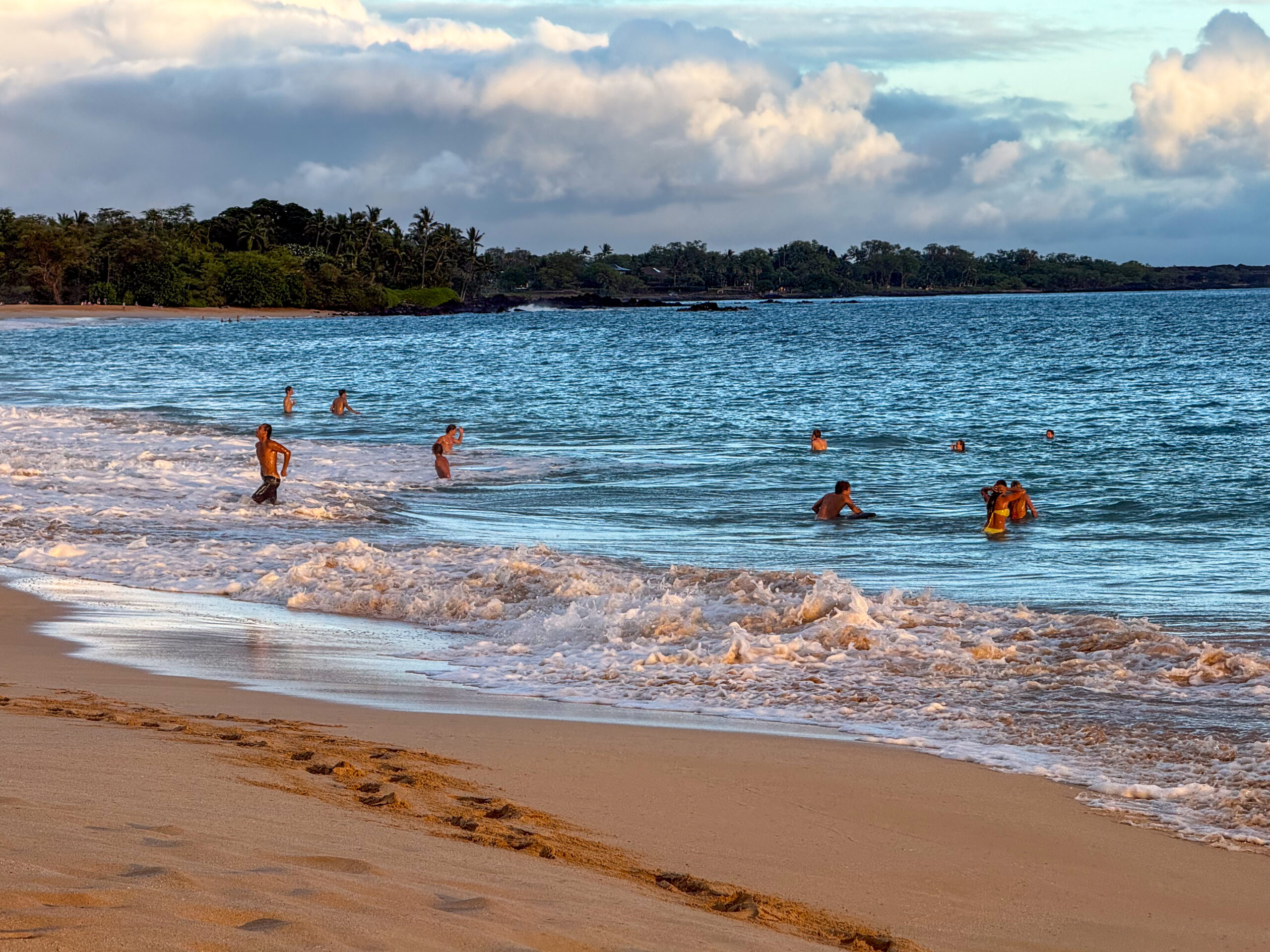
To Kahula, permanent bathrooms make sense at Mākena, a high-use park where permanent bathrooms and showers could be more comfortable, help save the sand being tracked into parking lots and cars, and improve accessibility for handicapped users.
“It just creates a whole better experience,” Kahula said.
When deciding amenities for each public park, the state has to take into account available infrastructure, environmental sensitivity, cultural resources, the maintenance required and public safety, Kahula said.
In a place like Honolua, permanent bathrooms are not the answer, said Carty, a founding member of the Save Honolua Coalition that helped stopped a luxury development above the bay years ago and now wants to curb the number of daily visitors and turn part of the land into a cultural sanctuary.
“Honolua is full of sacred sites and iwi kūpuna,” he pointed out. “And so it’s not really an appropriate place to put in plumbing or leachfields because you don’t want to disturb the ‘āina. So the porta-potty is preferred in a place like Honolua, where there’s no sewer.”
The state, which owns the land surrounding Honolua Bay, contracts Carty’s company, Big John Portable Toilets, to provide the porta-potties at Honolua Bay. But he said he has to find other jobs to keep the business viable, and it’s not easy to deal with the bureaucracy of the state, which is why he understands why some private companies don’t want to do it.
Carty said he hasn’t seen an increase in beachgoers since installing the porta-potties over a year ago. However, he pointed out that since the August 2023 wildfires, visitors to West Maui have declined.
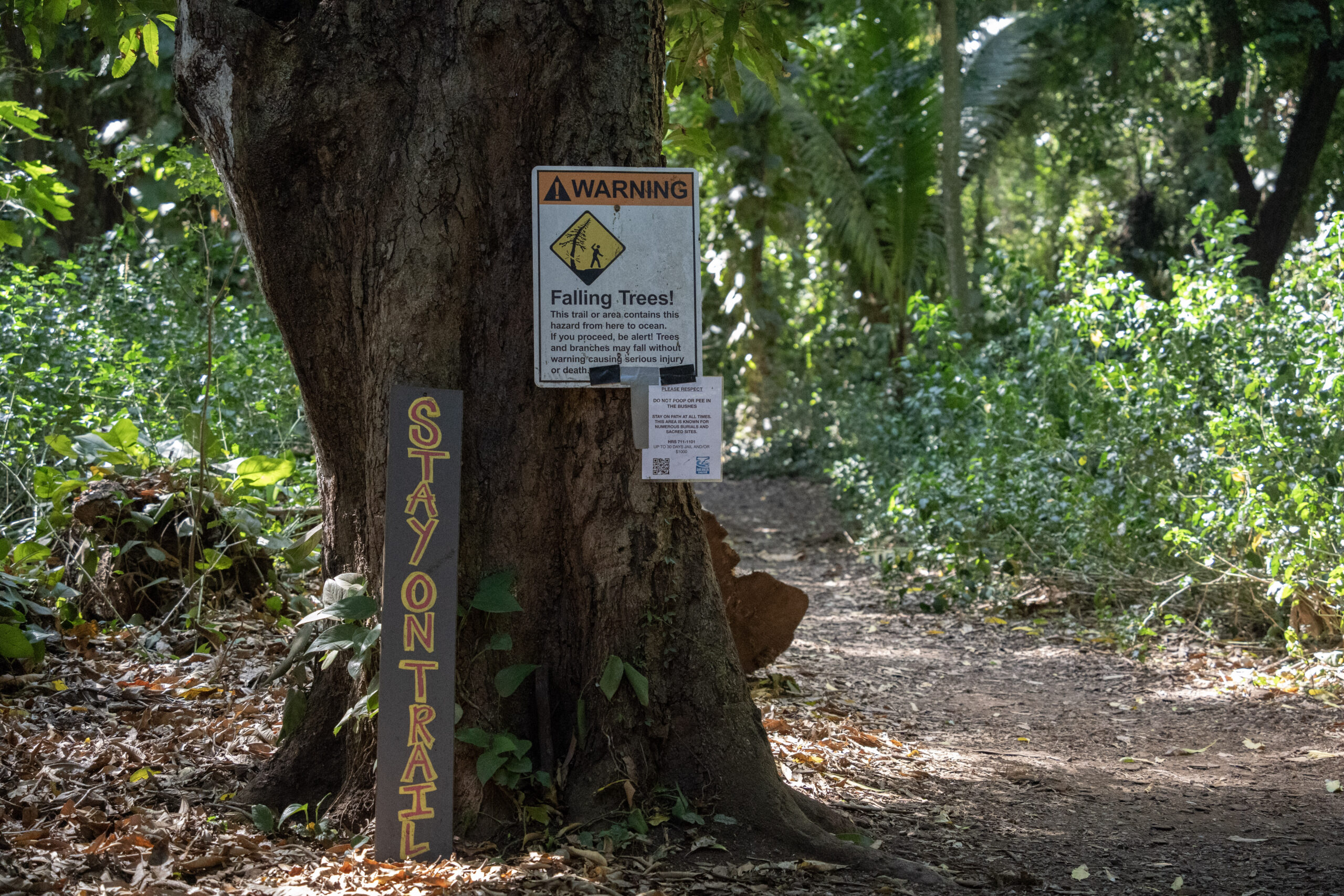
Carty said if permanent facilities were proposed at Honolua, where the land surrounding the bay is owned by the state, “the community would definitely respond in the same way that they have at Mākena.”
He added that with the right technology, such as solar fans and more frequent servicing, the porta-potty experience doesn’t have to be “hot and stinky all the time.”
At the Makawao Forest Reserve, state officials and community groups are trying to figure out the best way to provide public amenities that won’t require constant repairs. Lance De Silva, the state’s Maui branch forestry program manager, said earlier this year that vandalism of porta-potties had gotten so bad — including flipping, spray painting and smashing them with a hammer — that no companies wanted to rent or service them for the state.
Members of the Sierra Club Maui Group said the removal of the porta-potties was a major issue for park users, some of whom hike for hours and have to relieve themselves off trail. The club hoped to get volunteers together to potentially dig a pit toilet like they did at Haleakalā National Park.

Kahula said vandalism fortunately hasn’t been a problem at Mākena, in part because there is a permanent park caretaker who is a lineal descendant of the area.
Public amenities at other state parks could also be up for discussion soon, too. In Central Maui, ‘Īao Valley State Monument’s facilities “will be on the horizon soon” to be addressed, Kahula said. The permanent bathrooms have been out of order since massive rains and flooding in 2016, and the park remains closed through the end of July due to damage from the Kona low storms and flooding in March.
He added that the state also wants to look at how to improve the leachfield at Wai‘ānapanapa State Park in East Maui, which has permanent bathrooms and showers.
“We need to engage with the community. That’s very important with the moves we make,” said Kahula, who was born and raised in Hāna. “We can never forget that these places are culturally and historically significant, and a lot of people have their families in these areas — burials, wahi pana, areas of prayer as well.”