


 Hawai'i Journalism Initiative
‘Climate change sucks’: Battered by storms, Hawai‘i communities search for more resilient solutions

KĀ‘ANAPALI — After Hurricane Lowell pummeled Kaua‘i, Luke Evslin spent the week cooking up Costco-sized portions of bacon and sharing meals with his neighbors as they tried to eat all the food in their fridges after the power went out.
Restaurants gave away food for free. Strangers left a cooler full of ice packs on the side of the road.
“Literally not a single complaint. Truly it was everybody just asking how they can help,” Evslin, a Democratic state representative for Kaua‘i’s District 16, said Friday.
Lowell was the latest storm to barrel through Hawai‘i in a busy hurricane season that’s already produced five named storms in the Central Pacific. A brewing sixth system, Tropical Storm Norbert, is expected to dissipate before it reaches the state.
“It’s a sign of the times,” Maui County Council Member Tamara Paltin said. “Everything is kind of cyclical, but I think the Earth is going through just a transition. It’s always changing, but this change is just harder for our built environments and humans to deal with.”
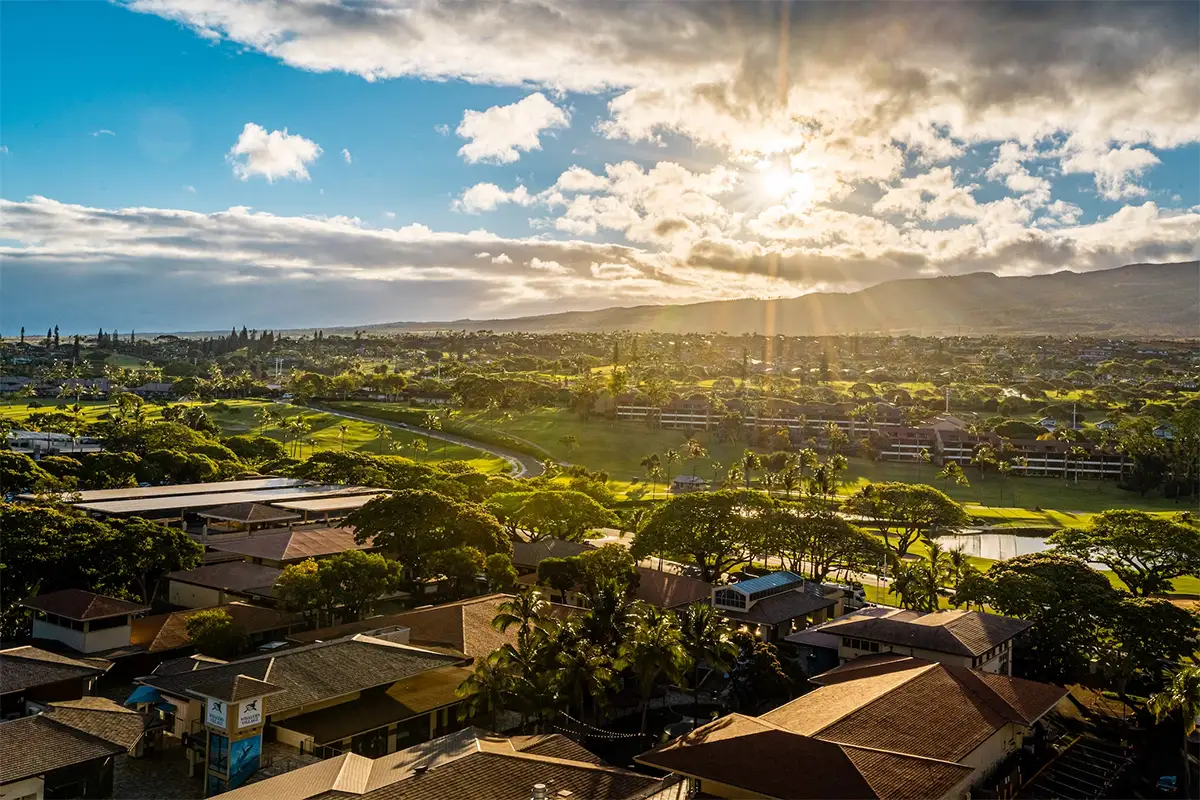
Paltin, Evslin and other government officials from across the islands were in West Maui for the Hawai‘i State Association of Counties conference on Thursday and Friday, where they discussed challenges facing their communities, including a lack of affordable housing, the impacts of tourism and the need for resilience amid severe weather.
Each of the four counties has suffered brutal blows from storms this year. More than 2 trillion gallons of rainfall in back-to-back Kona low storms in March unleashed torrential flooding statewide, sweeping away land in ‘Īao Valley and devastating homes and farms on O‘ahu’s North Shore.
Hurricane Lala lashed the islands in mid-August, killing two people and damaging more than 200 homes on Hawai‘i island while knocking out power for more than 250,000 people across the state.
Hurricane Lowell arrived with winds of more than 100 mph last weekend, damaging nearly 60 homes and destroying at least seven on Kaua‘i while cutting power for over 33,000 people, including at Līhu‘e Airport where security lines piled up.

Evslin was 7 years old when Hurricane ‘Iniki struck Kaua‘i in September 1992 and still remembers the sound of it, “like a freight train.” He said everyone on Kaua‘i has “‘Iniki PTSD,” which makes them well prepared for storms.
About a dozen people, including Evslin’s brother and parents, sheltered in his home the night Lowell hit. His wife made pho for dinner. The kids played Pictionary. They slept downstairs in the hot living room because upstairs was “much louder and much more shaky.” The next morning, they walked outside to neighbors repairing downed fences.
On his way to Maui, Evslin missed his first flight after getting stuck in the TSA line for an hour while the power cut out twice.
“Climate change sucks, right?” said Evslin, a former Kaua‘i County Council member. “This is, in a lot of ways, a disaster of our own making.”
Weather experts say this year’s El Niño, whose warmer waters have fed the flurry of hurricanes, has a high chance of developing into one of the strongest El Niño events since 1950.
Maui County Council Member Keani Rawlins-Fernandez said it’s a reminder to prepare for more frequent and intense storms, as well as coinciding weather events.
“We plan for king tides alone, a hurricane alone, but not all the things at once,” she said. “A drought with hurricane winds and no rain to put out the fire. Kona low and then another Kona low within the week. So that kind of stacking obviously is happening now and will become worse.”
Jeff Griffiths, the District 2 supervisor for Inyo County, Calif., and past president of the California State Association of Counties, said Friday at the conference that communities need to focus on “putting the resources into planning for what the environment and situation is going to be like in 10 years.”

RETREATING FROM THE COAST
In Hawai‘i, that means pushing back from the shoreline and accepting that Kanaloa, the Hawaiian god of the ocean, is always going to be stronger than any measures humans can put in, said Rawlins-Fernandez, who holds the council’s Moloka‘i seat.
At the Hyatt Regency where the conference was held, a temporary erosion skirt installed earlier this year has tried to hold back the coastal erosion that’s undermined the beachwalk fronting the hotel.
Farther up the coast, Kahana condominiums’ attempts to harden the shoreline over the years have worsened erosion on neighboring properties and impacted beaches.
“It’s undeniable that the systems that we have in place now need to be changed,” Rawlins-Fernandez said.
Paltin, who holds the council’s West Maui seat and is president of the Hawai‘i State Association of Counties, said “we really need to move our own infrastructure back,” especially in vulnerable coastal places like Front Street and Lower Honoapi‘ilani Road.
“A person that’s not familiar with the ocean is going to think it’s a slow, steady rise of the ocean, and it’s not,” said Paltin, who also chairs the council’s Disaster Recovery, International Affairs and Planning Committee. “It’s these (Kona) lows, Lalas, Mokes.”

Maui County recently launched a $50 million buyout program that offers commercial property owners along Front Street a chance to sell to the county, which has proposed turning the area into a greenway. Before the Lahaina fire in 2023, some businesses jutted out over the ocean. Shoreline setback rules no longer allow new construction to be built that close to the water.
“The best thing is to not rebuild in the shoreline area,” Paltin said. “I think once your home in the shoreline area gets destroyed for whatever reason, don’t put it back there, you know? That’s the solution. Sell it, whatever you gotta do, and move back.”
On Kaua‘i, storm surge produced some of the most damage during Hurricane Lowell, Evslin said. Some resorts ended up with swimming pools full of sand.
“The beaches are trying to retreat, right?” Evslin said. “And the sand is trying to push mauka, and you have a hotel there. And because the hotel is there, that beach is going to go away. I’m not saying get rid of the hotel, but it’s a wake-up call again. The importance of strong setbacks ensures that our beaches can retreat.”
In 2022, Kaua‘i County passed a law requiring the lowest floors of new and renovated buildings to be elevated above projected sea-level rise. It was one of the first places in the nation to set regulations based on future sea-level rise.
“Homeowners are like, ‘ah, why do I gotta build such a house?’ It’s like, so that your house can be here 50 years from now when the water is coming up here on a regular basis,” Evslin said.

KEEPING RURAL COMMUNITIES CONNECTED
Honolulu City Council Member Andria Tupola, who represents West O‘ahu’s District 1 that runs from ‘Ewa to Ka‘ena Point, said the severity of the Kona lows “woke up everybody.”
“I feel like we haven’t caught a break, but at the same time, I think the necessity of preparedness is coming at us at a whole new level,” Tupola said.
Access is one major issue that’s surfaced in Wai‘anae where Tupola lives. Like Lahaina, where people ran into traffic jams trying to flee the fire, Wai‘anae only has one major highway in and out that ends near the island’s westernmost tip.
“The west side is really the largest cul-de-sac on the island,” Tupola said.
An old 15-mile military road, Kolekole Pass, connects the west side to central O‘ahu, but the military never used to open it to the public until the Lahaina fire heightened the need for emergency evacuation, Tupola said. In July 2025, the pass was opened to allow evacuations during a tsunami warning. It opened again in April after the Kona lows.
Tupola said she hopes Hawai‘i’s congressional delegation will rally for more funds to maintain the road, especially if it’s used more going forward.
James Hustace, Hawai‘i County Council member for District 9 that includes North and South Kohala, said the storms took a toll on rural communities that rely on limited roads and single utility lines that are the main power source for wells.
Hustace said energy resiliency is a big concern. A few days without power is one thing, but when people can’t bathe or feed their animals and crops, it becomes a bigger problem.
“With these transmission lines that are impacted by high winds, we really kind of need to think outside the box in how we move that forward and what are the changes we need to make, and then just the overall redundancy in our systems,” Hustace told the Hawai‘i Journalism Initiative on Friday after moderating a conference panel on water resiliency during drought and storms.

In Ka‘ū, the local hospital ran off a generator for 11 days before power was restored. Thousands of gallons of fuel had to be delivered to the island for residents relying on their generators. Some places were offline for two weeks.
Hustace said Hawaiian Electric increases staffing on Hawai‘i island ahead of storms, but they’ve been pushed to their limits. He said the power grid could be protected by controlling nonnative trees that fall on lines as well as better land management, especially when lines run through private property.
“The rural nature of our lifestyle here has really put people on these spaces where it’s more challenging and really pushes a lot of our utility crews to long days, long hours, and to bring in resources from other counties, out of state,” Hustace said.
In Upcountry Maui, hundreds of trees toppled onto power lines and roads and uprooted water pipelines underground, said James “Kimo” Landgraf, the deputy director of the Maui County Department of Water Supply. The county had to clear the trees just to access the damaged equipment.
“That means maybe we better relocate some of that infrastructure,” Landraf said during the panel. “Every time there’s a problem, there’s a solution.”
Landgraf said that all of Maui County’s surface water plants have permanent standby power. Critical well sites have either permanent or temporary standby power, but the county wants to expand resiliency across the whole system and hopes to soon get funding under the federal Hazard Mitigation Grant Program to acquire 32 permanent standby generators, Landgraf said.

Last year, the drought was so bad that the county had to make sure there was enough water to go around, Landgraf said. This year, there was a deluge of rainfall, but not enough places to store it. That’s why the county is also trying to improve its storage capacity and acquire more water assets.
“Most times the government is the best stewards of water,” Langraf said. “We’re not going to go away. … What we’re looking forward to do is building the resiliency and the capability, but not overlooking that we need to still rebuild the watershed.”
KNOWING YOUR NEIGHBORS
At the end of the day, Evslin said, “there’s only so much we can do to prepare our built infrastructure.” Sometimes the best preparation and response is neighbors ready to help each other.
Paltin sees value in tapping into the resiliency of the past, when people didn’t have weekly barges and relied on the ingenuity of their communities to get through disasters. She witnessed this after the Lahaina fire when residents mobilized to keep each other fed and informed.
“It’s just prioritizing what is really important: food, water, helping out our neighbors, our elderly,” Paltin said. “I feel pretty solid in my neighborhood because we stood up Nāpili Noho (distribution hub). We have a diverse range of people that each knows how to pull together.”

Knowing neighbors is not just important for the people who live there, but also the government officials tasked with responding to disasters, Tupola said. If they aren’t familiar with the community and don’t know the names of people and places, “it’s a little bit hard to run on-the-ground ops.” She said the county recently funded five new positions for the Honolulu Department of Emergency Management.
“The key in Hawai‘i is that even if you have all the staff, you gotta know the community,” Tupola said. “You gotta know who to call — what uncle lives on that road, what pastor is in charge of this neighborhood.”
Rural communities also can have different needs because they are more spread out, Tupola said.
For example, when sand washed over Farrington Highway during Hurricane Lowell, only one shelter opened in Wai‘anae. But when the road is blocked, there need to be multiple shelters, Tupola said.
“For a lot of these people that are making decisions, you gotta come to our community and see what the struggle looks like,” Tupola said. “Because hypothetically in your emergency operations center, you’re looking at dots and screens. When you’re in the road and it’s blocked and the water’s coming over and the excavator is broken, you gotta make on-the-ground decisions.”

One thing has been common across Hawai‘i after every storm — Good Samaritans have always showed up. After the Kona lows, hundreds of volunteers cleaned debris off Mākaha Beach. Community groups on Maui, O‘ahu and Hawai‘i island shipped supplies to Moloka‘i residents hit hard by the storms.
Last weekend, Maui County’s Kōkua Hawai‘i Island Donation Drive drew 5,000 pounds of nonperishable food. The county plans to organize another drive soon for Kaua‘i.
Tupola said people always remember Hurricane ‘Iniki in 1992 and the Hāmākua Coast tsunami in 1975, and now this year of storms will reverberate for a long time.
“Everybody who went through something traumatic like a natural disaster, it’s like etched in your memory forever,” she said. “I think the North Shore will never forget the Kona lows. Ka‘ū is never going to forget Hurricane Lala because of all the devastation there. I do think that every so often we get hit by these things and the community pulls together and it’s a moment of unity we should appreciate.”